 Premium
Mara North Conservancy · 2 Nights
Karen Blixen Camp
Mara North Conservancy, Kenya
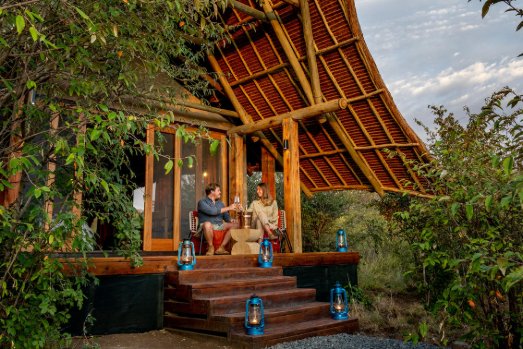
Inside Mara North Conservancy, a community-owned wildlife corridor bordering Maasai Mara National Reserve.
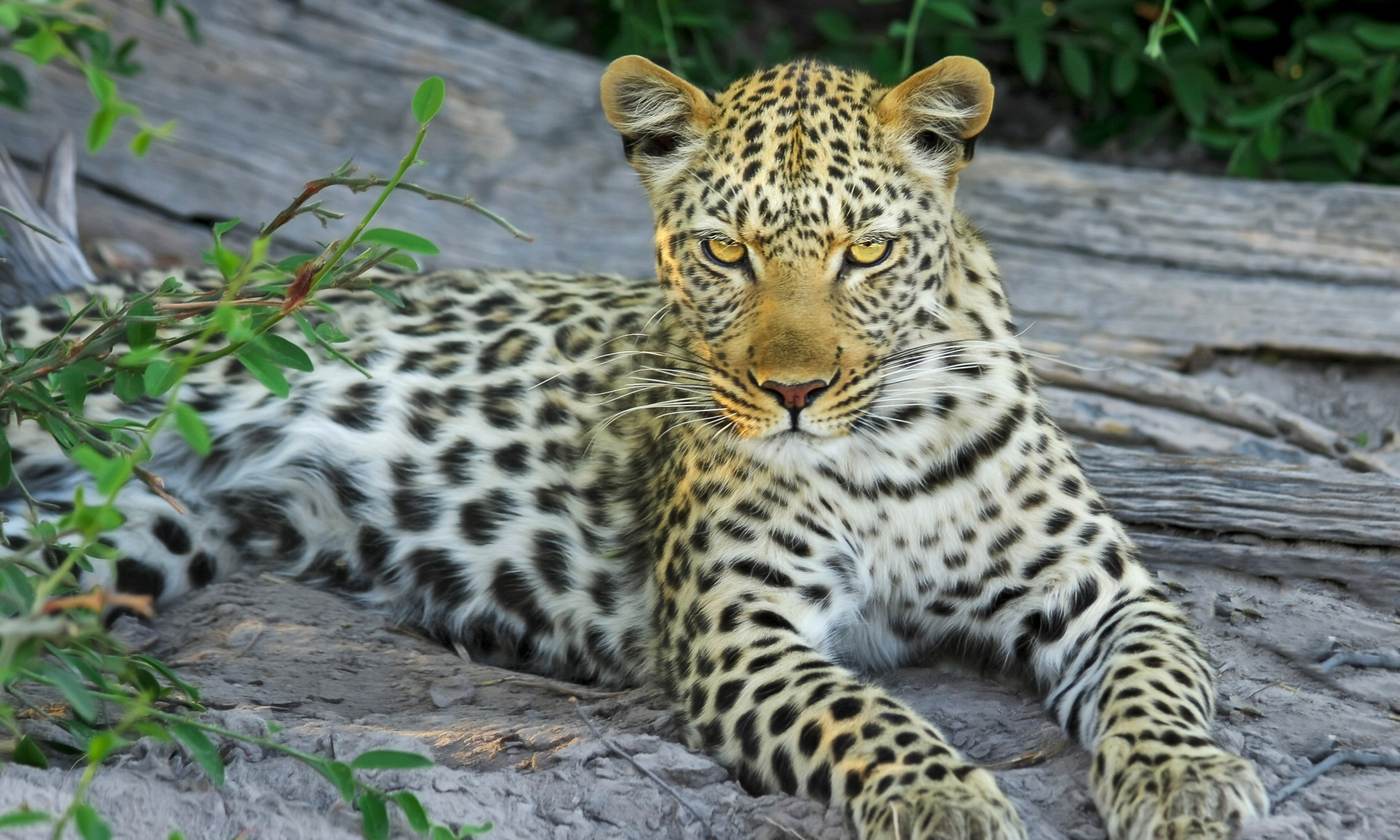
Exclusive traversing rights, night drives and walking safaris across the private conservancies bordering the Maasai Mara.
Itinerary ref: KE-005
This Kenya private conservancy safari is for travelers who have already done a first Kenya safari and want to go deeper, quite literally further off the beaten track. Over eight days, it travels through three private conservancies bordering the Maasai Mara National Reserve, and it is built entirely around exclusivity.
Mara North, Naboisho and Olare Motorogi conservancies operate under strict guest-density caps, negotiated directly with the Maasai landowning communities who lease their grazing rights to conservation tourism. As a result, vehicle counts stay genuinely low at every sighting. In addition, off-road driving is permitted here, whereas it is permitted nowhere inside the national reserve itself.
Night game drives also reveal an entirely different cast of nocturnal characters. Meanwhile, a guided Maasai walking safari with an armed tracker brings you down to ground level. This uncrowded Kenya safari is therefore made for photographers who want time and space at a sighting rather than a five-minute queue of vehicles. Similarly, it suits conservation-minded travelers who want their trip to directly fund the community conservancy model, now widely regarded as East Africa's most successful land-use innovation.
On a Mara conservancy safari, the model itself is worth understanding before you go. Each of these three reserves is community-owned Maasai land, leased collectively to a small number of camps under strict traversing agreements. Those agreements cap bed density at a fraction of what the adjoining national reserve permits, often one vehicle per several thousand acres rather than dozens crowding a single leopard sighting. For example, Naboisho Conservancy has developed one of Kenya's highest recorded lion densities specifically because of this low-impact model. Meanwhile, the cheetah and leopard populations of Olare Motorogi Conservancy benefit from research-grade monitoring by resident conservancy ecologists. Our guides to luxury conservancy safaris in Kenya and the Laikipia conservancies explain the model in more depth.
Traveling now rather than later matters for a genuine reason: conservancy bed quotas are capped by design. Consequently, camps here routinely sell out eight to twelve months ahead of the June-through-October and January-February high seasons. If you are also considering northern Kenya, compare the Samburu & Laikipia Wilderness Safari, and see the Kenya destination page for the wider country. Wildlife conservation across Kenya is overseen by the Kenya Wildlife Service.
See also: Kenya Photographic Big Cat Safari, Kenya & Tanzania Luxury Private-Guide Safari and Kenya Migration Explorer: Maasai Mara River Crossings.
First, low-density, high-exclusivity game viewing with off-road access on private conservancy land in Kenya.
Next, one of the highest lion densities in Kenya, with night drives permitted.
Finally, a closing conservancy stretch known for cheetah and leopard sightings.
Sign in to save this safari's dates and party size to your account, so you can pick up right where you left off.
Sign in to save this itineraryA light-aircraft flight from Nairobi's Wilson Airport delivers you to a private conservancy airstrip in Mara North, where your dedicated conservancy guide meets you for a drive into camp that doubles as your first game drive — a genuine privilege given that off-road tracking begins the moment you're through the gate, something never permitted in the adjoining national reserve. Mara North's roughly 74,000 acres are shared among only a handful of camps under one of the strictest bed-density caps in the entire Mara ecosystem, and it shows immediately in how few other vehicles you encounter, even at an active sighting. Resident lion prides here are well habituated to safari vehicles without ever having been pressured by high traffic, and late afternoon commonly produces excellent sightings of elephant breeding herds moving through the conservancy's riverine woodland en route to the Mara River itself. A private bush dinner under the stars is a common first-night welcome at several conservancy camps.
Today is dedicated entirely to Mara North's off-road access, which allows your guide to position the vehicle directly alongside a sighting rather than staying on a fixed track — invaluable for photographers chasing a specific angle or simply for families wanting an unobstructed view of a resting lion pride. A morning drive typically explores the conservancy's western Leopard Gorge area, historically one of the most reliable leopard territories in the greater Mara ecosystem and made well known through BBC's Big Cat Diary series. After a midday break at camp, the evening offers something entirely unavailable inside the national reserve: a night game drive using red-filtered spotlights that don't disturb natural behavior, revealing genet, civet, aardvark and, with good fortune, a hunting leopard active in total darkness. Tomorrow's transfer to Naboisho Conservancy is a short drive rather than a flight, keeping travel time to a minimum.
A scenic overland transfer — itself a game drive, given the wildlife density along the route — carries you from Mara North into the adjoining Naboisho Conservancy, a roughly 50,000-acre community-owned reserve widely regarded as holding one of the highest lion densities anywhere in Kenya, a status confirmed by long-running research collaborations based within the conservancy itself. Naboisho was established later than Mara North and deliberately capped at an even lower bed density per acre, and the difference is noticeable the moment you arrive — vast, rolling grassland broken by acacia thickets with genuinely no other vehicles in sight for long stretches. An afternoon game drive introduces several of the conservancy's known resident prides, and your guide will typically brief you on which specific lions — often named and tracked by conservancy researchers — have been active in recent days, giving the tracking an unusually personal, informed quality.
A full day immersed in Naboisho's exceptional lion population, with your guide's accumulated knowledge of specific pride territories and denning sites putting you in strong position for extended sightings rather than brief drive-by encounters. Naboisho also permits walking safaris with an armed Maasai guide — a genuinely different way to experience the bush, reading tracks and dung at close range and learning the traditional ecological knowledge that has guided Maasai pastoralism here for generations. The afternoon's night drive, permitted throughout the conservancy, is where Naboisho earns its reputation among specialist safari-goers: lion prides are frequently found active and hunting after dark, a behavior largely invisible to reserve-bound daytime visitors. Evening usually closes with a sundowner on one of Naboisho's characteristic rocky outcrops, watching the light change over grassland that, by community agreement, will never see a fence.
This morning's guided walking safari, led by an armed Maasai tracker alongside your driver-guide, moves at an entirely different pace than a vehicle-based drive — close attention to spoor, dung, birdlife and the smaller details of the ecosystem that are easy to miss at speed, punctuated by genuine lessons in traditional bush survival and medicinal plant use passed down through generations of Maasai pastoralists. Later, many conservancy camps arrange an informal briefing with a resident conservation officer or researcher, explaining exactly how conservancy lease fees translate into direct payments to the roughly 500 Maasai landowning families who set aside their grazing land for wildlife rather than cattle — the economic engine underpinning the entire conservancy model. The afternoon returns to a final Naboisho game drive before tomorrow's transfer to Olare Motorogi, the itinerary's third and final conservancy.
A short transfer east carries you into Olare Motorogi Conservancy, roughly 33,000 acres of prime grassland bordering the Maasai Mara's northeastern boundary and consistently rated among the Mara ecosystem's strongest territories for cheetah and leopard sightings, a reputation earned through both low vehicle density and an unusually open, undulating landscape that suits both species' hunting styles. Your guide's afternoon drive typically works known cheetah territory along the conservancy's open ridgelines, where a female's methodical stalk of a Thomson's gazelle is a realistic possibility with patience. Olare Motorogi's off-road access again allows close, considered positioning at any sighting, and the conservancy's research partnership with resident cheetah and leopard monitoring projects means your guide often has current, specific intelligence on which individual cats have been active nearby — genuinely useful information rather than general reassurance.
Your final full game-viewing day is dedicated to Olare Motorogi's resident cheetah coalition and the conservancy's well-documented leopard population, both benefiting from the same low-density, off-road-access model that has defined every conservancy leg of this trip. Morning and late-afternoon drives are timed around these two species' preferred activity windows — cheetah hunting in the cooler hours before the midday heat forces them into shade, leopards beginning to move as dusk approaches. A relaxed midday break at camp allows time to review the trip's photographs with your guide, many of whom are experienced at helping guests understand what made a particular sighting technically or behaviorally distinctive. The evening's final sundowner, typically set on a rise overlooking the conservancy's open plains, is a natural moment to reflect on eight days spent almost entirely off any fixed track — a genuinely different Mara experience from the reserve most visitors see.
A final relaxed morning at your Olare Motorogi camp — an optional early game drive for anyone not ready to stop looking — precedes a short flight from a nearby conservancy airstrip back to Nairobi's Wilson Airport for your onward or international connection. Our local team coordinates all timing around your outbound flight. Most guests leave this itinerary already asking about Kenya's other conservancies, a common response to a week spent almost entirely without another vehicle in sight.
Built from our own staff's real packing guidance for this trip's destinations, tailored to your dates and this exact itinerary above.
Every stop is a private conservancy — never the crowded main reserve
Night drives and off-road access, both restricted in the national reserve
Strict guest-bed density caps keep vehicle counts genuinely low
Direct conservancy fees fund Maasai landowner community programs
Inside Mara North Conservancy, a community-owned wildlife corridor bordering Maasai Mara National Reserve.
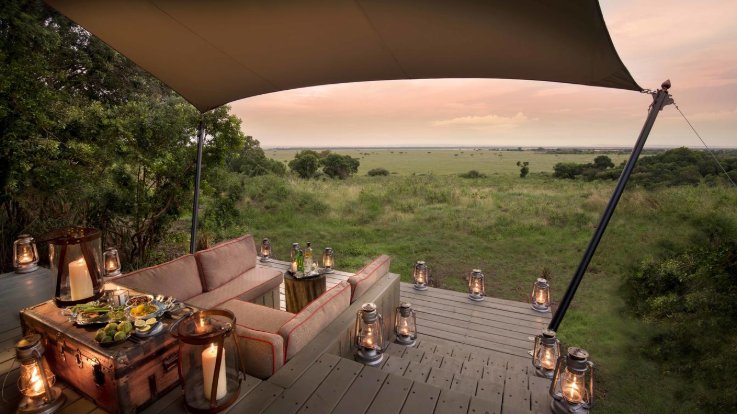
Inside the Mara Naboisho Conservancy, a 50,000-acre community-owned reserve bordering — but administratively separate from — Maasai Mara National Reserve.
On a private concession bordering the Mara Triangle, with exclusive traversing rights into the adjoining national reserve.
| Accommodation Tier | Per Person Sharing (USD) | Single Supplement |
|---|---|---|
| Classic Comfort | $7,400 | +$1,300 |
| Premium | $9,800 | +$1,700 |
| Ultra-Luxury | $12,200 | +$2,150 |
Rates are per person sharing, in USD, based on double occupancy during standard season (June-October and January-February peak conservancy season); conservancy bed quotas are limited, so early booking is strongly advised.
Four steps from your first message to your safari.
Send your dates, group size and the places you want to see. A specialist replies within 24 hours.
We shape this journey around your dates and budget and send you a quote that shows what is and is not included.
A 40% deposit confirms your booking. Where your trip needs gorilla or park permits, we buy them once your deposit has been received and confirmed.
The final balance is due 60 days before departure, unless your booking confirmation says otherwise.
Cancellations and refunds follow our booking terms, and how we protect your trip and your payment explains how your money and permits are handled. Questions first? You can contact us at any time.

Answered from our own real trip details above -- itinerary, inclusions, difficulty, and more. For an exact price, use "Enquire Now" below.
Finish your safari with a few days on the coast.
Tell us your dates and group size — a destination specialist replies within 24 hours.