East Africa safari prices per person per day, official park and permit fees in Uganda, Rwanda, Kenya and Tanzania, three worked budgets and what quotes leave out.
Written by Tumwine Kenneth, founder of Paramount Gorilla Expeditions · Last updated · About 21 minutes to read: our full breakdown of East Africa safari cost
Fees and prices checked
The short answer
Published guides put a budget safari in East Africa at about US$150 to US$350 per person per day, mid-range at US$350 to US$700 and luxury at US$700 to US$1,500 or more, before international flights. Our own packages run from about US$350 to US$1,650 per person per day, and most fall between US$600 and US$950.
US$350–700Mid-range safari, per person per day (published range)
US$200Maasai Mara reserve entry per day, July to December (Narok County tariff)
East Africa safari cost is a range, not one figure: the same week can cost three times as much depending on camps, season and how private your guiding is. Government fees sit under every trip and do not change between operators. Below are the published price bands, the official fees, our from-prices and three worked budgets.
All figures are US dollars per person, checked on 24 October 2026, and each fee names the official document it comes from.
How much does a safari in East Africa cost per person per day?
The nearest thing to one comparable number is the cost per person per day. Published bands overlap, because lodges, vehicles and fees rise together.
Style
Per person per day
Seven days
What it usually means
Budget (cheapest)
US$150–350
US$1,050–2,450
Group-joining or camping trips, simple lodges, a shared vehicle, usually one country.
Mid-range
US$350–700
US$2,450–4,900
Classic lodges and tented camps, private or small shared vehicle with a driver-guide, park fees and meals included.
Luxury
US$700–1,500+
US$4,900–10,500+
Small camps and private conservancies, private guiding, off-road driving where permitted, light-aircraft transfers.
Ultra-luxury
US$1,500+
US$10,500+
Exclusive-use camps and private-guide itineraries.
Bands as published by Duma Explorer, SafariBookings and Africafreak on 23 October 2026. Each site draws its lines a little differently, so use them as ranges, not quotes. Seven-day totals are our arithmetic (daily band times seven). All figures exclude international flights.
Across the 47 of our safaris that include lodging and guiding (beach-only stays left out), from-prices work out between US$350 and US$1,650 per person per day, and 38 of them sit between US$600 and US$950. The lowest is our 10 Days Best Of Uganda Safari at US$350 a day. That puts us in mid-range and above, not at the budget end.
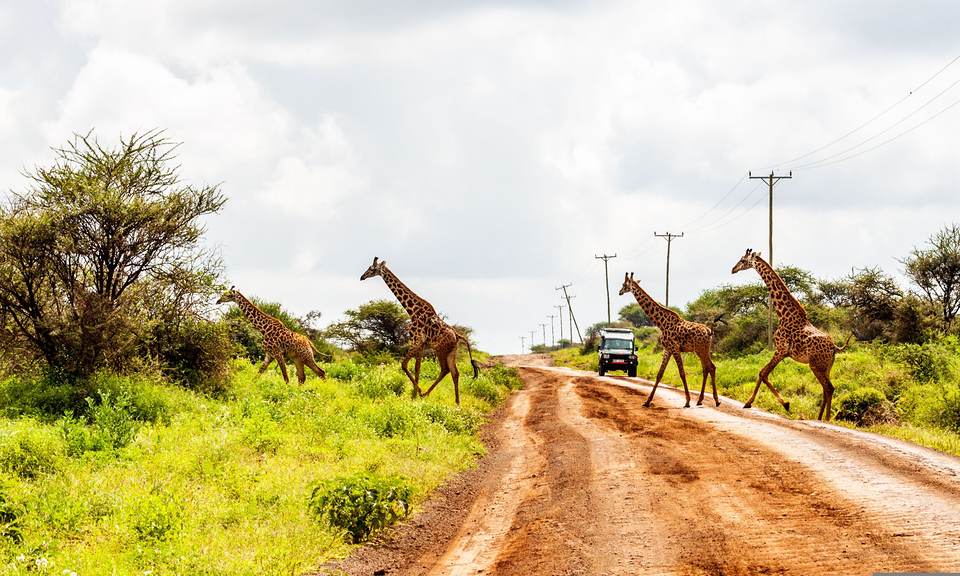
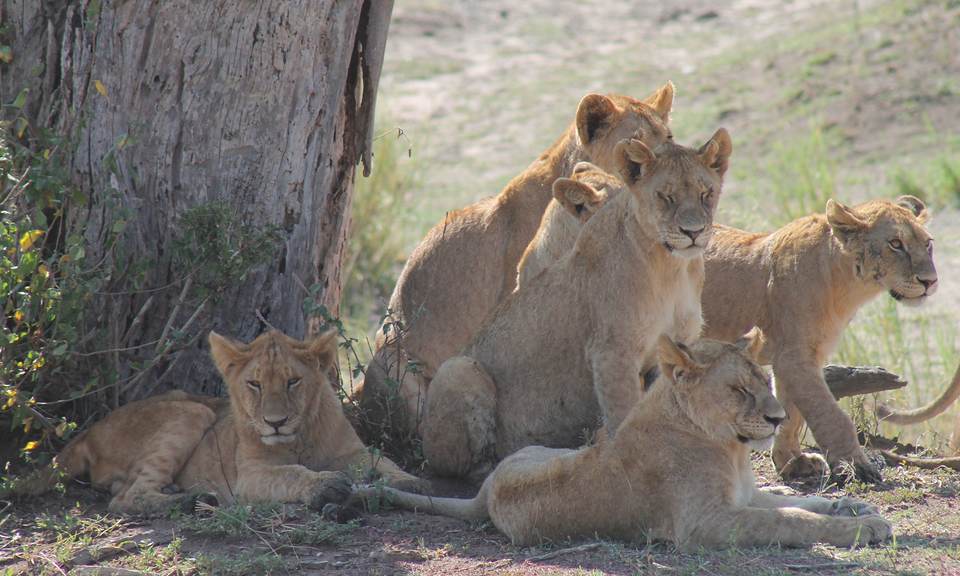
A safari price pays for the road time, fuel, guide and vehicle that put you in front of moments like this one.
East Africa safari prices by country: Uganda, Rwanda, Kenya and Tanzania
Each country charges differently, so one regional figure can mislead.
Uganda gorilla permit price and safari costs
The gorilla permit is Uganda’s biggest fee: US$800 for a foreign adult on the official tariff. It covers one mountain gorilla trek in Bwindi Impenetrable National Park or Mgahinga Gorilla National Park. Chimpanzee tracking in Kibale costs US$250, rising to US$300 from 1 January 2027. Our 10 Days Best Of Uganda Safari starts at US$3,500 and the 6-day Classic Gorilla Trekking Safari at US$3,800. Full figures: Uganda safari cost.
Rwanda gorilla permit cost and Volcanoes National Park
The Maasai Mara (often spelled Masai Mara) drives Kenya’s price: Narok County’s 2025/26 fee sheet lists reserve entry at US$100 a day from January to June and US$200 from July to December, plus the flight or long drive from Nairobi. Our 7-day Maasai Mara and Amboseli safari starts at US$4,400. Full figures: Kenya safari cost.
Tanzania safari prices: Serengeti and Ngorongoro Crater
Planning a trip across several countries? The fixed fees (permits, park fees and visas) add up differently on a route that crosses borders. Our four country safari cost guide lists each fee and adds them up for six multi-country routes.
Official park and permit fees behind every safari price in East Africa
These fees appear in every estimate. Authorities set them, so they do not vary between operators; what varies is whether a quote includes them. Where an authority has announced a change that starts later, the table gives the date.
Official tariff is read on the authority’s own published document, and each row names it. Our arithmetic is worked out from those figures. All fees were checked on 24 October 2026.
Uganda: gorilla and chimpanzee permits, park entry
Fee (foreign non-resident adult)
US$
Status
Gorilla permit
800
Official tariff UWA notice TDO 93/04 of 26 February 2026 keeps US$800 from 1 January 2027, the same as the 2024 to 2026 tariff.
Gorilla permit, April, May and November
600
Official tariff Same notice, which lists these months.
Gorilla habituation experience
1,800 from 1 January 2027
Official tariff Same notice. It was US$1,500 on the 2024 to 2026 tariff.
Chimpanzee tracking, Kibale
300 from 1 January 2027
Official tariff Same notice. It was US$250 on the 2024 to 2026 tariff, with park entry included.
Chimpanzee tracking, April, May and November
200
Official tariff Same notice, which lists these months.
Park entry, Murchison Falls and Queen Elizabeth
45 and 40 a day
Official tariff Valid 24 hours. From the 2024 to 2026 tariff, which UWA still lists as its current tariff on 24 October 2026.
Foreign visitors can only book permits through licensed operators, and UWA says fees can change without notice. Foreign residents pay US$700, other Africans US$500 and East Africans UGX 300,000 for the same permit. The minimum age is 15. See our permit cost comparison.
A gorilla permit is a fixed government fee, whichever camp you sleep in.
Rwanda: gorilla permit
Fee (foreign non-resident adult)
US$
Status
Gorilla permit
1,500
Official tariff Visit Rwanda gorilla tracking page (RDB), read 24 October 2026. RDB announced the US$1,500 price on 6 May 2017.
Tanzania: park entry per 24 hours, concession fees and Ngorongoro
Fee (non-resident, per 24 hours unless stated)
US$
Status
Serengeti entry, adult: peak (16 May to 14 March) / low (15 March to 15 May)
70 + VAT = 82.60 / 60 + VAT = 70.80
Official tariff OFFICIAL TARIFF, TANAPA 2023/24: the latest schedule published as of 24 October 2026. It states its charges before 18% VAT. Our arithmetic
Tarangire, Manyara and Arusha entry, adult: peak / low
50 + VAT = 59.00 / 45 + VAT = 53.10
Official tariff Same schedule.
Concession fee per night inside the Serengeti, adult
60 + VAT (July to September); 50 + VAT (October to June)
Official tariff Same schedule.
Ngorongoro Crater service fee, per vehicle
295
Official tariff Ngorongoro Conservation Area Authority tariff page, read 24 October 2026, rate for non-East African citizens.
These are official TANAPA 2023/24 figures (1 July 2023 to 30 June 2024), the latest schedule TANAPA has published as of 24 October 2026. The schedule states its charges before 18% VAT, so the table shows both. Children aged 5 to 15 pay US$20 plus VAT, which is US$23.60, in the Serengeti, and under-fives are free. See Tanzania safari cost.
The crater fee is charged per vehicle, so group size changes your share: about US$147.50 each for two guests, US$73.75 for four and US$49.17 for six (our arithmetic on the official US$295).
Our East Africa safari packages: from-prices and price per day
Lowest starting prices per person from our price lists on 24 October 2026. They are not quotes. The last column divides the from-price by the days.
Every estimate is built from seven blocks: lodging, meals, vehicle and guide, park fees, internal flights, special permits, and the operator’s planning and support. Six things move them most.
Accommodation level
The camp is the biggest swing: a classic tented camp and a private-conservancy camp can differ by several hundred dollars a night for the same animals. The top end buys space, privacy and fewer vehicles.
Season
Peak lodge rates run July to October in Kenya and northern Tanzania and at Christmas; April, May and November cost less.
Private or shared vehicle
A private vehicle and guide cost more per person for a couple than a shared one, while small-group departures spread the cost. See private vs group safari and fly-in vs road safari.
Rooms are priced for two, so solo travellers often pay a single supplement (see solo travel on safari). Children pay less in Tanzania, and gorilla trekking has a minimum age of 15.
Length of stay and activities
A longer stay does not steadily lower the daily price in our packages; lodge level, permits and flights matter more. Extras add more: see hot air balloon safari cost.
Worked examples: what three East Africa safari budgets add up to
These add the costs outside a package to three of our from-prices, with tips from our tipping guide. They are worked examples at 24 October 2026 prices, not quotes, and leave out flights and travel insurance.
Example 1: six days of gorilla trekking in Uganda
Line, per person
Low (US$)
High (US$)
Package: Classic Gorilla Trekking Safari, 6 days
3,800
3,800
Uganda e-visa
50
50
Tips, driver-guide (6 days at 10 to 20)
60
120
Tips, camp staff (5 nights at 5 to 15)
25
75
Total before flights and insurance
3,935
4,045
Per person per day, all-in
656
674
Example 2: seven days in the Maasai Mara and Amboseli
Line, per person
Low (US$)
High (US$)
Package: Classic Maasai Mara & Amboseli Safari, 7 days
4,400
4,400
Kenya eTA
30
30
Tips, driver-guide (7 days at 10 to 20)
70
140
Tips, camp staff (6 nights at 5 to 15)
30
90
Total before flights and insurance
4,530
4,660
Per person per day, all-in
647
666
Example 3: twelve days across Uganda, Kenya, Tanzania and Zanzibar
Line, per person
Low (US$)
High (US$)
Package: Explorer’s East Africa Safari, 12 days
7,450
7,450
Uganda e-visa
50
50
Kenya eTA
30
30
Tips, driver-guide (12 days at 10 to 20)
120
240
Tips, camp staff (11 nights at 5 to 15)
55
165
Tanzania e-visa and visitor travel insurance
on your written quote, not in this total
Total before flights, the Tanzania visa and insurance
7,705
7,935
Per person per day, all-in
642
661
For two travellers, double every line. Example 3 prices the Uganda and Kenya visas separately, because the East Africa Tourist Visa covers Uganda, Kenya and Rwanda but not Tanzania.
What an East Africa safari price includes, and what it does not
A fair quote lists what is in and out, in writing. If a price looks unusually low, permits, internal flights or park fees are usually what is missing.
Normally included
Lodging as set out in the itinerary
Meals as stated
Park and conservancy fees
A vehicle with a driver-guide
Internal flights and transfers the route needs
Gorilla or chimpanzee permits where part of the route
24-hour in-country support
Normally extra
International flights
Visa fees
Travel and evacuation insurance
Tips for guides and camp staff
Alcohol beyond house pours, laundry, personal items
Optional extras such as a balloon flight
Porter fees on gorilla treks
The driver-guide and the vehicle are usually the largest single block in a package after lodging.
Costs outside the package
These sit outside almost every package, so budget for them from the start. Visa fees change, so check the official portal before you apply.
Item
Typical cost (US$)
Note
Uganda e-visa
50
Official tariff Uganda Immigration tourist visa page: single entry, approval valid 90 days. See our visa guide.
Kenya eTA
from 30
Official tariff Official eTA site.
East Africa Tourist Visa
100
Official tariff Uganda Immigration: covers Uganda, Kenya and Rwanda, multiple entry, valid 90 days, not Tanzania. See the EATV guide.
The visas priced above and tips add roughly US$130 to US$485 per person on the three examples above.
How the season changes East Africa safari prices
If you can choose your dates, the season is the best lever on price that does not reduce quality. It moves official fees as well as lodge rates. We give no percentage per month, because no authority publishes one.
What changes
Season
When, and what it does to the price
Status
Maasai Mara entry
High (peak)
July to December: US$200 a day
Official tariff Narok County 2025/26
Maasai Mara entry
Low
January to June: US$100 a day
Official tariff Narok County 2025/26
Serengeti entry
High (peak)
16 May to 14 March: US$70 net
Official tariff TANAPA 2023/24, latest published
Serengeti entry
Low (green)
15 March to 15 May: US$60 net
Official tariff TANAPA 2023/24, latest published
Uganda gorilla permit
Low (green)
April, May and November: US$600 instead of US$800
Official tariff UWA notice of 26 February 2026
Lodges and camps
High (peak)
July to October and at Christmas: the highest rates
Each camp sets its dates.
Lodges and camps
Shoulder
The weeks either side of peak: often priced between the two
Each camp sets its dates.
Lodges and camps
Low (green)
April, May and November: lower rates
Each camp sets its dates.
In high season, also called peak season, park fees and camp rates are at their highest and the best camps sell out first. The shoulder season, the weeks either side, often means fewer vehicles at a sighting and lower camp rates. Low season and the green season (April, May and November at many camps) bring fewer vehicles and lush landscapes, though some camps close and roads are slower. Read our green-season guide and East Africa safari weather, or the best time pages for Uganda, Kenya and Tanzania.
Quieter months mean fewer vehicles at a sighting, and lower rates at many camps.
How to save money on an East Africa safari
Many travellers search for a cheap or affordable East Africa safari, and there are real ways to spend less. Authority fees stay fixed, so savings come from how and when you travel.
Travel in the quieter months. April, May and November lower lodge rates, and Tanzania’s park fees dip from 15 March to 15 May.
Use fewer countries. Each one adds a flight, fees and often a visa.
Skip extras you will not use, such as a balloon flight.
The cheapest safaris are camping or group-joining trips with a local operator, for travellers who accept shared vehicles and simpler camps. Ask any operator for a written list of what is covered.
Is an East Africa safari worth the money?
A safari costs more per day than most holidays, so the fair question is what the money buys. Part of it pays for things you cannot arrange yourself: a trained driver-guide who finds the animals, a well-kept 4x4, fuel across rough roads, and small camps with few rooms. Another part is government fees, such as a US$800 gorilla permit in Uganda or Serengeti entry, which fund conservation and the communities around the parks. Those fees are the same whoever you book with, so a much lower quote usually means less is included.
Whether it is worth it depends on what you want from a vacation. Mountain gorillas live in only a few forests, and the Great Migration crosses rivers only in the Serengeti and the Maasai Mara, so the price reflects access to something rare, not only comfort. If you mostly want rest and a beach, a shorter safari followed by a beach stay may suit you better. Set a budget from the per-day figures above, then compare quotes line by line.
How to compare East Africa safari quotes
Give us your dates, group, countries, lodging style and whether you want a private vehicle, and we can return a specific price quickly. Whoever quotes you, check these points before comparing totals.
Put every quote on one basis, per person per day or per trip.
Check that permits, park fees and internal flights are inside each price.
Ask which tariff year and exchange rate each quote uses.
Ask whether the vehicle is private or shared, and by how many guests.
Ask which dates a lower seasonal permit rate covers.
Sources and how we checked these East Africa safari prices
Every fee in the tables comes from the authority’s own published document, read on 24 October 2026. We correct this page when an authority issues a new tariff.
Amboseli National Park entry, Nyungwe chimpanzee tracking, Rwanda’s low-season gorilla discount, the Tanzania e-visa and Tanzania travel insurance are not listed above: each appears with its current figure on your written quote. Spotted a changed figure? Tell us.
About the author
Tumwine Kenneth is the founder of Paramount Gorilla Expeditions and a tour guide and destination specialist. Born and raised on the outskirts of Bwindi Impenetrable National Park, he has years of hands-on experience guiding safaris across East Africa and still personally guides tours today. He founded the company in 2022, speaks English, German and Spanish, and stays personally involved in selecting and evaluating every camp the company adds. Read his full profile, or meet the rest of the team on our about page.
Late July to September is the best time for a four country safari across Uganda, Rwanda, Kenya and Tanzania. See the month by month table, the second window and the 2026/27 rain caveat.
Trek gorillas in both countries on one trip: what two permits cost, which Bwindi sector links to Rwanda, which direction to travel and how to protect a rest day between treks.
The East Africa tourist visa covers Uganda, Kenya and Rwanda for USD 100 and 90 days, but not Tanzania. Fees, first-entry rule, Kenya eTA question and the Tanzania eVisa, dated.
The fixed part of a four country safari cost: permits, park fees, visas and Tanzania insurance, added up for six routes, plus the ten lines to compare in any quote.
Should gorilla trekking come at the start or end of a long safari? Both sides, the tie-breakers, buffer nights and what to do if a trek is cancelled, with a five-step method to choose.
How to combine gorillas and the Great Migration in one trip: the months that overlap, Uganda or Rwanda, the Mara or Serengeti, and the nine nights you need.
Work out how many days a Uganda, Rwanda, Kenya and Tanzania safari needs: a nights-per-stop ledger, the transfer days you cannot skip, and what 10 to 21 days really give you.
The Kenya eTA for safari guests: official USD 30 fee, about three working days to process, 90 days validity, who is exempt, transit rules and the open question for regional visa holders.
A planner's guide to a Rwanda Kenya Tanzania safari that starts in Kigali: route order, flights, the Mara to Serengeti link, entry rules and the gorilla permit.
A planner's guide to a Rwanda and Kenya safari: start in Kigali, trek once, fly to Nairobi, then the Mara. Flights, how to split your days and the entry rules for both countries.
A planner's guide to a Rwanda and Tanzania safari: one gorilla trek, RwandAir's three-day-a-week flight, the Serengeti by air or road, and Tanzania's eVisa and insurance rules.
How flights really work between safari countries: international routes, bush flights, the 15 kg baggage limit, the Mara to Serengeti link, overland times and a realistic transit day.
Safari luggage weight limits by carrier: the 15 kg soft bag rule, who allows 20 kg, excess and freight seat prices, storing luggage at the gateway and packing for the multi-country trap.
Tanzania now requires foreign visitors to hold government inbound travel insurance. See what is verified, reported and unknown: cost, exemptions, Zanzibar, buying and enforcement.
The route we recommend for a Uganda Kenya Tanzania safari: the best order, how many days it needs, the best months, how you move between countries and what to check before you book.
Two land posts link Rwanda and Uganda for gorilla trips. Learn which suits your sector, what to carry, how long to allow and why hours differ, checked 11 October 2026.
A Uganda Rwanda Kenya safari on one East Africa Tourist Visa: the order of the three countries, the Nairobi flights, the Mara, yellow fever rules and the open Kenya eTA question.
How to plan a Uganda Rwanda Kenya Tanzania safari: the four route directions compared, the flight chain, how the East Africa Tourist Visa interacts with the order, and what to check.
A planner's guide to a Uganda Rwanda Tanzania safari: Entebbe or Kigali start, the border or flight between the forests, Kilimanjaro flights, visas and Tanzania's insurance.
Visa rules for Uganda, Kenya, Tanzania, Rwanda, Zanzibar and the Seychelles change often. Here is how to check them properly and what to prepare before you travel.
Uganda dropped its yellow fever entry certificate on 2 October 2026, but Kenya, Rwanda and Tanzania still ask. Journey table, 12 hour transit rule and border outcomes, dated.
Published guides put budget safaris at about US$150 to US$350 per person per day, mid-range at US$350 to US$700 and luxury at US$700 to US$1,500 or more, before flights. Our packages work out between about US$350 and US$1,650 per person per day, most between US$600 and US$950.
How much does a 7-day East Africa safari cost per person?+
At the published daily bands, seven days comes to roughly US$1,050 to US$2,450 budget, US$2,450 to US$4,900 mid-range and US$4,900 to US$10,500 or more for luxury. Our 7-day packages start at US$4,400 to US$4,700 per person, excluding flights, visas, insurance and tips.
What is the average cost of an East Africa safari per day?+
Most guides put a mid-range trip with a private guide, park fees, meals and lodging at US$350 to US$700 per person per day. Quotes come per day, per night or per trip, so compare on one basis first. Flights, visas and tips are usually extra.
Is a safari in East Africa more expensive than in South Africa?+
Published guides generally price South Africa lower, mainly because of the rand exchange rate and common self-drive safaris in Kruger, while most East Africa safaris are guided with a private driver. We only operate in East Africa, so we cannot quote South Africa.
Is there a cheap way to do an East Africa safari?+
Yes, with limits. The cheapest routes are group-joining or camping trips, one country, a shared vehicle, low season and a shorter stay, and park fees stay fixed. Our packages sit mid-range and above, so if your budget is well below US$350 per person per day, we will say so.
What is the cheapest month for an East Africa safari?+
April and May are usually cheapest for lodges, and on TANAPA’s latest published schedule (2023/24, as of 24 October 2026), park fees are lower from 15 March to 15 May. The trade-off is rain, slower roads and some closed camps. Ask which dates each quote’s fees cover.
Why is an East Africa safari so expensive?+
Wildlife areas are remote, so every guest needs a trained guide, a well-kept 4x4 and fuel. Camps are small, with long supply lines and few rooms to share costs across. Governments also set high park and permit fees on purpose, to fund conservation and communities.
How much does gorilla trekking add to the cost of a safari?+
The permit alone is US$800 in Uganda (official tariff, foreign adult) and US$1,500 in Rwanda (official Visit Rwanda page). Uganda’s permit covers one trek in Bwindi or Mgahinga. The minimum age is 15. Our packages include the permit where a trek is part of the route.
How much is a gorilla permit in 2027?+
A Uganda gorilla permit is US$800 for a foreign adult, and UWA’s February 2026 notice keeps that price from 1 January 2027, with US$600 listed for April, May and November. A Rwanda permit is US$1,500 on RDB’s tourism site, and no 2027 price has been announced. We list the permit rate for your dates on every quote.
What is included in the price of an East Africa safari?+
Our packages normally include lodging, meals as stated, park and conservancy fees, a vehicle with a driver-guide, internal flights and transfers the route needs, gorilla or chimpanzee permits where they are part of the route, and 24-hour in-country support. Every quote lists these separately.
What is not included in an East Africa safari price?+
International flights, visa fees, travel insurance, tips, alcohol beyond house pours, laundry and optional extras such as a balloon flight. Budget for these from the start: the visa fees for Uganda, Kenya and the East Africa Tourist Visa are in the table above, so you can add them to your total.
How much should I tip on an East Africa safari?+
Our tipping guide gives US$10 to US$20 per guest per day for a driver-guide and US$5 to US$15 per night for camp staff. On a one-week trip that comes to roughly US$100 to US$230 per person across guide and camp staff, as the worked examples show.
Are park fees included in safari prices, and do children pay less?+
In our packages park and conservancy fees are included. Children usually pay less: on TANAPA’s latest published schedule (2023/24, as of 24 October 2026), a child aged 5 to 15 pays US$23.60 in the Serengeti against US$82.60 for an adult in peak season, and under-fives are free.
How do I compare two East Africa safari quotes?+
Put both on one basis, per person per day or per trip, then compare inclusions line by line: permits, park fees, internal flights, vehicle type, meals and drinks. If one price is far lower, check what is missing, and ask which tariff year and exchange rate each quote uses.
Which is cheapest: Uganda, Kenya, Tanzania or Rwanda?+
Among our packages the entry points are close per day: US$350 for 10 days in Uganda, US$633 for the 6-day Uganda gorilla safari, US$629 for 7 days in Kenya and US$664 for 7 days in Tanzania. Fees and flights decide the total more than the country.
How far ahead should I book an East Africa safari?+
For gorilla permits on a fixed date we advise six to ten months ahead, and earlier for July to October in the Mara or Serengeti and for Christmas. Permits sell out in peak months, and operators report Uganda now asks for full payment at booking.
Tick the destinations you're drawn to — each one opens its own list of signature experiences. Tick as many as you like, tell us how to reach you, and a real destination specialist turns your selections into a tailored itinerary within 24 hours.