Twelve habituated mountain gorilla families, golden monkeys, chimpanzees beneath a canopy walkway and lions on the savannah, all within a few hours of Kigali. Our complete Rwanda guide covers permits, parks, costs, the best time to go and how to plan it.
Rwanda is a small, green, mountainous country in the heart of Africa, and it is one of only three places on earth where you can trek wild mountain gorillas. The other two are Uganda and the Democratic Republic of Congo. What sets Rwanda apart is how little time it takes: every Volcanoes National Park activity leaves from one briefing point at Kinigi, and the paved road from Kigali airport reaches it in roughly two to three hours.
That makes Rwanda the most time-efficient gorilla destination in Africa. You can land in Kigali, meet your guide, sleep near the park, and be face to face with a silverback the next morning. Add the chimpanzees and canopy walkway of Nyungwe Forest, the lions, rhinos and elephants of Akagera, and the hills and shoreline of Lake Kivu, and you have a country that rewards a three-day dash just as well as a two-week journey.
This guide is written by the specialists who plan these trips every week. It covers how gorilla trekking works, what each national park offers, what the permits really cost, when to go, how Rwanda compares with Uganda, and how to put it all together. Where a price or rule can change, we say where it comes from and when we last checked it.
Permit prices are set by the Rwanda Development Board (RDB). We last checked them on 9 October 2026, and they can change. See permits and fees for the full picture, including the discount that applies from November to May.
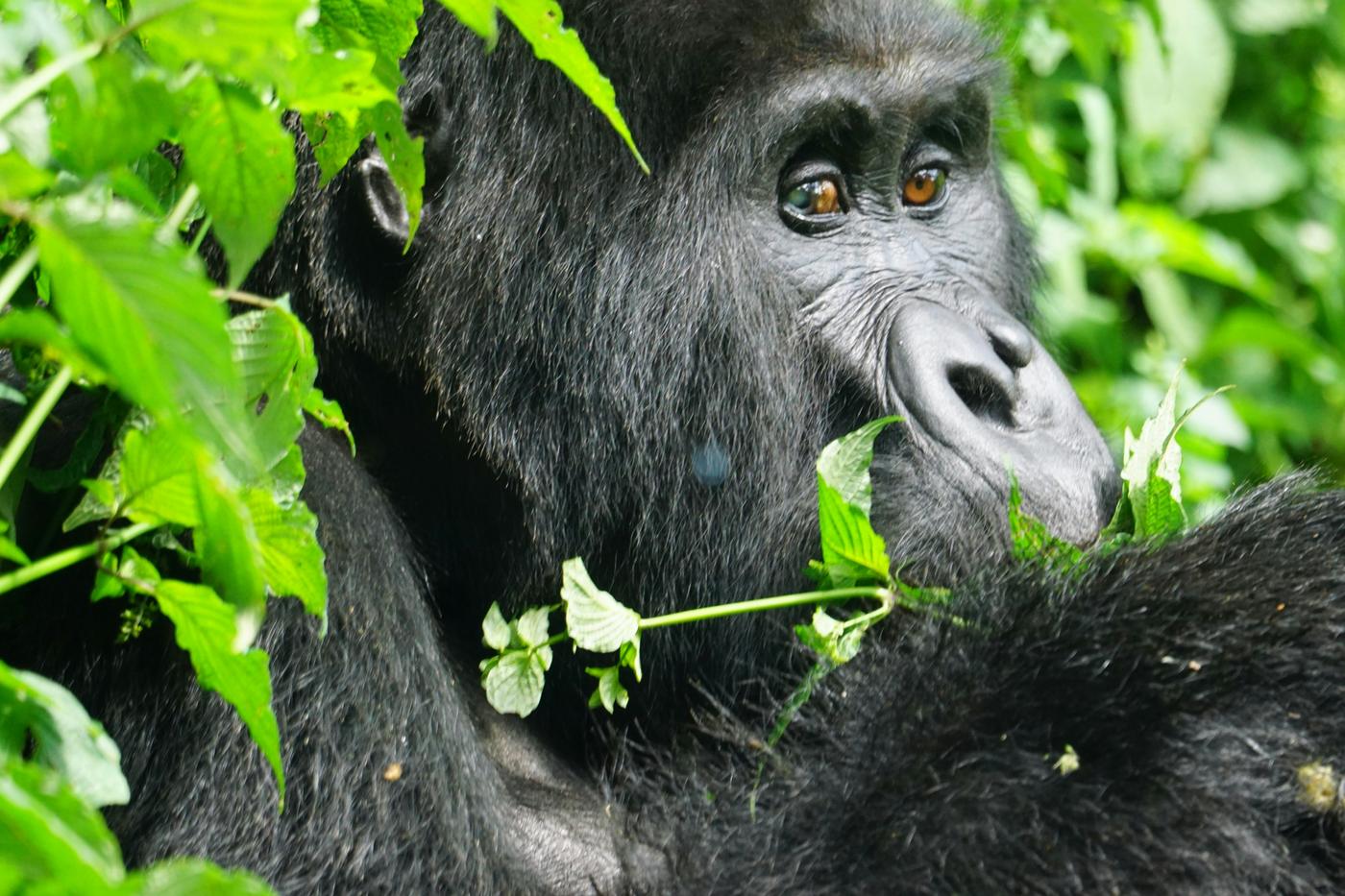
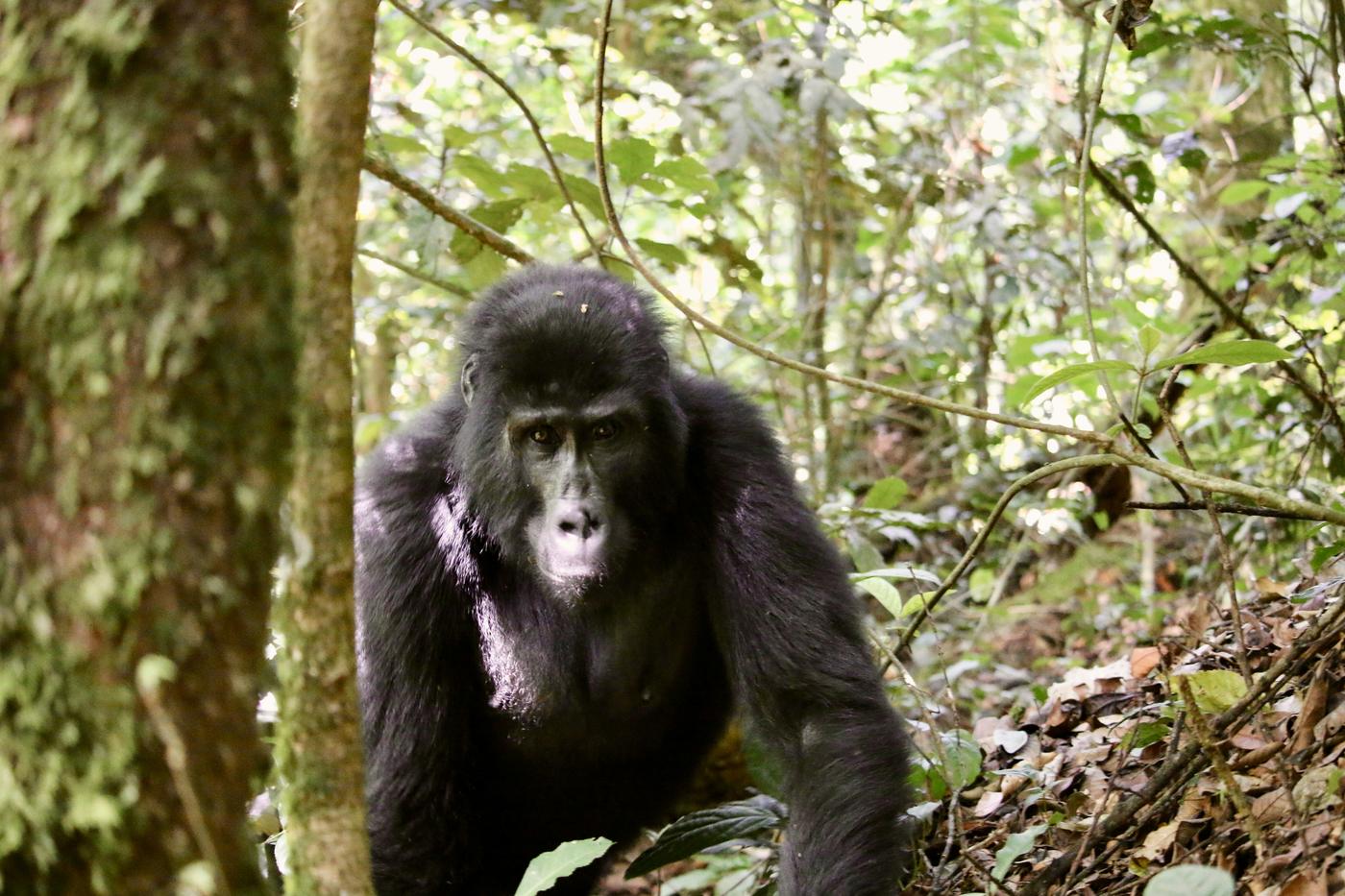
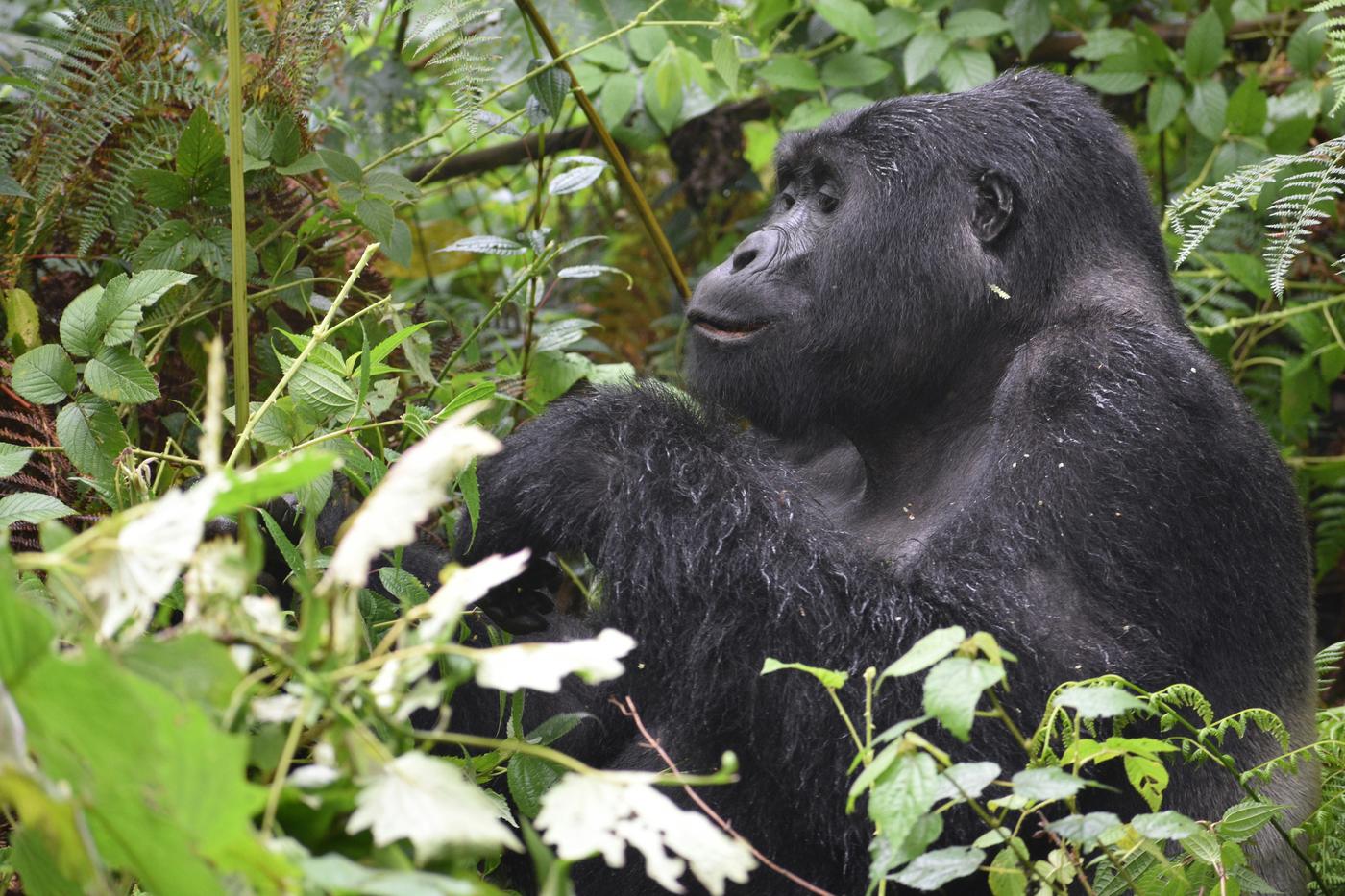
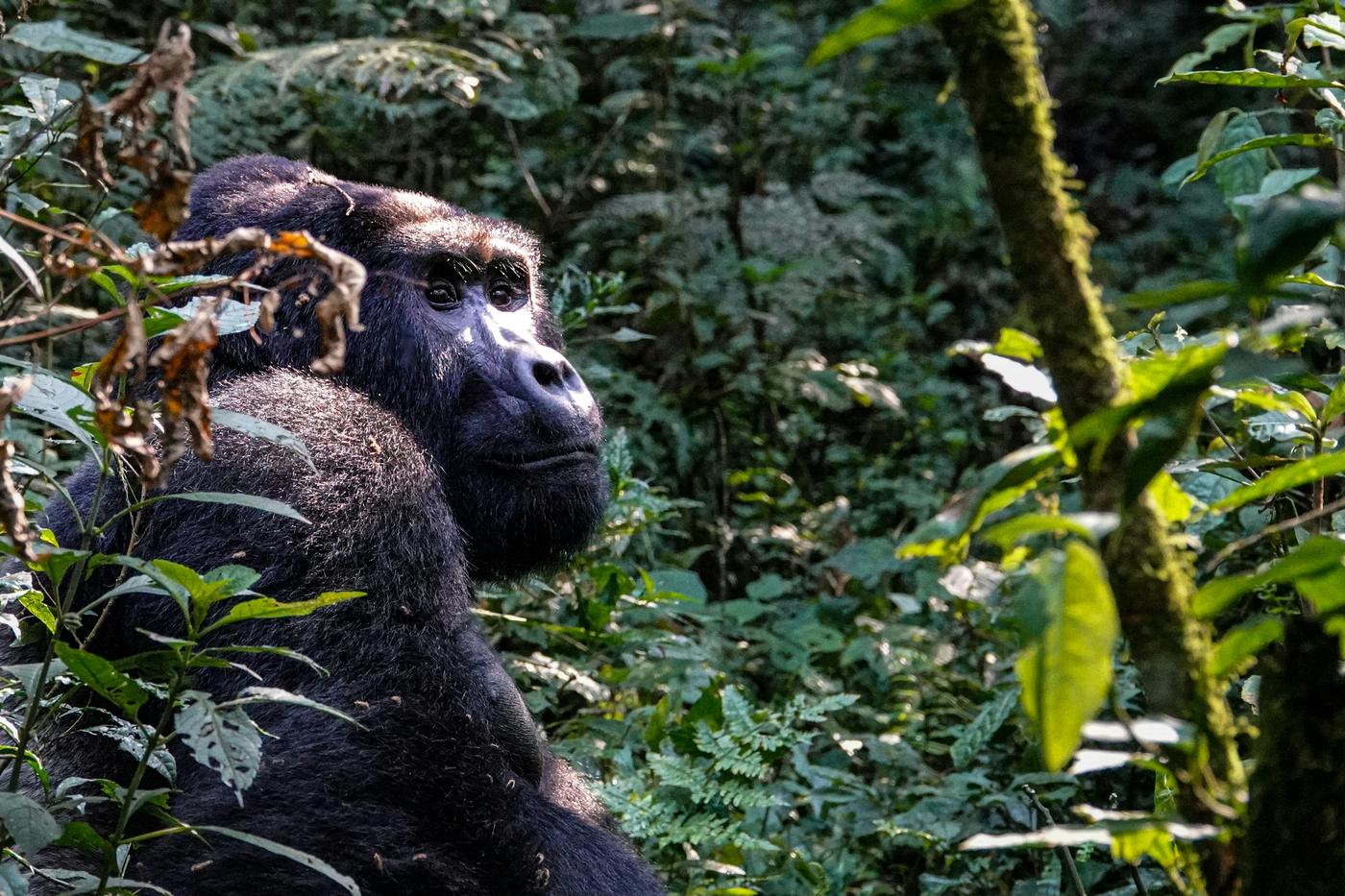
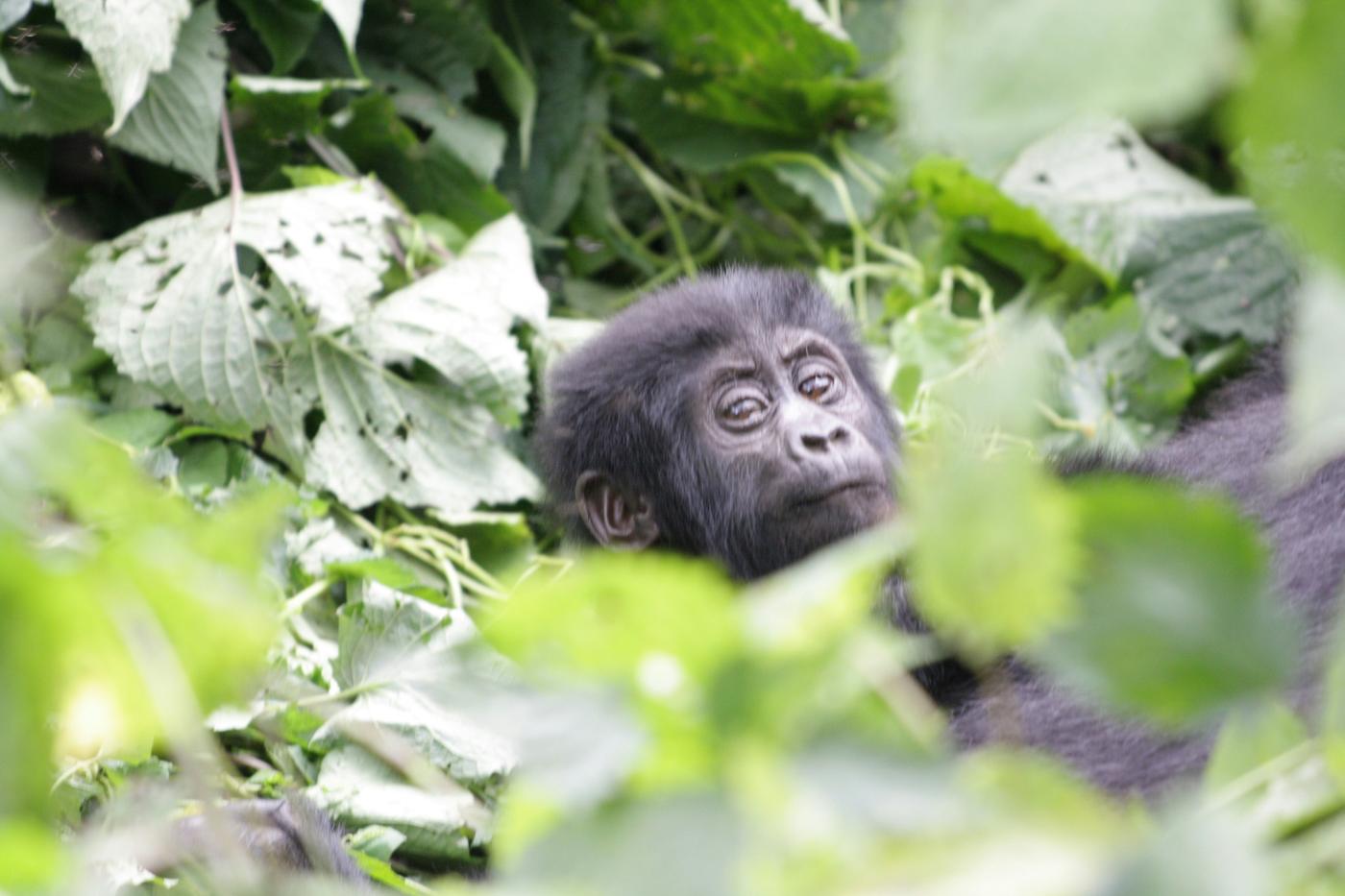
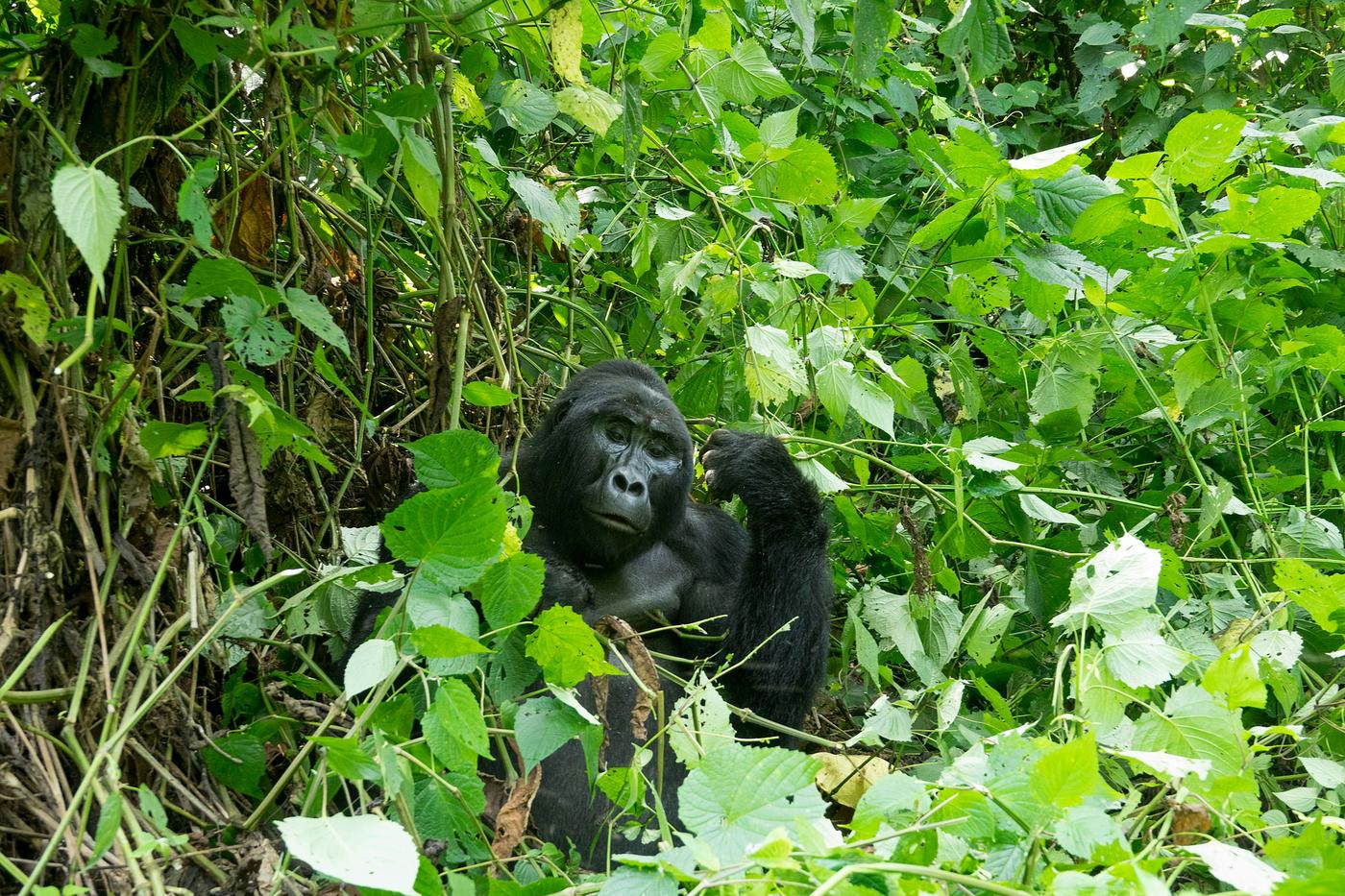
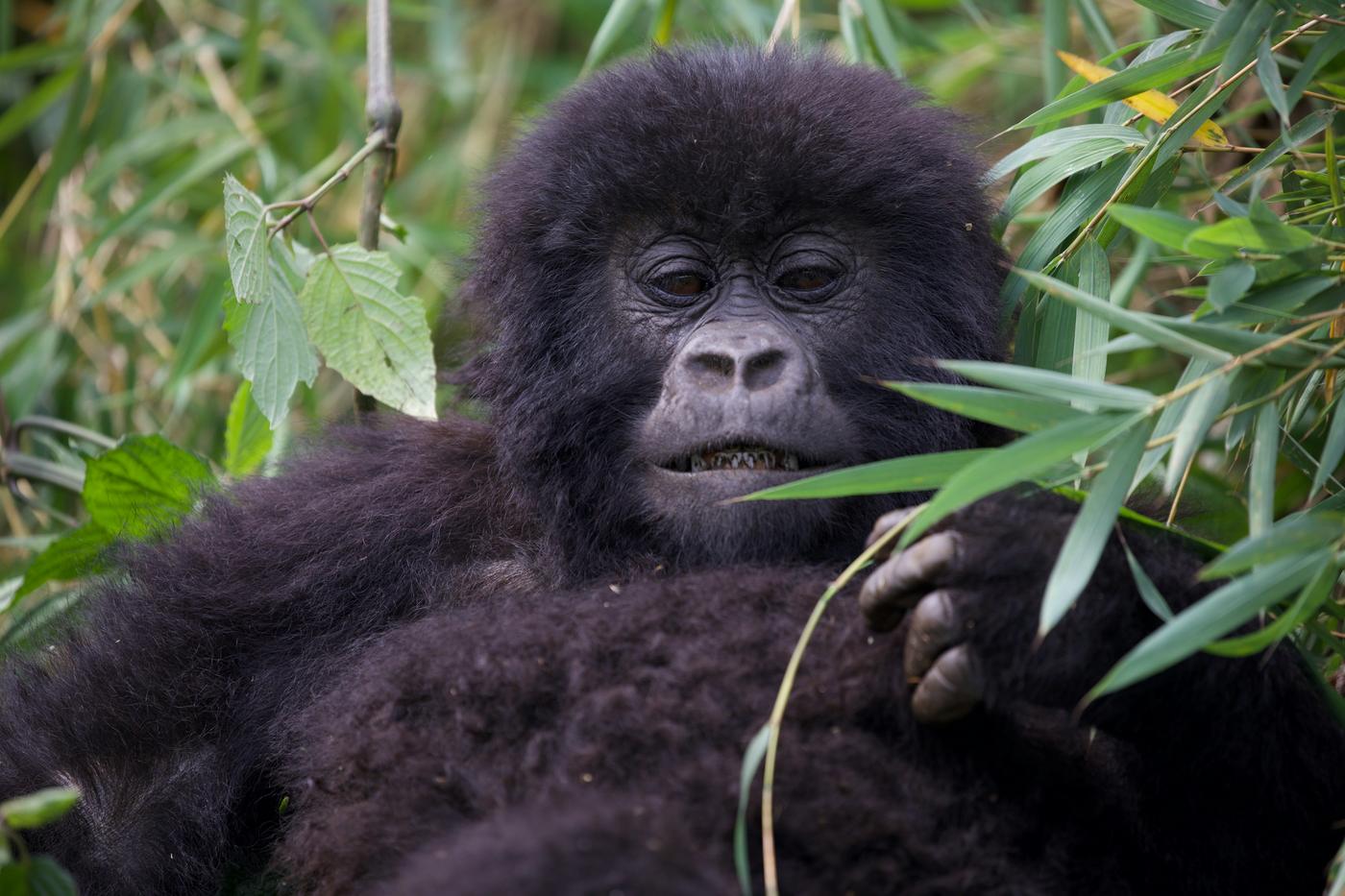
Gorilla trekking in Rwanda takes place in Volcanoes National Park, a 160 km² park that protects the Rwandan side of the Virunga Massif, a chain of eight volcanoes shared with Uganda and DR Congo. Twelve gorilla families are habituated to human visitors, and each family can be visited by one group of up to eight people a day. That limit is why there are 96 permits a day, and why the experience still feels quiet and personal.
Well-known families include Susa, Sabyinyo, Amahoro, Agashya, Kwitonda, Umubano and Hirwa. Susa, the family long linked with Dian Fossey's research, ranges high on the slopes of Karisimbi, so it is usually the most demanding trek. Others live lower down and are closer to the trailhead. Family sizes, silverback names and group splits change over the years as young males leave to form new families, so we do not promise a particular family when you book. What we do promise is that every family has been habituated for years and is monitored daily by trackers.
For a deeper look at the park itself, read Volcanoes National Park: The Complete Guide. Each year, newborn gorillas are named at Kwita Izina, Rwanda's gorilla naming ceremony.
Home to Rwanda's gorilla families, and far more than a one-activity park. The same Kinigi briefing point leads to golden monkey tracking in the bamboo forest, the hike to the grave of Dian Fossey, and climbs of the volcanoes themselves.
Golden monkeys are rare, playful primates that live in the bamboo forest of the Virungas, and tracking them is a lighter, shorter outing than a gorilla trek. The Dian Fossey hike climbs to the site of her Karisoke research camp, where she is buried beside the gorillas she studied. Fossey began her work here in 1967, and her research is a large part of why these animals survive. Volcano hikes include Bisoke, which has a crater lake at its summit, and Karisimbi, the highest of the Virungas at 4,507 metres, which is a two-day climb with a night camp.
Beyond the park, the Musanze caves, the twin lakes of Burera and Ruhondo and the villages around Kinigi fill an extra day well. Read the full Volcanoes guide for each activity in detail.
One of the oldest and largest surviving montane rainforests in Africa, covering 1,019 km² in the south-west. Nyungwe was inscribed as a UNESCO World Heritage Site in September 2023, and it is home to 13 primate species, including chimpanzees, black-and-white Angolan colobus monkeys and L'Hoest's monkeys.
The park is managed by African Parks. It is roughly 218 km south-west of Kigali, a four to five hour drive on tarmac, or a short flight to Kamembe. Its headline activities are chimpanzee tracking, primate and birding walks, and the canopy walkway, a suspended path above the forest floor that is the only one of its kind in East Africa. Nyungwe also sits on the Congo-Nile Divide, the ridge that separates rivers flowing to the Congo from those flowing to the Nile. Read the full Nyungwe guide for the trails and sectors.
Rwanda's savannah park, in the east on the Tanzanian border, and the only place in the country where you can see the Big Five. It covers about 1,120 km² of rolling plains, papyrus swamps and a chain of lakes.
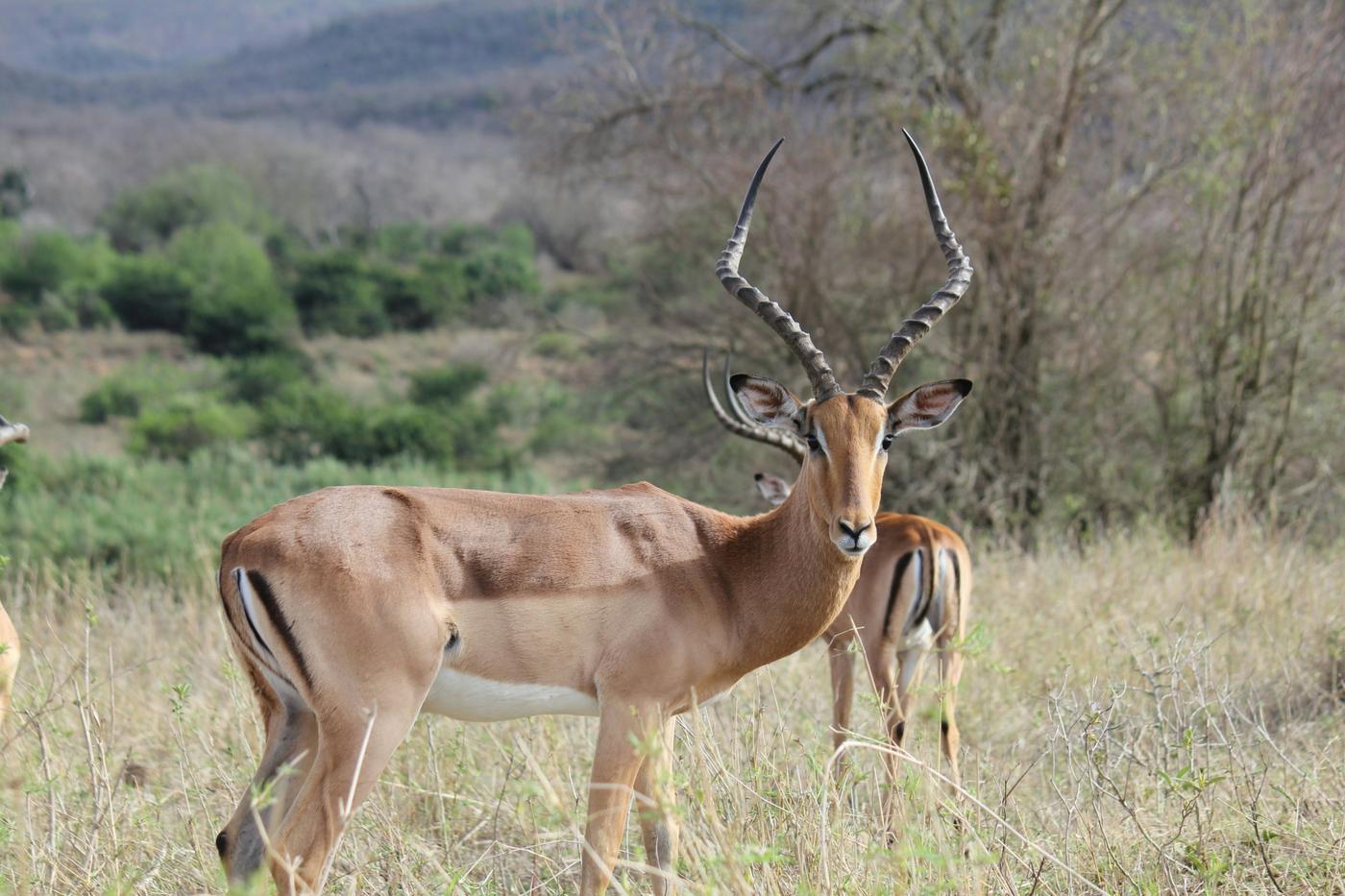
The park's story is one of the great restorations in African conservation. Poaching and settlement after the conflict of the 1990s wiped out the park's lions by 2002 and its last black rhino was seen in 2007. The park has been managed in partnership with African Parks since 2009. Seven lions were reintroduced in 2015, and 18 black rhinos arrived in 2017. Elephants, buffalo, giraffes, zebras, hippos, antelopes and some 500 bird species complete the picture. A solar-powered electric fence, built in 2013, now protects the park's boundary, and game drives and boat trips on Lake Ihema are the main activities.
Rwanda's fourth and smallest national park, formalised in 2015, protects 34 km² across two forest fragments in the west, on the same Congo-Nile ridge as Nyungwe. About 20 chimpanzees live in Gishwati, alongside golden monkeys, L'Hoest's monkeys and blue monkeys, and more than 230 bird species have been recorded there. It is still being developed for tourism and suits a short, quiet add-on rather than a main stop.
Rwanda's gorilla permit is set by the Rwanda Development Board, and the standard price for international visitors is US$1,500 per person per trek. It was raised from US$750 in May 2017. A family-group package for a whole gorilla family was introduced at the same time, at US$15,000.
The US$1,050 discount. You will often see US$1,050 quoted as Rwanda's low-season price. It is not a simple seasonal drop. As it is published, the lower rate applies between November and May for visitors who combine their gorilla trek with paid nights or activities in Akagera or Nyungwe, or who attend a conference or similar event in Rwanda. Outside those conditions, and always from June to October, the price is US$1,500. We check which rate applies when we quote you, so you never have to guess.
Lower rates for residents. Promotional rates reported for 2026 give Rwandan and East African citizens a US$200 permit, and other African citizens and foreign residents US$500. They run until 31 December 2026 and do not apply in the peak months. These are not available to international visitors, so we mention them only so you understand the published figures.
| Activity | Non-resident price per person |
|---|---|
| Mountain gorilla trekkingVolcanoes National Park | US$1,500US$1,050 with the November–May conditions |
| Golden monkey trackingVolcanoes National Park | US$100 |
| Dian Fossey hikeVolcanoes National Park | US$75 |
| Mount Bisoke hikeVolcanoes National Park | US$75 |
| Mount Karisimbi hikeVolcanoes National Park | US$400 |
| Chimpanzee trackingNyungwe Forest National Park | US$150 |
| Canopy walk, guided birding, primate trackingNyungwe Forest National Park | US$40 each |
| Park entry fee, 1 nightNyungwe Forest National Park | US$100 per adultUS$150 for 2 nights, US$200 for 3 |
Nyungwe figures come from the park's 2025–26 price list, published by African Parks. Volcanoes figures are the published non-resident rates. All prices are in US dollars, are set by RDB and the park operators, and can change without notice. We checked them on 9 October 2026 and confirm the current figure on every quote.
Permits are booked through RDB's online booking system or by a licensed tour operator on your behalf. Once your dates are set, we reserve your permits, because the dry-season months sell out well in advance. You will need each traveller's full name and passport number exactly as printed in the passport. Permits are tied to a date and a named person, so keep your dates as firm as you can before you pay. Our Rwanda safari cost guide explains what drives the total price, and the permit comparison with Uganda sets the figures side by side.
Where the money goes: through RDB's Tourism Revenue Sharing Programme, 10 per cent of park tourism revenue is reinvested in the communities around the parks, for schools, health centres, clean water and roads.
Gorilla trekking runs all year, so there is no closed season. The real question is how much mud and rain you are prepared to walk through. This calendar marks the driest, most comfortable months for hiking.
Rwanda sits close to the equator and high above sea level, so temperatures change little through the year. Days rarely go above 30°C and nights seldom fall below 15°C. Kigali averages about 21°C, the Akagera lowlands in the east are the warmest part of the country, and the Virunga mountains are the coolest. What changes is the rain.
The most popular months. Trails are firmest, views are clearest and the gorilla permit is always at the full price. Permits sell out early, so book as soon as your dates are set.
A second good window, with light rain, green forest and generally fewer visitors than mid-year. Christmas and New Year dates fill up quickly.
Heavy rain can make trails slippery and roads slow. Gorilla trekking still goes ahead, and the November to May permit discount can apply if your trip qualifies. Bring good waterproofs.
Showers are common, but the forest is lush and the crowds thin. Early September also brings the gorilla naming ceremony, Kwita Izina, to Kinigi.
Rainy and dry season dates come from Rwanda's official tourism and meteorological sources and shift a little from year to year. Our Rwanda travel information page carries the weather, packing list and health advice.
Almost every international visitor arrives at Kigali International Airport (KGL), which Rwanda Airports Company says is open 24 hours. Rwanda's national carrier RwandAir flies there, and several European, Middle Eastern and African airlines also serve it. A second international airport, Kamembe (KME) in the south-west, serves the Lake Kivu and Nyungwe side. A new international airport is under construction at Bugesera, but you should plan on Kigali for now.
Roughly two to three hours on tarmac. Most gorilla guests sleep near Musanze or Kinigi the night before their trek.
About 218 km, a four to five hour drive. A short flight to Kamembe is possible if you prefer.
A drive of a couple of hours east of the capital on a tarmac road, making it a simple add-on at the start or end of your trip. For fees, lodges, boat trips and Big Five odds, see our Akagera National Park guide.
You can cross from Uganda at Gatuna (Katuna) on the Kampala road, or at Cyanika near Kisoro, which suits travellers combining Bwindi with Volcanoes.
Most visitors can get a tourist visa on arrival at Kigali airport and at land borders, or apply online in advance through Rwanda's government portal. An East African Tourist Visa covers Rwanda, Uganda and Kenya together. Entry rules, health requirements and travel notices change often, and in 2026 they have included specific measures linked to the Ebola outbreak in DR Congo, so we do not repeat them here. Please read our Rwanda travel information and the official links on our Visa & Travel Documents page shortly before you travel. Our guide to malaria and yellow fever vaccinations explains the health side in plain language.
Rwanda drives on the right, the currency is the Rwandan franc (US dollars are widely accepted at hotels), the official languages are Kinyarwanda, French and English, and the time zone is Central Africa Time (UTC+2). On the last Saturday of every month Rwandans take part in umuganda, community work, when many services slow down in the morning.
Both countries protect the same species in neighbouring forests, and both are superb. The choice comes down to time, budget and the kind of experience you want around the trek.
| Rwanda | Uganda | |
|---|---|---|
| Where you trek | Volcanoes National Park, one briefing point at Kinigi | Bwindi (four sectors) and Mgahinga |
| Time from the capital | Kigali to the park in about 2–3 hours | Long drive or domestic flight from Kampala; the road to Bwindi is around 8–10 hours |
| Permit price | US$1,500 standard | Lower than Rwanda; see our permit comparison for the current figure |
| Group size and age | 8 per family, age 15 and over | 8 per family, age 15 and over |
| Other primates | Golden monkeys, Nyungwe chimpanzees | Golden monkeys at Mgahinga, chimpanzees in Kibale and elsewhere |
| Big game | Akagera (Big Five) | Queen Elizabeth, Murchison Falls and more |
| Best for | Short trips and a tight schedule | Longer, more varied safaris and tighter budgets |
Many guests settle the question by doing both. Our Uganda & Rwanda Double Gorilla Safari treks gorillas in Bwindi and in Volcanoes National Park over seven days. For the full, honest head-to-head, read Uganda vs Rwanda: The Complete Gorilla Safari Comparison, or see our Uganda destination guide. If you want more time with the gorillas, read our guide to the gorilla habituation experience.
Rwanda is not only about wildlife, and a day or two around the capital and the lake deepens any trip.
Over 250,000 victims of the 1994 genocide against the Tutsi are buried at the memorial in Gisozi. It is the best place to understand the country you are visiting, and most guests set aside half a day. Visit with respect and without rushing. Our Kigali travel guide covers opening hours, how to prepare for a visit and how to plan your time in the city.
Rwanda's capital is hilly, clean and easy to explore. Kimironko Market is the place for fabrics, produce and everyday life, and local coffee is among the country's best-known exports.
Lake Kivu runs along Rwanda's western border. Towns such as Rubavu (Gisenyi) make a restful stop between the gorillas and Nyungwe, with beaches, boat trips and lakeside hotels.
A route of roughly 227 km follows the lake from Rubavu to Rusizi, popular with cyclists and walkers who want to see village life above the water.
Mountain gorillas are one of conservation's rare success stories, and tourism is part of the reason. A 2018 census counted 459 gorillas in Bwindi and Sarambwe, following a 2016 count of 604 in the Virunga Massif, for a known total of 1,063. In 2018 the IUCN moved the species from Critically Endangered to Endangered, because numbers had been rising. Numbers across the two forests have since grown to a little over 1,000 animals.
Rwanda's model is simple: limit the number of visitors, charge a high price for each permit, and put part of the income back into the forest and the people who live beside it. Ten per cent of park tourism revenue is reinvested in surrounding communities. Every year, in early September, Rwanda holds Kwita Izina, a ceremony at Kinigi where baby gorillas born in the past year are given names, in the tradition of naming a newborn child. It began in 2005, and the 2026 ceremony, its 21st, was set for 4 September.
As a guest, you add to that story by following the park's health and distance rules, hiring local porters, staying in lodges that employ and buy locally, and choosing an operator that books your permits in the proper way. Our sustainability commitment explains how we work.
Two gorilla treks with different habituated families, briefed each morning from Kinigi.
A lighter primate day and a hike to the grave of the researcher whose work made this park's gorilla conservation possible.
Chimpanzee trekking plus East Africa's only 160-metre canopy walkway, near Lake Kivu.
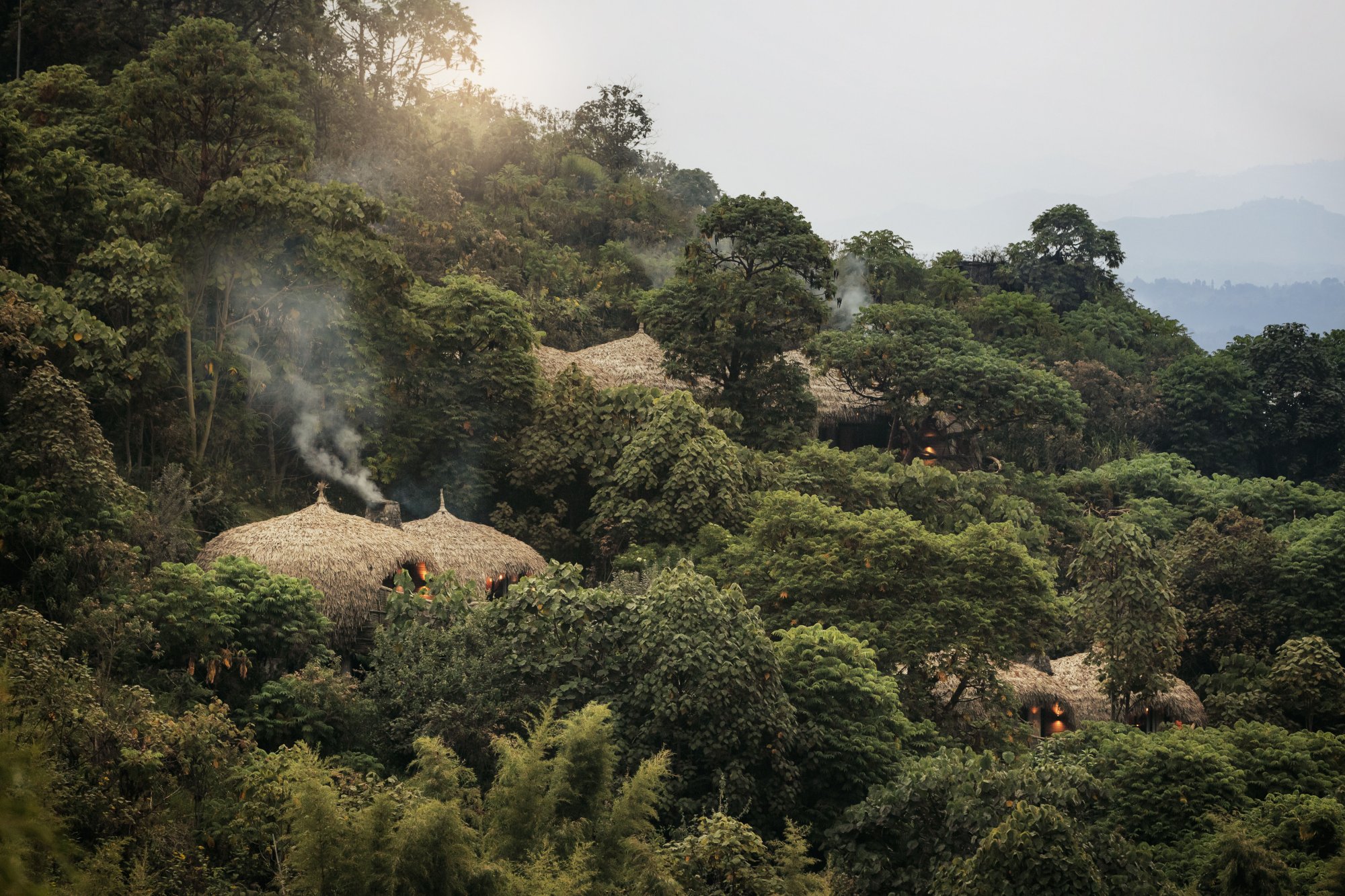
Six forest villas reborn from an eroded hillside, minutes from Volcanoes National Park
Rwanda's pioneering safari lodge, on a ridge above two Virunga lakes

Hilltop cottages above the tea plantations bordering Nyungwe Forest
Every Rwanda trip is built by a destination specialist rather than assembled from a template. You tell us your dates, group, fitness and interests through the trip planner. A specialist then turns your selections into a tailored itinerary and replies within 24 hours, with the lodges, permits and transfers laid out day by day and every cost shown clearly. You can change the plan until you are happy. We reserve your permits once dates are firm, and we stay available on the ground while you travel.
Gorillas, golden monkeys, the Dian Fossey hike and volcano climbs in detail.
Read the guide → Park guideChimpanzees, the canopy walk, colobus monkeys and the Congo-Nile Divide Trail.
Read the guide → CompareAll four parks side by side, with an honest view of which to include.
Read the guide → BudgetPermits, lodges, transfers and the extras that catch people out.
Read the guide → PackagesReal itineraries and prices for three, five and seven days.
Read the guide → CompareEverything that differs between the two gorilla countries.
Read the guide → PracticalVisa, health, currency, weather, packing and emergency contacts.
Open the fact sheet → Official linksOfficial links for visas, health certificates and travel advice.
See the links →Our Rwanda trips, with the guides we point guests to when they plan.
Kigali has direct flights to Nairobi and Kilimanjaro, so a gorilla trek fits neatly before the Maasai Mara or the Serengeti. Start with our multi-country guide, or choose a ready-made route:
“I can highly recommend Paramount Gorilla Expeditions. It was an all-round perfect holiday.”
“We had the best trip of our lives. Everything was perfectly organized.”
Our Uganda & Rwanda Double Gorilla Safari treks gorillas in both Bwindi and Volcanoes National Park over 7 days — two countries, two distinct forests, two habituated families.
View Combined ItineraryThe standard Rwanda Development Board permit costs US$1,500 per person per trek for international visitors. A discounted rate of US$1,050 is published for November to May, but it applies only when the trek is combined with paid stays or activities in Akagera or Nyungwe, or with a conference in Rwanda. From June to October the price is US$1,500. We last checked these figures on 9 October 2026, and we confirm the rate that applies when we quote you.
Twelve mountain gorilla families in Volcanoes National Park are habituated for tourism. Each family can be visited by one group of up to eight people a day, which gives 96 gorilla permits a day. Families are assigned by the rangers on the morning of your trek.
You must be 15 or older. The age limit is strictly enforced at the park, and anyone showing signs of illness, such as a cold, flu or cough, can be refused for the safety of the gorillas.
You spend one hour with the gorillas once the family has been found. The walk to find them can take from about 30 minutes to four hours or more each way, depending on where the family slept the night before.
Gorilla trekking takes place all year. The easiest conditions are in the long dry season from June to mid-September and the short dry season from December to February. The rainy seasons run from mid-February to May and from mid-September to mid-December, when trails are muddier but the forest is quieter.
Volcanoes National Park is roughly two to three hours from Kigali by tarmac road. Nyungwe Forest National Park is about 218 kilometres from the capital, a four to five hour drive.
Chimpanzee tracking is offered in Nyungwe Forest National Park, in the south-west. According to Nyungwe's 2025 to 2026 price list from African Parks, the park's operator, chimpanzee tracking costs US$150 per person and the canopy walk costs US$40. About 20 chimpanzees also live in Gishwati-Mukura National Park.
Yes, in Akagera National Park in the east. Lions were reintroduced in 2015 and black rhinos in 2017, and the park also has elephants, buffalo and leopards, along with giraffes, zebras, hippos and hundreds of bird species.
Most visitors can get a tourist visa on arrival at Kigali airport and at land borders, or apply online in advance through Rwanda's government portal. An East African Tourist Visa covers Rwanda, Uganda and Kenya. Rules, fees and health notices change, so check the official links on our Visa and Travel Documents page before you travel.
A yellow fever certificate is required if you arrive from a country with yellow fever risk, which includes neighbours such as Kenya, Uganda, Burundi and DR Congo. It is not required if you arrive from a country without the risk. Carry your certificate if your route includes any of those countries, and confirm the current list with the Rwanda Biomedical Centre.
Rwanda is better for short trips, because Volcanoes National Park is only two to three hours from Kigali. Uganda usually costs less per permit and suits longer, more varied safaris. Many travellers do both, and our seven-day Uganda and Rwanda Double Gorilla Safari treks gorillas in Bwindi and in Volcanoes National Park.
Three days is the minimum for a single gorilla trek. Five days lets you add golden monkey tracking and the Dian Fossey hike, and seven days or more lets you include Nyungwe for chimpanzees and the canopy walk, or Akagera for the Big Five.
You need a reasonable level of fitness. Treks take place on steep, often muddy volcanic slopes at altitude, and can last from about 30 minutes to four hours or more each way. Porters are available and recommended. Tell us your real fitness level so we can request a suitable gorilla family.
Kwita Izina is Rwanda's annual gorilla naming ceremony, held in Kinigi at the foot of Volcanoes National Park. Baby gorillas born in the past year are given names, following the tradition of naming a newborn child. The ceremony began in 2005, and the 21st edition was scheduled for 4 September 2026.
Through the Rwanda Development Board's Tourism Revenue Sharing Programme, 10 per cent of park tourism revenue is reinvested in the communities around the parks, funding projects such as schools, health centres, clean water and roads.
Yes. Rwanda combines easily with Uganda by road at the Gatuna or Cyanika border crossings, and with Tanzania or Kenya by air. Our Uganda and Rwanda Double Gorilla Safari is one of our most popular combinations, and we can add Zanzibar or the Seychelles for a beach finish.
Visitors travel to Rwanda's national parks every day, and gorilla trekking is run by rangers and armed escorts. Governments advise caution near the border with DR Congo, in particular within 10 kilometres of the border in Rusizi District. Always check your own government's current travel advice and the official links on our Visa and Travel Documents page before you book.
Last reviewed 9 October 2026 by our Rwanda destination specialists. Prices, entry rules and health notices change, so always confirm the latest details before you travel, or ask us.
A real destination specialist answers every message personally, and we reply within 24 hours.
Have a quick question about a trip, a lodge or the best season? Send us a message and a specialist answers personally.
Message +256 744 269 228Tell us your preferred dates and group size. We confirm what is available before you commit to anything.
Choose destinations and experiences and we build a tailored itinerary around them.