
 Premium
Bwindi Impenetrable Forest · 3 Nights
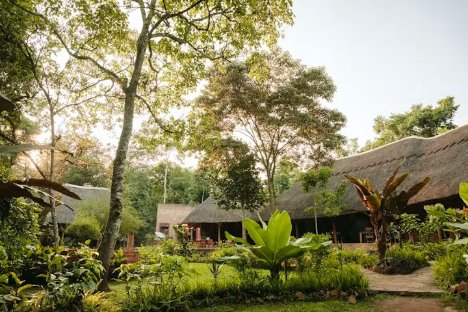
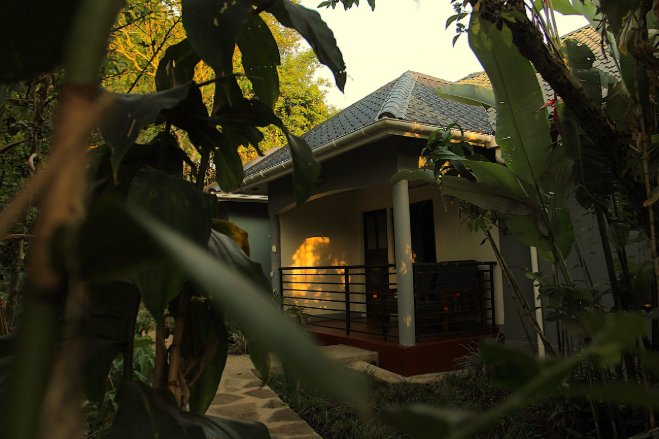
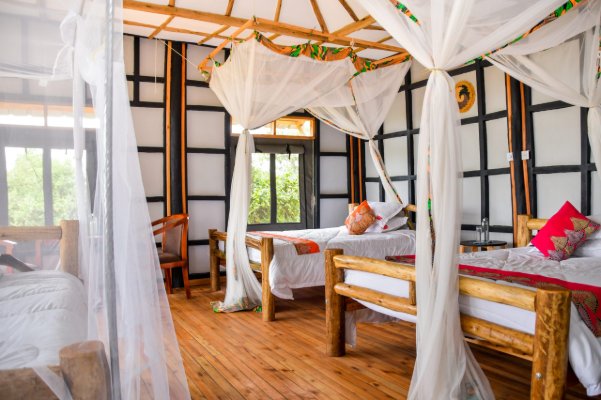
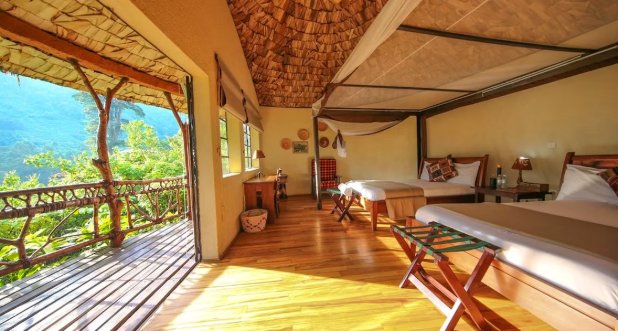
Mahogany Springs
Buhoma, Bwindi Impenetrable Forest, Uganda
Along the Munyanga River just outside Bwindi Impenetrable National Park's Buhoma boundary.
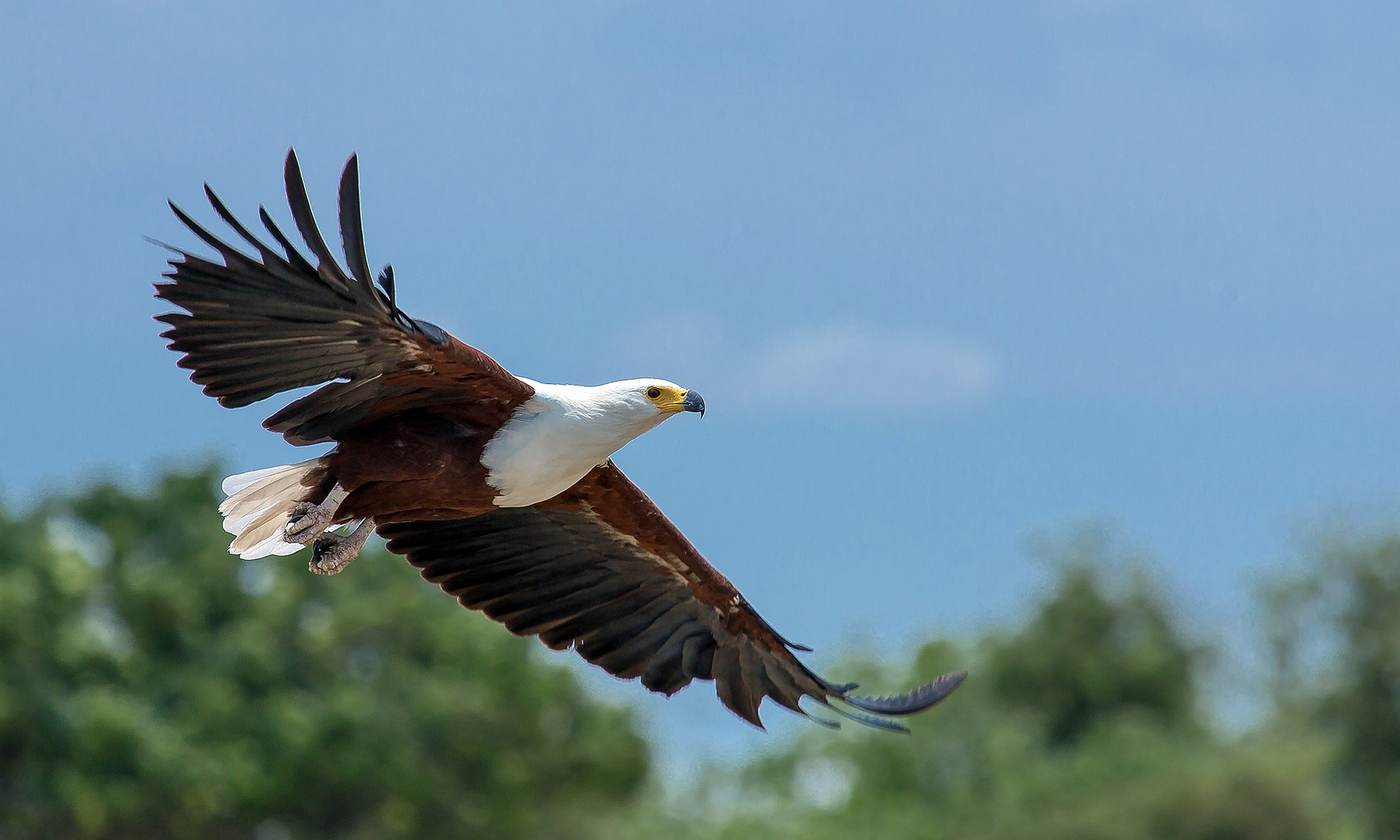
Over 1,000 recorded bird species meet mountain gorilla trekking — Uganda's forests are one of Africa's premier birding destinations.
Itinerary ref: UG-002
This Uganda birding & gorilla safari spends eleven days in three of the country's richest parks. Uganda has over 1,000 recorded bird species, one of the highest totals in Africa, packed into a country smaller than the United Kingdom. On this route, you trek to a mountain gorilla family in Bwindi Impenetrable Forest. You also track chimpanzees in Kibale's tall forest. Finally, you explore the savannah and papyrus wetlands of Queen Elizabeth National Park. There, a specialist guide searches the Kazinga Channel for the shoebill stork. In short, this is not a general safari with birds noted in passing. Instead, every stage pairs its headline wildlife moment with guide-led birding time. For background on the country, see our Uganda destination guide.
Most gorilla trips leave little time for birds. By contrast, this Uganda birding and gorilla safari gives you a specialist birding guide for the whole trip, in addition to the park trekking guides. As a result, you can spend a full day on a single trail without rushing. Your guide also keeps a combined species checklist, and you receive the final list at the end of the trip. For example, Queen Elizabeth's mix of savannah and wetland often produces more than 100 species across a single day's outings.
On day one, you fly from Entebbe to Kihihi airstrip and then drive into Bwindi Impenetrable Forest. The forest has more than 350 recorded bird species, including 23 Albertine Rift endemics. The next day, you join a group of no more than eight guests for the gorilla trek. Because the family moves each day, the walk can take from 45 minutes to several hours. Once you find the gorillas, you spend one hour with them. Permit rules are set by the Uganda Wildlife Authority, and we arrange your permit in advance.
Day three is a full day of Bwindi birding on the Mubwindi Swamp trail, deep in the forest's southern sector. It is one of the only reliable sites anywhere for the African green broadbill, a tiny, range-restricted Albertine Rift endemic. In addition, the trail offers chances of Grauer's rush warbler, dusky crimsonwing and handsome francolin. It is a demanding walk, however, so a packed lunch is taken by the stream before you return.
Next, you drive north to Kibale Forest National Park, with roadside birding stops on the way. Kibale has the highest primate density in East Africa and a bird list of more than 370 species. On the tracking morning, you follow one of the park's habituated chimpanzee communities and spend an hour with them once they are found. Then, in the afternoon, your guide looks for forest birds such as the yellow-spotted barbet and the great blue turaco. The following day, you walk the boardwalk at Bigodi Wetland Sanctuary, a community-run reserve known for papyrus birds such as the papyrus gonolek.
From Kibale, you drive south to Queen Elizabeth National Park for the last four nights of your Uganda birding safari. Here, a slow birding cruise on the Kazinga Channel works the papyrus banks for the shoebill stork. A sighting of the shoebill in Uganda is never guaranteed; still, it is a real possibility with a patient guide. The channel also produces African fish eagle, pied kingfisher and African skimmer. After that, a day trip to the Ishasha sector combines tree-climbing lions with raptors such as the martial eagle. Finally, you visit Maramagambo Forest and its Bat Cave before you fly home from Kasese airstrip.
The birding calendar here rewards planning. The dry seasons, December to February and June to September, give the clearest views and the easiest trails for both gorilla trekking and forest birding. However, specialist guides for this combined route are limited, so we suggest booking early. Our guide to the best time to see gorillas in Uganda explains the seasons in more detail.
This Uganda birding and gorilla safari suits keen birders who also want a gorilla trek, as well as wildlife photographers. If you would rather spend more time on big game, see our Uganda national parks safari. Similarly, if you want gorillas in two countries, read our guide to combining Uganda and Rwanda gorilla trekking.
For more on gorilla trekking in Uganda, read our guide Gorilla Trekking 2026: Uganda vs Rwanda, Cost, Permits & Best Time. You can also compare this route with our Classic Uganda Gorilla Trekking Safari and Uganda Primates: Gorillas & Chimpanzees itineraries.
Gorilla trekking plus dedicated birding walks for forest specials like the African green broadbill.
Chimpanzee tracking alongside some of Uganda's richest forest birdlife.
Savannah and wetland birding along the Kazinga Channel, including shoebill stork search.
Sign in to save this safari's dates and party size to your account, so you can pick up right where you left off.
Sign in to save this itineraryLanding at Entebbe International Airport, an Paramount Gorilla Expeditions representative meets you for a transfer to the domestic terminal and a scenic light-aircraft flight south over Lake Victoria and the terraced hills of southwestern Uganda, touching down at Kihihi airstrip. The drive into Bwindi Impenetrable Forest — over 25,000 years old and one of the most biodiverse forests on the continent, with more than 350 recorded bird species including 23 Albertine Rift endemics — sets the tone immediately. The afternoon includes a gentle orientation walk along the forest edge with your specialist birding guide, picking up early sightings of Rwenzori turaco and various sunbirds, before a briefing on tomorrow's gorilla trek.
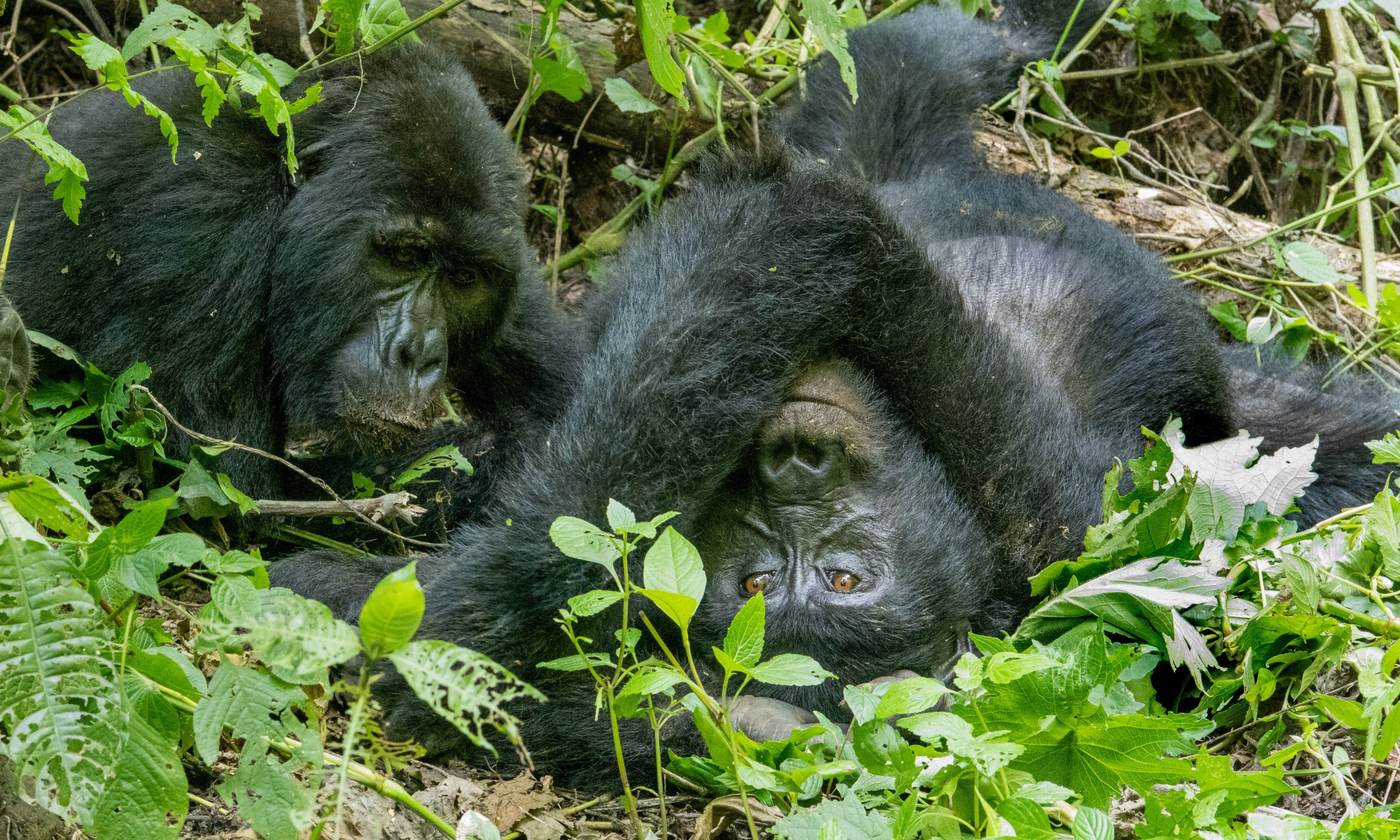
This is the day the whole itinerary orients around. After an early breakfast, you'll join a trekking group of no more than eight guests at park headquarters for a briefing on the habituated family assigned to you and the trek's strict ground rules — a mandatory seven-meter distance, no flash photography, absolute quiet once located. The trek can run from forty-five minutes to several hours through dense understorey, guided by rangers reading fresh dung and broken vegetation, with your guide also calling out forest birds encountered en route. The permitted hour with the gorillas — a silverback's low rumbling vocalizations, juveniles somersaulting through the canopy, direct eye contact at close range — remains genuinely hard to describe in advance.
A full day dedicated entirely to birding, walking the Mubwindi Swamp trail deep into Bwindi's southern sector — a demanding but rewarding route considered one of the finest birding walks in Africa. This is the most reliable site anywhere for the African green broadbill, a tiny, range-restricted Albertine Rift endemic found almost nowhere else on Earth, alongside chances at Grauer's rush warbler, dusky crimsonwing and handsome francolin. Your specialist guide works the trail methodically, reading calls as much as sightings, and checklist totals of 40-plus species in a single outing are common for attentive groups. A packed lunch is taken streamside before the return walk.
The drive north from Bwindi to Kibale crosses varied terrain — descending highland forest into the Rift Valley floor before climbing back into Kibale's mid-altitude rainforest — with several roadside birding stops along the way, including wetland pull-offs known for African wattled lapwing and papyrus gonolek. Kibale itself holds the highest primate density in East Africa and an equally serious bird list exceeding 370 species across its mixed evergreen canopy. Arriving in the afternoon, settle into your forest-edge lodge and join a short orientation walk on the property grounds, where black-and-white casqued hornbill and various greenbuls are frequently seen without leaving the lodge trails.
A morning chimpanzee trek departs from Kibale's main trailhead, tracking one of the park's habituated communities — an estimated 1,500 chimpanzees inhabit the forest, tracked via overnight nest sites and distinctive pant-hoot calls carrying through dense canopy. Once found, an hour is spent observing grooming, feeding and territorial displays at close range. The afternoon shifts to dedicated birding along Kibale's forest trails, where your guide targets species like the African pitta (season-dependent), yellow-spotted barbet and the striking great blue turaco, whose deep, resonant call is one of the forest's most distinctive sounds.
A full-day birding excursion to the Bigodi Wetland Sanctuary, a community-run reserve bordering Kibale known for papyrus and swamp-forest specials difficult to find elsewhere on this itinerary — papyrus gonolek's startling red-and-black plumage, white-spotted flufftail, and, with real luck, the shoebill stork occasionally recorded in the sanctuary's deeper marsh sections. The boardwalk trail also produces excellent primate sightings, including red colobus and grey-cheeked mangabey, alongside a strong butterfly count. Revenue from the walk funds the community-run sanctuary directly, and local guides bring detailed micro-habitat knowledge built over years working the same trail.
The drive south from Kibale into Queen Elizabeth National Park trades dense forest canopy for open savannah and papyrus wetland — one of Uganda's most complete ecological transitions in a single day's drive. Arriving by early afternoon, an introductory game drive through the Kasenyi sector turns up lion prides and Uganda kob alongside open-country raptors including bateleur and long-crested eagle. Your specialist guide begins building the trip's combined checklist in earnest here, cross-referencing forest species from Bwindi and Kibale against the very different savannah and wetland list Queen Elizabeth offers over the coming days.
A dedicated birding-focused boat cruise along the Kazinga Channel prioritizes slow passes along the papyrus-fringed banks over open-water transit, working the channel's edges for the shoebill stork — a prehistoric-looking wetland bird capable of standing motionless for hours, never guaranteed but genuinely possible with a patient, specialist guide. Beyond the shoebill search, the channel consistently produces African fish eagle, pied kingfisher, African skimmer and dense pelican rafts, layered over hippo pods and basking Nile crocodile that make this one of Uganda's most productive single outings for pure species count.
A day trip south to the Ishasha sector combines Queen Elizabeth's famous tree-climbing lions — resting draped across fig-tree branches in behavior found reliably almost nowhere else in Africa — with strong raptor birding across the sector's riverine woodland and open plains, including martial eagle, African hawk-eagle and, in season, migrant Eurasian species passing through on the broader East African flyway. The Ishasha River's banks also hold African finfoot, a notoriously shy waterbird prized by serious birders. A streamside picnic lunch breaks up the day's driving before the return north.
Your final full day explores Maramagambo Forest, a moist evergreen block distinct from Queen Elizabeth's savannah character, holding forest species overlapping with Kibale alongside its own specials, plus a visit to the Bat Cave, where a resident python colony preys directly on the cave's thousands of fruit bats. Your guide spends the afternoon closing out the trip's combined checklist, revisiting any target species missed earlier in the circuit and finalizing what for most groups totals well over 300 recorded species across the eleven days. A farewell dinner at your lodge overlooking the Kazinga Channel closes the trip's birding arc.
A relaxed final morning at your channel-view lodge — a last walk along the water's edge with your binoculars or a slow breakfast on the terrace — precedes your transfer to Kasese airstrip for the flight back to Entebbe and your onward or homeward international connection. Our local team remains available throughout, and your finalized species checklist is compiled and sent on as a keepsake of the trip.
Built from our own staff's real packing guidance for this trip's destinations, tailored to your dates and this exact itinerary above.
Specialist birding guide alongside your standard trekking guide
Access to Uganda's Albertine Rift endemic bird species
Dedicated shoebill stork search included in Queen Elizabeth
Combines two great ape treks with serious birding time
Along the Munyanga River just outside Bwindi Impenetrable National Park's Buhoma boundary.
The only lodge located directly inside Kibale Forest National Park, minutes from the main chimpanzee trekking trailhead.
On the Mweya Peninsula, located within Queen Elizabeth National Park.
| Accommodation Tier | Per Person Sharing (USD) | Single Supplement |
|---|---|---|
| Classic Comfort | $7,600 | +$1,350 |
| Premium | $9,800 | +$1,750 |
| Ultra-Luxury | $12,900 | +$2,300 |
Rates are per person sharing, in USD, based on double occupancy during standard season and include a dedicated specialist birding guide throughout; contact us for exact seasonal pricing and single-traveler rates.
Four steps from your first message to your safari.
Send your dates, group size and the places you want to see. A specialist replies within 24 hours.
We shape this journey around your dates and budget and send you a quote that shows what is and is not included.
A 40% deposit confirms your booking. Where your trip needs gorilla or park permits, we buy them once your deposit has been received and confirmed.
The final balance is due 60 days before departure, unless your booking confirmation says otherwise.
Cancellations and refunds follow our booking terms, and how we protect your trip and your payment explains how your money and permits are handled. Questions first? You can contact us at any time.

Answered from our own real trip details above -- itinerary, inclusions, difficulty, and more. For an exact price, use "Enquire Now" below.
Some guests like a few quiet days by the sea after trekking. It is entirely optional.
Tell us your dates and group size — a destination specialist replies within 24 hours.
.jpg)