
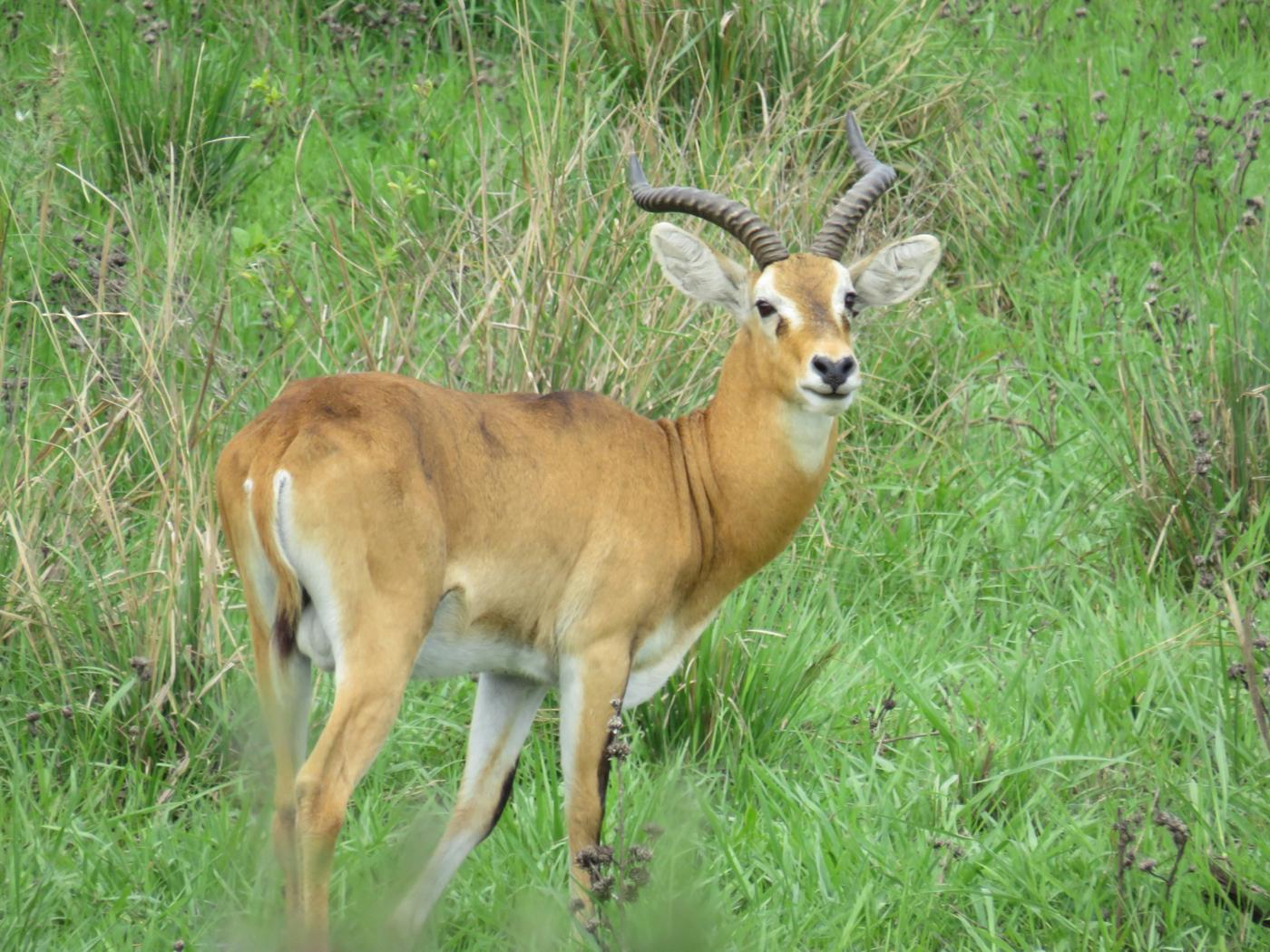
Gishwati-Mukura National Park is Rwanda's smallest national park, two forest fragments in the Western Province of about 35 square kilometres in total that were almost cleared in the 20th century and are now being restored, with eastern chimpanzees, golden monkeys, L'Hoest's monkeys and a growing choice of walks and community visits. This guide is written on 14 November 2026. It explains the history, where the park is and how to reach it, what you can do, what the sources say about permits and fees, which claims we could not confirm and how to combine it with Volcanoes, Nyungwe and Lake Kivu. People search for it as Gishwati-Mukura National Park, Gishwati forest, Mukura forest, Gishwati chimpanzees, Gishwati golden monkeys, Rwanda's newest national park and things to do near Lake Kivu.
Quick answer
Visit Gishwati-Mukura if you already plan to stay near Lake Kivu or Rubavu, want a quieter forest than Volcanoes or Nyungwe, and are happy with a small, still-developing park. It offers guided forest walks, birding, chimpanzee and monkey visits and community experiences, and the park has a good restoration story. It is not a replacement for gorilla trekking or the Nyungwe canopy walk.
Be careful with two things. Sources disagree on fees and on whether chimpanzee trekking is open and routine, and the only dated, official-looking figures we found are from a 2017 guidebook. We confirm both with the Rwanda Development Board before we sell it. Read our Rwanda national parks compared guide for where it sits among Rwanda's parks, and our Nyungwe National Park guide for the larger forest.
Gishwati-Mukura National Park at a glance
| Question | What we found |
|---|---|
| Status | National park; most sources say established in 2015 or February 2016 |
| Area | About 35.58 square kilometres (Gishwati 15.70, Mukura 19.88); some sources say about 34 |
| Where | Rutsiro and Ngororero districts, Western Province |
| Nearest towns | Rubavu and Karongi, on Lake Kivu |
| Main wildlife | Eastern chimpanzees, golden monkeys, L'Hoest's monkey |
| Birds | 120 to 126 species in a 2017 guidebook; some operators say 230 or more |
| Main activities | Guided forest walks, chimpanzee and monkey visits, birding, night walks, community visits |
| Group size | Maximum of eight in the 2017 guidebook |
| Permits | Sold through the Rwanda Development Board; we found no gate sales |
| Fees | Sources disagree; confirm before booking |
| Minimum age | Not stated in any source we read |
Chapter 01: What is Gishwati-Mukura, and why does it matter?
The park joins two separate forests, Gishwati in the north and Mukura in the south, each reduced by farming, grazing and settlement. A 2017 guidebook produced with the Critical Ecosystem Partnership Fund and the Forest of Hope Association records that Gishwati was a natural reserve of about 70,000 hectares from 1930, fell to about 28,000 hectares by 1960, 8,800 in 1990 and 600 by 2002, after forestry, cattle ranching and clearing that continued after 1994. Restoration projects since 2006 have brought it back to about 1,500 hectares. Mukura was gazetted as a reserve in 1951, held about 3,000 hectares in the 1960s and holds under 2,000 today after mining and settlement.
The park status came after those projects. The 2017 guidebook says the government decided in February 2016 to make the forests a national park, while other sources say 2015, so we say "2015 or 2016". Lonely Planet described the park in 2020 as a national park and UNESCO biosphere reserve. We could not confirm a biosphere date, so we make no claim about the year.
Chapter 02: Where is it and how do you get there?
The park lies in the Western Province, in Rutsiro and Ngororero districts, with Rubavu and Karongi as the nearest towns on Lake Kivu. The 2017 guidebook says a bus from Kigali's Nyabugogo station to Rubavu takes about three hours, or about two hours to Karongi, and that the beaches of Lake Kivu are 30 minutes away. Drive times from Kigali in other sources vary from two to four hours, so allow three. A few operators mention charter flights to Rubavu, which sources do not agree on, so we do not offer that.
Many visitors reach the park from the lake. Our Lake Kivu guide describes the lakeside towns, the Congo Nile Trail and boat trips. Our Kigali travel guide covers the capital, and the Akagera National Park guide covers the savanna park in the east.
Chapter 03: What wildlife lives there?
- Eastern chimpanzees. The 2017 guidebook records more than 25 eastern chimpanzees. One operator mentions a troop of 35, which conflicts, so we give the lower figure and say counts vary.
- Golden monkeys. More than 18 groups and more than 100 animals, mostly in the north-eastern bamboo, an endangered subspecies. Our Volcanoes National Park guide describes the golden monkey trek, which is easier and more famous.
- L'Hoest's monkey. More than 13 groups and more than 150 animals, mainly in western Gishwati.
- Other mammals and reptiles. The guidebook lists serval, genet, civet, side-striped jackal, sun squirrel and the Great Lakes bush viper. Blue monkeys and baboons appear only on operator sites, so we do not list them.
- Birds. The 2017 guidebook gives more than 120 species and about 14 Albertine Rift endemics. Other sites give 230 or more. We use the lower, dated number and say that counts vary.
None of this is guaranteed. The forests are small and the animals move. Our gorilla versus chimpanzee trekking guide explains what to expect from a primate trek, and how many mountain gorillas are left explains why habituated gorillas live elsewhere.
Chapter 04: What can you do there?
The 2017 guidebook lists these activities:
- Guided nature walks of up to eight people, on trails that include a seven-kilometre waterfall loop, an eight-kilometre Umushwati trail, a three-kilometre Matyazo trail and longer cycling and tea-estate routes.
- Chimpanzee and monkey visits, with visits between about 7 and 10 am.
- Birding, with Albertine Rift specialities.
- Night walks.
- Community visits, including a farmstay, traditional dance, traditional medicine, beekeeping and tea estates, organised through local cooperatives.
One operator adds cycling on the Congo Nile Trail. None of our six sources lists a canopy walk at Gishwati, and one says the Nyungwe canopy walk is the one to do, which our Nyungwe guide covers. If you like culture and walking more than big-name wildlife, Gishwati-Mukura is a good fit, and our Rwanda honeymoon safari guide and birding in Rwanda guide show how it can sit in a wider plan.
Chapter 05: Are the chimpanzee visits open?
This is the point we are least sure about, and we say so. We could not find a dated, confirmed statement on whether a group of chimpanzees in Gishwati-Mukura is fully habituated for routine tourist visits today. A Lonely Planet article from November 2020 says trekking was "set to begin". The 2017 guidebook describes chimpanzee visits without using the word habituated. One operator says the chimpanzees are habituated, and a second says the observation time is one hour and the trek is more research-focused. We therefore treat chimpanzee visits as something to confirm with the Rwanda Development Board for your date, and we do not guarantee a sighting.
If chimpanzees are your priority, Nyungwe National Park and Kibale in Uganda have well-established treks. Our Mahale and Gombe guide covers Tanzania.
Chapter 06: What does it cost, and how do you book?
The Rwanda Development Board is the permit authority, according to the sources, and we found no source that says you can buy at the gate. The 2017 guidebook says fees range from US$10 to US$35 depending on the activity, and a second version of the same guidebook says to contact the board. A 2026-labelled operator page lists a park entry fee of US$50, a guided walk at US$30 and chimpanzee trekking at about US$100, and a second operator's page says there is no fixed price, so the sources conflict. We confirm the current fee and the booking route for your date before we quote.
For comparison, the Volcanoes gorilla permit is US$1,500 in the figures in our Rwanda safari cost guide, so Gishwati-Mukura is much cheaper. Our Rwanda safari packages show how it can fit a budget.
Chapter 07: Who is it for, and what are the rules?
It suits walkers, birders, culture-minded travellers and visitors who want a quiet extra day on Lake Kivu. It is not for anyone who wants a headline wildlife experience. The 2017 guidebook sets a maximum of eight people per group and says not to visit within 48 hours of diarrhoea, fever, cough, sneezing, cold sores, a sore throat or exposure to a communicable disease. None of our sources states a minimum age, so ask before you book with children. The general rules for primate visits in Rwanda, such as distance and quiet, are in our gorilla trekking rules and regulations guide, and we expect similar rules for chimpanzees. Dress as for any forest walk, as our what to wear for gorilla trekking guide explains.
Chapter 08: Where do you stay?
The 2017 guidebook lists homestays, farmstays, low-cost camping and hotels in Rubavu and Karongi. A Lonely Planet article planned a guesthouse and campsite run by the Forest of Hope Association, and we could not confirm that it opened. Two operator sites name Gishwati Lodge as a luxury lodge inside the park with six chalets, and one advises booking a month ahead, but a third source says there is little accommodation inside the park, so we do not rely on it. Most visitors stay on Lake Kivu, which our Lake Kivu guide and Rwanda honeymoon safari guide cover.
Chapter 09: When is the best time to go?
The park is open all year. The 2017 guidebook gives the rainy seasons as October to December and March to May. One operator puts the best months at June to September and December to early March, and another gives March to May and October to November as wet. Mud is the main issue in the rains. Our best time to visit Rwanda guide covers the seasons across the country.
Chapter 10: How do you combine it with other places?
Gishwati-Mukura fits at the end of a western Rwanda loop. A typical route is Kigali, Volcanoes National Park for gorillas, Lake Kivu for rest and Gishwati-Mukura or Nyungwe as the last forest, then back to Kigali. If you are short of time, choose one forest. Our Uganda versus Rwanda guide and combine Uganda and Rwanda gorilla trekking guide cover routes between the countries, and our 7 day complete Rwanda primates tour and Rwanda destination page show tested plans.
Chapter 11: Where do the sources disagree?
We read six pages: two 2017 guidebooks, a 2020 Lonely Planet article and three operator pages. They disagree on the year the park was established (2015 or February 2016), the area (35.58 or about 34 square kilometres), the altitude, the drive time from Kigali, the number of chimpanzees, the number of bird species, the fees and the minimum age, which none states. We could not find the year of the biosphere designation. We have used the dated guidebooks for facts where possible and flagged everything else. Ask us for the current position when you book.
Tell us your dates and route, and we will reply within 24 hours with a written plan, a check on what the park currently offers and a quotation that shows every line separately.
Request a free quotation