
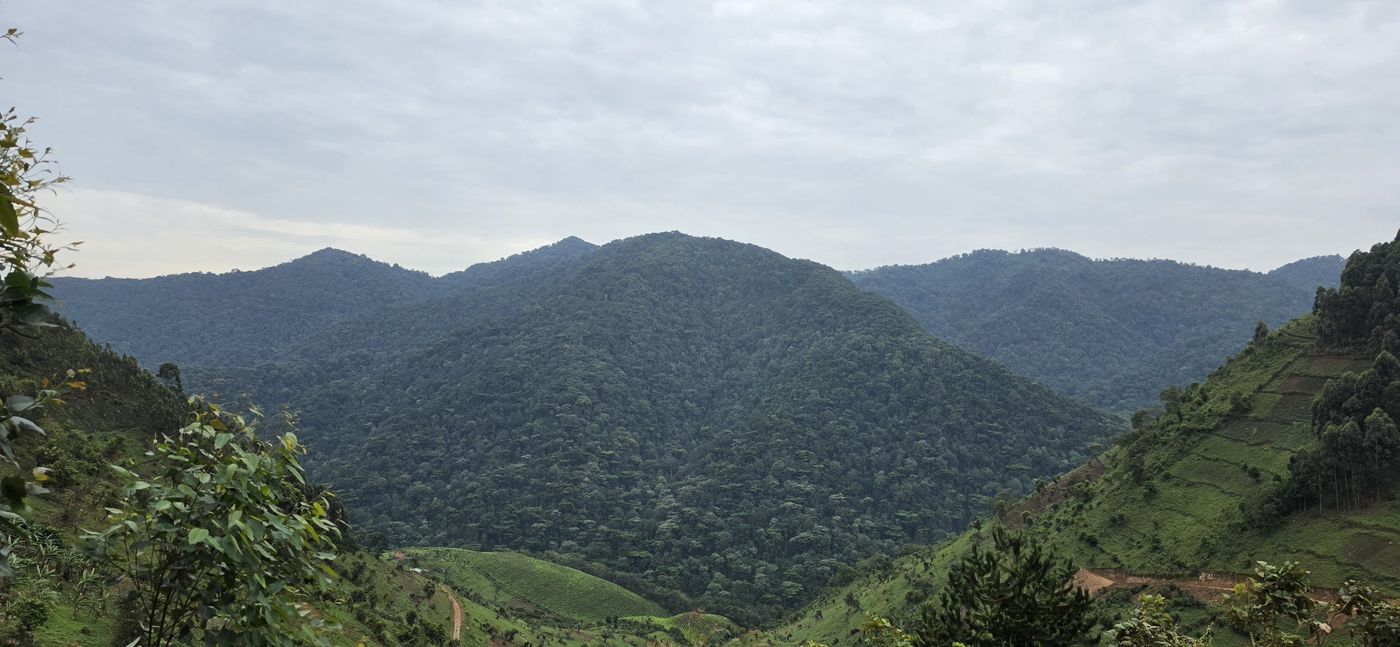
Few countries pack as much habitat into one itinerary as Uganda does. There is lowland rainforest on the Congo border, a bamboo-clad volcano, a snow-capped range with giant lobelias, and a botanical garden on the shore of Lake Victoria. This guide covers where to go for plants, what wildlife shares each habitat, and how to plan the whole thing as a private trip.
Quick Answer
For a plant-focused Uganda trip, build the route around four habitats. Rwenzori Mountains National Park gives you afro-alpine vegetation. Bwindi and Mgahinga cover Afromontane forest, bamboo and moorland. Budongo and Semuliki offer lowland forest. Entebbe Botanical Gardens makes an easy start or finish. Add Kibale, Queen Elizabeth and Murchison Falls for primates, savanna and big wildlife. Allow 10 to 14 days. Species-level plant identification is best left to a specialist botanist guide, which we can arrange on request, while we plan the routes, permits, lodges and logistics around that.
Key Sites at a Glance
| Site | Habitat | Plant highlight | Wildlife that shares it |
|---|---|---|---|
| Entebbe Botanical Gardens | Lakeshore garden and forest fragments, about 40 ha, founded 1901 | Roughly 2,500 plant species by most site sources | Birds, monkeys |
| Rwenzori Mountains NP | Savanna to alpine; UNESCO World Heritage Site since 1994 | Giant lobelia, giant groundsel, tree heather | Birds, forest mammals |
| Bwindi Impenetrable NP | Montane (Afromontane) forest | Tree ferns, epiphytes, dense understorey | Mountain gorillas |
| Mgahinga Gorilla NP | Bamboo, Afromontane forest and moorland; Uganda's smallest park at about 33.7 sq km | Bamboo belts, high-altitude moorland | Gorillas, golden monkeys |
| Budongo Forest Reserve | Semi-deciduous tropical forest | 465+ tree and shrub species | Chimpanzees, forest birds |
| Semuliki | Lowland forest, the lowest-altitude forest in Uganda | Central African lowland species | Forest birds and primates |
| Kibale | Tropical rainforest | Forest trees and undergrowth | Primates |
| Queen Elizabeth | Savanna and wetlands | Acacia and grassland | Antelope, elephants, lions |
| Murchison Falls | Savanna, woodland and riverbank | Riverine woodland | Giraffe, elephants, hippos |
Entebbe Botanical Gardens: The Gentle Start
The gardens were founded in 1901 and cover about 40 hectares beside Lake Victoria, close to the airport. Site sources put the collection at roughly 2,500 plant species. That makes them the sensible first stop: you land, shake off the flight, and learn the common plant families before you head into the forests.
What to see. Mature trees, ornamental plantings and patches of natural forest, with the lake as a backdrop. Walk slowly in the morning, when the light is soft and the birds are active.
Wildlife. Birds and monkeys move through the canopy.
Who it suits. Everyone, but especially botanists who want a reference collection before meeting the same families in the wild. It also works as a calm last day before an international flight.
Local expert tip: ask your specialist guide to walk you through the garden's labelled trees first. Matching a name to a leaf here makes the forests far easier to read later.
Rwenzori Mountains National Park: Afro-Alpine Plants
The Rwenzori range is the botanist's headline destination. The park has been a UNESCO World Heritage Site since 1994, and its vegetation changes in clear bands as you climb. Savanna and lowland forest sit at the base, then montane forest, bamboo and heath, and finally the afro-alpine zone.
What to see. The afro-alpine zone is the draw. Giant lobelia, giant groundsel and tree heather grow here at sizes that look closer to fantasy than to ordinary mountain flora. The middle zones are defined by moss-draped trees and wet, spongy ground.
Wildlife. Birds are the most dependable sightings. Mammals are secondary and shy in the dense vegetation.
Who it suits. Fit, determined walkers. Trekking here is demanding: expect steep, muddy terrain and cold, wet weather at altitude. If you want the plants without the multi-day effort, ask us about shorter lower-zone walks, and we will tell you honestly what each option reaches.
Bwindi Impenetrable National Park: Afromontane Forest
Bwindi is famous for gorillas, but it is also an ancient montane forest, and the plant life deserves attention in its own right.
What to see. Layered Afromontane forest, with tall canopy trees, tree ferns, and a thick understorey of epiphytes, mosses and climbers. The trails are steep and humid, so plant viewing is slow and close to the ground.
Wildlife. Mountain gorillas, plus forest birds and other primates.
The practical detail. Gorilla permits cost 800 USD per person per trek in high season and 600 USD in low season, and we handle them. Neither permits nor sightings can be guaranteed, so we plan with that in mind and discuss flexibility with you early.
Who it suits. Anyone combining plants and primates. A gorilla trek is a botanical walk in its own right, though you move at the trackers' pace rather than your own.
Mgahinga Gorilla National Park: Bamboo and Moorland
At about 33.7 square kilometres, Mgahinga is Uganda's smallest park, and that compactness is part of its appeal. The vegetation shifts quickly with altitude.
What to see. Bamboo belts, Afromontane forest and higher moorland. The change from dense bamboo to open, wind-swept ground is easy to see within a single day's walking.
Wildlife. Gorillas and golden monkeys, both tied to the bamboo and forest habitat.
Who it suits. Photographers and plant lovers who like contrast. It pairs naturally with Bwindi on a southwestern Uganda circuit.
Budongo Forest Reserve: Lowland Forest and Chimpanzees
Budongo holds more than 465 tree and shrub species, which makes it one of the richest forests on any Uganda itinerary for woody plant diversity.
What to see. Tall, mixed forest under a closed canopy. Walks are cooler and shadier than in the savanna parks nearby, and the variety of trees rewards a guide who can name species.
Wildlife. Chimpanzees are the main attraction, alongside forest birds and monkeys.
Who it suits. Naturalists with a particular interest in trees. Budongo sits close to Murchison Falls, so the two combine easily in the north.
Semuliki: Uganda's Lowest-Altitude Forest
Semuliki is the lowest-altitude forest in Uganda, and it feels different from the highland forests. The lowland setting gives the plant and bird life a Central African character.
What to see. Lowland forest with species you will not meet in the mountains. For botanists the contrast is the point: after Rwenzori and Bwindi, Semuliki shows how one country supports entirely different plant communities.
Wildlife. Forest birds and primates. Birders often rank it highly.
Who it suits. Specialists and repeat visitors who want somewhere less visited. It lies in the west, near the Rwenzori, so it fits naturally into that leg of a route.
Kibale, Queen Elizabeth and Murchison Falls: The Wider Picture
These three parks round out a plant-and-wildlife trip.
- Kibale offers tropical rainforest and is the usual primate stop on the western circuit.
- Queen Elizabeth brings savanna and wetland, where open vegetation makes wildlife easy to see. After the forests, it is a welcome change of scale.
- Murchison Falls combines savanna, woodland and riverbank, with large mammals and river life.
Together they cover the full range of Uganda's flora and fauna: closed forest, open grassland, mountain and riverbank. Few countries let you take in that spread on one trip.
How to Plan a Botanical Safari in Uganda
Season and weather
Uganda is green and lush for much of the year, and rain is part of the experience in the forests and mountains. Drier months make trails easier and mountain views clearer. Wetter months bring richer foliage and fewer visitors, but the walking is muddier. Gorilla permits are priced by season too: 800 USD in high season, 600 USD in low season. Our companion guide to the best time for a safari in Africa goes month by month.
Fitness
Be realistic here. Rwenzori trekking is the most physically demanding item on this list, and gorilla treks in Bwindi involve steep, slippery ground for a few hours. Tell us your fitness level and any limits, and we will shape the days to match. Porters can be arranged for treks.
Guides and identification
We plan routes, permits, lodges and logistics, and our Uganda-based local team guides the trip on the ground. Botanical identification is a separate skill. If you want species-level plant identification, the best approach is a specialist botanist guide, which we can arrange on request. Mention it at the start so the itinerary leaves enough slow time on the trails.
Photography
Forest light is dim and the humidity is high, so bring a fast lens and protect your equipment. Montane and afro-alpine plants reward macro work. For more on gear and locations, see our birdwatching and photography guide.
Combining it all in one private itinerary
A typical flow runs from Entebbe to the northern forests of Budongo and Murchison Falls, then west to Kibale, Semuliki and Queen Elizabeth, and south to Bwindi and Mgahinga. Rwenzori slots in wherever your fitness and time allow. Many travellers finish with a beach stay in Zanzibar or the Seychelles. For route ideas across borders, read our guide to a multi-country East Africa safari, or see what a real safari day looks like.
What it costs
Prices are per person and quoted by itinerary, season, party size and lodge tier. Gorilla permits are 800 USD per trek in high season and 600 USD in low season, and we handle them. Your written quotation shows the exact figures.
Plan Your Uganda Botanical Safari
Tell us your interests, your fitness and your budget, and we will build a private route through the habitats above, with permits, lodges and logistics handled. If identification matters to you, mention a botanist guide at the start.
Design My Safari: message us on WhatsApp at +256 744 269 228, or learn more at paramountgorilla.com.