
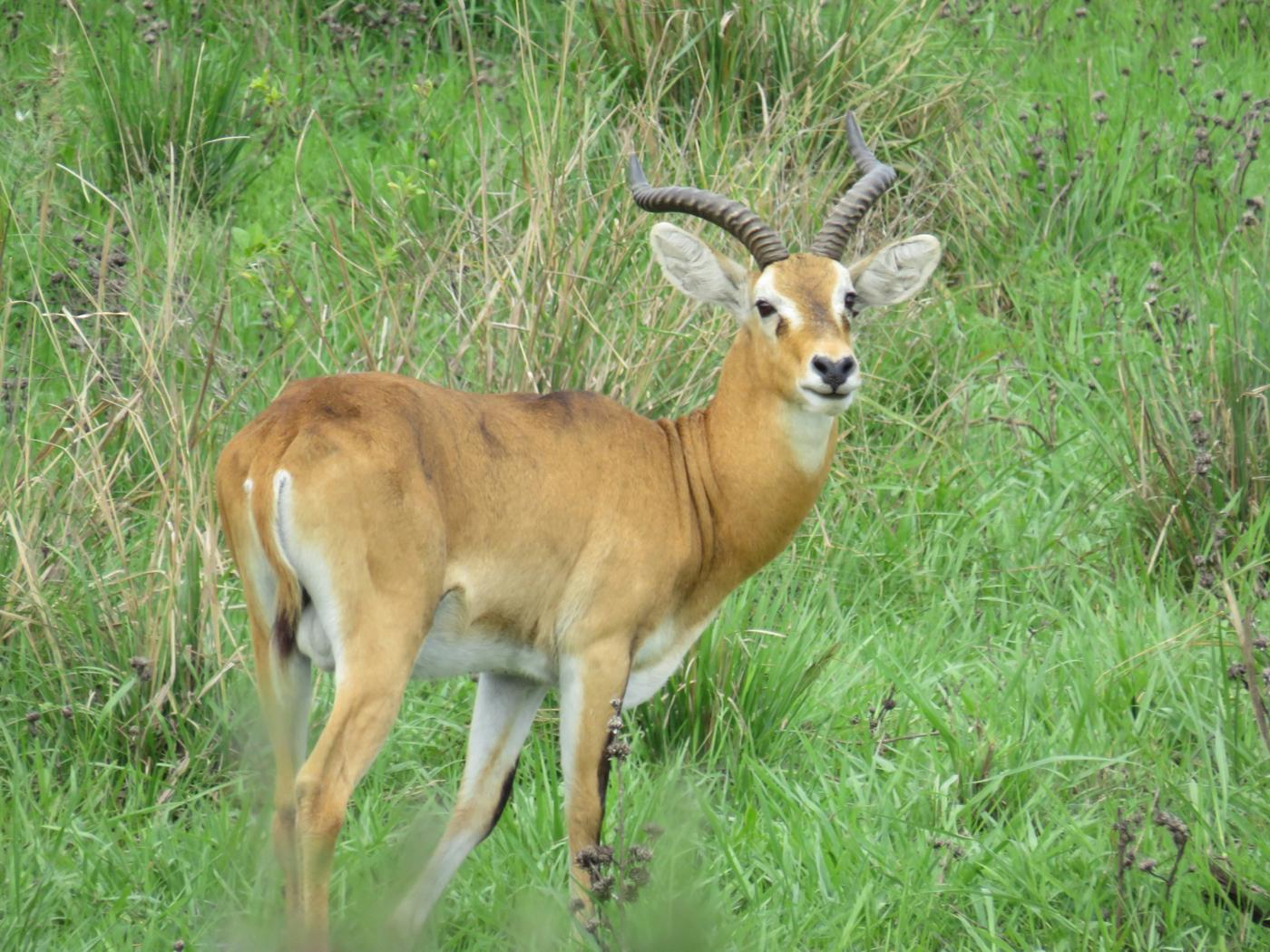
Aberdare National Park protects the high forests and moorlands of Kenya's Aberdare Range, about three hours' drive north of Nairobi near Nyeri. It is famous for its two "tree hotels", Treetops and The Ark, where you watch elephants, buffalo and other animals at a floodlit waterhole through the night, and for misty mountain scenery with some of Kenya's tallest waterfalls. One night is enough for a tree-hotel visit; two nights let you explore the moorland. It combines naturally with Mount Kenya, Ol Pejeta and Samburu.
Aberdare at a glance
| Location | Aberdare Range (Nyandarua), central Kenya, west of Mount Kenya, near Nyeri |
|---|---|
| Established | 1950 |
| Area | About 767 km² |
| Altitude | From roughly 2,000 m in the forest to about 4,000 m at Ol Donyo Lesatima, the highest peak |
| From Nairobi | About 3 hours by road to Nyeri; light aircraft to Nyeri or Mweiga airstrips |
| Managed by | Kenya Wildlife Service |
| Known for | Tree hotels, elephants, forest wildlife, waterfalls, moorland scenery |
| Ideal stay | 1 night (tree hotel) or 2 nights (tree hotel plus moorland) |
Two parks in one: the Salient and the moorland
Aberdare is unlike Kenya's savanna parks. It has two very different zones, and knowing which you are visiting shapes the whole trip.
The Salient is the eastern forest arm of the park, closest to Nyeri. It is dense montane forest and bamboo, with forest glades and waterholes. This is where Treetops and The Ark stand, and where most elephant, buffalo and rhino sightings happen.
The moorland plateau lies higher, between the two main peaks. It is open, cold, often misty country of tussock grass, giant heather, and giant groundsels and lobelias, crossed by clear streams that fall off the plateau as waterfalls. It feels more like the Scottish Highlands than the Africa of postcards, and it is quiet: on many days you will see very few other vehicles.
Treetops and The Ark
The tree hotels are the reason most people come. Both work in a similar way: you check in at a base hotel lower down, leave your main luggage there, and are driven into the forest in the afternoon with just an overnight bag. The lodges overlook a waterhole and salt lick, which is floodlit at night, and you watch from viewing decks, lounges and ground-level hides as animals come to drink.
- Treetops is the original. It became world-famous in February 1952, when Princess Elizabeth was staying there on the night her father, King George VI, died, so she went up the tree a princess and came down a queen. The current building replaced the original after it burned down in 1954. Treetops reopened in 2024 after a three-year closure.
- The Ark is built in the shape of Noah's Ark, deeper in the Salient. It has a reputation for a slightly wider range of night visitors, and offers a buzzer system that wakes you if something special arrives in the night.
Rooms at both are small and simple, and the experience is about the waterhole, not the room. Both have minimum age rules for children and set check-in times, so confirm these before you book.
What you might see at the waterhole: elephants (often the main event), buffalo, giant forest hog, bushbuck, waterbuck, warthog, spotted hyena and genets. Leopards and black rhino visit some nights; the rare mountain bongo is seen only very occasionally.
Wildlife: what you can realistically see
Aberdare's forests hide their animals well, so expect a different kind of wildlife experience from the open plains of the Mara.
| Animal | Likelihood | Notes |
|---|---|---|
| Elephant | Very likely | Especially at the tree-hotel waterholes |
| Buffalo | Very likely | Forest and moorland |
| Black-and-white colobus, Sykes's monkey | Likely | Forest edges and the Salient |
| Giant forest hog | Possible to likely | One of the best places in Kenya to see it |
| Black rhino | Possible | Present in the Salient; more often heard of than seen |
| Leopard | Possible | Forest and moorland, including dark-coated individuals reported over the years |
| Serval | Possible | The moorland is known for melanistic (black) servals |
| Spotted hyena | Possible | Often at night waterholes |
| Lion | Rare | Present but not a reason to visit |
| Mountain bongo | Very rare | Critically endangered forest antelope; a sighting is a genuine event |
Birders come for montane forest and moorland species, including Jackson's francolin and the Aberdare cisticola, a bird found almost nowhere else. For leopard expectations across the region, see our leopards in East Africa guide, and for rhino options, rhino tracking in East Africa.
Waterfalls, hikes and trout streams
The moorland streams drop off the plateau in spectacular waterfalls. Karuru Falls, often cited at about 273 metres over three tiers, and the nearby Gura Falls are among the tallest in Kenya, and Chania Falls and Magura Falls are easier to reach. Short walks lead to viewpoints, and longer guided hikes are possible on the moorland, including towards the summits. Walking in the park requires a ranger, because of buffalo and elephant.
The cold streams were stocked with trout in the colonial era, and fly-fishing is still possible with a permit. It is a very different side of Kenya.
History: a princess, Mau Mau and Baden-Powell
Aberdare's forests were a stronghold of the Mau Mau independence fighters in the 1950s, including their best-known leader, Dedan Kimathi, and guides can point out places connected with that history. In Nyeri town, the grave of Lord Baden-Powell, founder of the Scout movement, is a quiet stop for many visitors, and his cottage, Paxtu, stands in the grounds of the Outspan Hotel. Treetops, of course, carries the story of the 1952 royal visit.
Best time to visit
Aberdare is one of the wettest areas in Kenya, and the moorland roads become difficult in the rains.
- Best: roughly June to September and December to February, the drier months, when moorland roads are passable and waterholes draw animals.
- Wettest: the long rains around April and May, and the short rains around October and November. Tree hotels still operate, but some moorland tracks may be closed.
- Always: pack warm layers. Nights at altitude can be close to freezing, and the moorland is cold even at midday under cloud.
Our best time to visit Kenya guide puts Aberdare in context with the rest of the country.
Getting there and getting around
From Nairobi, drive north to Nyeri, about three hours on good roads. Tree-hotel guests are driven in from the base hotels. To explore the moorland you need a 4x4: the park roads are steep, rough and muddy after rain. Self-drive is possible for experienced 4x4 drivers in the dry season (see our self-drive safari guide), but most visitors go with a driver-guide who knows the tracks. Light aircraft fly to Nyeri and Mweiga airstrips. Park entry is charged by the Kenya Wildlife Service; see our Kenya safari cost guide for current fees.
Where to stay
- Tree hotels: Treetops or The Ark, for the night-time waterhole experience.
- Lodges and cottages near the park: options around Nyeri and the park boundary, including historic country hotels, suit travellers who want to explore the moorland by day.
- KWS accommodation: simple bandas, cottages and campsites inside the park suit self-sufficient travellers.
How Aberdare fits a Kenya itinerary
Aberdare sits on the natural route north from Nairobi, which makes it an easy stop between the city and the northern parks:
- Nairobi → Aberdare (1 night) → Ol Pejeta and Laikipia (2 nights) → Samburu (2 nights): a classic central and northern Kenya loop.
- Combine with Mount Kenya: the two ranges face each other across the Laikipia plateau.
- Add the Rift Valley: continue west to Lake Nakuru and Lake Naivasha, then south to the Maasai Mara.
For more ideas beyond the Mara, read Kenya beyond the Mara, or browse our Kenya safari packages.
Tips from our guides
- Pack a warm jacket, hat and gloves for the tree hotels: you will want to sit out on the decks at night.
- Bring binoculars. Animals at the waterhole can be at the edge of the floodlight.
- Pack your overnight bag before you reach the base hotel; there is no time to repack on arrival.
- Do not expect savanna-style game drives. Aberdare is about atmosphere, forest wildlife and scenery.
- Families should check minimum ages for the tree hotels before booking; our Kenya family safaris guide suggests alternatives for young children.