
Mount Kenya is the second-highest mountain in Africa and the most beautiful: a jagged, glacier-capped extinct volcano that rises almost on the equator, ringed by bamboo forest, giant-flowered moorland and a UNESCO World Heritage landscape of lakes, tarns and U-shaped valleys. You can walk to its trekking summit, Point Lenana, in four to six days without technical climbing, you can drive around its foothills in a day and you can pair it with the wildlife conservancies of Laikipia on the same trip. This guide explains the mountain, its peaks and routes, how hard Point Lenana really is, when to go, what the park fees are and how to plan a Mount Kenya climb or a foothills stay. People also search for the same mountain as Mount Kenya climbing, Mount Kenya trek, Point Lenana, Sirimon route, Naro Moru route, Chogoria route, Mount Kenya National Park, Batian and Nelion, Mount Kenya hike and Mount Kenya safari.
Quick answer
Can you climb Mount Kenya without technical skills? Yes, to Point Lenana. The two highest summits, Batian (5,199 m) and Nelion (5,188 m), are rock climbs that need mountaineering skills and equipment. Point Lenana (4,985 m) is a trekking peak that most fit walkers can reach in four to six days by the Sirimon, Naro Moru or Chogoria routes, with a guide, with no ropes, and with a long final push that starts in the middle of the night. The main risks are altitude, cold and fatigue, not technical difficulty. The park entry fee in the Kenya Wildlife Service's 2025 fee regulations is USD 70 per non-resident adult per day, and hut, ranger and porter costs are itemised on your written quote.
Mount Kenya at a glance
| Detail | |
|---|---|
| Where | Central Kenya, roughly 190 km north-east of Nairobi; the gateway towns are Naro Moru, Nanyuki and Chogoria |
| Type | Extinct volcano, active between about 3.1 and 2.6 million years ago; once perhaps 6,500 m high |
| Highest peaks | Batian 5,199 m, Nelion 5,188 m (technical climbs); Point Lenana 4,985 m (trekking peak) |
| Glaciers | About a dozen small glaciers, all retreating; about 20 glacial tarns between 3,950 m and 4,800 m |
| Protected status | National park (gazetted 1949), UNESCO Biosphere Reserve (1978), World Heritage Site (1997) |
| Main routes | Sirimon, Naro Moru and Chogoria (staffed gates); Burguret, Timau and Kamweti need Kenya Wildlife Service permission |
| Typical trek | Four to six days to Point Lenana |
| Best time | January to February and July to September |
| Park entry (non-resident adult, 2025 regulations) | USD 70 per day; child or student USD 35 |
Chapter 01 — What is Mount Kenya?
Mount Kenya is an extinct volcano in central Kenya, about 190 kilometres north-east of Nairobi, and it gave the country its name. It was active between about 3.1 and 2.6 million years ago and is thought to have once reached around 6,500 metres, before glaciers and erosion wore the cone down to the jagged plug of rock that now makes up its summit: the twin peaks of Batian (5,199 m) and Nelion (5,188 m). Several lower peaks stand at the heads of deep, U-shaped valleys that glaciers carved, and Point Lenana (4,985 m), the third-highest point, is the one that trekkers climb.
The mountain sits close to the equator, which gives it an unusual character: snow and ice on the summit, an equatorial sun, and bands of vegetation that change with altitude from farmland and forest through bamboo and heath to open moorland and bare rock. It is also a water tower for central Kenya, the source of rivers that flow to the lowlands, including the Tana and the Ewaso Ng'iro. The upper mountain lies inside Mount Kenya National Park, run by the Kenya Wildlife Service, and the lower forest belt is protected as forest reserve. Our Kenya destination page and our Kenya travel guide place it among the country's other highlights.
Chapter 02 — A World Heritage mountain
UNESCO lists the property as Mount Kenya National Park/Natural Forest. It was inscribed in 1997, on criteria that recognise outstanding natural beauty and ongoing ecological and biological processes, and it was later extended to include Lewa Wildlife Conservancy and the Ngare Ndare Forest to the north, joined to the mountain by an elephant corridor. The listing describes the mountain as one of the finest landscapes in East Africa, with about a dozen remnant glaciers that are retreating fast, about 20 glacial tarns and continuous vegetation up to around 4,500 metres, with isolated plants above 5,000 metres.
The mountain's history of protection goes back further: it was gazetted as a national park in 1949 and became a UNESCO Biosphere Reserve in April 1978. The glaciers are the most visible sign of change. They have shrunk steadily, and observers expect the smaller ones to disappear within a few decades, which is part of why many climbers want to see them now. You can read UNESCO's description on the World Heritage Centre page for Mount Kenya.
Chapter 03 — The peaks: Batian, Nelion and Point Lenana
Batian (5,199 m) is the highest summit and Nelion (5,188 m) the second, and they sit a short distance apart, joined by a ridge called the Gate of the Mists. Both are technical rock climbs. The classic routes need ropes, protection, a competent partner or a guide and good weather, and even the easier lines are graded as serious mountaineering, with a long approach and a bivouac or a hut stay. They are not for trekkers.
Point Lenana (4,985 m) is named after a Maasai laibon, or spiritual leader, and is the highest point on the mountain that can be reached on foot. From the summit you look across the glaciers and tarns to the jagged towers of Batian and Nelion, and out over the plains to the north. It is the objective of almost every Mount Kenya trek, and the one this guide treats as the climb. The first recorded ascent of the mountain's main summit was made on 13 September 1899, by the British geographer Halford Mackinder with the guides César Ollier and Joseph Brocherel.
Chapter 04 — Names, legends and the people of the mountain
The mountain has older names than the one on the map. To the Kikuyu it is Kirinyaga, often translated as the place of brightness or the mountain of whiteness, a reference to its snow, and traditional belief holds that the god Ngai rests on its summit. Neighbouring peoples, including the Meru, Embu and Maasai, also have names and stories for it, and the mountain has long been a place of ceremony as well as a landmark and a source of water.
That context is worth carrying with you. The farms on the lower slopes are tended by families whose ancestors have lived there for generations, and a conversation with your guide or a night in a farm stay will teach you more than a guidebook. Treat the mountain with respect, take your litter out and be courteous in the villages on the way in. Our responsible travel guide explains how to travel in a way that benefits the people who live near the places you visit.
Chapter 05 — How hard is Point Lenana?
Point Lenana is not technically difficult, but it is a real mountain at a real altitude, and it is higher than Mont Blanc, the highest summit in the European Alps. The challenge is a combination of altitude, cold, steep ground on the final day and the early start. Most trekkers reach the summit at dawn after starting in the dark, around two or three in the morning, and the last section is steep, rocky and cold, with sections of scree.
The people who struggle are those who rush the ascent. Altitude affects everyone, and fitness does not protect you from it, so a gradual route, a rest day and a sensible pace make far more difference than speed. A guide will manage the pace, watch for symptoms and decide whether to continue. If you can walk for six to eight hours a day over uneven ground and are willing to be tired and cold, Point Lenana is realistic. Our first-time safari planning guide covers how we build trips around fitness, and our guide to Mount Kilimanjaro shows how this climb compares with Africa's highest mountain.
Chapter 06 — The three main routes
Sirimon starts on the north-west side, near Nanyuki. It climbs gradually through forest and open moorland, with long views and a good chance of seeing buffalo, elephant, eland and other wildlife on the lower slopes. Its gentle gradient makes it the best route for acclimatisation, and it is the usual way up. Camps and huts on the route include the Old Moses area and Shipton's Camp, and a day around Shipton's lets you walk higher and sleep low for acclimatisation.
Naro Moru starts on the western side and is the shortest and steepest route, with a famous section of boggy ground called the Vertical Bog, then the Teleki Valley and the Mackinder's area. It is quick, but the faster gain in altitude increases the risk of altitude sickness, and it is often used as a descent route instead. Chogoria starts on the eastern side and is widely regarded as the most beautiful: it passes through bamboo and forest, then runs along the rim of the Gorges Valley with views of Lake Michaelson and the Hall Tarns, and it is usually used for the descent in a Sirimon-up, Chogoria-down traverse.
Other routes exist, including Burguret, Timau and Kamweti, but they need Kenya Wildlife Service permission and are rarely used. If you are choosing, the classic plan is up the Sirimon route and down the Chogoria route. It is slower, and it gives you gradual acclimatisation, wildlife on the way up and the best scenery on the way down.
Chapter 07 — A typical five-day itinerary
A well-paced Sirimon–Chogoria trek runs for five days, and a sixth day adds extra acclimatisation. These are indicative: your guide adjusts the plan to the group and the conditions.
- Day 1: Drive from Nairobi or Nanyuki to the Sirimon gate and walk through forest and moorland to a camp or hut at around 3,000 to 3,300 metres.
- Day 2: Walk higher through moorland to Shipton's area, around 4,200 metres, with a short acclimatisation walk in the afternoon.
- Day 3: Rest or make a short climb to the tarns, then settle at the high camp near the base of the summit. Early to bed.
- Day 4: Start around two or three in the morning, climb in the dark to Point Lenana at dawn, then descend to the Chogoria side and continue down to the Gorges Valley or Lake Michaelson.
- Day 5: Walk out through bamboo and forest to the Chogoria gate and drive back to Nanyuki or Nairobi.
A six-day version adds a day for acclimatisation, and a short version that goes up and down the same route is possible but is less comfortable. We confirm the exact plan, the huts and camps and the guide on your written quote.
Chapter 08 — A day on the trail
A typical trekking day starts early, with tea and a hot breakfast in camp or at the hut, and a briefing from the guide about the day's route and weather. You walk for four to seven hours at a steady pace, with a guide in front, and stop for rest and a packed lunch at a scenic spot. Porters pass you on the way, because they walk faster with the loads, and they will be at the next camp before you arrive.
You reach camp in the afternoon, with time to rest, wash, drink tea and watch the light change on the peaks. Dinner is hot and early, and you are in your sleeping bag by about eight. On a clear night the stars are very bright at that altitude, and the cold is sharp. The routine is simple, and the simplicity is part of the appeal: walk, eat, sleep, repeat, with the mountain as your whole world for a few days.
Chapter 09 — Altitude, cold and safety
Altitude sickness is the main risk on Mount Kenya. Symptoms include headache, nausea, dizziness, poor sleep and loss of appetite, and they usually come on above about 3,000 metres. The best protection is a slow ascent, a rest day, plenty of water and the willingness to turn back or descend if symptoms get worse. Never ignore a headache that worsens or loss of coordination, and tell your guide at once. Ask your doctor about medication before you travel.
The mountain is cold even at the equator, with frost at night at altitude and freezing temperatures at the summit before dawn. Weather changes quickly, and rain, hail and fog can arrive in the afternoon. Good layers, a warm sleeping bag and waterproofs are essential, and so is travel insurance that includes high-altitude trekking and evacuation. See our travel insurance guide.
Chapter 10 — When to go
The best months are January to February and July to September, when the weather is driest and the views are clearest. These two windows follow the main dry spells of the equatorial calendar. The long rains fall from about March to May and the short rains in October and November, when the trails are wet, the cloud is thicker and the cold is harder.
The mountain can be climbed outside the dry months, and some trekkers prefer the quiet. The trade-off is more cloud, more mud and a higher chance of rain or snow on summit day. The pre-dawn start works in any season. Our best time to visit Kenya guide and our weather guide explain how the seasons work.
Chapter 11 — Wildlife and plants
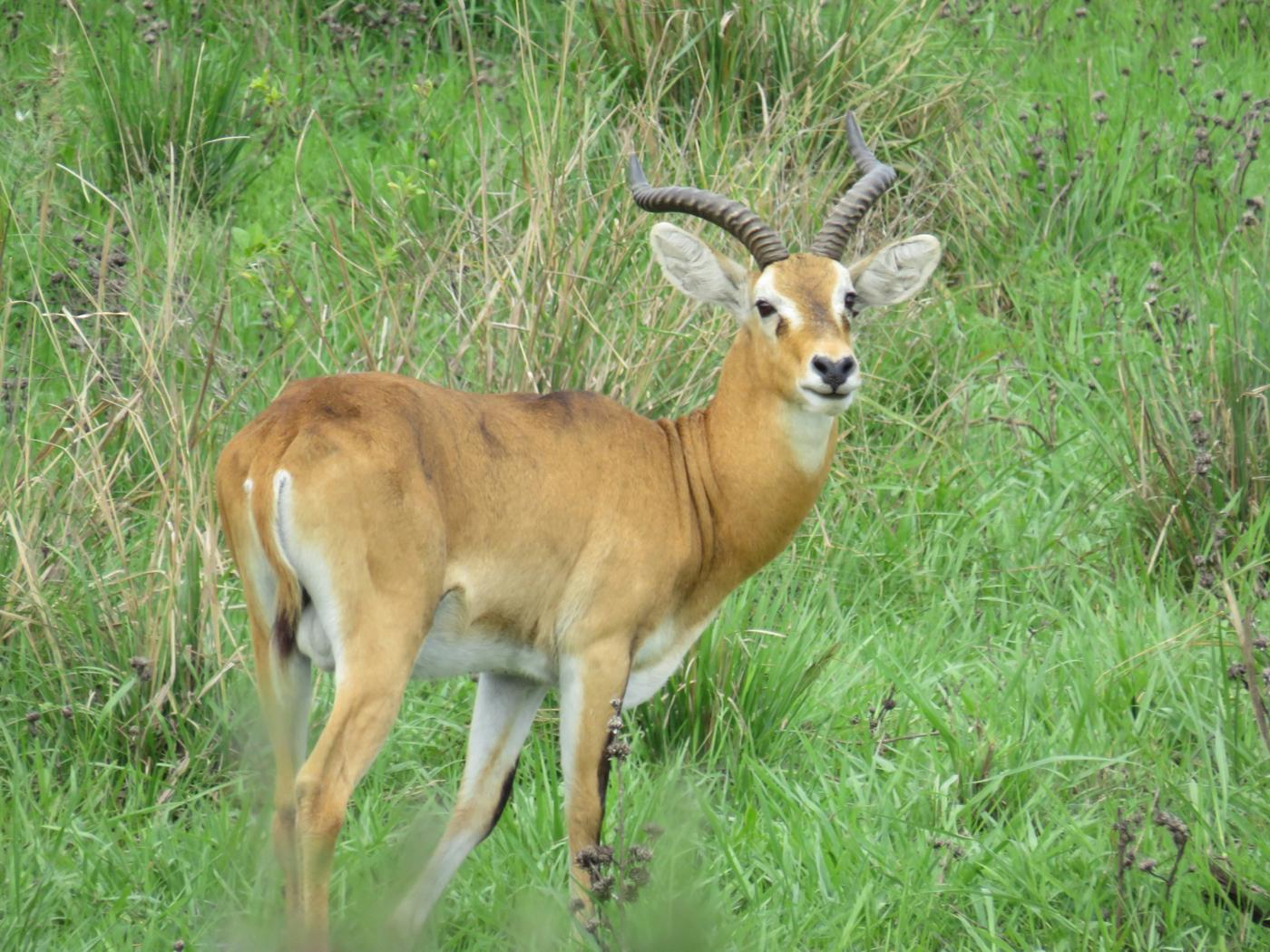
Mount Kenya's vegetation changes in clear bands. The lower slopes are farmland and montane forest, with podocarpus, cedar and bamboo, and the forest holds elephant, buffalo, bushbuck, leopard, hyena and colobus monkeys. Higher up, the bamboo gives way to heath and then to the Afro-alpine moorland, a surreal landscape of giant groundsels and giant lobelias, with many plants found only on this mountain and a handful of other East African peaks.
Above the tree line the mammals are small and hardy: rock hyrax are common around the huts, there is a duiker, and the Mount Kenya mole-rat lives in the high grassland. Sunbirds feed on the lobelias. Elephants and buffalo use the forest and moorland, and visitors on the lower trails need to follow the ranger's instructions in case of encounters. Lions occasionally pass through the lower slopes.
Chapter 12 — Fees and permits
The Kenya Wildlife Service's fee regulations were published in the Kenya Gazette Supplement of 22 September 2025, as Legal Notice 160 of 2025. They set a daily access fee, valid for up to 24 hours, and the figures for Mount Kenya National Park are below. The regulations list no season split for the park, and they do not say whether the figures include VAT, so your written quote states exactly what is included.
| Mount Kenya National Park, per person per day (2025 regulations) | Adult | Child or student |
|---|---|---|
| Non-resident | USD 70 | USD 35 |
| African citizen (non-Kenyan) | USD 30 | USD 15 |
| Resident | KSh 1,100 | KSh 550 |
| East African citizen | KSh 800 | KSh 400 |
Children aged five and younger are exempt from conservation fees. A student under 23 on a documented educational visit pays the child rate. The regulations do not list hut, ranger, guide, rescue or porter fees for Mount Kenya, so those costs are itemised on your written quote and depend on the route, the number of days and the size of the group. For the whole bill, see our Kenya safari cost guide.
Chapter 13 — Guides, porters and how a climb is organised
A Mount Kenya trek is normally organised through a licensed operator, with a guide, a cook and porters. The guide leads, sets the pace and decides on the day; the cook feeds the group in camp or in the huts; and the porters carry the bulk of the luggage, food and cooking gear. A good team makes the difference between a hard week and a rewarding one.
We arrange the whole package: transfers from Nairobi or Nanyuki, permits, huts or camps, meals, the crew and an emergency plan. The size of the crew depends on the group and the route. Treat porters well, pay fairly, check that their gear and weight limits are respected and tip according to our guidance. Our tipping guide explains the customs.
Chapter 14 — What to pack for Mount Kenya
The core of the packing list is layers, because the temperature ranges from warm in the forest to well below freezing before dawn at the summit.
- Footwear: broken-in waterproof walking boots, spare socks and gaiters if you have them.
- Layers: thermal base layers, a fleece or light down jacket, a waterproof jacket and trousers, and a warm hat and gloves.
- Sleep system: a sleeping bag rated for well below freezing, and a sleeping mat if not provided.
- Light and safety: a head torch with spare batteries, sunglasses, sunscreen, a hat and lip balm.
- Hydration: two litres or more of water capacity, and purification tablets if advised.
- Personal: a first-aid kit, any medication you take, and trekking poles, which help on the descent.
See our safari packing list for general advice and your written quote for the gear that the operator supplies.
Chapter 15 — A foothills stay without the climb
You do not have to climb to enjoy Mount Kenya. The foothills have lodges, farm stays and camps with views of the peaks on clear mornings, and nature walks, horse riding and day hikes through the forest. The towns of Naro Moru and Nanyuki are the usual bases, and Nanyuki sits on the equator, where a short stop for the equator sign and the shops makes a pleasant break on the road.
A foothills stay is also the natural starting point for the conservancies of Laikipia, which lie a short drive to the north. Our Laikipia conservancy guide and our Kenya luxury conservancy safaris guide cover the wildlife, and the combination of a mountain and a conservancy is one of the best short trips in Kenya.
Chapter 16 — Combining Mount Kenya with a safari
Mount Kenya fits easily into a Kenya itinerary, because it lies between Nairobi and the northern parks. A common plan is to climb first, then fly or drive to Laikipia, Samburu or the Maasai Mara for wildlife. Others do it the other way round, and finish with a few days at a lodge on the lower slopes as a rest.
For a classic route, our Kenya private conservancy safari and our Samburu and Laikipia wilderness safari show how we link the mountain's neighbourhood with the plains. If you plan to climb both Mount Kenya and Kilimanjaro, allow a few days between them to recover, and ask us to plan the sequence and the flights.
Chapter 17 — Mount Kenya compared with Kilimanjaro and other climbs
Kilimanjaro is higher and busier, with a snow-capped summit and well-developed routes of six to nine days. Mount Kenya is lower, steeper and quieter, with more dramatic rock scenery, a smaller trekking summit and more varied wildlife on the way. Mount Meru in Tanzania is a shorter, quieter climb, often used for acclimatisation. The Rwenzori Mountains in Uganda are wetter, muddier and wilder, and Mount Elgon on the Uganda-Kenya border is a gentle caldera walk.
If you have time for one, choose Kilimanjaro for the summit and the name, Mount Kenya for scenery and solitude, Meru for a shorter outing and the Rwenzoris for a wild, remote trek. For a more adventurous plan, Mount Kenya and Kilimanjaro make a strong pair.
Chapter 18 — Getting to Mount Kenya
Mount Kenya is about 190 kilometres from Nairobi, and the drive to Naro Moru or Nanyuki takes around three to four hours by road, depending on traffic. There are also flights from Nairobi's Wilson Airport to airstrips near Nanyuki, and these are often used by guests who continue to a conservancy. The gates for the main routes are reached on good dirt roads from the towns.
If you arrive in Kenya from abroad, check the entry rules before you travel. Our guide to Kenya's electronic travel authorisation explains how to apply, and our flight logistics guide shows how to plan the route.
Chapter 19 — Practical planning for Mount Kenya
- Choose the route: Sirimon up and Chogoria down is the classic plan.
- Allow five or six days, so that you have time to acclimatise.
- Travel in the dry months, January to February or July to September.
- Train for it: long walks with a pack, on hills, for several weeks beforehand.
- Book early, because huts and permits have limited capacity.
- Check your insurance: it must cover high-altitude trekking and evacuation.
- Speak to your doctor about altitude and any medication.
- Pack layers, a warm sleeping bag and a head torch.
- Add a conservancy in Laikipia or a park such as Samburu.
- Ask us to plan it: we confirm the route, guide, huts and fees on your written quote.
Chapter 20 — Mount Kenya myths and mistakes
- "Mount Kenya is the same as Kilimanjaro." It is a different mountain, steeper, quieter and rockier, in a different country.
- "Anyone fit can climb Batian." It is a technical rock climb, and only Point Lenana is a trekking peak.
- "Fitness protects you from altitude sickness." It does not. Pace and acclimatisation matter more.
- "It is hot because it is on the equator." The summit is below freezing before dawn.
- "You can do it in three days." Three days is possible only for a very short, rushed plan. Allow at least four.
Chapter 21 — Mount Kenya for kids
Our verdict
Mount Kenya is the climb for people who want a real mountain with fewer people, wilder scenery and the chance to see wildlife on the way. Point Lenana is within reach of a fit walker who takes four to six days and listens to a good guide, and the foothills and the neighbouring conservancies make it easy to turn the climb into a longer trip. Go in the dry months, choose Sirimon up and Chogoria down and give yourself time to acclimatise. Tell us your dates and your fitness, and we will plan the route and itemise the guide, hut and park fees on your written quote.
Plan your safari with us. Tell us the month you can travel, how many days you have and who is coming, and we will reply within 24 hours with a route and a written quotation.
Request a free quotation