
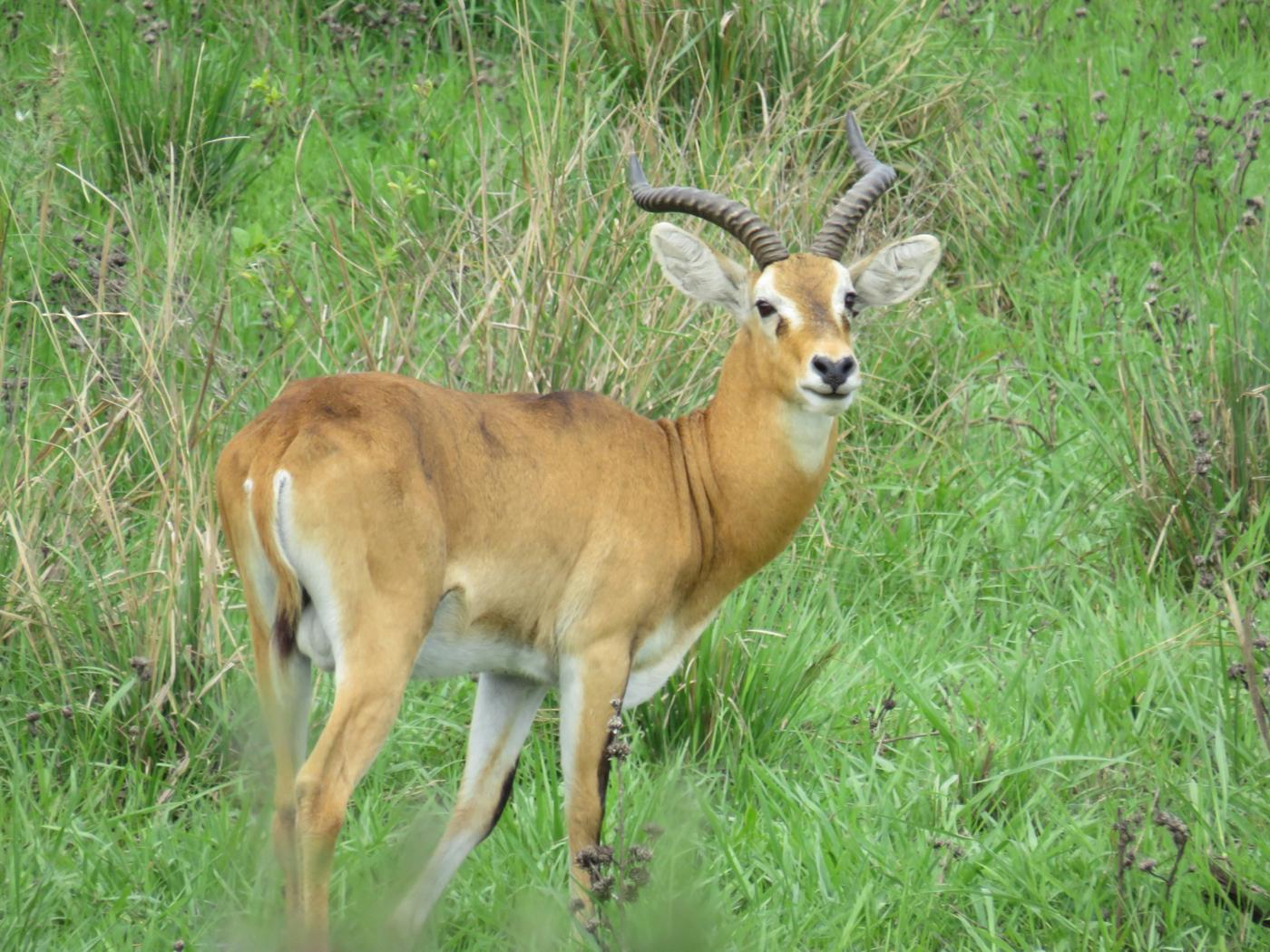
Choose Uganda if mountain gorillas and chimpanzees are the reason you are going: it has roughly half of the world's mountain gorillas, Africa's best-known chimpanzee forest at Kibale, and more than 1,000 bird species in a country smaller than the UK. Choose Tanzania if you want the classic savanna safari: the Serengeti, the Great Migration, Ngorongoro Crater, reliable Big Five sightings and an easy beach finish on Zanzibar. If you want both, combine them: the two countries are under two hours apart by air.
Uganda vs Tanzania at a glance
Both are excellent safari countries, but they are excellent at different things. Uganda is a green, hilly, forest-and-lake country built around primates, the Nile and birdlife. Tanzania is East Africa's savanna heavyweight, with some of the largest and most famous wildlife parks on the continent. The table below is the honest version of the comparison we give our own guests.
| Factor | Uganda | Tanzania | Edge |
|---|---|---|---|
| Mountain gorillas | Bwindi and Mgahinga; about half the world's population | None | Uganda |
| Chimpanzees | Kibale (dense, well-habituated communities), plus Budongo and Kyambura | Gombe and Mahale on Lake Tanganyika: superb but remote and costly to reach | Uganda for access, Tanzania for wilderness |
| Big Five | Four in the parks; rhinos only at Ziwa Rhino Sanctuary | All five, with Ngorongoro Crater the most reliable single place | Tanzania |
| Great Migration | No | Yes: Serengeti, year-round, with river crossings in the north | Tanzania |
| Big-cat density | Good in Queen Elizabeth and Murchison; tree-climbing lions at Ishasha | Among the best in Africa (Serengeti) | Tanzania |
| Birding | 1,000+ species, including the shoebill | 1,100+ species, spread over a far larger country | Uganda per day of travel |
| Crowds | Light; few vehicles at most sightings | Busy in the central Serengeti and the Crater in peak months | Uganda |
| Typical travel style | Road trip with some long drives, or fly-in to save time | Northern circuit by road, or fly-in camps | Even |
| Beach finish | Fly to Zanzibar (no coast of its own) | Zanzibar, Pemba and Mafia on the doorstep | Tanzania |
| Mountain trekking | Rwenzori Mountains, Mount Elgon | Kilimanjaro, Mount Meru | Depends on the trek |
Wildlife: primates vs the plains
Uganda: the primate capital of East Africa
Uganda's headline experience is gorilla trekking in Bwindi Impenetrable Forest and Mgahinga. You hike with rangers and trackers to a habituated gorilla family and spend one hour with them, a few metres away. Nothing on a Tanzanian safari compares to it, because Tanzania has no mountain gorillas.
The second pillar is chimpanzees. Kibale Forest holds one of the highest densities of chimpanzees in Africa, and its habituated communities give some of the most reliable chimp sightings anywhere. Add golden monkeys in Mgahinga, red colobus and L'Hoest's monkeys in Kibale, and Uganda gives you more primate species in a week than most safaris give in a lifetime. If you are deciding between the two primate experiences, our gorilla vs chimpanzee trekking guide compares them side by side.
Uganda's savanna parks are real game parks, not afterthoughts. Queen Elizabeth has lions (including the Ishasha tree-climbers), elephants, buffalo and the Kazinga Channel boat trip, one of the best hippo-and-bird boat rides in Africa. Murchison Falls combines Nile delta game drives, giraffe and the falls themselves, where the Nile forces itself through a gap roughly seven metres wide. Kidepo Valley is remote, beautiful and almost empty of other vehicles.
Tanzania: the classic savanna safari
Tanzania's strength is scale. The Serengeti covers about 14,750 km², and with the Maasai Mara it holds the Great Migration of well over a million wildebeest with hundreds of thousands of zebra and gazelle. Predator density is exceptional: lions, cheetahs, leopards, hyenas and, in the south, wild dogs in Ruaha and Nyerere.
Ngorongoro Crater is the world's largest intact, unflooded volcanic caldera, and the most reliable single place in East Africa to see black rhino on a game drive. Tarangire is one of the best elephant parks on the continent in the dry season.
Big Five and the Great Migration
If ticking off the Big Five matters to you, Tanzania wins clearly. All five are present on the northern circuit, and a well-planned week gives good odds of all five, with rhino the hardest. In Uganda you can see lions, leopards, elephants and buffalo in the national parks, but the only rhinos are at Ziwa Rhino Sanctuary on the road to Murchison, where you track them on foot. That is a memorable experience, but it is not the same as wild rhino on open plains. Our where to see the Big Five guide rates every major park.
The Great Migration is Tanzania-only in this comparison. The herds move through the Serengeti all year: calving in the south from roughly January to March, moving through the western corridor around May and June, and crossing the Mara River in the north from about July to October. See the Great Migration by month for where they are when you travel.
Landscapes and variety
Uganda feels lush. Within a single trip you move from mist-covered rainforest to crater lakes, papyrus swamps, the Nile, and open savanna, often all within a few hours' drive. It is a very green country for most of the year.
Tanzania's northern circuit is the image most people have of Africa: endless short-grass plains, kopjes, acacia woodland and the walls of the Crater. The southern parks are wilder and drier, with miombo woodland and big rivers. Kilimanjaro, Africa's highest mountain, dominates the north.
Cost: which is cheaper?
There is no simple answer, because the biggest single costs are different in each country.
- In Uganda, the big line item is permits. A gorilla trekking permit is $800 per foreign non-resident. Tour operators citing a Uganda Wildlife Authority notice of 26 February 2026 report that from 1 January 2027 the gorilla permit stays at $800, while gorilla habituation rises to $1,800 and Kibale chimp tracking to $300. Check the latest figures on our gorilla permits page before you budget. National park entry fees in Uganda are moderate.
- In Tanzania, the big line items are daily park fees and the Crater. Conservation fees in the Serengeti are among the highest in Africa, VAT is added on top, and a vehicle descending into Ngorongoro Crater pays a per-vehicle crater service fee of around $295. These daily fees add up quickly on a longer trip.
- Accommodation spans every budget in both countries, but Tanzania has far more high-end luxury camps, which pushes the top end higher.
As a realistic guide, a proper 7-day Serengeti and Ngorongoro safari runs from about $4,650 per person, and a 10-day multi-park Uganda trip with gorillas from about $6,900 per person, at a comfortable mid-range level. The full breakdowns are in our Uganda safari cost and Tanzania safari cost guides.
Our honest take: for a savanna-only safari of the same length and comfort, Uganda is usually cheaper. Once you add gorilla permits, the totals come closer. Per unique experience, both are good value.
Crowds and exclusivity
Uganda is the quieter safari. Even in peak season it is normal to share a lion sighting in Queen Elizabeth with one or two other vehicles, and Kidepo can feel completely private. On gorilla treks, each family is visited by a maximum of eight people per day.
Tanzania's central Serengeti (Seronera) and Ngorongoro Crater can be busy in July, August and over Christmas, with many vehicles at the best sightings. You avoid most of that by using the northern and southern Serengeti, private concessions, the southern parks, or by travelling in the green season. Our northern vs southern circuit guide explains the trade-offs.
Best time to visit each
| Months | Uganda | Tanzania |
|---|---|---|
| Jan–Feb | Dry season: very good for gorillas and parks | Excellent: migration calving in the southern Serengeti |
| Mar–May | Long rains, especially April–May; muddier treks, low-season permit offers | Long rains, especially April–May; some camps close; lowest prices |
| Jun–Sep | Main dry season: peak demand for permits | Peak dry season; river crossings start around July |
| Oct–Nov | Short rains; still very workable | Crossings continue into October; short rains in November |
| Dec | Dry and busy over the holidays | Herds move south; busy at Christmas |
Month-by-month detail is in best time to visit Uganda and best time to visit Tanzania.
Getting around and travel days
Uganda is usually a road safari. Distances look short on the map, but roads are slow, and some days are mostly driving, for example from Kibale to Bwindi. Domestic flights to Bwindi, Kihihi, Kisoro and Murchison cut the longest days if your budget allows. You arrive at Entebbe International Airport. If you want to start your gorilla trek from Rwanda, our Uganda–Rwanda border crossing guide explains the shorter southern route into Bwindi.
Tanzania's northern circuit is compact by road from Arusha or Kilimanjaro International Airport: Tarangire, Lake Manyara, Ngorongoro and the Serengeti link naturally. Many travellers drive in and fly out. The southern and western parks are almost always fly-in. Our fly-in vs road safari guide helps you choose.
Beach add-ons
Tanzania has the advantage here: Zanzibar is a short flight from Arusha, Kilimanjaro, the Serengeti airstrips and Dar es Salaam, and the quieter islands of Pemba and Mafia are close too. From Uganda you fly to Zanzibar, usually connecting through Dar es Salaam, Kilimanjaro or Nairobi. See adding Zanzibar to your safari for routes and how many nights to allow.
Visas, insurance and health
- Uganda: a single-entry tourist e-visa is $50. The East Africa Tourist Visa ($100) covers Uganda, Kenya and Rwanda, but not Tanzania.
- Tanzania: an e-visa is $50 for most nationalities and $100 for US citizens. Tanzania has also introduced mandatory travel insurance for visitors; read our guide to Tanzania's mandatory travel insurance before you book.
- Health: both are malaria areas and both require or recommend yellow fever vaccination depending on your route. See malaria, yellow fever and vaccinations and visa requirements for all five destinations.
Who should choose which
| You are… | Our pick | Why |
|---|---|---|
| A first-time safari traveller who wants classic big game | Tanzania | Big Five, big cats and the migration with the least effort |
| Coming mainly for gorillas | Uganda | Gorillas at $800 vs $1,500 in Rwanda, plus chimps nearby |
| A repeat safari traveller | Uganda | Primates, forests and quieter parks feel completely different |
| A photographer | Tanzania for big cats; Uganda for primates and birds | Different subjects, different light |
| A birder | Uganda | More species per day, plus the shoebill |
| A honeymoon couple | Tanzania | Luxury camps and an easy Zanzibar finish |
| A family with children under 15 | Tanzania | The gorilla trekking minimum age is 15; Tanzania's game drives suit all ages |
| A hiker | Either | Kilimanjaro in Tanzania; the Rwenzoris in Uganda |
Combining Uganda and Tanzania
You do not have to choose. A combined trip is one of the most complete safaris in Africa: gorillas and chimps in Uganda, then the Serengeti and the Crater in Tanzania, then Zanzibar. Flights connect Entebbe with Kilimanjaro and Dar es Salaam, and the order matters less than people think. Our guide to putting gorillas first or last helps you decide.
A typical 12- to 14-day combination is: 2 nights Kibale (chimps), 2–3 nights Queen Elizabeth, 2 nights Bwindi (gorillas), fly to Kilimanjaro, then 1 night Tarangire, 2 nights Ngorongoro and 3 nights Serengeti. For full route options, see our Uganda, Rwanda and Tanzania route guide and combining Tanzania with gorilla trekking.
Related comparisons: Uganda vs Kenya, Uganda vs Rwanda and Tanzania vs Kenya.