
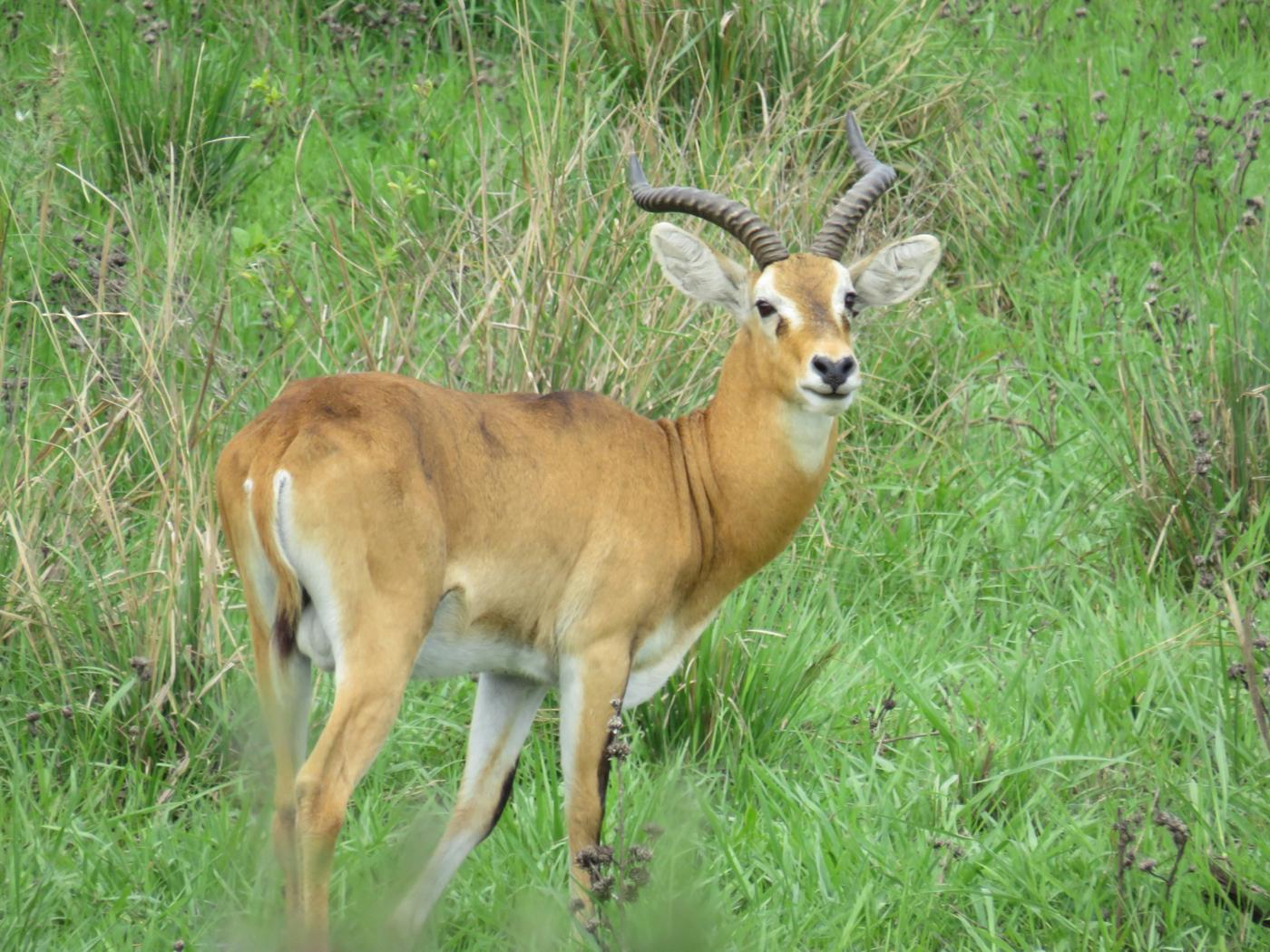
Meru National Park is one of Kenya's least crowded big parks: around 870 km² of rivers, doum palms, bush and open grassland east of Mount Kenya, made famous by Born Free, the story of Joy and George Adamson and Elsa the lioness. It has lions, elephants, buffalo, leopards and a fenced rhino sanctuary with black and white rhino, plus northern species such as reticulated giraffe, gerenuk and Beisa oryx. Stay 2–3 nights. It pairs perfectly with Samburu, Mount Kenya and Laikipia.
Meru at a glance
| Location | Eastern Kenya, on the lowlands east of Mount Kenya and the Nyambene Hills |
|---|---|
| Area | About 870 km² |
| Part of | The Meru Conservation Area, with Kora National Park and neighbouring reserves |
| From Nairobi | About 5–6 hours by road via Meru town; light aircraft to the park's airstrip |
| Managed by | Kenya Wildlife Service |
| Known for | Born Free, wilderness, rivers, rhino sanctuary, very few vehicles |
| Ideal stay | 2–3 nights |
Born Free: Elsa, Joy and George Adamson
Meru is where Joy and George Adamson returned Elsa, the orphaned lioness they had raised, to the wild. Joy's book Born Free (1960) and the 1966 film made Elsa one of the most famous animals in the world and helped change how people thought about wild animals and conservation. Joy later rehabilitated a cheetah, Pippa, in Meru too. Elsa's grave lies in the park, and visiting it is a quiet, moving stop for many guests.
George Adamson continued his work with lions in neighbouring Kora, where he lived until his death in 1989. Joy's earlier life at Lake Naivasha is covered in our Lake Naivasha guide, which includes her former home, Elsamere.
Landscape: thirteen rivers and doum palms
Meru is far greener than you might expect for a park on the edge of Kenya's dry north. More than a dozen rivers and streams run off the Nyambene Hills and Mount Kenya across the park towards the Tana River, its southern boundary, each lined with doum palms, tamarinds and riverine forest. Between the rivers are open grasslands, acacia and commiphora bush, and rocky kopjes. The mix of green rivers and dry bush gives Meru a wild, untidy beauty quite different from the Mara's open plains.
Wildlife and sighting chances
| Animal | Likelihood | Notes |
|---|---|---|
| Elephant, buffalo | Very likely | Along the rivers and in the bush |
| Reticulated giraffe, Grant's zebra, waterbuck | Very likely | Reticulated giraffe is a northern Kenya speciality |
| Hippo and crocodile | Very likely | Rivers and the Tana |
| Lion | Likely | Prides across the park |
| Gerenuk, Beisa oryx, lesser kudu | Likely | Dry-country antelopes rarely seen further south |
| Rhino (black and white) | Likely | In the rhino sanctuary |
| Leopard | Possible | Riverine forest and kopjes |
| Cheetah | Possible | Open grassland in the north of the park |
| Somali ostrich | Possible | Blue-legged northern ostrich |
Animals in Meru are often shyer than in the busy southern parks, and the vegetation can be thick, so sightings take patience. The reward is that you will often have them to yourself. Meru is also excellent for birds, with several hundred species recorded, including kingfishers and hornbills along the rivers. See our guides to cheetahs and leopards for where else to look for them, and Kenya's wildlife and biodiversity for the bigger picture.
The Meru rhino sanctuary
A fenced sanctuary inside the park protects reintroduced white and black rhinos. Game drives inside the sanctuary give good chances of white rhino, which graze in the open; black rhino are more secretive in the thicker bush. The sanctuary is one of the reasons Meru counts as a Big Five park. Compare it with other options in our rhino tracking guide and where to see the Big Five.
From poaching crisis to recovery
In the 1980s, Meru suffered severely from poaching: elephant and rhino numbers collapsed, its rhinos were lost, and visitors stayed away. From the late 1990s the Kenya Wildlife Service, with conservation partners, rebuilt the park's infrastructure, security and wildlife populations, including the reintroduction of rhinos and the movement of elephants and other animals from elsewhere in Kenya. Today Meru is a genuine conservation success story, and its low visitor numbers are one of its best features.
Best time to visit
- Late June to October: the main dry season; grass is shorter, animals stay near the rivers, and tracks are in good condition.
- January to February: a second dry spell with good game viewing.
- April–May and November: the rains. The park is very green and beautiful, but tall grass makes animals harder to see, and some tracks can be difficult.
Meru is hot at lower altitudes; plan drives for the morning and late afternoon. See best time to visit Kenya for the country-wide calendar.
Getting there
By road: from Nairobi, drive north around Mount Kenya to Meru town and on to the park, about 5–6 hours. Combining it with Mount Kenya, Ol Pejeta or Samburu breaks up the journey.
By air: light aircraft fly to the park's airstrip from Nairobi, and flights can be combined with other northern Kenya parks. This saves a long day of driving.
Park entry fees are charged by the Kenya Wildlife Service; see our Kenya safari cost guide for current fees and budgets.
Where to stay
- Elsa's Kopje: a lodge built into a rocky hill near George Adamson's old camp site, with wide views over the park.
- Riverside tented camps: several camps sit on the park's rivers, including options close to the rhino sanctuary.
- KWS bandas and campsites: simple, affordable choices for self-drive travellers.
Not sure about camp or lodge? Our tented camp vs lodge guide explains the difference.
How Meru fits a Kenya itinerary
- The northern loop: Nairobi → Aberdare or Mount Kenya → Meru (2–3 nights) → Samburu (2 nights) → Laikipia (2 nights).
- Add the Mara: fly from the north to the Maasai Mara for the classic plains safari.
More ideas are in Kenya beyond the Mara and our Kenya safari packages.
Meru vs Samburu
| Meru | Samburu | |
|---|---|---|
| Landscape | Green rivers, palms, thicker bush | Dry, open, the Ewaso Ng'iro River |
| Northern specials | Reticulated giraffe, gerenuk, oryx, lesser kudu | All of these, plus Grevy's zebra |
| Rhino | Yes, in the sanctuary | No |
| Crowds | Very few vehicles | Quiet, but busier than Meru |
| Ease of sightings | Takes more patience | Easier in open country |
| Story | Born Free | Samburu culture and elephant research |
Many of our guests do both: Samburu for easy northern specials, Meru for the wilderness and the rhinos.