
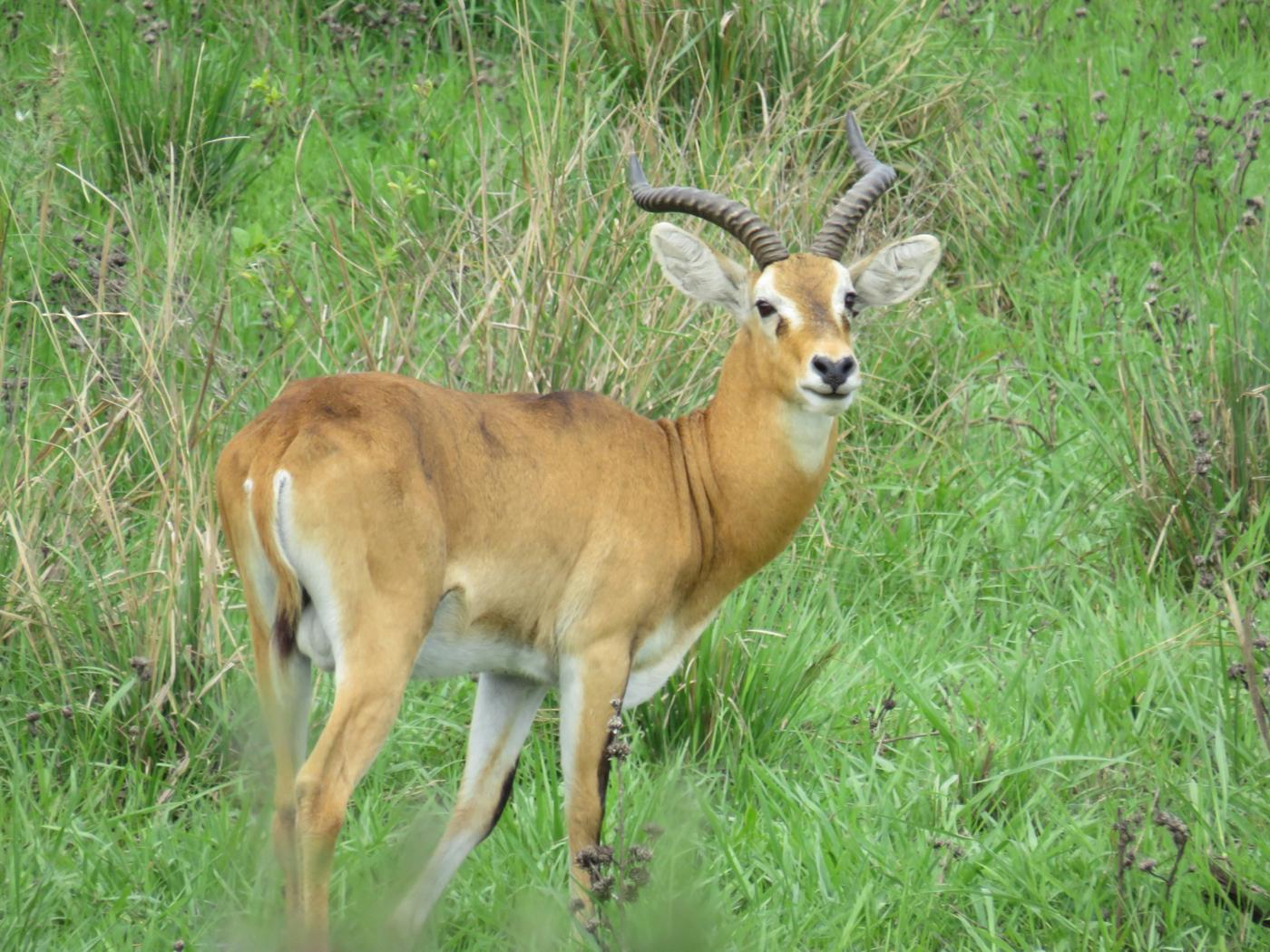
Arusha National Park is the small, green, easy-to-reach park on the doorstep of Arusha city: only 137 square kilometres, but it holds the forested Ngurdoto Crater, the pink-fringed Momella Lakes and Mount Meru, a 4,562 m volcano that is one of Africa's finest short climbs. It is close to Kilimanjaro International Airport, so it is the natural first or last stop of a northern Tanzania safari. This guide explains what to see, how to choose between a day trip and a Mount Meru climb, when to go, what the park fees are and how Arusha National Park fits into a northern circuit. People also search for the same park as Arusha National Park Tanzania, Arusha day trip, Mount Meru climb, Momella Lakes, Ngurdoto Crater, Arusha walking safari and Arusha canoe safari.
Quick answer
Is Arusha National Park worth visiting? Yes, as a half-day or full-day trip at the start or end of a safari, or as a base for a Mount Meru climb. It is a small park, about 25 km from Arusha and 35 km from Kilimanjaro International Airport, and it is one of the few parks where you can combine a walking safari, a canoe on a lake and a game drive in the same day. You will see giraffe, buffalo, zebra, warthog, black-and-white colobus monkeys and flamingos. Most visitors spend half a day to a day. A Mount Meru climb takes three to four days and uses its own route, huts and an armed ranger. The park fee on TANAPA's published schedule is USD 50 per adult per day at peak season for non-resident visitors.
Arusha National Park at a glance
| Detail | |
|---|---|
| Where | Arusha Region, northern Tanzania; main gate about 25 km east of Arusha city |
| Size | About 137 km², an IUCN Category II national park |
| History | Established in 1960 as Ngurdoto Crater National Park; renamed Arusha National Park in 1967 when Mount Meru was added |
| Three areas | Ngurdoto Crater, the Momella Lakes and Mount Meru with its crater |
| Wildlife | Giraffe, buffalo, zebra, warthog, colobus and blue monkeys, bushbuck, hippo, flamingos; leopards present but rarely seen |
| Mount Meru | 4,562 m, a dormant stratovolcano; the Momella route is the usual climb |
| Park entry (non-resident adult, 2023/24 schedule, peak) | USD 50 per day, before 18% VAT |
| Distance from airport | About 35 km from Kilimanjaro International Airport |
| Typical visit | Half a day to a full day; three to four days for Mount Meru |
Chapter 01 — What is Arusha National Park?
Arusha National Park is a compact national park in Arusha Region, a few kilometres north-east of Arusha city. It covers about 137 square kilometres and is managed by TANAPA, the Tanzania National Parks Authority. It was established in 1960 as Ngurdoto Crater National Park and was renamed Arusha National Park in 1967, when Mount Meru was added. The main gate is about 25 kilometres east of Arusha, the park is about 58 kilometres from Moshi and about 35 kilometres from Kilimanjaro International Airport.
It is small, but it has three very different landscapes within a short drive: forest and grassland around Ngurdoto Crater, shallow alkaline lakes in the north-east and the forested slopes and crater of Mount Meru to the west. That variety, and the fact that it can be seen in a day, is why many guests choose it as a gentle introduction to Tanzania or as a final outing before a flight home. You can read the park's published fees on TANAPA's tariff page, and our Tanzania national parks guide shows how it compares with the larger parks.
Chapter 02 — The three areas of the park
Ngurdoto Crater is in the south-east. The crater is about three kilometres across, with a swamp on its floor and steep forested walls, and the grassland and forest around it is a good area for buffalo, warthog and monkeys. The crater floor is closed to vehicles and to walkers, so you look down from the rim. It is sometimes called a miniature Ngorongoro, but it is a different, quieter place, and our Ngorongoro Crater guide explains the scale of the real thing.
The Momella Lakes are a group of shallow lakes in the north-east, each with a different colour and level of salinity. Their alkaline water attracts flamingos and other waterbirds, and the shores are good places for giraffe, buffalo, bushbuck and hippo. Mount Meru is in the west. Its forested lower slopes hold colobus and blue monkeys and the high crater and ridge are reached by the Momella route.
Chapter 03 — Wildlife you can see
This is a park of giraffe, buffalo and monkeys more than of big cats. Masai giraffe are easy to see in the open grassland and around the lakes, and Cape buffalo, zebra and warthog are common. The forest holds black-and-white colobus monkeys, whose long white tails and capes make them one of the park's signature animals, and blue monkeys are also common. Bushbuck, waterbuck and hippo are regular sightings, and the lakes have flamingos at some times of year.
Leopards are present, but they are rarely seen, and lions are not part of the picture here. The park is better for birds, forest and scenery than for predators, and the best way to see it is with a good guide who knows where the colobus are. If big cats are your priority, our Big Five guide explains where to go, and the larger parks of the northern circuit are the place to look.
Chapter 04 — Walking safari, canoe safari and game drive
It is one of the few Tanzanian parks where a walking safari is part of the standard offering. A ranger-guide with a rifle takes you on foot across the grassland and along the lake shore, which is a good way to get close to giraffe and buffalo and to see smaller details. Walks are short or long and are set by your guide on the day. Our guide to night drives and walking safaris explains the rules and the etiquette.
On Small Momella Lake you can take a canoe safari, paddling quietly along the shore with a guide, with flamingos and hippo in view at a distance. TANAPA's schedule lists canoeing in Arusha National Park at USD 20 per adult for two hours. A game drive through the park takes in all three areas, and it is common to combine a morning game drive with a walk or a canoe and finish by lunchtime. Our family Tanzania safari shows how short outings like this fit with a longer trip.
Chapter 05 — Mount Meru: the climb
Mount Meru is a dormant stratovolcano of 4,562 metres, standing about 70 kilometres west of Kilimanjaro and just north of Arusha. The last minor eruption was in 1910, and the first recorded ascent was made in 1904 by Fritz Jäger. It is Tanzania's second-highest mountain and the fifth-highest in Africa, and the climb is often described as a very good acclimatisation hike before Kilimanjaro, as well as a rewarding mountain in its own right.
The Momella route, from the Momella gate on the eastern side, is the usual way up. It passes through forest, where you may see buffalo and monkeys, then moorland and rock, and climbs to the crater rim and a ridge with views over the ash cone and, on a clear morning, to Kilimanjaro. The climb takes three to four days. Climbers sleep in huts, and an armed ranger accompanies every group. A good level of fitness is needed, the final push begins in the early hours, and the weather can be cold and windy at the top.
Chapter 06 — Meru and Kilimanjaro: which one?
Mount Meru is shorter, quieter and cheaper than Kilimanjaro, and it gives a real mountain experience with wildlife on the lower slopes. Kilimanjaro is higher, longer and busier, with its snow-capped summit and well-developed trekking routes. Some climbers choose Meru as preparation for Kilimanjaro, and others choose it as a stand-alone objective for those who want a challenge without the full commitment of Kilimanjaro.
If you are weighing the two, think about time, budget and ambition. Meru takes three to four days and Kilimanjaro takes six to nine. Our guide to combining Kilimanjaro with a safari explains the sequencing, and our Kilimanjaro trek and Serengeti safari shows how a climb can be built into a wider itinerary.
Chapter 07 — When to go
The park can be visited all year. The dry months, from late June to October and again from January to February, give the clearest views of Meru and Kilimanjaro, the best conditions for walking and the best chance of dry trails on the mountain. The main rains fall in April and May, and the shorter rains in November and December, when the park is green and quiet.
For Mount Meru, the dry months are the best time to climb: the trail is easier, the views are clearer and the nights are less wet. The park is at its most photogenic in the early morning, when the mountains are most often free of cloud. Our best time to visit Tanzania guide and our weather guide explain how the seasons work across the north.
Chapter 08 — How to get there
The park is the easiest park on the northern circuit to reach. The main gate is about 25 kilometres east of Arusha, around 35 kilometres from Kilimanjaro International Airport and about 58 kilometres from Moshi, so a day trip from Arusha or the airport is simple. The roads inside are good, and the drive takes under an hour from the airport.
That access makes it ideal for the first or last day of a safari: after an evening arrival you can see the park the next morning, and on departure day you can fit in a morning outing before a flight. Our Tanzania safari itinerary length guide and our first-time safari planning guide explain how we place a short outing like this.
Chapter 09 — Where to stay
Most visitors stay in lodges and camps around Arusha and on the park's edge, and do the park as a day trip. A few places lie inside or beside the park boundary, with views of Meru and the lakes, and there are campsites and huts for those who climb. Arusha itself has a wide choice, from small guesthouses to larger lodges set in coffee estates.
We choose by position, comfort and what you plan to do: a night near the park suits a Meru climb or an early walking safari, and a night in a lodge near Arusha suits a day trip. Our Tanzania safari lodges guide explains how we choose places to stay across the country.
Chapter 10 — Fees and permits
TANAPA's tariff page publishes the schedule that covers 1 July 2023 to 30 June 2024. It is the latest schedule on the authority's site, and the figures below come from it. The schedule states that charges are exclusive of 18% VAT, so the last column shows the same fee with VAT added. Your written quote shows the fee in force on your dates, including which season rate applies.
| Fee (TANAPA schedule, 2023/24) | Adult, 16 and over | Child, 5 to 15 | With 18% VAT (adult / child) |
|---|---|---|---|
| Park entry, per 24 hours, peak season | USD 50 | USD 15 | USD 59 / USD 17.70 |
| Park entry, per 24 hours, low season | USD 45 | USD 15 | USD 53.10 / USD 17.70 |
| Mount Meru hut fee, per person per night (Miriakamba and Saddle) | USD 30 | USD 10 | USD 35.40 / USD 11.80 |
| Rescue fee for Meru, per person per trip | USD 20 | USD 23.60 | |
| Ranger fee for Meru climbing, per group per day | USD 15 per group | USD 17.70 per group | |
| Guide fee per group per day, all parks except Kilimanjaro | USD 20 per group | USD 23.60 per group | |
| Canoeing, per person per two hours | USD 20 | USD 10 | USD 23.60 / USD 11.80 |
Children under 5 enter free. TANAPA says its conservation fees are valid for 24 hours from the time of entry, and rates for Tanzanian residents and East African citizens are lower. Hut fees need prior booking. Walking safaris and cycling have their own fees in the schedule, and your quote shows what applies to your plan. For how these fit within a full Tanzania bill, see our Tanzania safari cost guide.
Chapter 11 — A sample day in the park
A typical day starts with an early drive to the main gate, then a game drive through the forest and the Ngurdoto Crater rim, where you look for colobus monkeys and buffalo. A mid-morning walk with a ranger takes you to the Momella lakes or to a waterfall, and a canoe on Small Momella Lake can follow. A picnic lunch by the lake gives you time to watch giraffe and flamingos, and an afternoon drive brings you back to the gate and to Arusha or the airport before dark.
If you are doing the park on arrival day, a shorter version works well: a morning drive and walk, then lunch and a rest. If you are doing it on departure day, finish the walk early enough to be at the airport on time, and allow a margin for traffic around Arusha.
Chapter 12 — Arusha National Park and the northern circuit
The park sits at the eastern end of the northern circuit, a short distance from Tarangire, Lake Manyara, Ngorongoro and the Serengeti. It is a good first stop for jet-lagged travellers, because the scenery is gentle, the drive is short and it gives a taste of Tanzania's wildlife before the longer drives to the bigger parks.
A common sequence is a night near Arusha, a morning in the park, and a drive on to Tarangire or Manyara. Others add it as the final day, with a morning outing before a flight from Kilimanjaro International Airport. Our northern versus southern circuit guide explains the bigger choice, and our classic Serengeti and Ngorongoro safari shows a typical northern route.
Chapter 13 — Photographing the park and the mountains
- Go early, when Meru and Kilimanjaro are most often clear.
- Look for colobus monkeys in the forest, and expect them in the tops of the trees.
- Use a long lens for flamingos and a wide lens for the crater and the lakes.
- Photograph giraffe against Meru, which gives the picture a sense of place.
- Shoot from the canoe at water level for a different view.
- Bring a rain cover for the wetter months.
See our packing list for the basics.
Chapter 14 — Practical planning
- Use it as a first or last day, because it is close to Arusha and the airport.
- Allow half a day to a full day for the park.
- Add a walk or a canoe for variety.
- Choose the dry months for the clearest views.
- Decide about Meru early, because the huts need prior booking.
- Allow three to four days for the climb.
- Check your insurance: a mountain climb needs cover that includes evacuation. See our travel insurance guide.
- Pack layers for the cold on the mountain.
- Pair it with Kilimanjaro if you want two mountains.
- Ask us to plan it: we confirm the guide, the fees and the timing on your written quote.
Chapter 15 — Myths and mistakes
- "It is too small to bother with." It is small, but it is varied, easy to reach and a good start or end to a trip.
- "You will see the Big Five." You will not. The park is better for giraffe, buffalo, colobus and scenery.
- "Meru is just a warm-up for Kilimanjaro." It is a fine mountain in its own right.
- "You can walk anywhere." Walks are with a ranger and on set routes, and the crater floor is closed.
- "You can climb Meru in two days." Allow three to four.
Chapter 16 — Arusha National Park for kids
Our verdict
Arusha National Park is easy to overlook and easy to love. It is close, green and varied, it works as a gentle first or last day of a safari, and it opens the door to Mount Meru for those who want a mountain as well. Allow half a day to a day, choose a walk or a canoe for variety and consider Meru if you have the time and the fitness. Tell us your dates and we will fit it into the route and confirm the guide and fees on your written quote.
Plan your safari with us. Tell us the month you can travel, how many days you have and who is coming, and we will reply within 24 hours with a route and a written quotation.
Request a free quotation- Tanzania destination page: every park we plan
- Tanzania safari: the complete guide
- Tanzania national parks guide
- Katavi National Park guide
- Mahale and Gombe chimpanzee trekking
- Lake Natron and Ol Doinyo Lengai
- Lake Eyasi and the Hadzabe
- Pemba Island
- Mafia Island
- Best time to visit Tanzania
- Tanzania safari cost