
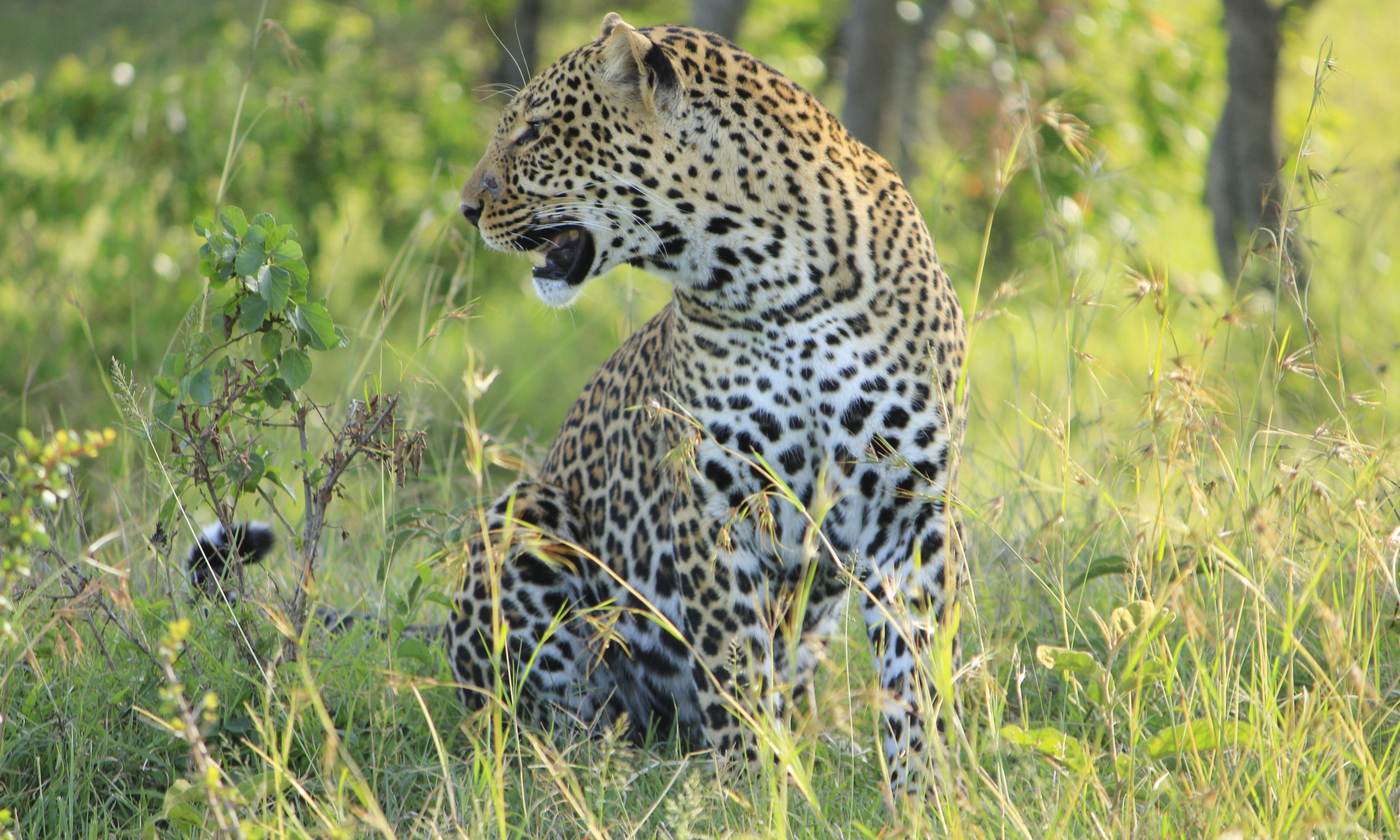
The best places to see the Big Five in East Africa are the conservancies of Laikipia and the lake-and-plains circuit of Kenya, the Serengeti and Ngorongoro Crater in Tanzania, and, for a rhino you can track on foot, Ziwa in Uganda and Akagera in Rwanda. Lion, elephant and buffalo are easy in most savanna parks, leopard needs time and a sharp guide, and rhino is the one that decides where you go. This guide gives park-by-park odds for more than twenty parks and reserves in Kenya, Tanzania, Uganda and Rwanda, explains where each rhino actually lives, shows what a Big Five safari costs for 2027 and sets out three sample routes. People also search for the same question as Big Five safari, where to see the Big Five in Africa, best Big Five parks in East Africa, Big Five in Kenya, Big Five in Tanzania, Big Five in Uganda and can you see the Big Five in one safari.
Quick answer
Where can you see all of the Big Five in East Africa? The most reliable single areas are Laikipia in Kenya (Ol Pejeta and Lewa, where lion, leopard, elephant, buffalo and both rhino species live together), Lake Nakuru and Tsavo in Kenya for rhino inside fenced sanctuaries, and Ngorongoro Crater in Tanzania, which holds a small black rhino population alongside lion and buffalo. Akagera in Rwanda has all five again after lions returned in 2015 and rhinos in 2017. The Serengeti is best for lion and leopard, and its rhino are very hard to see. A Big Five sighting is never guaranteed, and the honest way to plan is to pick the rhino area first and build the trip around it.
Where to see the Big Five at a glance
| Animal | Easiest | Hardest | Where to put your effort |
|---|---|---|---|
| Lion | Very easy in the Mara, the Serengeti, Ngorongoro, Ruaha | Rare in Lake Manyara and Lake Mburo | Any big plains park, early morning and late afternoon |
| Leopard | Moderate in Samburu, Laikipia, central Serengeti, Ruaha | Hard almost everywhere | A skilled guide, three or four nights, night drives where allowed |
| Elephant | Very easy in Amboseli, Tarangire, Tsavo | Not present at Lake Mburo | Almost any park; Amboseli and Tarangire give the most |
| Buffalo | Very easy in almost every savanna park | Rarely hard | Anywhere; Katavi and Murchison have huge herds |
| Rhino | Easy in the sanctuaries at Lake Nakuru, Ol Pejeta and Lewa, and Ziwa | Hard in the wild in Ngorongoro, the Serengeti and Akagera | Choose a rhino area first and plan around it |
Chapter 01 — What counts as "seeing" the Big Five
A Big Five safari means seeing lion, leopard, elephant, buffalo and rhino, either black or white, and it can be done in a single trip or in a single park, a day or in a week. What counts is a clear, photographable sighting, from a vehicle or on foot with a ranger, and not a distant shape in the grass. Our guide to the difference between the Big Five and the Big Nine explains where the list came from and what the wider lists add, and our Kenya Big Five safari guide goes deep on Kenya alone.
This page is the region-wide map. It tells you which park to choose for which animal, how the odds compare and how to put the pieces together. The ratings below are our planning judgement, built from how each park is run and what guides report, and not a statistical promise: wild animals move, seasons change and a very good park can still have a quiet morning.
Chapter 02 — How to read the odds tables
Each table rates the five animals on a simple scale. Very high means a sighting is expected on a stay of two or three days. High means likely. Moderate means a fair chance that depends on the guide, the season and luck. Low means a sighting is a bonus. Rare means present in small numbers and seldom seen, and None means the animal does not live there. The last column states whether a single park can deliver all five.
Rhino ratings come with a rule: in the sanctuaries and conservancies, where rhinos are protected inside fenced or guarded areas, the odds are much better than in open parks. Read the rhino column first, because it narrows your choice fastest. For the full story of how rhinos are tracked, see our rhino tracking guide.
Chapter 03 — Kenya: park-by-park odds
Kenya has the strongest overall record for the Big Five, because its conservancies are built around rhino and leopard protection.
| Park or area | Lion | Leopard | Elephant | Buffalo | Rhino | All five in one place? |
|---|---|---|---|---|---|---|
| Maasai Mara (reserve and conservancies) | High | Moderate to high in the conservancies | High | High | Rare | Seldom; add a rhino area |
| Amboseli | Moderate | Low | Very high | Moderate | None | No |
| Tsavo East and West | High | Low to moderate | High | High | High, in the sanctuary only | Possible with the sanctuary |
| Lake Nakuru | Moderate | Moderate | Low | High | Very high | Close; elephants are few |
| Samburu | Moderate to high | High | High | Moderate | None | No; add Laikipia |
| Laikipia (Ol Pejeta and Lewa) | Moderate to high | High | High | Moderate | Very high | Yes |
| Aberdares and Solio area | Low to moderate | Moderate | Moderate | Moderate | High, at Solio | Partly |
Laikipia is the one area where all five are realistic in a few days, which is why it features in so many Big Five itineraries. Our Laikipia conservancy guide and Kenya luxury conservancy safaris guide cover it, and the Maasai Mara guide, Amboseli guide, Tsavo guide, Lake Nakuru guide and Samburu guide cover the others.
Chapter 04 — Tanzania: park-by-park odds
Tanzania's parks are larger and wilder, with the highest lion and elephant numbers, and a much smaller rhino population.
| Park or area | Lion | Leopard | Elephant | Buffalo | Rhino | All five in one place? |
|---|---|---|---|---|---|---|
| Serengeti | Very high | Moderate to high | High | High | Rare | Rhino is the gap |
| Ngorongoro Crater | High | Rare | Low to moderate | High | Moderate to low | Close; leopard is the gap |
| Tarangire | Moderate | Low to moderate | Very high | High | None | No |
| Lake Manyara | Rare | Low | High | High | None | No |
| Ruaha | High | High | Very high | High | None | No; rhino is absent |
| Nyerere | Moderate | Low to moderate | High | High | None | No |
| Katavi | High | Moderate | Moderate to high | Very high | None | No |
| Mkomazi | Low | Low | Moderate | Low | A guarded sanctuary, limited access | Not a Big Five park |
The Serengeti and Ngorongoro are the classic pairing, because the plains give you lion and leopard and the crater gives you the best chance of a Tanzanian rhino. Our guides to the Serengeti, Ngorongoro Crater, Tarangire, Lake Manyara, Ruaha, Nyerere and Katavi go into each park.
Chapter 05 — Uganda and Rwanda: park-by-park odds
Uganda and Rwanda are known for gorillas, and their savanna parks have a different Big Five story.
| Park or area | Lion | Leopard | Elephant | Buffalo | Rhino | All five in one place? |
|---|---|---|---|---|---|---|
| Murchison Falls | Moderate | Low to moderate | High | Very high | None | No |
| Queen Elizabeth | Moderate | Moderate | High | Very high | None | No |
| Lake Mburo | Rare | Moderate at night | None | Very high | None | No |
| Kidepo Valley | High | Moderate | Moderate | Very high | None | No |
| Ziwa Rhino Sanctuary | None | None | None | None | Very high, on foot | A rhino stop only |
| Akagera (Rwanda) | Moderate | Low | Moderate | High | Moderate | Yes, with patience |
Uganda's wild rhinos were lost decades ago, and the only rhinos you can see there today live at Ziwa. Rwanda's Akagera is different: lions came back in 2015, black rhinos in 2017 and 2019 and white rhinos in 2021 and 2025, so it now qualifies as a Big Five park. Our guides to Murchison Falls, Queen Elizabeth, Lake Mburo, Kidepo Valley and Rwanda's national parks cover them.
Chapter 06 — Conservancies, national parks and reserves: how they differ
National parks and reserves are open to all registered vehicles, with set rules on where you can drive and what time you must be out. Private conservancies limit the number of vehicles and beds, and many allow off-road driving, night drives and walking safaris, which makes a big difference to leopard and rhino sightings and to how crowded each sighting feels. The trade-off is cost: a conservancy stay is usually the most expensive part of a trip.
A good Big Five plan often mixes the two: a national park or reserve for scale and the migration or big herds, and a conservancy for rhino, leopard and a quieter experience. Our guide to responsible and sustainable safari travel explains how conservancy fees support conservation and local communities.
Chapter 07 — Where the rhinos live
Rhino is the hard one, and the reason is simple: populations are small and protected, and the best sightings come from places built around rhino security. It helps to know the facts for each area.
Kenya. Ol Pejeta and Lewa in Laikipia hold black and white rhinos in guarded conservancies, and Ol Pejeta is also home to the last two northern white rhinos. Lake Nakuru National Park is fenced to protect its black and white rhinos, and a count in 2009 recorded more than 25 black rhinos and about 70 white rhinos. Tsavo has a black rhino sanctuary with limited access, and Solio Ranch, near the Aberdares, has a long-established private sanctuary. Our Kenya Big Five guide explains the sanctuary system in detail.
Tanzania. Ngorongoro Crater holds a small population of black rhinos, down from about 108 in the mid-1960s to 13 in 1993, and recovered to about 55 by 2018. The Serengeti holds a few black rhinos, kept under close protection and rarely seen, and Mkomazi in the north-east has a patrolled, breeding sanctuary that is not open for casual game drives. Our Ngorongoro guide explains how to see the crater's rhinos.
Uganda. Black and northern white rhinos were wiped out by 1982. Ziwa Rhino Sanctuary, about 70 square kilometres on the road to Murchison Falls, was established in 2005 and now holds about 48 southern white rhinos, which you track on foot with an armed ranger. It is a sanctuary, and the aim is to reintroduce rhinos to Uganda's national parks.
Rwanda. Akagera has had rhinos again since 2017, when 18 eastern black rhinos arrived from South Africa, followed by 5 in 2019. Thirty southern white rhinos arrived in November 2021 and 70 more in June 2025. Our Rwanda national parks guide explains the park.
Chapter 08 — Lion, elephant and buffalo: the easy three
Lion, elephant and buffalo are the three you can rely on. Lions are most reliably seen in the Maasai Mara, the Serengeti, Ngorongoro Crater and Ruaha, and the tree-climbing lions of Ishasha in Queen Elizabeth and of Lake Manyara are a bonus: see our tree-climbing lions guide. Elephants are most numerous in Amboseli, Tarangire, Tsavo and Ruaha, and buffalo herds are huge in Katavi, Murchison and the Mara.
If you only have a few days, these three will happen almost anywhere. The planning effort belongs to leopard and rhino, and the choice of park should be driven by them.
Chapter 09 — Leopard: how to improve your odds
Leopards are solitary, nocturnal and well camouflaged, and a sighting depends on a guide who knows the territory. The best areas are the conservancies of the Mara and Laikipia, Samburu, the central Serengeti around Seronera and Ruaha, where leopards are habituated or well studied. Allow at least three or four nights, go out at first light and late afternoon, ask for a guide who specialises in cats, and consider a private conservancy, where off-road driving and night drives are allowed.
Our guide to leopards in East Africa explains how leopards live and how they are found, and our night drives and walking safaris guide explains where night drives are permitted.
Chapter 10 — Choosing by priority
If rhino is the priority, choose Laikipia, Lake Nakuru, Ngorongoro Crater, Ziwa or Akagera, in that order of reliability for most visitors. If leopard is the priority, choose Samburu, the Mara conservancies, Seronera in the Serengeti or Ruaha, and allow extra nights. If lion is the priority, the Mara, the Serengeti, Ngorongoro and Ruaha are all excellent, and if elephants are the priority, Amboseli, Tarangire and Tsavo give the most.
If you want all five in the shortest time, Laikipia is the answer. If you want the widest wildlife drama with four of the five, the Serengeti and Ngorongoro are unmatched. If you want to combine the Big Five with gorillas, the Uganda and Rwanda route in this guide does it. Whatever you choose, give it more nights than you think you need: the last animal on the list is almost always the one that takes the extra day.
Chapter 11 — The best time of year for the Big Five
The dry season is the best time for the Big Five almost everywhere. In Kenya and northern Tanzania, that is June to October and January to February, and in the south, including Ruaha, Nyerere and Katavi, June to October. In the dry months the vegetation thins, animals gather at water and sightings are easier. The green season has its own rewards, but cats and rhinos are harder to spot in tall grass.
Rhinos in sanctuaries are less seasonal, and a good conservancy delivers all year. Our best time to visit Kenya guide and best time to visit Tanzania guide explain the calendar, and our green season guide explains the trade-offs.
Chapter 12 — How many days do you need?
A Big Five trip needs more days than a general safari, because the last two animals take time. For Laikipia, three nights is usually enough for all five. For the Serengeti and Ngorongoro, five to seven days gives lion, elephant and buffalo, a fair chance of leopard and a chance of a crater rhino. For a Kenya circuit that covers several areas, seven to ten days is realistic.
If your priority is the full list, allow more days in the sanctuaries and fewer in the open parks. Our Tanzania itinerary length guide and first-time safari planning guide explain how to set the pace.
Chapter 13 — What a Big Five safari costs for 2027
Costs depend on the tier, the season and the number of nights in private conservancies, and these are the ranges we publish on our own cost guides for 2027 planning. They are per person, based on two travelling together.
| Region | Published range | Detail |
|---|---|---|
| Kenya | About USD 550 to 950 per person per day; USD 4,400 to 8,200 for Classic Comfort trips, USD 5,700 to 10,800 Premium, USD 7,250 to 13,500 Ultra-Luxury | Private conservancies at the top end |
| Tanzania | About USD 414 to 1,037 per person per day; a 7-day Serengeti and Ngorongoro safari from USD 4,650 | Premium about USD 6,500 to 7,900, Ultra-Luxury about USD 9,500 to 14,000 or more, for the 7-day benchmark |
| Uganda | About USD 350 to 691 per person per day | Lodges roughly USD 150 to 1,200 per room per night by tier |
| Rwanda | About USD 670 to 1,007 per person per day | Includes gorilla permits on trips that use them |
Park fees are part of the total. The Kenya Wildlife Service's 2025 regulations set Nairobi National Park at USD 80 for a non-resident adult, for example, and TANAPA publishes its own schedule. Our Kenya safari cost guide, Tanzania safari cost guide, Uganda safari cost guide and Rwanda safari cost guide itemise the totals, and your written quote shows the fees in force on your dates.
Chapter 14 — Sample route 1: Kenya Big Five in eight days
Days 1 to 3, Laikipia: fly or drive from Nairobi to a conservancy such as Ol Pejeta or Lewa for black and white rhino, leopard, lion and elephant, with game drives, a rhino encounter and a night drive where allowed.
Days 4 to 7, Maasai Mara: fly to the Mara for lion, cheetah, elephant and buffalo, and leopard in the conservancies, with the migration from July to October.
Day 8: return to Nairobi.
This route gives you all five in the first three days and uses the Mara for the best big-cat viewing. Our Kenya private conservancy safari and Kenya photographic big cat safari show how we build it.
Chapter 15 — Sample route 2: Tanzania Big Five in seven days
Day 1: Arusha to Tarangire for elephants and baobabs, with lion and buffalo.
Days 2 to 4, Serengeti: the central plains for lion and leopard, with the herds in season.
Days 5 to 6, Ngorongoro Crater: a morning descent for the best chance of a black rhino, with lion and buffalo.
Day 7: return to Arusha.
This is the classic northern circuit, and it delivers four of the five with confidence and rhino with patience. Our classic Serengeti and Ngorongoro safari shows a typical version. See also our crater day trip versus overnight guide.
Chapter 16 — Sample route 3: Uganda and Rwanda Big Five in eleven days
Day 1: Entebbe to Ziwa Rhino Sanctuary, tracking white rhinos on foot, then on to Murchison Falls.
Days 2 to 4, Murchison Falls: buffalo, elephant, lion and a boat trip to the falls.
Days 5 to 7, Queen Elizabeth: lion and leopard on the Kasenyi plains and the Ishasha tree-climbing lions.
Days 8 to 11: cross into Rwanda and spend three nights in Akagera for black and white rhinos, lion, buffalo and elephant, then return to Kigali.
This route is longer and covers three parks and a border crossing, and it combines well with gorilla trekking. See our Uganda and Rwanda border crossing guide and our Uganda complete safari.
Chapter 17 — Beyond the Big Five
The Big Five is a good starting point, and other animals deserve a place on the list. The cheetah is the fastest land animal, the African wild dog is one of the continent's most endangered carnivores and the Ugly Five are the oddly appealing animals that every guide loves. Our Big Five versus Big Nine guide explains the wider lists, and our Kenya wildlife and biodiversity guide goes further.
For a gentler list, try our Little Five guide, and for a primate list, see gorilla trekking in Uganda and Mahale and Gombe chimpanzee trekking.
Chapter 18 — Practical planning for the Big Five
- Choose your rhino area first, because it narrows the rest.
- Allow three or four nights for leopard in the right area.
- Travel in the dry season, June to October for most parks.
- Choose a guide with a cat specialism, and a private conservancy for the best odds.
- Combine a sanctuary with an open park, for rhino and for open-plains drama.
- Book early for conservancies and the best dry-season dates.
- Do not trust guarantees, because wild animals cannot be promised.
- Pack a long lens and good binoculars. See our packing list.
- Check your insurance. See our travel insurance guide.
- Ask us to plan it: tell us your dates and priorities, and we build the route and confirm the fees on your written quote.
Chapter 19 — Big Five myths and mistakes
- "You can see the Big Five in any park." You cannot. Most parks lack rhino, and several lack leopard or elephant.
- "The Serengeti has all five." It has all five on paper, but its rhinos are very rarely seen.
- "The Masai Mara has rhino." It has a few, rarely seen. Plan a rhino area separately.
- "Uganda has rhino in its national parks." The only rhinos in Uganda live at Ziwa.
- "A guarantee is possible." No honest operator can promise a sighting.
- "Leopards are rare." They are common but elusive, and a good guide finds them.
Chapter 20 — The Big Five for kids
Our verdict
The Big Five is easy to promise and hard to complete, and the secret is to plan backwards from the rhino. Laikipia delivers all five in a few days, Ngorongoro and the Serengeti make the classic Tanzanian pairing, Akagera has brought the Big Five back to Rwanda and Ziwa is the one place in Uganda where you can walk up to a rhino. Choose the dry season, give leopards time and add a conservancy for the best odds. Tell us your dates and your priorities, and we will build the route and confirm the fees on your written quote.
Plan your safari with us. Tell us the month you can travel, how many days you have and who is coming, and we will reply within 24 hours with a route and a written quotation.
Request a free quotationOnce you have found the Big Five, slow down for the Little Five animals that share their names.
Learn the Big Five in Swahili with our Swahili phrases for travellers guide.
For fees, activities and lodges in Rwanda's Big Five park, see our Akagera National Park guide.
For Tanzania on its own, with the latest counts, see our Tanzania Big Five guide.