
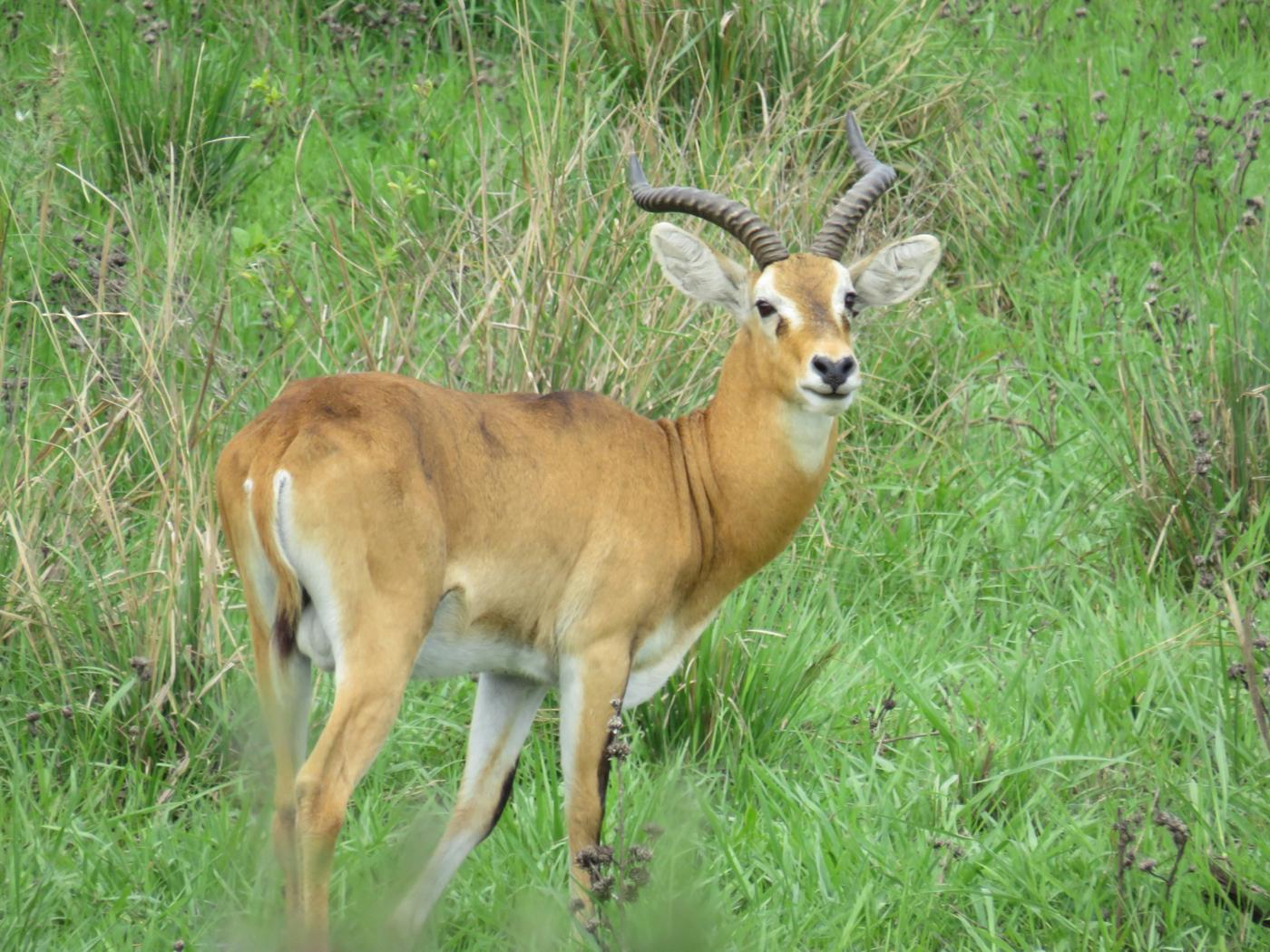
Choose East Africa if you want the Great Migration, mountain gorillas and chimpanzees, and classic open-plains game viewing with a guide at the wheel. Choose Southern Africa if you want a wider choice of safari styles: self-drive in Kruger or Etosha, walking safaris in Zambia, mokoro trips in the Okavango Delta, desert landscapes in Namibia, and malaria-free reserves. Neither region is better overall. They are good at different things, and this guide shows where each one wins.
We plan safaris in East Africa, so we say plainly at the start that this is a comparison written by East Africa specialists. We do not sell Southern Africa trips. We have compared the two regions as fairly as we can, so that you choose the one that fits you, even when that is not us.
Quick answer
- Pick East Africa (Kenya, Tanzania, Uganda, Rwanda) for the wildebeest migration, primate trekking, dense predator sightings on open grassland and a first safari with simple logistics.
- Pick Southern Africa (South Africa, Botswana, Namibia, Zambia, Zimbabwe) for self-drive freedom, walking safaris, water-based safaris, desert scenery, malaria-free options and easy add-ons such as Cape Town and Victoria Falls.
- Price: neither is cheap. Botswana's Okavango camps are priced at the top of the continent by national policy, while South Africa's national parks and self-drive trips can be among the more affordable ways to see the Big Five.
- Timing: both are best in their dry seasons, which fall in a similar window: roughly May to October in the south, and June to October for the Migration in the north.
- If you cannot decide: ask what you most want to see. Gorillas or the Migration means East Africa. A walking safari, a self-drive trip or a delta by canoe means Southern Africa.
This guide compares the regions, not individual countries. For a head-to-head between two East African countries, read our guides on Uganda vs Kenya and Tanzania vs Kenya.
East Africa vs Southern Africa at a glance
| Factor | East Africa (Kenya, Tanzania, Uganda, Rwanda) | Southern Africa (South Africa, Botswana, Namibia, Zambia, Zimbabwe) | Edge |
|---|---|---|---|
| Signature experience | Great Migration, gorilla and chimpanzee trekking | Okavango Delta, walking safaris, Kruger, Etosha, Victoria Falls | Depends on your wish |
| Great Migration | Yes (Serengeti and Maasai Mara) | No | East Africa |
| Great apes | Mountain gorillas (Uganda, Rwanda) and chimpanzees (Uganda, Tanzania) | None | East Africa |
| Big Five | Yes, in Kenya and Tanzania; rhino is limited in Uganda | Yes, in South Africa and parts of Namibia; Etosha has no buffalo | Even |
| Main safari style | Guided game drives from a 4x4 with a driver-guide | Guided drives, plus self-drive, walking and boat safaris | Southern Africa for variety |
| Self-drive | Uncommon and not the usual way to safari | Common and easy in Kruger and Etosha | Southern Africa |
| Walking safaris | Available in selected conservancies and parks | A speciality of Zambia (South Luangwa) and Zimbabwe | Southern Africa |
| Water-based safaris | Boat trips on rivers and lakes | Mokoro canoes and boat safaris in the Okavango and Chobe | Southern Africa |
| Landscapes | Savannah, Rift Valley, volcanoes, rainforest, snow-capped Kilimanjaro | Delta, desert dunes, salt pans, bushveld, Victoria Falls | Southern Africa for variety |
| Crowds | Busy at Migration river crossings in peak months | Quiet in Botswana and Zambia; busier at Kruger gates in school holidays | Southern Africa |
| Camp price level | Wide range, from budget to ultra-luxury | Botswana among the most expensive; South Africa and Namibia have many mid-range options | East Africa for choice at mid-range |
| Malaria | Present in most safari areas | Varies: Kruger lies in a risk area; Madikwe and the Eastern Cape reserves are malaria-free | Southern Africa for malaria-free choices |
| Best months | June to October for the Migration; January and February also good | About May to October (dry season) | Similar |
| Beach and city add-ons | Zanzibar, Kenyan coast, Seychelles | Cape Town, Garden Route, Victoria Falls | Both strong |
Wildlife and landscapes
1. The Big Five and general game viewing
Both regions offer lion, leopard, elephant, buffalo and rhino, but the way you meet them differs. In East Africa, wide grassland gives long, unobstructed views, so a single morning drive in the Maasai Mara or Serengeti can produce several predator sightings. In Southern Africa the habitats are more varied, from the bushveld of Kruger to the waterholes of Etosha to the woodland and floodplains of the Zambezi and the Okavango, so the experience feels different from park to park.
Etosha National Park in Namibia shows how Southern Africa can concentrate wildlife. Its dozens of waterholes, several floodlit at the rest camps, bring elephants, lions, rhinos and plains game within sight of a parked vehicle, especially in the dry season. Etosha has no buffalo, so it is not a full Big Five park. South Africa's reserves, including the private reserves beside Kruger, are the usual choice for seeing all five.
Verdict: East Africa for density on open plains. Southern Africa for variety of habitat and for water-centred viewing.
2. The Great Migration versus the Okavango flood
The Great Migration is East Africa's headline event: well over a million wildebeest, with zebra and gazelle, circling between the Serengeti in Tanzania and the Maasai Mara in Kenya, with the dramatic Mara River crossings usually seen from about July to October. Southern Africa has no equivalent movement of that scale. Our migration safari planning guide shows how to plan around it.
Its nearest counterpart is the annual flood of the Okavango Delta in Botswana. Rain that falls in Angola takes about four months to reach Botswana, so the water arrives in the delta's channels from March and April, when the local rains have ended. The flood peaks around the middle of the year and begins to recede from August, and in the later dry months the shrinking water concentrates wildlife around the remaining channels and pools.
Verdict: East Africa for a mass wildlife spectacle. Southern Africa for a flood that gives you canoe and boat safaris in the dry season.
3. Predators
East Africa's open plains make lion, cheetah and leopard easy to follow once found. Southern Africa has strong predator viewing in different settings. South Luangwa in Zambia is widely regarded as one of the best places in Africa to see leopards, and the northern Botswana wilderness is known for painted dogs. Predators are easier to find in the dry months, when animals gather at water.
Verdict: East Africa for reliable predator action on open ground. Southern Africa if you prefer to find predators on foot, by boat, or at night in quieter reserves.
4. Rare and special species
East Africa is the only place to see mountain gorillas and the main place for chimpanzee trekking, in Uganda, Rwanda and Tanzania. Southern Africa cannot match that, but it has its own specialities: desert-adapted wildlife in Namibia, black rhino in Etosha, and some of Africa's strongest painted dog (African wild dog) viewing in northern Botswana. Sightings of rare species can never be promised in either region.
Verdict: East Africa for great apes. Southern Africa for desert specialists and a different set of rare species.
5. Landscapes and birds
East Africa gives you iconic scenery: golden savannah, the Great Rift Valley, volcanic highlands and, on a clear day, Kilimanjaro rising behind elephants in Amboseli. Southern Africa gives you contrast: the Okavango's channels and islands, Etosha's vast white salt pan, Namibia's dunes, the bushveld of Kruger and Victoria Falls on the Zambia and Zimbabwe border.
For birders, the Okavango is at its best in the green season, when migratory species arrive in large numbers and rates are lower. East Africa's birding is covered in our East Africa birding safari guide.
Verdict: East Africa for the classic savannah picture. Southern Africa for the greater range of landscapes within one region.
How you travel: styles, stays, costs and logistics
6. Safari styles: guided, self-drive, walking and by water
This is the biggest practical difference between the regions. East African safaris are almost always guided: a driver-guide takes you out in a 4x4 safari vehicle, often with a pop-up roof, and handles navigation, sightings and park paperwork. Walking safaris, night drives and balloon flights are available in selected conservancies and private reserves, but the core experience is a guided drive. Our night drives and walking safaris guide explains what is allowed where.
Southern Africa offers the full menu. Self-drive is a mainstream way to visit Kruger in South Africa and Etosha in Namibia. In Etosha the main tourist roads are well-maintained gravel, a standard rental car is enough for the central circuit, gates open at sunrise and close at sunset, visitors must stay in the vehicle except at rest areas and camps, and walking and night drives are not allowed inside the park. Walking safaris are a speciality of Zambia: South Luangwa pioneered the walking safari in the 1950s, groups walk with armed rangers leading and following, and the walking season runs from about May to November. Boat and mokoro (traditional canoe) safaris belong to the Okavango and the Chobe River.
Verdict: East Africa for a simple, fully guided first safari. Southern Africa if you want independence, to walk, or to travel by water.
7. Accommodation
East Africa has the broader spread, from simple tented camps to ultra-luxury lodges in conservancies. Southern Africa has fewer ultra-luxury camps but very strong private-reserve and fly-in camp products, from the reserves beside Kruger to remote Okavango camps. In South Africa and Namibia there is also a deep mid-range of lodges and national-park rest camps, and self-drive visitors can book park accommodation directly.
Verdict: East Africa for choice at every level. Southern Africa for private-reserve exclusivity and for good mid-range value outside Botswana.
8. Costs: how the regions compare
Neither region is cheap, but their cost structures differ. Park fees are set separately by each authority and revised from time to time, so we do not print them here; they are shown on a written quotation for East Africa. For East African prices, read our East Africa safari cost guide.
- East Africa: the Maasai Mara entry fee is set by Narok County and differs between the first and second half of the year, Tanzania's parks are set by TANAPA and the Ngorongoro Conservation Area Authority, and Uganda's by the Uganda Wildlife Authority. Gorilla permits are a fixed cost that makes a gorilla safari more expensive on paper.
- Botswana: the country chose long ago to sell fewer beds at a higher standard rather than fill the bush with vehicles, so camp prices are among the highest on the continent, and remote camps are reached by light aircraft.
- South Africa and Namibia: national-park entry is charged per person per day, revised each year by SANParks and by Namibia's park authorities, and self-drive trips with park accommodation can be among the more affordable ways to safari in either region.
Our published starting prices in October 2026 for East Africa are from US$3,800 per person for a six-day Uganda gorilla safari and from US$4,400 per person for a seven-day Maasai Mara and Amboseli safari. These are "from" prices that depend on season, lodge level, group size and flights.
Verdict: Southern Africa can be cheaper if you self-drive or use South African parks, and more expensive if you choose the Okavango. East Africa has a wider mid-range.
9. Crowds and exclusivity
Botswana has chosen exclusivity by policy. Zambia's walking camps and Namibia's remote areas are similarly quiet. Kruger gates and rest camps can be busy in school holidays, and the Mara can be crowded at peak river crossings. East Africa lets you avoid crowds by choosing private conservancies or less-visited parks.
Verdict: Southern Africa feels quieter by default in its premium areas. East Africa offers quiet when you choose it.
10. Getting around
Both regions have major hub airports (Nairobi in East Africa, Johannesburg and Cape Town in Southern Africa) and a network of domestic flights and light aircraft. In Botswana, remote Okavango camps are normally reached by light aircraft, which adds to the cost and limits baggage to soft bags. Namibia is large, with long road distances, which suits self-drive travellers who enjoy road trips. In East Africa, the key trade-off is time on the road between parks, and our fly-in vs road safari guide explains how to weigh it.
Verdict: East Africa is compact for a short trip. Southern Africa rewards travellers who have more time or want a road trip.
Seasons, health, safety, entry rules and families
11. Seasons and the best time to go
The two regions have similar dry seasons, which makes combining them practical. In East Africa the Migration river crossings are usually seen from about July to October, with January and February also good, and the long rains fall from March to May. In Southern Africa the dry season runs roughly from May to October. Etosha's dry season runs May to October, with July and August the busiest and the later months giving the highest waterhole concentrations. In the Okavango, the dry months are the best for game viewing, and the wet season runs from about November to March.
Two cautions apply. Southern Africa's dry season is its winter, so early mornings on open vehicles can be cold. And October can be very hot in the Okavango.
If you want both regions in one year, June to October is the overlap when both are in their dry season. For green-season value in either region, read our green season safari guide. For month-by-month detail on an East African country, use that country's best-time guide.
12. Malaria and health
Most East African safari areas are in malaria-risk zones, so preventive medication is normally advised. Southern Africa is more mixed, and this is a real advantage if you want to avoid antimalarials.
- Kruger and Greater Kruger lie in a malaria-risk area, with the risk concentrated in the warmer, wetter months. Ask a travel clinic for current advice before you go.
- Malaria-free reserves in South Africa include Madikwe and the reserves of the Eastern Cape.
- Botswana, Zambia and Zimbabwe: ask a travel clinic about your route.
Read our malaria and yellow fever guide for vaccine requirements, and see a doctor or travel clinic six to eight weeks before departure.
13. Safety
Both regions receive large numbers of safari visitors, and lodges and parks manage most risks. Take normal precautions in cities, especially at night, and keep to the guidance of your guide or park rules on foot and by vehicle. Governments publish travel advice for every country in both regions, and it differs by country and changes over time, so read your own government's current advice before you book. Our safari travel insurance guide explains the medical evacuation cover you should hold in either region.
14. Visas and entry rules
Both regions have moved to online systems. The figures below are those published by the immigration and tourism authorities concerned in October 2026:
- Uganda: an e-Visa for US$50, or the East Africa Tourist Visa at US$100, which covers Kenya, Uganda and Rwanda but not Tanzania.
- Kenya: an Electronic Travel Authorisation, from US$30, applied for online before you fly.
- Zambia: a single-entry visa for US$50 from 1 January 2026. The KAZA UniVisa, at US$50, covers Zambia and Zimbabwe for up to 30 days and allows day trips to Botswana through Kazungula.
- Other countries: the rules depend on your nationality, so use each country's official government site.
For most trips your passport needs at least six months' validity and blank pages. Our visa guide for five destinations covers the East African countries in detail.
15. Families and accessibility
Southern Africa has an edge for families who want to avoid antimalarials, because malaria-free reserves such as Madikwe and the Eastern Cape reserves are popular with families, and self-drive in Kruger lets you set your own pace. Many private reserves in both regions set minimum ages for game drives, so check each camp before booking. East Africa is excellent for older children and teenagers, with age limits on gorilla and chimpanzee trekking, and for short guided trips with young children if you choose family-friendly camps.
For detailed guidance, read our guides to the best age for a family safari and family-friendly safari camps.
Verdict: Southern Africa for malaria-free and self-drive family trips. East Africa for older children and guided simplicity.
Add-ons, culture and who each region suits
16. Beach and city extensions
Both regions pair well with a rest stop after the bush.
From East Africa the usual add-ons are Zanzibar's beaches and spice-island culture, the Kenyan coast, and the Seychelles, all of which we arrange as part of safari itineraries. Read our Zanzibar honeymoon guide for a beach finish.
From Southern Africa the natural add-ons are Cape Town and the Winelands, the Garden Route and Victoria Falls, which can be reached from Zambia or Zimbabwe. Cape Town gives a city break with food, wine and mountain scenery that East Africa's gateway cities do not match, and Victoria Falls adds a world-famous waterfall to a Zambezi or Chobe safari.
Verdict: Both are strong. Southern Africa for a city and wine finish, East Africa for island and beach finishes.
17. Culture and people
East Africa is known for living cultural encounters, including visits to Maasai communities in Kenya and Tanzania and the cultures around the gorilla parks of Uganda and Rwanda. Southern Africa's cultural offer is different: the history and heritage of South Africa, the rock art and bushman cultures of the Kalahari and Namibia, and the cultural diversity of Cape Town and Johannesburg. In either region, choose community visits that are run with and benefit local people, and read our guide to Maasai cultural visits and our responsible safari guide.
18. Who each region suits
East Africa suits travellers who want the Great Migration or great apes, who prefer a fully guided safari, who are on a first safari and want straightforward logistics, or who want a choice of camps at every price level.
Southern Africa suits travellers who want to drive themselves, walk, canoe or watch wildlife from a boat, who want a malaria-free option, who like combining safari with a city, wine or waterfall, or who prefer quieter, exclusive camps and are willing to pay for them.
If you are torn, decide on the single experience you would most regret missing, then choose the region that offers it. Our guide to which destination to visit first helps you once you have chosen a region.
Quick rules for choosing a region
Choose East Africa if
- You want to see the Great Migration, especially the Mara River crossings between about July and October.
- Gorillas or chimpanzees are on your list, since they live only in East and Central Africa.
- You want a fully guided safari without having to drive or navigate.
- It is your first safari and you value simple logistics and a wide choice of camps.
- You want a beach finish on Zanzibar, the Kenyan coast or the Seychelles.
Choose Southern Africa if
- You want to self-drive in Kruger or Etosha at your own pace.
- You want to walk with armed guides in South Luangwa or travel by canoe in the Okavango.
- You want a malaria-free option, such as Madikwe or the Eastern Cape reserves.
- You prefer exclusive, low-volume camps and are prepared for premium prices in Botswana.
- You want a Cape Town, winelands or Victoria Falls extension.
How Southern Africa trips are usually shaped
We plan East Africa trips and do not sell Southern Africa packages, so these outlines are for comparison only.
- Kruger and Cape Town, about 9 to 10 days: Johannesburg, a few nights in Kruger or a neighbouring private reserve, then a flight to Cape Town for the city and Winelands.
- Victoria Falls, Chobe and the Okavango, about 9 to 10 days: Victoria Falls, a Chobe River stay, then fly-in camps in the delta.
- Namibia self-drive, about 10 to 14 days: Windhoek, the Sossusvlei dunes, the coast and Etosha, with a rental vehicle.
- Zambia walking safari, 6 to 8 days: South Luangwa with a mix of walks and drives, best from about May to November.
Our own East Africa starting prices in October 2026 are from US$3,800 per person for a six-day Uganda gorilla safari and from US$4,400 per person for a seven-day Maasai Mara and Amboseli safari, with the final price depending on season, lodge level, group size and flights.
Can you combine both regions in one trip?
Yes, but it needs time and a larger budget. The regions are far apart, so a combined trip usually means an international flight between hubs such as Nairobi and Johannesburg, plus domestic flights on each side. Plan at least two weeks so that you are not spending most of the trip in transit, and place the two halves in the shared dry-season window of June to October. A simpler route for most travellers is to choose one region now and the other on a later trip. If you want to combine several East African countries on one route, read our East Africa multi-country safari guide and our guide to flight logistics between safari countries.
Our verdict: East Africa or Southern Africa?
Choose the region that offers the one experience you would most regret missing. East Africa wins for the Great Migration, gorillas and chimpanzees, and a simple, fully guided first safari. Southern Africa wins for self-drive freedom, walking and water-based safaris, malaria-free reserves and combinations with Cape Town or Victoria Falls. Both are best in their dry seasons, roughly June to October, and both reward booking early.
Once you have chosen East Africa, the next question is which country. Our guides to Uganda vs Kenya, Tanzania vs Kenya and which destination to visit first will lead you from region to route. Tell us the month you can travel, how many days you have and who is coming, and we will tell you honestly whether East Africa fits.
Plan your safari with us. Tell us the month you can travel, how many days you have and who is coming, and we will reply within 24 hours with a route and a written quotation.
Request a free quotation