
Choosing between a Uganda safari and a Kenya safari comes down to one question: what do you most want to see? Uganda is the better choice for mountain gorilla and chimpanzee trekking, forests, rivers and quieter parks. Kenya is the better choice for open-savannah game drives, big predator sightings and the Great Migration river crossings in the Maasai Mara. This guide compares the two countries chapter by chapter so you can decide with confidence.
Quick answer
- Choose Uganda if primates are your priority, if you want fewer vehicles at each sighting, and if you like a safari with some walking, boat trips and forest scenery.
- Choose Kenya if you want classic savannah game viewing, the best chance of dense lion, cheetah and elephant sightings, and the Migration between roughly July and October.
- Choose both if you have ten days or more. The two countries sit side by side and the trips complement each other well.
- First safari, short on time, or keen on photographing big cats on open plains: Kenya is usually the easier first step.
- Second safari, or a wish for something quieter and more adventurous: Uganda often rewards you more.
Still deciding between East Africa and Southern Africa as a whole? Read our East Africa vs Southern Africa safari guide first, then come back here.
Uganda vs Kenya safari at a glance
| Factor | Uganda | Kenya | Edge |
|---|---|---|---|
| Signature experience | Mountain gorilla and chimpanzee trekking | Great Migration river crossings and open-plains game drives | Depends on your wish |
| Mountain gorillas | Bwindi and Mgahinga | None | Uganda |
| Chimpanzees | Kibale, Budongo and Kyambura Gorge | Only in sanctuaries (Sweetwaters at Ol Pejeta) | Uganda |
| Big Five | Lion, leopard, elephant and buffalo in the parks; rhino only at Ziwa Rhino Sanctuary | All five in the wild, with rhino at Nairobi National Park, Lake Nakuru, Lewa, Ol Pejeta and the Mara | Kenya |
| Great Migration | No | Yes, Maasai Mara, roughly July to October | Kenya |
| Predator density | Good, but cats are harder to find in thick bush | Excellent in the Mara and Amboseli | Kenya |
| Landscape | Rainforest, crater lakes, the Nile, the Rwenzori mountains, savannah | Savannah, Rift Valley, Mount Kenya, coast | Uganda for variety, Kenya for classic plains |
| Crowds | Quieter; each gorilla group is limited to 8 visitors a day | Busy in peak Mara season, especially at river crossings | Uganda |
| Getting around | Long drives (Kampala to Bwindi is about 8 to 9 hours by road) or domestic flights | Shorter hops (Nairobi to the Mara is about 5 to 6 hours by road or a 45-minute flight) | Kenya |
| Physical effort | Gorilla treks can be steep and last 1 to 8 hours | Mostly vehicle-based | Kenya |
| Beach extension | Lake Victoria islands only | Diani, Watamu and Lamu | Kenya |
| Adventure | White-water rafting, Nile boat trips, chimpanzee habituation, Kazinga Channel cruises | Hot-air balloons, walking safaris, cultural visits | Uganda for variety |
| Entry | e-Visa (US$50) or the East Africa Tourist Visa (US$100) | Electronic Travel Authorisation (from US$30) | Both straightforward |
Visa figures are those published by the Ugandan and Kenyan immigration authorities in October 2026.
Wildlife, landscapes and crowds
1. The Big Five and game density
Kenya wins on classic game viewing. The Maasai Mara, Amboseli, Samburu, Lewa and Laikipia between them offer lion, leopard, elephant, buffalo and, with the right choice of park, black and white rhino. Open grassland means you often see an animal from far away and can stay with it, which is why Kenya produces so many of the safari photographs people remember: a cheetah on a termite mound, a lioness crossing a plain at dawn, elephants beneath Mount Kilimanjaro in Amboseli.
Uganda has a different strength. Queen Elizabeth National Park is known for tree-climbing lions in the Ishasha sector, Murchison Falls for elephants, buffalo, Rothschild's giraffe and lions north of the Nile, and Kidepo Valley for remote, dramatic scenery and big herds. Predators are present but the bush is thicker and the numbers lower, so sightings take more patience. Uganda has no wild rhinos in its parks. The way to see rhinos in Uganda is on foot at Ziwa Rhino Sanctuary, where southern white rhinos have been reintroduced, so a Uganda trip that includes rhinos needs that extra stop.
Verdict: Kenya for density and predator action. Uganda for variety and a sense of discovery.
2. Primates: gorillas and chimpanzees
This is Uganda's decisive advantage. Kenya has no wild mountain gorillas and no wild chimpanzees in its parks; the chimpanzees you can see in Kenya live in sanctuaries.
Uganda protects mountain gorillas in Bwindi Impenetrable National Park and Mgahinga Gorilla National Park. The 2018 census counted about 459 gorillas in Bwindi and 1,063 in the Bwindi and Virunga populations together. Each habituated group is visited by no more than eight people a day, and you spend one hour with the gorillas once you find them. The trek to reach them can last from one hour to most of a day on steep forest trails, and porters are available and worth hiring. The minimum age is 15.
Chimpanzee trekking in Kibale Forest, home to several thousand chimpanzees, is the best-known primate experience after gorillas. Uganda also offers golden monkey tracking in Mgahinga, chimpanzee habituation, Budongo Forest near Murchison Falls and the Kyambura Gorge. The minimum age for chimpanzee tracking in Kibale is 12.
The Uganda Wildlife Authority tariff for July 2024 to June 2026 sets the foreign non-resident gorilla permit at US$800 per person. We price your permit at the tariff in force for your travel date and show it on your written quotation. Our gorilla trekking permit guide explains how permits are booked.
Verdict: Uganda, easily. If gorillas are on your wish list, Kenya cannot replace them.
3. The Great Migration
Kenya owns the best-known wildlife spectacle on the continent. Each year more than a million wildebeest, with zebra and gazelle, travel between the Serengeti in Tanzania and the Maasai Mara in Kenya. The dramatic Mara River crossings are usually seen from about July or August to October, with the peak varying with the rains. Timing is never guaranteed: herds can arrive early or late and crossings can happen on any day or not at all, so a good itinerary allows several days in the Mara. Our migration safari planning guide shows how to build one.
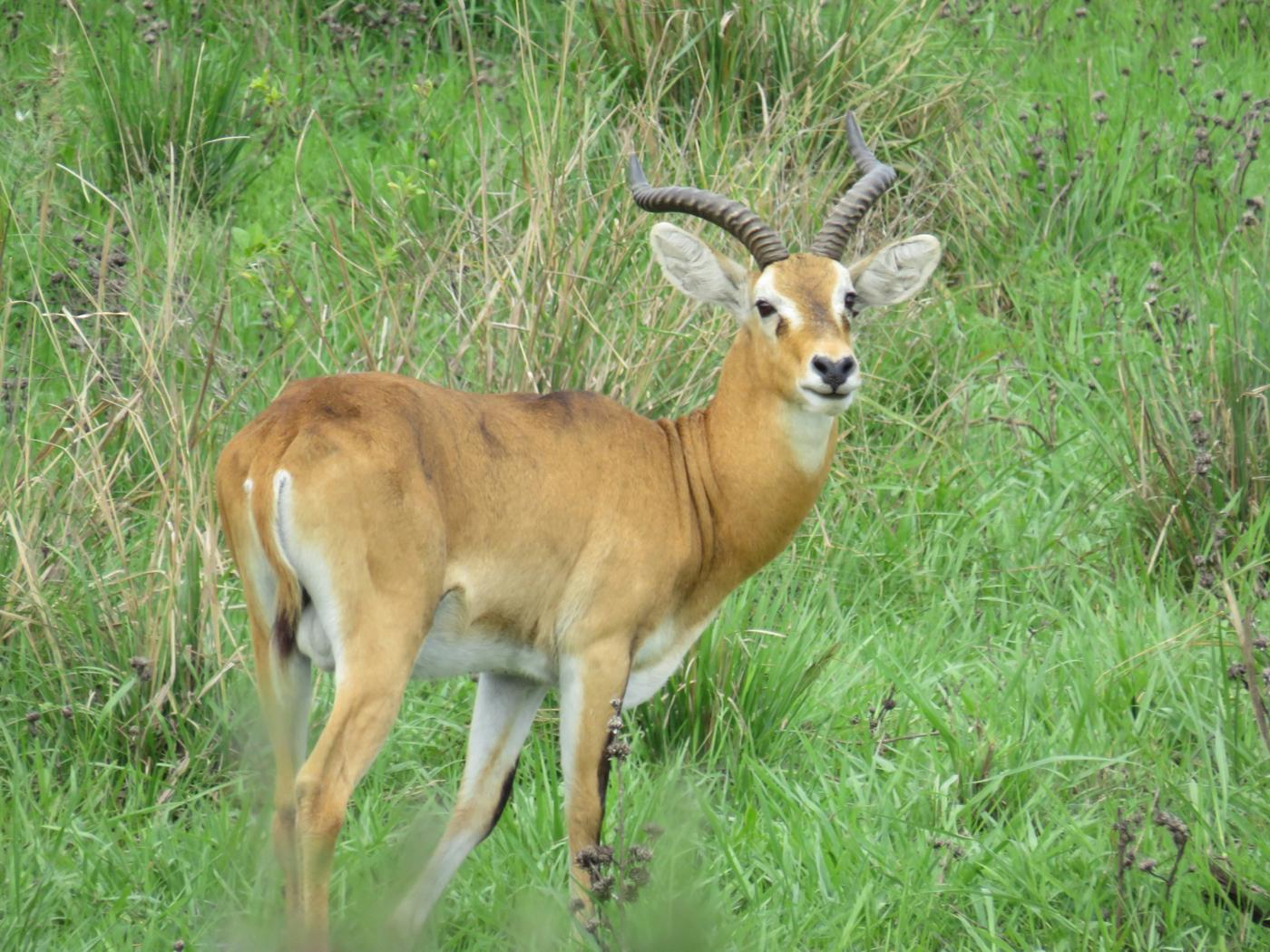
Uganda has no equivalent. Its largest herd spectacle is the movement of Uganda kob and buffalo in Queen Elizabeth and Kidepo, which is lovely but not comparable.
Verdict: Kenya, if the Migration matters to you. Travel between July and October and plan at least three nights in the Mara.
4. Landscapes
Uganda is green and varied. Winston Churchill's description of it as the "Pearl of Africa" still fits: Bwindi's mist-covered forest, the Rwenzori mountains, crater lakes near Fort Portal, Lake Bunyonyi, Murchison Falls where the Nile squeezes through a narrow gorge, and the source of the Nile at Jinja. A Uganda safari feels like moving through several countries in one.
Kenya's scenery is the classic Africa of the imagination: golden savannah and flat-topped acacias in the Mara, the Great Rift Valley, Lake Nakuru and Lake Naivasha, Mount Kenya, and the arid north around Samburu with species you will not see further south, including the Grevy's zebra, reticulated giraffe, beisa oryx, gerenuk and Somali ostrich.
Verdict: Uganda for lush variety, Kenya for iconic open plains.
5. Crowds
In peak season the Maasai Mara can be busy. A river crossing may draw many vehicles, and behaviour at sightings varies between camps and guides. You can reduce this a great deal by staying in a private conservancy next to the reserve, where vehicle numbers are limited and off-road driving and night drives are allowed. Other Kenyan parks, such as Samburu and Laikipia, are quieter.
Uganda is generally quieter. Gorilla groups are capped at eight visitors, and most of its savannah parks see only a handful of vehicles. The trade-off is that infrastructure is less developed, roads can be slow, and fewer visitors means fewer lodges to choose from.
Verdict: Uganda feels quieter by default. Kenya can be just as peaceful if you choose conservancies and travel outside the peak weeks.
Practical planning
6. Accommodation
Kenya has the larger and more varied accommodation market. Tented camps in the Mara and its conservancies range from comfortable mid-range camps to some of the most expensive safari lodges in Africa, with private-conservancy camps usually at the top of the range. Amboseli, Samburu, Laikipia and Lewa each have their own distinctive lodges.
Uganda has fewer properties, but they are well placed and often more intimate. Bwindi has lodges perched on forested ridges with views over the canopy, Queen Elizabeth and Murchison Falls have riverside lodges, and the mid-range and budget lodges are good value. Because there are fewer rooms near gorilla trailheads, the best lodges fill early in the dry seasons. Our lodges directory lists the properties we use in both countries.
Verdict: Kenya for choice and ultra-luxury. Uganda for forest-lodge atmosphere and good value in the mid-range.
7. Costs
Neither country is cheap, and the biggest cost difference is what each is built around. In Uganda the gorilla permit is a fixed cost that makes a gorilla safari more expensive on paper, but park fees and many lodges elsewhere are moderate. In Kenya the main variable is the Maasai Mara, where the entry fee is set by Narok County, differs between the first and second half of the year, and is added to some of the highest camp rates in East Africa.
As a guide, our published starting prices in October 2026 are from US$3,800 per person for a six-day Uganda gorilla safari and from US$4,400 per person for a seven-day Maasai Mara and Amboseli safari. These are "from" prices that depend on season, lodge level, group size and flights, so treat them as a starting point rather than a quotation. Park and permit fees for each trip are shown on your written quotation.
Four things drive the final price in either country: how many domestic flights you take, whether you choose a private conservancy or a shared reserve, the time of year, and whether you travel privately or with a group. For more detail, read our Uganda safari cost and Kenya safari cost guides.
Verdict: A comparable range. Kenya costs more in the peak Mara season; Uganda costs more if you add several gorilla permits.
8. Getting around
Kenya is easier to move around. Nairobi is a major international hub, and the Mara is about five to six hours by road from the city or a flight of around 45 minutes. Roads to Amboseli are good, and scheduled domestic flights connect the major parks.
Uganda involves more time on the road. Kampala to Bwindi is roughly eight to nine hours by road, and Kampala to Murchison Falls or Queen Elizabeth takes several hours each. Domestic flights from Entebbe or Kajjansi to the Bwindi airstrips cut a full day of driving down to around ninety minutes, which many guests find worth the extra cost. The drives themselves are scenic, with tea plantations, villages and views of the Rift Valley escarpment. Our fly-in vs road safari guide helps you weigh the choice.
Verdict: Kenya if time is short. Uganda if you enjoy overland travel or can add flights.
9. Best time to go
The best months differ, but they overlap in the middle of the year.
For Kenya, July to October is the classic season for the Migration, and January and February are also good dry months. March to May are the long rains, when some camps close and prices drop, and November brings a shorter rainy spell.
For Uganda, the two dry seasons are roughly December to February and June to September. Gorillas can be trekked at any time of year, but trails are drier and easier in the dry seasons. March to May is the wettest period. Our best time to visit Uganda guide has the detail.
If you want both countries in one trip, June to September is the easiest overlap: dry weather in Uganda and the Migration building in the Mara from July.
10. Beaches
Kenya wins clearly here. The coast offers Diani, Watamu, Malindi and Lamu, and a beach stay after a Mara safari is easy to arrange. Uganda has no ocean coastline, only lake leisure, such as the Ssese Islands on Lake Victoria and Lake Bunyonyi in the south-west. If you want a beach after a Uganda safari, the most common choices are Zanzibar and the Seychelles, both of which we add to itineraries. See our Zanzibar honeymoon guide for a beach finish.
11. Safety and health
Both countries receive large numbers of safari visitors every year, and most trips pass without incident. Lodges, parks and guides manage most of the risk. As in any city, take normal precautions in Nairobi and Kampala against petty theft and avoid walking alone after dark. Governments publish travel advice for both countries, and it concerns certain border areas and districts rather than the usual safari routes; read your own government's current advice before you book, and ask us about any route you are unsure of.
For health, speak to a travel clinic six to eight weeks before departure. Malaria prevention is advised for both countries. Uganda requires proof of yellow fever vaccination from arriving visitors, while Kenya requires it for travellers arriving from countries with yellow fever transmission. Make sure your travel insurance covers medical evacuation. Our malaria and yellow fever guide and safari travel insurance guide have the details.
LGBTQ+ travellers should read their government's advice before booking: same-sex relations are criminalised in both countries, and Uganda's 2023 legislation carries severe penalties.
12. Visas and entry
Both countries use online systems, and both are straightforward if you apply ahead of time.
Uganda issues a tourist e-Visa through its immigration portal for US$50 per person. If you plan to visit Uganda, Kenya and Rwanda on one trip, the East Africa Tourist Visa at US$100 covers all three. Kenya requires an Electronic Travel Authorisation, from US$30, which you apply for online before you fly. These are the figures the immigration authorities published in October 2026. Your passport should be valid for at least six months and have blank pages. Apply only through the official government websites. Our visa guide for five destinations walks through the process.
13. Families and children
Kenya is generally the easier country for families with young children. Game drives are comfortable, many camps run children's programmes, and no core activity in the Mara is age-restricted. Age policies differ from camp to camp, and some lodges and balloon operators set a minimum age. See our best age for a family safari guide.
Uganda has firm age limits for primate trekking: the minimum age for gorilla trekking is 15, and chimpanzee tracking in Kibale is for ages 12 and over. That makes a Uganda gorilla trip better suited to teenagers and adults. Families with younger children can still enjoy Queen Elizabeth, Murchison Falls, Lake Mburo and Ziwa Rhino Sanctuary. In both countries, discuss malaria prevention for children with your doctor well in advance.
14. Birdwatching
Both are among the best birding destinations in Africa, with more than a thousand recorded species each. Uganda is famous for the shoebill, which you can look for at Mabamba Swamp near Entebbe, for the Albertine Rift endemics in Bwindi, and for forest species in Kibale and Semuliki. Kenya has the flamingo gatherings on the Rift Valley lakes (numbers vary with water levels), Lake Naivasha, Kakamega Forest and a rich mix of savannah and coastal birds. Our East Africa birding safari guide covers both.
Verdict: Uganda for the shoebill and forest specialists. Kenya for easy open-country birding and a mix of habitats.
15. Adventure and activities
Uganda is the stronger choice for active travellers. Options include white-water rafting and kayaking at Jinja on the Nile, boat safaris on the Kazinga Channel and below Murchison Falls, hiking in the Rwenzori mountains, cycling and walking safaris at Lake Mburo, and forest walks with primates.
Kenya adds sunrise hot-air balloon flights over the Mara, guided walking safaris in conservancies, night drives in private conservancies, visits to Maasai communities, cycling in Hell's Gate, and snorkelling and diving on the coast. Our night drives and walking safaris guide explains what is allowed where.
Verdict: Uganda for variety of adventure on land and water. Kenya for the balloon flight and conservancy activities.
16. Who each country suits
Uganda suits travellers who want an experience rather than a checklist: gorilla and chimpanzee encounters, forests, rivers and a quieter safari. It suits people who are comfortable with some walking and long drives, and who may already have been on a classic savannah safari.
Kenya suits travellers who want the classic safari: wide plains, big cats, elephants and the Migration, with a comfortable first-timer experience, shorter transfers and an easy beach extension.
If you are undecided, remember that the two countries are neighbours and that many guests combine them.
Quick rules for choosing between them
Choose Uganda if
- You want to see mountain gorillas or chimpanzees in the wild, which is not possible in Kenya.
- You prefer a quieter, more adventurous safari with forests, rivers and walking.
- You are travelling as adults or with teenagers (gorilla trekking starts at age 15).
- You love birds and want the shoebill and Albertine Rift endemics.
- You have already done a savannah safari and want something different.
- You can allow extra time, or budget for flights, to cover long distances.
Choose Kenya if
- You want to see the Great Migration river crossings between July and October.
- Classic open-plain game viewing and big cat sightings matter most.
- This is your first safari and you want shorter transfers and easy logistics.
- You are travelling with young children, or want a beach stay on the coast.
- You want to see all of the Big Five, including rhino, in the wild.
- You want a hot-air balloon flight or a private-conservancy experience.
Sample trips and starting prices
These outlines show how each trip is usually shaped. Prices are our published "from" prices per person sharing in October 2026; your quotation depends on dates, lodge level, group size and flights.
Uganda gorilla safari, 6 days (from US$3,800 per person)
- Day 1: Arrive in Entebbe and transfer to your hotel.
- Day 2: Fly or drive to Bwindi and settle into your forest lodge.
- Day 3: Gorilla trek and one hour with a habituated family, then rest in the afternoon.
- Day 4: Optional second activity, such as a community walk or forest walk, then return transfer.
- Days 5 and 6: Return to Entebbe, with time for Lake Victoria or Ziwa Rhino Sanctuary on the way, then departure.
Kenya Maasai Mara and Amboseli, 7 days (from US$4,400 per person)
- Day 1: Arrive in Nairobi.
- Days 2 to 4: Maasai Mara game drives, with a river-crossing watch in season.
- Days 5 and 6: Amboseli, with elephants and Kilimanjaro views.
- Day 7: Return to Nairobi and depart.
Combined Uganda and Kenya, about 10 to 12 days (priced on your written quote)
A typical route runs Entebbe, Bwindi for gorillas, Queen Elizabeth or Kibale, then a flight to Nairobi and on to the Mara. Add a beach extension on the Kenyan coast or Zanzibar if you want to finish by the sea. We price this one individually, because it depends heavily on lodge level and flights.
Can you combine Uganda and Kenya?
Yes, and many guests do. The two countries are neighbours with direct flights between Entebbe and Nairobi, so you can trek gorillas in Uganda and then watch the Migration in the Mara in a single trip. Allow at least ten days, and book early if you want to travel between July and September. The combined trip works best in a straight line, flying in to one country and out of the other, which avoids backtracking. For the full route, costs and visas, read our Uganda and Kenya combined safari guide.
Our verdict: Uganda or Kenya?
There is no single winner, because each country is best at something different. Choose Uganda for gorillas, chimpanzees, forests and a quieter, more adventurous safari. Choose Kenya for the Great Migration, open plains, big cats and an easy first safari. If you have the time, combine them and see both.
Tell us the month you can travel, how many days you have and who is coming, and we will recommend a route and send a quotation. Not sure which country comes first on your list? Our guide to which destination to visit first compares all of our destinations, and our Tanzania vs Kenya guide covers the other classic pairing.
Plan your safari with us. Tell us the month you can travel, how many days you have and who is coming, and we will reply within 24 hours with a route and a written quotation.
Request a free quotation