
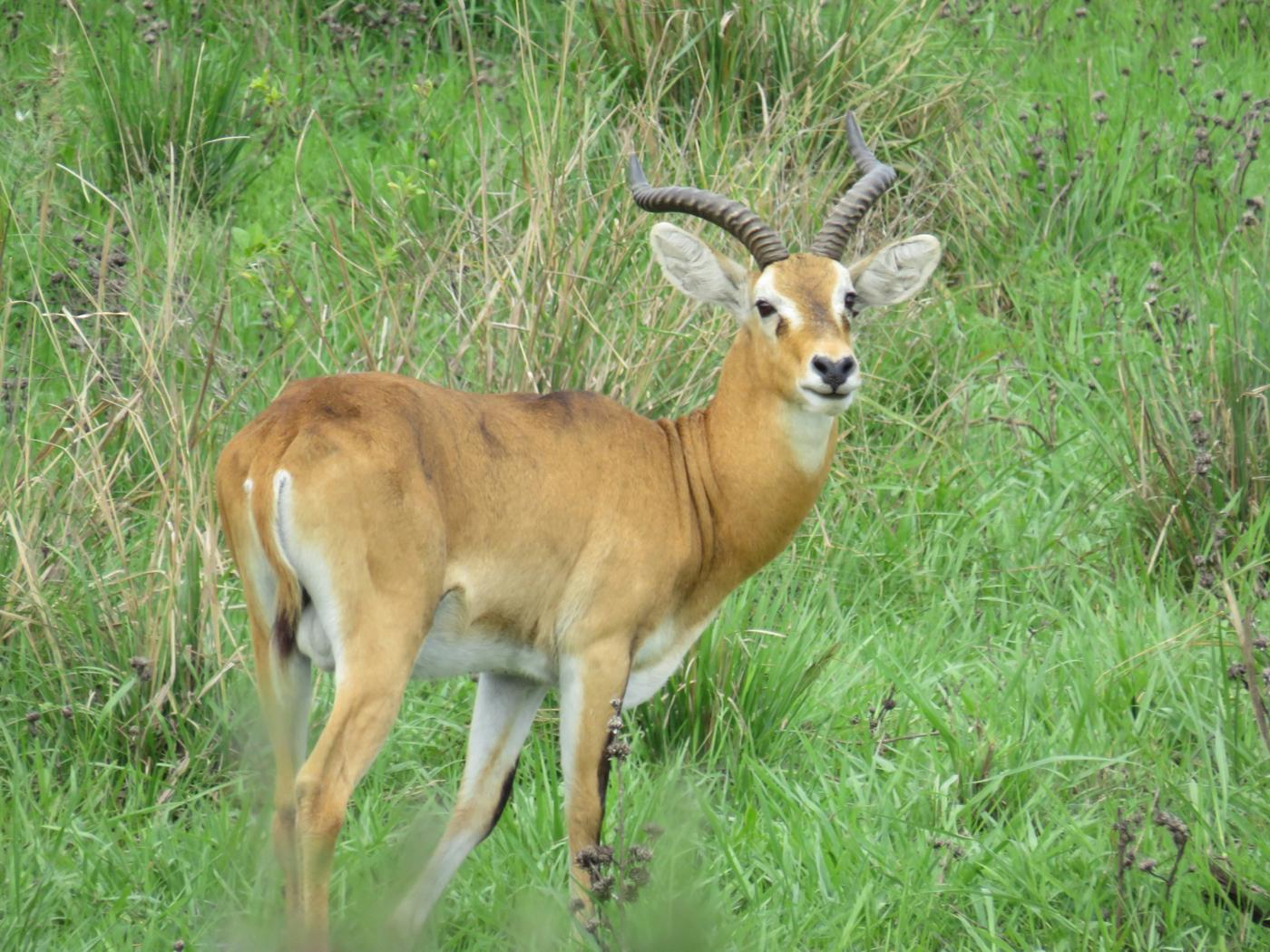
Masai Mara or Amboseli is the most common choice a first-time visitor to Kenya has to make, and the two parks could hardly be more different. The Mara is vast, golden and famous for big cats and the wildebeest migration. Amboseli is small, green around its swamps and famous for elephants walking beneath the snow-capped summit of Mount Kilimanjaro. This guide compares them head to head: size, wildlife, big cats, elephants, scenery, the best time to go, crowds, cost, how to get there, who each suits and how to combine them. People search for it as Masai Mara vs Amboseli, Masai Mara or Amboseli, Amboseli vs Masai Mara, which is better Mara or Amboseli, Mara or Amboseli for a first safari and Amboseli or Maasai Mara for elephants. The comparison is for planning a 2027 trip.
Quick answer
Choose the Masai Mara for big cats, wide open plains and the migration from about July to October. Choose Amboseli for elephants, the Kilimanjaro backdrop and a smaller, easier park. If you have the time, combine them: the Mara for the predators and the herds, Amboseli for the elephants and the mountain.
The Mara covers about 1,510 square kilometres of reserve and is also surrounded by private conservancies. Amboseli National Park covers about 392 square kilometres. The Mara's non-resident adult fee is USD 100 per day from January to June and USD 200 from July to December on the 2026 schedule, against USD 90 per day at Amboseli on the Kenya Wildlife Service schedule from October 2025.
Masai Mara vs Amboseli at a glance
| Item | Masai Mara | Amboseli |
|---|---|---|
| Size | About 1,510 km2 reserve plus conservancies | About 392 km2 park |
| Landscape | Open grassland, rivers, acacia | Swamps, dry plains, Kilimanjaro backdrop |
| Famous for | Big cats, the migration, river crossings | Elephants, Kilimanjaro views |
| Best months | July to October for the migration | June to October for wildlife, December to February for clear mountain views |
| Elephants | Present | A highlight, roughly 1,500 in the ecosystem |
| Lions and leopards | Excellent | Lions present, leopards unlikely |
| Rhino | Black rhino in small numbers | Not part of an Amboseli safari |
| Adult fee | USD 100 or 200 per day, by season | USD 90 per day |
| Distance from Nairobi | About 230 to 280 km | About 204 to 240 km |
| Activities | Balloons, walking and night drives in conservancies | Game drives and viewpoints over the swamps |
Chapter 01: How do the two parks differ in size and landscape?
The Mara is a huge reserve of open grassland cut by the Mara and Talek rivers, with acacia woodland, escarpments and a ring of private conservancies on its borders. Amboseli is a fraction of the size, and its landscape is built around swamps fed by meltwater from Kilimanjaro, which turn a dry plain green and draw wildlife from miles around.
This difference shapes the experience. In the Mara you cover ground and find animals spread across a wide area. In Amboseli animals gather near the swamps, which makes finding them easier and the park manageable in two or three days.
Chapter 02: Which has better wildlife?
The Mara has the greater variety of large mammals and the more dramatic encounters: lions, leopards, cheetahs, elephants, buffalo, hippos, crocodiles and, in season, vast herds of wildebeest and zebra. Amboseli has fewer species but strong numbers of elephants, buffalo, zebra, wildebeest and giraffe, and a rich birdlife, with over 400 species recorded, many around the swamps.
If your list is led by big cats and predator action, the Mara is the better park. If it is led by elephants and photography, Amboseli is the better one. Our Kenya Big Five guide shows how both parks fit the Big Five.
Chapter 03: Which is better for big cats?
The Mara, by a clear margin. Lions are common, leopards are seen along the river and in the rocky areas, and cheetahs hunt on the open plains. Amboseli has lions and some other cats, but leopards are unlikely and big-cat sightings are far rarer than in the Mara.
If seeing a hunt or a leopard is the main reason for your trip, choose the Mara, and consider a private conservancy, where the smaller number of vehicles makes long sightings easier.
Chapter 04: Which is better for elephants?
Amboseli. The Amboseli Trust for Elephants has followed the park's elephants for decades, and the herds of the ecosystem number roughly 1,500. They feed in the swamps and cross the open plain in front of Kilimanjaro, and the large tuskers and big family groups make Amboseli one of the best places in Africa to watch elephants at close range.
The Mara also has elephants, but the herds are more dispersed and the setting less photogenic. If elephants are your first priority, Amboseli wins.
Chapter 05: Which has better scenery?
It depends on what you prefer. Amboseli has Kilimanjaro, Africa's highest mountain at 5,896 metres, as a backdrop, and a picture of elephants in front of the summit is one of Kenya's most famous images. The mountain is clearest in the early morning and late afternoon, when cloud tends to clear, and the months from December to February often give the best views.
The Mara offers wide horizons, river valleys and the sight of thousands of animals moving across open country. Neither park is plain. One has a mountain, the other has space.
Chapter 06: When is the best time to visit each?
For the Mara, July to October is the migration season, with river crossings at the Mara River, and it is the busiest and most expensive period. January to June is quieter and cheaper, though April and May bring the long rains.
For Amboseli, the dry season from June to October is best for wildlife, because animals concentrate around the swamps. December to February often brings the clearest views of Kilimanjaro. The long rains from March to May make roads difficult in both parks. Our best time to visit Kenya guide gives the full calendar.
Chapter 07: Which is more crowded?
The Mara is busiest in July and August, when the migration draws many vehicles, and the popular crossing points can be crowded. Conservancies limit the number of beds and vehicles, so they stay quieter. Amboseli is smaller, so its popular areas can feel busy at any time of year, though it is generally quieter between November and May.
If crowds matter, choose a conservancy in the Mara or visit Amboseli outside the dry-season peak.
Chapter 08: Which costs more?
The Mara usually costs more. Its reserve fee is USD 100 per adult per day from January to June and USD 200 from July to December on the 2026 schedule, while Amboseli's adult fee is USD 90 per day on the Kenya Wildlife Service schedule from October 2025. Camp rates are generally higher in the Mara as well, particularly in the conservancies and in the migration months.
The difference is smaller in the first half of the year and largest from July to October. Our Masai Mara cost and park fees guide explains the Mara's fees in detail.
Chapter 09: How do you get to each park?
Amboseli lies about 204 to 240 kilometres from Nairobi by road, depending on the gate and route: through Emali and the Iremito gate, through Namanga and the Meshanani gate, or through Tsavo West and the Kimana gate. Light aircraft land at the Kimana airstrip. The Mara lies about 230 to 280 kilometres from Nairobi, and most visitors fly to an airstrip near the camp or drive for five to six hours. Our Nairobi to Masai Mara guide explains the Mara route, and our Amboseli guide covers the other.
Chapter 10: Which park suits which traveller?
First-timers: both work. Amboseli is easier to cover in two or three days, and the Mara offers the broader introduction to the safari experience.
Families: both suit families, and the Mara conservancies and Amboseli's easy distances are both forgiving. Our Kenya family safaris guide covers age limits.
Photographers: Amboseli for elephants against Kilimanjaro, the Mara for big cats and the migration.
Couples: the Mara for conservancy camps, balloon flights and sleep-outs, Amboseli for quieter camps beneath the mountain. Our Kenya honeymoon safari guide covers the options.
Birders: Amboseli's swamps draw wetland birds, while the Mara has grassland birds and raptors.
Chapter 11: Can you visit both?
Yes, and many itineraries do. The usual route runs through Nairobi, by road or by air, and the stay is divided between the two parks. One published ten-day itinerary spends four days in Amboseli and six in the Mara. Our own approach is to allow at least two nights in Amboseli and three in the Mara, with a night in Nairobi between them if you are flying, so that the transfers do not use up the safari.
Our Maasai Mara and Amboseli safari combines the two. Our how many days guide shows how to size the trip.
Chapter 12: What if you can only choose one?
Choose the Mara if your trip is in July to October, if big cats matter most or if you want the widest range of experiences, including a balloon flight. Choose Amboseli if elephants and the mountain matter most, if your budget is tighter or if you are travelling between December and February for the clearest views.
Chapter 13: What mistakes do visitors make?
Expecting the same wildlife in both parks, expecting a clear view of Kilimanjaro at midday, allowing only one night in either park, ignoring the transfer time between them and booking Amboseli for leopards or the Mara for tusker herds against the mountain. Another is assuming that the migration is in the Mara all year round, when the herds are there only from about July to October.
Chapter 14: What is the verdict?
The Mara is the better park for predators, variety and the migration. Amboseli is the better park for elephants, the mountain and a compact trip. If you can spare five or six days, visit both, with at least two nights in each.
Tell us your dates, your interests and your budget, and we will send a written quotation that fits them. See our Kenya destination page, our Masai Mara guide and tours such as our Maasai Mara and Amboseli safari and our 6-day Masai Mara migration fly-in safari.
Tell us your dates, your interests and how many days you have, and we will reply within 24 hours with a written quotation for the Mara, Amboseli or both.
Request a free quotation