
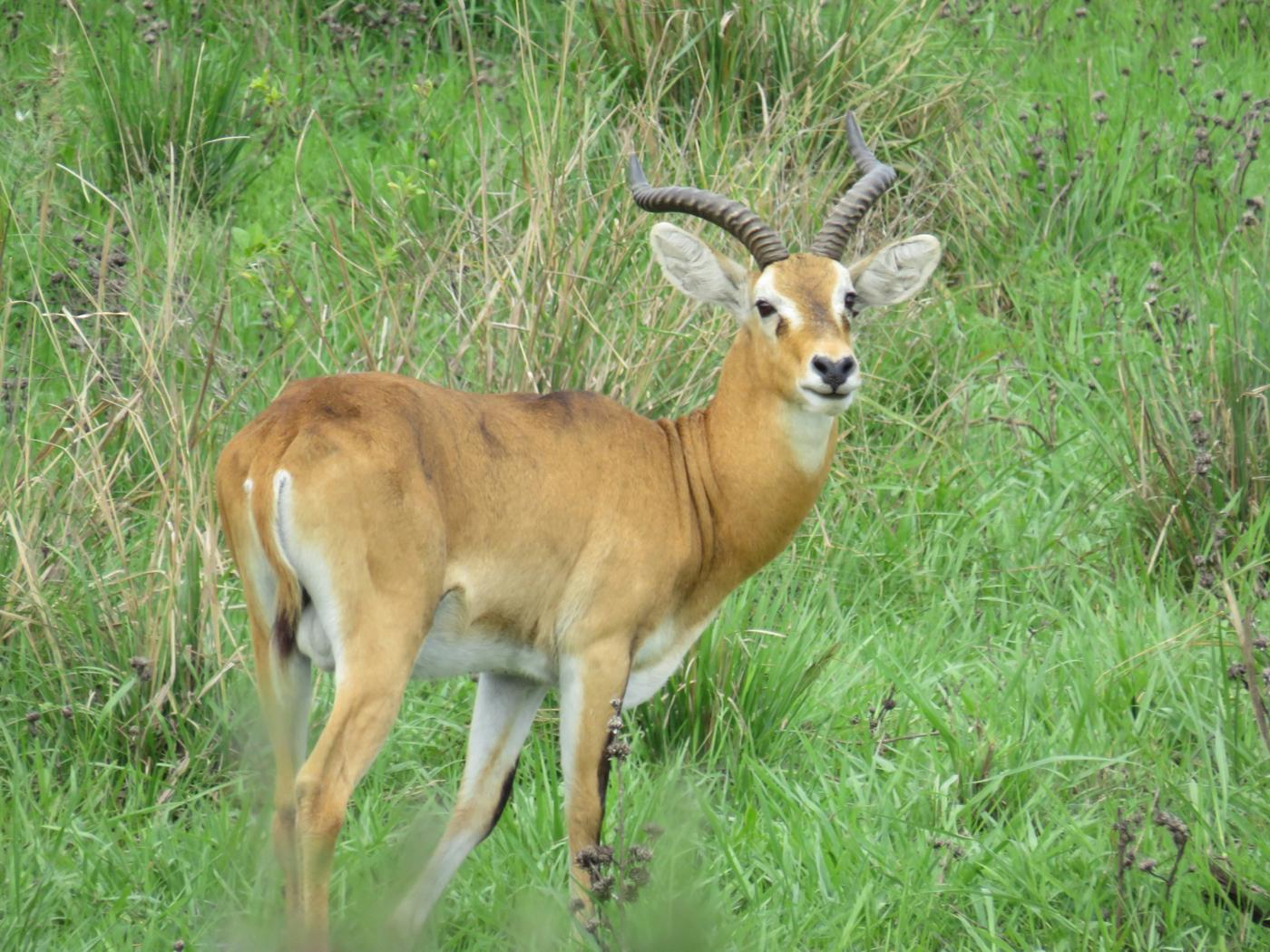
A safari for seniors is realistic, comfortable and rewarding in Uganda, Rwanda, Kenya, Tanzania and Zanzibar, provided the trip is built around the traveller's stamina, mobility and medical needs rather than around a standard itinerary. This guide covers which destinations and activities suit older and less mobile travellers, what the official rules say about gorilla and chimpanzee trekking, the health points to raise with a doctor, how to choose lodges and vehicles, and a step-by-step plan for an accessible safari with the right pace.
Quick answer
Can seniors go on safari in East Africa? Yes. There is no upper age limit for a game drive, a boat safari or a visit to a conservancy, and there is no upper age limit for gorilla trekking, where the published rules set only a minimum age of 15. What matters is the individual: how far you can walk on uneven ground, whether you manage steps and long vehicle days, how you cope with altitude and heat, and what your doctor advises. A good safari for seniors uses fewer stops, longer stays, flat parks, private vehicles, lodges with easy access and rest days before and after any trek.
Three points shape everything. First, a gorilla trek is the hardest day on most itineraries, so plan around it and tell your operator your limits in writing before you pay for a permit. Second, take medical advice four to six weeks before travel, because yellow fever and malaria advice changes with age and with the countries on your route. Third, ask lodges specific access questions instead of accepting "accessible" as an answer, because the word means different things at different camps.
Safari for seniors at a glance
| Destination | Why it suits older travellers | What to check |
|---|---|---|
| Uganda | Short flights or drives between varied parks; boat safaris on the Kazinga Channel and the Nile; chimpanzee trekking from age 12 | Bwindi sits at 1,160 to 2,607 m, and gorilla treks are steep and slow |
| Rwanda | Compact country with short transfers from Kigali; gorilla treks start from one headquarters at Kinigi | Treks reach 2,500 to 4,000 m, and hikes run from 30 minutes to four hours or more |
| Kenya | Flat savanna, short game-drive days and conservancies with private vehicles | Long road transfers; malaria is high risk in most parks |
| Tanzania | Northern circuit with Ngorongoro Crater's compact game viewing and fly-in options | Yellow fever and malaria advice is age-specific; check road lengths |
| Zanzibar | A gentle rest at the end of a safari | Malaria risk applies on the island too; beach lodges vary in step-free access |
Chapter 01 — Is a safari suitable for older travellers?
Is age the question? No. Two travellers of 72 can have very different safaris. Ask four questions instead. Can you walk 30 minutes on uneven ground without help? Can you climb into a safari vehicle using a step or a helping hand? Can you manage a long day with limited toilet stops? Are there medical conditions, medicines or equipment, such as a CPAP machine or insulin, that need a plan? If the answer to any of these is uncertain, tell your operator before you choose a route, because the answer changes the itinerary.
What does a safari day look like? A typical day has an early game drive of three or four hours, a break at camp, a second drive in the afternoon and an early night. Most of the time is spent sitting in a vehicle. The effort comes from early starts, vibration on rough tracks, heat and dust, and getting in and out of the vehicle, not from walking. That is why a safari for seniors can work well for travellers who would find a walking holiday difficult, and why the best safari for seniors is designed around the seat, not the stride.
What does a good plan look like? A safari for seniors that works uses fewer, longer stops of three nights where possible, flies between distant parks to cut road time, puts rest days next to demanding activities, and uses a private vehicle with a driver-guide who sets the pace. Our guide on fly-in versus road safaris shows the trade-off in time and comfort, and our first-time safari planning guide shows how a trip is put together.
Chapter 02 — Which destination suits a safari for seniors?
The right destination for a safari for seniors depends on whether you want game, primates or a mix.
Kenya and Tanzania for game viewing. The savanna parks suit travellers who want to see animals with little walking. Our guides to Amboseli, the Maasai Mara, Lake Nakuru, Nairobi National Park, Ngorongoro Crater and Tarangire describe the landscapes and the road time to each. Ngorongoro is compact: the crater floor allows only 4x4 vehicles up to 3,500 kg tare weight, a licensed or official NCAA guide must accompany every crater visitor, and driving is permitted between 06:00 and 18:00, so a day there is a vehicle day rather than a walking day.
Uganda for primates and water. Uganda is the home of gorilla and chimpanzee trekking, but its savanna parks also suit older travellers. A boat cruise on the Kazinga Channel in Queen Elizabeth National Park and the launch trip to the base of the falls in Murchison Falls National Park are seated, scenic and gentle, and Lake Mburo is a compact park close to Kampala. Our Uganda national parks guide compares them.
Rwanda for a short, focused trip. Rwanda's gorilla trek starts from the park headquarters at Kinigi, and the country is small enough for short transfers. Our guide to Volcanoes National Park explains the trek. The altitude and steep ground are the same issues as in Uganda.
Meals and special diets. Tell every lodge about dietary needs, allergies and swallowing or chewing difficulties when you book, and drink water steadily, because heat and altitude dehydrate. Our East African food guide explains what you will be served and what to ask for.
Zanzibar for the end. A few nights on the island make a gentle finish after the early starts of a safari. Our Zanzibar add-on guide and Zanzibar beyond the beach explain how it fits.
Country pages. Our destination pages for Uganda, Rwanda, Kenya, Tanzania and Zanzibar and our travel information pages give the practical detail for each.
Chapter 03 — Gorilla and chimpanzee trekking: the rules, the effort and the options
Is there an age limit for gorilla trekking? Only a minimum. The UWA conservation tariff says the minimum age for gorilla tracking is 15 years, and Visit Rwanda says the same for Rwanda. Neither publishes a maximum age. Chimpanzee tracking in Uganda has a minimum age of 12. Our gorilla trekking fitness guide explains the physical side.
What are the health rules? UWA's tracking rules say not to visit the gorillas if you have a cold or other infectious illness. Groups are limited to eight visitors per gorilla group, visitors keep 10 metres from the gorillas, and each visit lasts one hour per group per day. Tell your guide if you are unwell on the morning, because the rules are there to protect the gorillas as well as you.
How hard is the trek? Bwindi's altitude is 1,160 to 2,607 m according to UWA. Visit Rwanda says treks reach 2,500 to 4,000 m and last anything from 30 minutes to four or more hours, and that visitors are allocated a gorilla family on the day according to fitness level. Tell your guide at the briefing exactly what you can manage so the allocation fits you. Our guides to the Bwindi sectors and to what happens on trekking day show how the sectors and the day differ.
Porters and help on the trail. Visit Rwanda says porters are available to carry backpacks and cameras and to offer a helping hand along the route. UWA's tariff and visitor pages do not describe a porter service or a carry service for people who cannot walk the trail. If you want hands-on help, a walking stick or a carry arrangement, ask your operator in writing what the park has agreed for your group before you pay for a permit.
Permits, price and booking. UWA says foreign non-resident gorilla and chimpanzee permits can only be booked through licensed tour operators. Its 2024 to 2026 tariff lists the foreign non-resident gorilla permit at USD 800, and that period ended in June 2026, so ask for the current price in writing. Visit Rwanda lists a gorilla permit at USD 1,500 per person per day. UWA's tariff lists no senior or disability category; its concessions are for Ugandan pupils, students and school groups. A late reschedule costs 25 per cent of the permit fee, and tracking in a different location costs 50 per cent, so settle your fitness plan before the date is fixed. Our how to book gorilla permits guide explains the process.
Options if the gorilla trek is too much. Choose chimpanzee tracking at Kibale, which has a lower minimum age, and ask your operator to rate the walking time and terrain for your group; or skip primates and build the safari around game drives and boat trips. A safari for seniors does not have to include a trek to be a success, and many of the best ones do not. Our classic gorilla trekking safari is built around the trek, and we can design a version with extra rest days.
Chapter 04 — Health first: what older travellers should ask a doctor
See a travel clinic four to six weeks before you fly. The UK's TravelHealthPro recommends a pre-travel appointment ideally at least four to six weeks before travel, and earlier if you have a pre-existing condition. Take your itinerary, your medicine list and your medical history, and ask about vaccines, malaria tablets, altitude, flights and your own conditions. This guide is not medical advice.
Yellow fever. The advice depends on your age and your route. TravelHealthPro lists the yellow fever vaccine as recommended for travellers aged 9 months and older in Uganda, and its yellow fever page says individuals aged 60 years and older should seek expert opinion before having it. For Kenya it recommends the vaccine for areas including Tsavo East and West, the Masai Mara and Lake Nakuru, and says people aged 60 or over should not be given it for travel to low-risk areas only. For Tanzania and Rwanda it says the vaccine is generally not recommended and that people aged 60 or over should not be given it for travel there. The UK's medicines regulator says the rate of rare serious reactions may be up to four times greater in people aged 60 or over, and that only healthcare professionals trained in benefit-risk evaluation should give the vaccine. A yellow fever certificate is valid for life according to the WHO, as TravelHealthPro notes.
Certificates and exemptions on multi-country routes. TravelHealthPro says Kenya, Tanzania and Rwanda require a certificate from travellers over one year old arriving from countries with a risk of yellow fever, and that Uganda is a country with risk. A route that crosses borders can therefore pull the entry rules and the medical advice in different directions, so ask the clinic early whether an exemption letter is appropriate for you. Our guides to malaria and yellow fever vaccinations and the yellow fever certificate set out the entry rules by country.
Malaria. TravelHealthPro lists malaria risk as high in Uganda and Rwanda, in Kenya apart from Nairobi and the highlands above 2,500 m, and in Tanzania below 1,800 m including Zanzibar. It lists older people among the higher-risk groups. Tablet choices depend on your health and other medicines, and atovaquone with proguanil and doxycycline start one to two days before arrival, while mefloquine starts two to three weeks before, so ask early.
Altitude. TravelHealthPro describes high altitude as 1,500 to 3,500 m and says altitude illness usually occurs above 2,500 m. Its advice includes avoiding a jump from below 1,200 m to above 3,500 m in a single day and never going higher to sleep while you have symptoms. Bwindi and Rwanda's volcano treks sit in this zone, so allow a night or two at moderate height before the trek, and ask your doctor whether your heart, lung or blood-pressure conditions need a plan.
Long flights. TravelHealthPro says a journey of more than four hours may increase the risk of a blood clot, that older travellers should consider properly fitted compression socks and ask a healthcare provider, that aspirin is not recommended for preventing clots, and that you should drink fluids and move your legs regularly. Ask for an aisle seat so you can walk, and plan a rest day on arrival.
Flu and other infections. TravelHealthPro notes that severe influenza illness is more common in people aged 65 or over. Check your routine vaccines at the same appointment.
Chapter 05 — Flights, transfers and vehicles
Cut the road time. Long drives on rough roads are the most tiring part of many safaris. Where distances are large, a short internal flight saves hours. Light aircraft have strict luggage limits, so read our luggage weight limits guide before you pack, and tell your operator if you travel with equipment.
Ask for airport assistance. Tell your airline in advance if you need a wheelchair or assistance at either end, and tell your operator so that a driver and a vehicle are waiting where the assistance ends. Ask your operator what assistance exists at each airport and airstrip on your route, and plan the bags and the steps with them.
Choose the vehicle. Most safari vehicles are raised 4x4s, so ask about the step height, whether there is a grab handle or a step, whether the roof lifts for viewing, how many seats each guest has, and whether you can sit near the door. A private vehicle with a driver-guide lets you stop when you need to, which a shared vehicle cannot. Our private versus group safari guide explains the difference. If you are tempted to drive yourself, read our self drive safari guide first.
Plan the breaks. Ask your driver-guide to build in toilet stops, and tell the operator how often you need one. Carry water, a hat, sun protection and any medicines in a day bag you can reach. Keep a copy of your medicine list and your insurer's emergency number in the bag.
Chapter 06 — Choosing lodges and camps: the access questions to ask
What does accessible mean? Nothing precise. Uganda's Persons with Disabilities Act, 2020 requires the owner or person in charge of a building to which the public is allowed access to provide appropriate access for persons with disabilities, covers recreation facilities and buildings where services such as boarding and lodging are provided through its schedules, and requires commercial service providers to make their services accessible, with an exception where it is necessary to protect the health or safety of any person. Rwanda's National Council of Persons with Disabilities describes national initiatives to empower and support persons with disabilities. Kenya's and Tanzania's rules are set in their own laws, and the wording of a lodge's brochure does not tell you what a room is like. Ask these questions in writing and keep the answers with your booking.
Ten questions to ask every lodge:
- Is the path from the vehicle drop-off to reception, the dining area and the room step-free, and how long is it?
- How many steps are there into the room, bathroom and shower, and is there a ramp?
- What is the bed height, and are there grab rails by the toilet and shower?
- Is there a bath, a walk-in shower or a roll-in shower?
- How far is the room from the dining area, and is the path lit at night?
- Is there an escort after dark, and can meals be brought to the room?
- Is power available all night for a CPAP machine or a medicine fridge, and is the generator ever switched off?
- What is the altitude of the lodge?
- How far is the nearest clinic, and what medical kit and training does the lodge have?
- What is the mobile phone signal like, and is there a landline or radio for emergencies?
Tented camps and permanent tents. Tents on raised decks may have steps and uneven paths, while rooms in a main building may be easier. Ask for the room nearest the dining area, and choose camps with a fixed bathroom and short paths. Our lodge pages describe the properties we feature, and our Ngorongoro guide and Uganda guide explain where to stay.
Chapter 07 — Wheelchair users and reduced mobility
Can wheelchair users go on safari? Yes, with planning. UWA's FAQ says every national park is accessible to everyone who wishes to visit, but the published rules do not describe the practical arrangements for a wheelchair at a gorilla trail, a boat jetty or a lodge path. The answer for each stop comes from the operator, the lodge and the park, in writing, before you book.
Think in levels of mobility. Tell your operator which of these describes you: you walk unaided; you walk short distances with a stick or an arm; you use a wheelchair but can transfer to a seat with help; or you cannot transfer without a hoist. Each level changes the vehicle, the lodges, the activities and the number of helpers needed.
What to ask about for each activity:
- Game drives: how you board the vehicle, how many people can help and where you sit.
- Boat cruises: whether the jetty has steps, a ramp or a gangway, and how the crew help with boarding.
- Village and cultural visits: whether paths are flat or rough.
- Gorilla and chimpanzee treks: what the park has agreed for your group, in writing, before the permit is paid.
- Flights on light aircraft: how the aircraft is boarded and what the weight limits are.
Bring a companion or carer. Many accessible safaris work best with a companion who can help on the days when it counts, and with a driver-guide who has time for patient assistance. Tell your operator if you travel with a carer so the rooms, the vehicle seating and the quotation reflect it.
Chapter 08 — Medicines, insurance and your documents
Medicines. Carry all medicines in your hand luggage in the original packaging, with a copy of the prescription or a letter from your doctor listing the generic names and doses. Pack more than you need for the trip, and split the supply between two bags. Rules on carrying controlled medicines differ between countries, so ask your doctor and the embassy of each country on your route before you fly.
Insurance. Declare every pre-existing condition, check the upper age limit on the policy, and make sure it covers emergency medical evacuation, not only hospital costs, because many parks are far from a hospital. Check that gorilla trekking, hot-air ballooning and any walking activities are covered. Our guide to safari travel insurance and evacuation explains the cover to look for, and Tanzania's mandatory travel insurance guide explains the rule there.
Documents. Our trip protection page explains how we handle bookings and changes. Take a medical summary, your emergency contacts, your insurer's 24-hour number and your vaccination certificate. Save copies offline, because phone signal fails in parks. Our SIM card and WiFi guide for East Africa explains how to stay connected and where signal drops.
Chapter 09 — Pace and itinerary: three shapes that work for a safari for seniors
The gentle Kenya loop. Fly into Nairobi, rest, then go to Amboseli and the Maasai Mara by road or short flights, with three nights in each place. Flat savanna and short game-drive days keep the effort low. Our Maasai Mara and Amboseli safari covers these two parks.
The Tanzania crater and savanna loop. Arusha, Tarangire, the Serengeti and Ngorongoro, with a fly-in leg to avoid the longest drive. A crater day is a vehicle day. Our Serengeti and Ngorongoro safari covers this area.
The Uganda primates and savanna loop. Kampala or Entebbe, Queen Elizabeth with a boat cruise, Bwindi with a rest day either side of the trek, and Kibale for chimpanzees. Our Uganda safari covers Bwindi, Queen Elizabeth and Murchison Falls, and our Uganda national parks guide helps you trim it.
Rules of pace. Plan three nights per stop where you can, put a rest day before and after any trek, avoid back-to-back long transfers, and leave an afternoon free after every early start. If you want a milestone trip, our milestone and proposal safari guide shows how to mark the day without piling on activities.
Chapter 10 — Activities by effort level
| Activity | Effort | Notes for older travellers |
|---|---|---|
| Game drive in a vehicle | Low | Early starts and vibration are the effort; a private vehicle sets the pace |
| Boat cruise | Low | Check the jetty and boarding arrangements |
| Cultural visit | Low to medium | Ask about paths and distance |
| Chimpanzee tracking | Medium | Minimum age 12; walking time and terrain vary |
| Gorilla trekking | Medium to high | Minimum age 15; altitude, steep ground and hikes from 30 minutes to four hours or more |
| Walking safari | Medium | Only where the park or conservancy allows it; see our night drives and walking safaris guide |
| Hot-air balloon | Low to medium | Check boarding and landing; see our balloon safari cost guide |
Chapter 11 — Travelling as a couple, alone, with a carer or with grandchildren
Couples and friends. Two older travellers can share the load, but both should agree the limits before booking. A private vehicle and a flexible driver-guide make the difference.
Solo seniors. Travelling alone is entirely possible, and a private driver-guide keeps you company and safe. Read our solo travel safari guide for the costs and the safety side.
With a carer. Tell your operator, so the vehicle seating, rooms and quotation reflect it, and ask lodges whether a carer can have a room next door.
With grandchildren. A multigenerational trip needs the pace of the least mobile traveller. Our multigenerational safari planning guide and best age for a family safari guide cover the family side, and this guide covers the senior side.
Chapter 12 — How to plan a safari for seniors, step by step
Use this order when you plan a safari for seniors, whether you are the traveller or the relative organising it.
- Write down your limits: walking distance, steps, standing time, heat, altitude, medicines and equipment.
- See a travel clinic four to six weeks before travel, and ask about yellow fever, malaria, altitude and flights.
- Choose one or two destinations, not four. See our first-time safari planning guide.
- Decide on the trek. Choose gorilla, chimpanzee or neither, and tell your operator in writing.
- Pick a private vehicle with a driver-guide who sets the pace.
- Cut road time with short flights where distances are large.
- Ask every lodge the access questions in Chapter 06 and keep the answers.
- Arrange insurance that covers evacuation and your conditions.
- Pack for comfort, with medicines in hand luggage and a day bag at the ready. See our packing list.
- Add rest days before and after any trek or long transfer.
Chapter 13 — Checklist
- Doctor's advice on vaccines, malaria tablets, altitude and flights
- Insurance with evacuation cover and declared conditions
- Medicines in original packaging, with a prescription copy
- Medical summary and emergency contacts saved offline
- Written answers from each lodge on access
- Written confirmation of what the park has agreed for any trek
- Walking stick or poles, sturdy shoes and sun protection
- Compression socks for long flights, if your doctor advises
- Day bag with water, medicines and the operator's emergency number
- Rest days booked before and after the trek
Mistakes to avoid and local tips
- Booking a gorilla permit before agreeing the plan. Late changes cost 25 or 50 per cent of the permit.
- Packing the trek into the first days. Arrive, rest and adjust first.
- Accepting "accessible" without details. Ask the ten questions.
- Booking four countries in two weeks. Fewer stops make a better safari for seniors.
- Skipping the clinic appointment. Yellow fever and malaria advice depends on age and route.
- Putting medicines in checked luggage. Keep them with you.
- Forgetting the day bag. Water, medicines and the emergency number belong in reach.
- Sharing a vehicle with a fixed schedule. A private vehicle sets its own pace.
- Underestimating altitude. Bwindi and the Rwanda volcanoes are high.
- Assuming phone signal. Download documents before you leave a town.
- Not telling the guide. Tell the driver-guide and the trekking ranger what you can manage.
Our view
A safari for seniors should feel unhurried. The best trips use fewer stops, flat parks, private vehicles, lodges with easy access and a rest day either side of the one demanding day. If you tell us your limits, your medicines and what you most want to see, we will design the route around them and say plainly which activities to keep, which to change and which to leave out.
Official pages we used
These are the official bodies and pages behind the facts above. Check them again close to your travel date, because rates and rules change.
- Uganda Wildlife Authority conservation tariff, July 2024 to June 2026, frequently asked questions and Bwindi Impenetrable National Park
- Visit Rwanda: gorilla tracking
- Ngorongoro Conservation Area Authority: visitor guidelines and procedures
- Persons with Disabilities Act, 2020 (Uganda) and National Council of Persons with Disabilities, Rwanda
- TravelHealthPro (UK): yellow fever, altitude illness and general travel advice
- UK Medicines and Healthcare products Regulatory Agency: yellow fever vaccine precautions
Plan your safari with us. Tell us the month you can travel, how many days you have and who is travelling, any mobility or health limits and the pace you want, and we will reply within 24 hours with a route and a written quotation.
Request a free quotation