Safari Luggage Weight Limits for East Africa Bush Flights, Carrier by Carrier
Safari luggage weight limits by carrier: the 15 kg soft bag rule, who allows 20 kg, excess and freight seat prices, storing luggage at the gateway and packing for the multi-country trap.
October 11, 2026Published
19 minRead time
Paramount Gorilla Expeditions Team East AfricaAuthor
Safari luggage weight limits are set by the small aircraft that link the parks, and on most East African bush flights the limit is 15 kg per person, hand luggage included, usually in a soft bag. A few carriers allow 20 kg, a freight seat can carry about 75 kg more, and an international ticket gives you 23 kg or more per bag, which is where multi-country trips go wrong. This guide sets out each carrier, with sources checked 11 October 2026.
Written by Paramount Gorilla Expeditions Team East Africa. Facts last checked 11 October 2026.
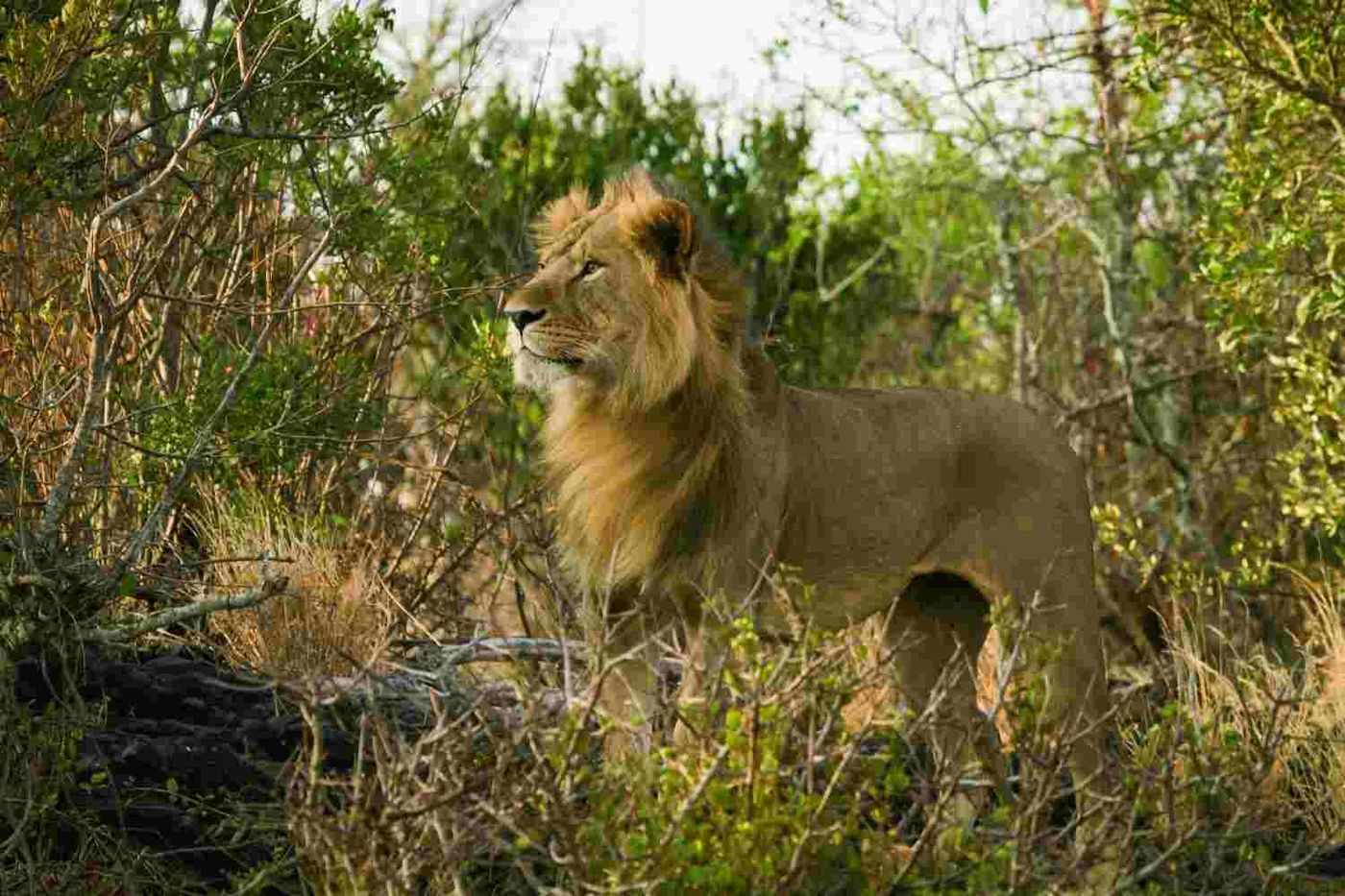
A male lion. The light aircraft that reach lion country carry a fixed load, which is why the bag rules are strict.
15 kgLimit on Safarilink, AirKenya, Coastal and Aerolink, hand luggage included
20 kgAuric Air limit, cameras included
75 kgExtra carried by a freight seat on three carriers
2 x 23 kgKenya Airways economy bags within Africa
The short answer
On most bush flights the limit is 15 kg per person including hand luggage, in a soft bag, which AirKenya and Aerolink require and others recommend. Safarilink, AirKenya, Coastal and Aerolink Uganda publish that figure, Auric Air and Skyward Express allow 20 kg, and Safarilink allows 20 kg on a short list of routes. Excess is charged per kilogram at the airline's discretion, and a freight seat carries about 75 kg extra on Safarilink, AirKenya and Auric. International tickets allow far more, so repack at your gateway.
Baggage rules change without notice and most carrier pages show no effective date, so we link the carrier pages and reconfirm every limit in writing when we quote.
Every bush airline publishes its own bush plane luggage limit. The table lists the carriers you are most likely to meet, plus one we could not verify. Read the hand luggage column first: on nearly every bush flight your camera bag and day pack are part of the allowance, not an extra.
Carrier
Limit
Hand luggage counts?
Soft bag rule
Bag size on the carrier's page
Safarilink (Kenya)
15 kg; 20 kg on a short list of routes
Yes, hand baggage is inside the 15 kg
Required on the 20 kg routes; rigid suitcases may go on a later flight
None stated
AirKenya Express (Kenya)
15 kg
Yes; personal items up to 5 kg count toward the 15 kg
Soft-sided bags on all services
Checked 60 x 45 x 33 cm; hand 30 x 53 x 23 cm
Coastal Aviation (Tanzania)
15 kg
Yes, carry-on is included
Strongly recommended, not obligatory
Soft duffel 40 x 40 x 80 cm; hard case up to 76 x 48 x 29 cm
Auric Air (Tanzania)
20 kg
Yes, including cameras and filming equipment
All bag types accepted; soft recommended
Up to 90 x 65 x 35 cm per piece
Aerolink Uganda
15 kg
Yes
Soft bags on all services
No dimensions on its terms page
Skyward Express (Kenya)
20 kg (15 checked plus 5 hand)
No, the 5 kg hand allowance is separate
No soft-bag rule stated
Not stated; a conventional scheduled carrier
Regional Air (Kenya, Tanzania)
15 kg reported, unverified
Unclear
Soft reported
Figures match AirKenya's exactly, so treat as unconfirmed
We found no official Regional Air baggage page. Safarilink's 20 kg routes on its page are Zanzibar, Kisumu, Diani, Lamu, Malindi, Entebbe and Mombasa.
Reading the safari luggage weight limits for your route
Use the lowest of the safari baggage limits on your route. A Kenya and Tanzania itinerary that mixes Safarilink, Coastal and Auric Air is a 15 kg trip, even though one airline in the chain allows 20 kg. Safarilink says check-in may allow up to 2 kg of leeway at its discretion, and AirKenya sells soft bags at Wilson Airport in Nairobi. Skyward Express is the odd one out, a conventional scheduled carrier with no safari policy that we found. In Rwanda we found no scheduled bush airline, only an operator table listing helicopter flights at 15 kg in a soft bag.
For gorilla trekkers in Uganda, the carrier that matters is Aerolink Uganda on the Entebbe to Kisoro and Kihihi routes, about 1 hour 15, with a limit of about 15 kg in a soft bag (confirm before you book). Our safari flight logistics guide covers the schedules.
Where the sources disagree on safari luggage weight limits
Confirm before you rely on it. An unpublished draft page lists Auric Air at 15 kg, but Auric's own page, a 2019 trade report and an operator guide all say 20 kg, so we use 20 kg. Safarilink's bag length is quoted as 90 x 65 x 35 cm by one agent and 70 x 60 x 35 cm by another, and its own page gives none, so plan for a bag about 70 to 90 cm long at most and ask your operator for the exact limit. Coastal permits a hard case within 76 x 48 x 29 cm, yet one operator guide lists Coastal as soft only. A lodge operator says Aerolink accepts hard cases "technically", but Aerolink's terms say soft bags.
Why safari luggage weight limits are so low, and the bag they need
Safari luggage weight limits are low because the aircraft are small. No carrier publishes its weight calculations, so this is our reading of what the published rules show. A light aircraft has a fixed payload to share between passengers, bags and fuel, and a limited hold. Coastal says a hard case must fit the cargo-pod door, a lodge operator describes Aerolink's Grand Caravans as carrying bags in a pod, and Safarilink warns that rigid suitcases are harder to stow and may travel on a later flight.
The clearest sign that the bush plane luggage limit is about payload is Safarilink's charter rule: 15 kg per person in soft bags when every seat is used, and more when seats are empty. One agent guide also reports that some charters cap a passenger at 100 kg and require an extra seat above that. We could not confirm it with a carrier, so treat it as a reason to ask, not a rule.
Choosing a soft duffel bag for safari flights
A soft duffel bag is a fabric bag with no wheels, frame or hard shell, so it squashes into the gaps in a pod. The right soft duffel bag is plain and sturdy, not a wheeled trolley. We advise one duffel plus one small day pack, and the roller suitcase left at home or at your gateway hotel.
Safari bag size: the numbers carriers publish
Published figures vary. AirKenya gives 60 x 45 x 33 cm for a checked bag, Coastal gives 40 x 40 x 80 cm for a soft duffel, and Auric Air allows up to 90 x 65 x 35 cm per piece. AirKenya's is the tightest carrier-published size, so a soft bag near 60 x 45 x 33 cm when full is the safest buy. That is our recommendation, not a carrier rule, and a soft bag compresses, so the test is how it lies in the pod, not a tape measure.
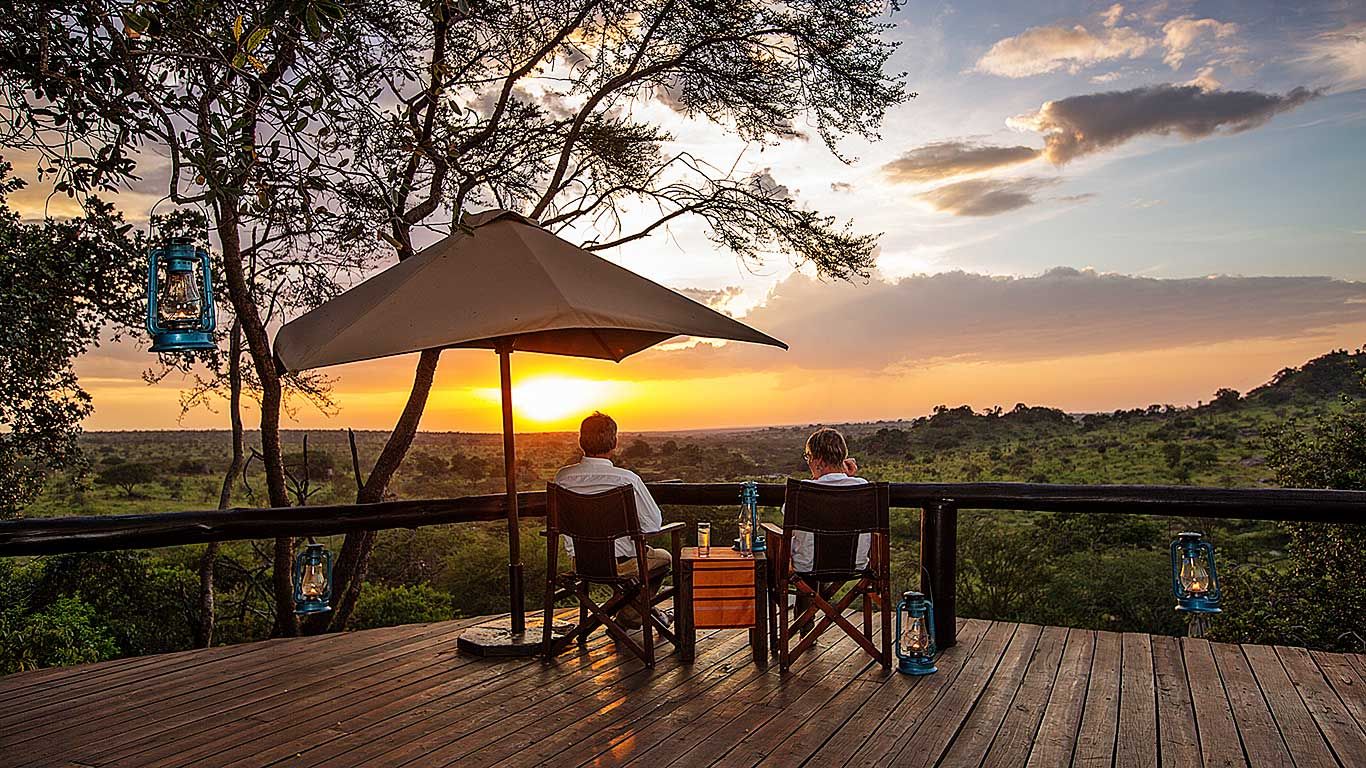
A tented camp. A single soft duffel is easier to carry across a camp than a wheeled case.
Hand luggage, cameras and long lenses under the 15 kg limit
Cameras are usually the heaviest single category in your safari luggage weight limits, and the carriers treat them differently. Auric Air counts cameras and filming equipment inside its 20 kg. AirKenya counts personal items, up to 5 kg, inside the 15 kg. Safarilink includes hand baggage in its figure. Only on international legs do you get a separate allowance: Kenya Airways, for example, lets you carry an accessory item such as a handbag, camera or laptop on top of the cabin bag, up to 40 x 15 x 30 cm.
That produces a common surprise. A photographer arrives with a 23 kg suitcase and a 9 kg camera bag, which is fine on the international flight, and then discovers that the bush flight counts both toward the same 15 kg. On a bush flight, camera gear has to be weighed into the light aircraft baggage allowance for safari, 15 kg or 20 kg, not added after.
How to plan camera gear around the limit
Weigh the camera bag with everything in it. Include lenses, batteries, chargers, cards and the bag itself, then weigh the whole load together with the duffel.
Choose one long lens, not three. A single long lens and a standard zoom cover most game-drive situations, and it is the lens that usually decides whether you need extra weight.
Consider a freight seat or an XL seat. Coastal sells a premium (XL) seat that allows 30 kg subject to availability, and Safarilink, AirKenya and Auric Air sell a freight seat. Both are covered in the next section.
Keep the fragile gear in your hand. Hand luggage counts toward the allowance, but lenses belong with you, not in the duffel.
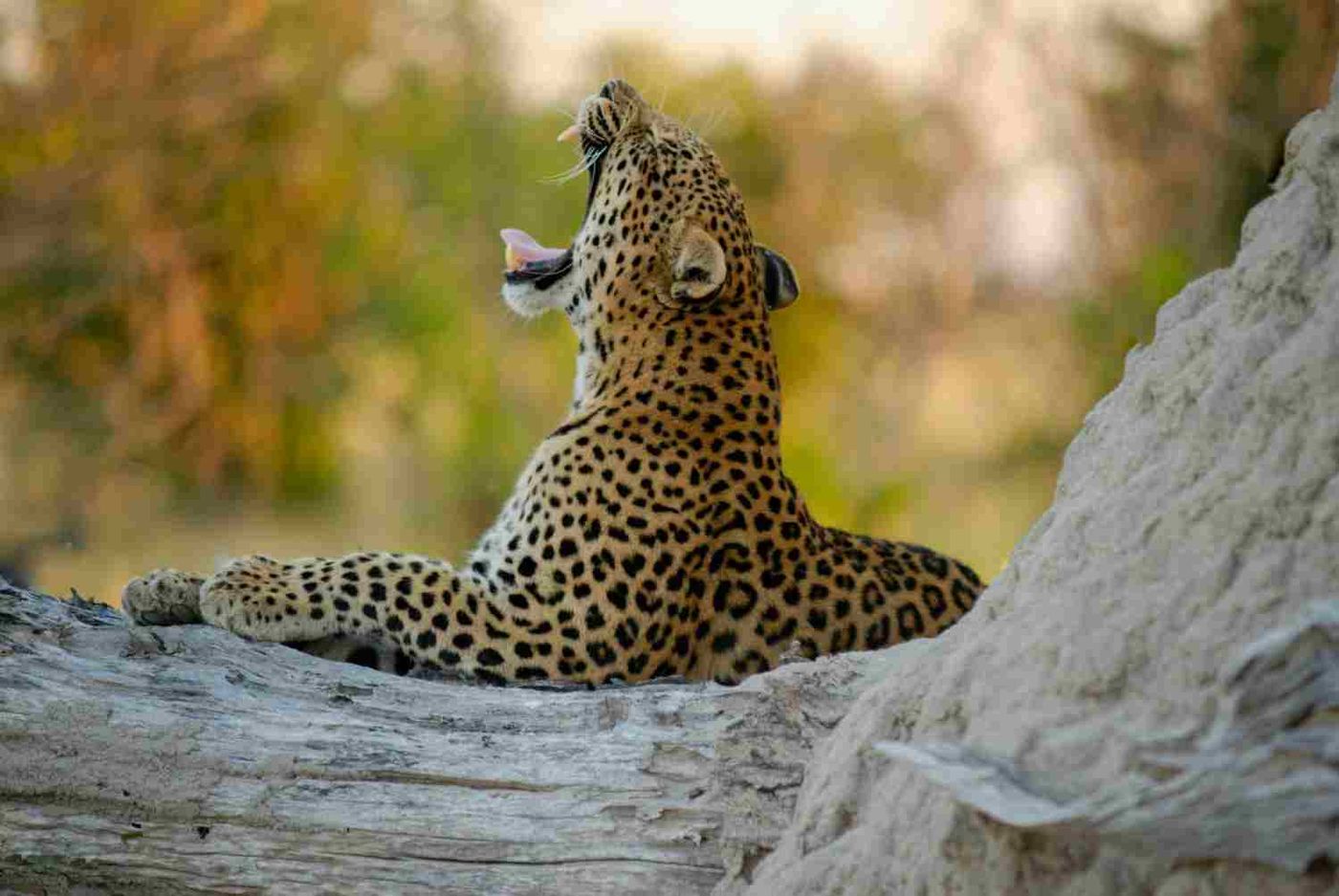
A leopard. The subject that makes photographers pack heavy lenses is the same one that makes weighing the camera bag worthwhile.
Excess baggage, the freight seat and charter flights
Excess baggage is a favour, not a right, under safari luggage weight limits. Every carrier in the table accepts extra weight only at its discretion, and AirKenya says it may be unavailable on the day. Arrange extra weight in advance, in writing, through your operator.
Carrier
Excess baggage
Freight seat or larger seat
Safarilink
Captain's discretion at the prevailing freight rate. Advance purchase to 48 hours before departure: 10, 20 and 30 kg at USD 50, 80 and 145 (page labels these 2023/2024 rates). At check-in: USD 50, 100 and 165
An adult-fare freight seat gives a confirmed extra 75 kg
AirKenya Express
USD 5 per kg, domestic and international; may be unavailable on the day
Pre-bookable freight seat carries up to 75 kg extra
Coastal Aviation
Prevailing freight rate, at company or pilot discretion
Premium (XL) seat allows 30 kg, subject to availability
Auric Air
Pre-booked in 10 kg slabs, up to 4 slabs: USD 30 per slab on coast routes, USD 60 on safari and bush routes. Captain's discretion
Freight seat adds 75 kg
Aerolink Uganda
USD 3 per kg on its terms; a 2024 newsletter said USD 3 domestic and USD 4 international. Accepted at the airline's discretion
No freight seat policy found
Skyward Express
KSh 350 per kg, space permitting
None found
Safarilink's advance rates carry a 2023/2024 label on its page, so confirm current rates before relying on them.
What excess baggage costs in practice
Our arithmetic, assuming the excess is accepted: 18 kg on AirKenya means 3 kg over, so USD 15. A 26 kg bag on an Auric Air bush route is 6 kg over the 20 kg limit, so one 10 kg slab at USD 60. For a few kilograms, excess is manageable. For a second photographer's worth of gear, consider the freight seat.
The freight seat explained
A freight seat is a seat bought for baggage instead of a person. On Safarilink, AirKenya and Auric Air it carries 75 kg extra, and on AirKenya it can be pre-booked. It is priced as a seat fare, which varies by route, so we quote no figure. Whether one freight seat can be shared across a party is for the airline or your operator to confirm.
Charter flights and baggage
A private charter does not remove the soft bag for safari flights rule. Safarilink's charter page gives 15 kg per person in soft bags when every seat is used, and more if seats are empty, on aircraft of 5, 12, 37, 50 or 52 seats. Aerolink Uganda takes charters on request with no published baggage figure, and Coastal lets you charter a whole aircraft. Ask for the allowance for your exact aircraft in writing.
The multi-country trap: a 23 kg bag meeting a 15 kg bush flight
This is the part most guides skip. Your long-haul and regional tickets allow generous bags, then a bush flight in the middle of the itinerary applies safari luggage weight limits of 15 kg. Arrive in Kigali or Entebbe with two 23 kg bags and you hold 46 kg against a 15 kg limit on the Nairobi Wilson to Mara light aircraft, a gap of about 31 kg to solve at the gateway. The pattern applies to every route that mixes countries, such as our Rwanda Kenya Tanzania safari route guide and the routes in the multi-country hub.
Storing luggage at the gateway
The standard fix is storing luggage: you pack a safari duffel for the bush legs and leave the rest where you will pass again. Three official offers are on record. Safarilink offers a free secure store at its Wilson Airport office, AirKenya offers free storage for returning passengers, and Coastal offers storage at its Terminal 1 airport office in Dar es Salaam. Two outfitter guides suggest the gateway airport or hotel. We did not research a storage policy at Entebbe or Kigali, so ask your hotel to confirm in writing that it will hold a bag, for how long, and whether it charges.
Planner's tip: storing luggage only works if you come back to the same place. A route that leaves a bag in Nairobi, then flies on to the Mara and Serengeti and home from Kilimanjaro, never returns to Nairobi, so the bag cannot be collected. On a one-way route, pack the whole trip to the bush-flight limit, or ask us in advance whether a second bag can travel with you on a freight seat.
Laundry on a long route
Laundry is the other half of packing light. One safari guide says many lodges offer laundry, so you can pack for a few days and wash. We did not research individual lodge policies, so ask at booking whether laundry is included and how long it takes.
The safest answer to safari baggage limits combines all three: a soft duffel for the route, a day pack for hand luggage, and one stored bag at a gateway you return to. Where you return is decided by the flights in our safari flight logistics guide, and fly-in or road safari compares the road, which avoids the aircraft limits.
International allowances: RwandAir, Kenya Airways and Uganda Airlines
The three carriers that connect the gateway cities publish far larger allowances than any bush plane luggage limit. They are the other half of the multi-country trap, so check them for the exact fare you buy.
Airline
Checked bags
Cabin bag
Our note
RwandAir
Economy and premium economy 2 x 23 kg; business 3 x 23 kg
One bag, 55 x 38 x 20 cm, up to 10 kg
Its checked-baggage text contains placeholder wording, so check the current fare rules; no separate allowance listed for Kigali to Nairobi or Kilimanjaro
Kenya Airways
Within Africa (includes Nairobi to Entebbe, Kigali and Kilimanjaro): economy 2 x 23 kg; business 2 x 32 kg
Economy one bag, 55 x 25 x 35 cm, 10 kg; business two bags, 18 kg total; plus an accessory item up to 40 x 15 x 30 cm
May change by aircraft on the day; partner-operated flights may differ
Uganda Airlines
East and Central Africa fares: economy 2 x 23 kg; business 2 x 32 kg (its pages also say about 30)
Economy one bag, 7 kg, plus an accessory item; business two bags of 7 kg
Kigali is not named on its fare page; Entebbe to Kigali was announced from 18 November 2026 and was not operating on 11 October 2026
A 2018 trade report said Kenya Airways cut intra-Africa economy to one 23 kg bag; its current page says two, so verify on your own fare.
What the international numbers mean for you
Three points follow. Allowances differ by fare and by day, so read the rule on your ticket. Cabin bags are 10 kg on Kenya Airways and RwandAir and 7 kg on Uganda Airlines, generous compared with a bush plane. And the airline is not the limit that matters: on a Kigali, Nairobi, Mara route, the Mara flight sets it. RwandAir lists East Africa excess rates, but the page looks unfinished, so we do not quote them.
Ethiopian Airlines ties its allowance to the route, and we found no confirmed figure for Entebbe, Kigali, Nairobi or Kilimanjaro, so use its baggage calculator. Entry rules for the same routes are in our East Africa tourist visa guide.
How to pack to the 15 kg limit without suffering
Packing within safari luggage weight limits is a method, not a sacrifice. We describe categories here and leave the full list to our East Africa safari packing list, which covers what to bring and why.
Find the lowest of your safari baggage limits. Ask your operator which bush carriers you will fly and whether hand luggage counts. If any flight is 15 kg, everything fits 15 kg.
Weigh everything together. Pack the duffel, the day pack and the camera bag, then weigh them as one load on a luggage scale, not one at a time.
Cut by category, not by item. Clothing, footwear, wash kit, electronics and camera gear, medication and documents are the categories. Clothing and footwear usually give the biggest saving, and electronics the most stubborn weight.
Choose clothes that work together. Neutral layers that mix and match, quick-drying fabrics, and a plan to wash them mean fewer garments.
Wear the heaviest things. Boots and the warmest jacket are better worn on the flight than packed.
Decant and share. Small bottles for the wash kit, and one charger or power bank per travelling party where that is sensible.
Leave the rest. Anything you will not need on the bush legs goes into the stored bag.
Pro tip: pack and weigh at home with the camera bag included, then take out one item from each category. It is much easier to do that in your hall than at an airstrip, where the weight is decided by a scale and a pilot, not by you.
These two rules decide what goes in the bag, and both carry caveats because we could not read every primary source.
Drones
Leave the drone at home unless permits are arranged in each country in advance. Uganda's guidelines, as reported in 2020, describe a chain of approvals from the Ministry, the Chief of Defence Forces, the revenue authority and the aviation authority, plus a permit fee; that is a secondary report, and the chain is impractical for a visitor. Rwanda's Civil Aviation Authority asks you to declare a drone to the Rwanda National Police at entry and requires an activity permit and registration. Visit Rwanda says the permit takes about 2 to 4 weeks and that foreigners cannot register a drone themselves. Neither page covers national parks, and the RCAA drones page has the rules we read. Kenya and Tanzania sources are secondary guides that treat parks and reserves as no-fly without written approval. We did not read the Kenyan or Tanzanian aviation authority pages.
Plastic bags
Rwanda's Law No 17/2019 prohibits the import and use of plastic carry bags and single-use plastics. We read it through a university copy, not the Official Gazette, and found no exemption for tourists and no mention of luggage or airports. Kenya's ban is described in press reports, which say zip-lock food bags may be covered while reusable zippered pouches are allowed. We did not research Uganda or Tanzania. Our advice is to use cloth or paper bags, carry none that you do not need, and ask us if you are unsure.
Do not rely on a packing list that says to bring plastic bags. Some guides suggest plastic bags or liners to keep a day pack dry. For Rwanda and Kenya, a cloth dry bag is the safer choice.
Gorilla trek day bag and porters
On a trek the duffel stays at the lodge and you carry a light day pack, so the bush plane luggage limit does not apply on the mountain. One operator guide lists what to take: water, snacks, sun protection, binoculars, a phone, a light rain jacket, spare camera batteries and memory cards. Another gives two litres of water.
Is there a porter weight limit?
We found no official weight limit for porters from the Uganda Wildlife Authority or the Rwanda Development Board. One blog says porters usually carry up to 15 to 20 kg, and one forum comment says a porter takes a maximum of one 15 kg bag. Several other operator pages we read give no limit. Fees quoted by operators range from about USD 10 to 25 per trek and are unverified, so confirm the rate and the rules at the park briefing.
Our recommendation, not a published rule: a porter carries your day pack, not your duffel, so keep that pack light. One operator guide says backpacks and walking sticks are left with the porter before you approach the gorillas. Our account of the trek day describes the hike, and the gorilla trekking fitness guide covers how hard it is.
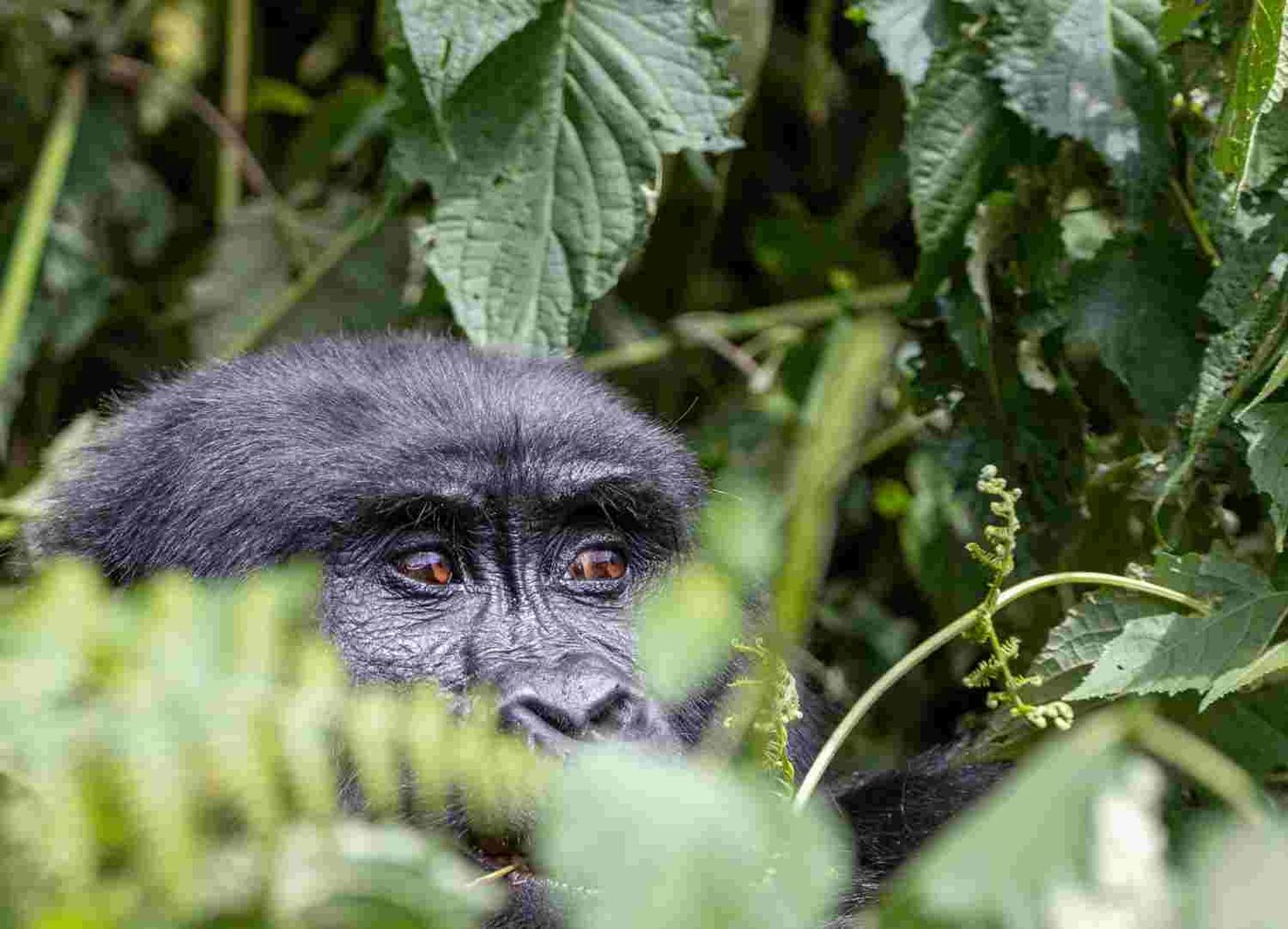
A juvenile mountain gorilla. You meet the family with a day pack, and the duffel waits at the lodge.
Who safari luggage weight limits affect most, and common mistakes
Safari baggage limits touch nearly every guest on a fly-in itinerary, but some travellers feel them more.
Photographers and videographers. Camera gear is heavy and counts toward the limit.
Multi-country travellers. They arrive with international-size bags and meet a bush flight halfway.
Families. The total is per person, so each child's bag counts, and children's clothes still add up.
Common mistakes
Ignoring safari bag size and softness. AirKenya and Aerolink want soft bags, and Safarilink warns that rigid cases may follow on a later flight.
Forgetting that hand luggage counts. The camera bag is inside the 15 kg on Safarilink, AirKenya, Coastal and Aerolink.
Assuming every carrier allows 20 kg. Only Auric Air and Skyward do, and Safarilink on a short list of routes.
Leaving a bag in Nairobi on a one-way route. Storage works only when you return.
Counting on excess at the strip. Excess is at the captain's discretion and may be unavailable on the day.
Buying a freight seat late. Safarilink's advance rates close 48 hours before departure.
Trusting an old figure. Check the date on any guide, including this one.
What most guides get wrong about safari luggage weight limits
Three errors recur. Some give one figure for every bush plane, when Auric Air is 20 kg and most others are 15 kg. Some say hard cases are never allowed, when Coastal publishes a hard case size. And some copy a draft or an old trade report, which is how a 15 kg figure for Auric and a one-bag rule for Kenya Airways persist.
Next steps: plan around your safari luggage weight limits
Tell us which countries you are visiting and what you carry, and our planners in Entebbe and Kakindu will name the lowest limit on your route, arrange freight seats or storage in writing, and tell you plainly where a road transfer is the better choice. Routes that cross several countries usually include light-aircraft legs, so the 15 kg limit often applies. We confirm which flights each itinerary uses:
Late July to September is the best time for a four country safari across Uganda, Rwanda, Kenya and Tanzania. See the month by month table, the second window and the 2026/27 rain caveat.
Trek gorillas in both countries on one trip: what two permits cost, which Bwindi sector links to Rwanda, which direction to travel and how to protect a rest day between treks.
What an East Africa safari really costs: the four price drivers, official permit and park fees in Uganda, Rwanda, Kenya and Tanzania, our from-prices and how to read a quote.
The East Africa tourist visa covers Uganda, Kenya and Rwanda for USD 100 and 90 days, but not Tanzania. Fees, first-entry rule, Kenya eTA question and the Tanzania eVisa, dated.
The fixed part of a four country safari cost: permits, park fees, visas and Tanzania insurance, added up for six routes, plus the ten lines to compare in any quote.
Should gorilla trekking come at the start or end of a long safari? Both sides, the tie-breakers, buffer nights and what to do if a trek is cancelled, with a five-step method to choose.
Work out how many days a Uganda, Rwanda, Kenya and Tanzania safari needs: a nights-per-stop ledger, the transfer days you cannot skip, and what 10 to 21 days really give you.
The Kenya eTA for safari guests: official USD 30 fee, about three working days to process, 90 days validity, who is exempt, transit rules and the open question for regional visa holders.
A planner's guide to a Rwanda Kenya Tanzania safari that starts in Kigali: route order, flights, the Mara to Serengeti link, entry rules and the gorilla permit.
A planner's guide to a Rwanda and Kenya safari: start in Kigali, trek once, fly to Nairobi, then the Mara. Flights, how to split your days and the entry rules for both countries.
A planner's guide to a Rwanda and Tanzania safari: one gorilla trek, RwandAir's three-day-a-week flight, the Serengeti by air or road, and Tanzania's eVisa and insurance rules.
How flights really work between safari countries: international routes, bush flights, the 15 kg baggage limit, the Mara to Serengeti link, overland times and a realistic transit day.
Tanzania now requires foreign visitors to hold government inbound travel insurance. See what is verified, reported and unknown: cost, exemptions, Zanzibar, buying and enforcement.
The route we recommend for a Uganda Kenya Tanzania safari: the best order, how many days it needs, the best months, how you move between countries and what to check before you book.
Two land posts link Rwanda and Uganda for gorilla trips. Learn which suits your sector, what to carry, how long to allow and why hours differ, checked 11 October 2026.
A Uganda Rwanda Kenya safari on one East Africa Tourist Visa: the order of the three countries, the Nairobi flights, the Mara, yellow fever rules and the open Kenya eTA question.
How to plan a Uganda Rwanda Kenya Tanzania safari: the four route directions compared, the flight chain, how the East Africa Tourist Visa interacts with the order, and what to check.
A planner's guide to a Uganda Rwanda Tanzania safari: Entebbe or Kigali start, the border or flight between the forests, Kilimanjaro flights, visas and Tanzania's insurance.
Visa rules for Uganda, Kenya, Tanzania, Zanzibar and the Seychelles change often. Here is how to check them properly and what to prepare before you travel.
Uganda dropped its yellow fever entry certificate on 2 October 2026, but Kenya, Rwanda and Tanzania still ask. Journey table, 12 hour transit rule and border outcomes, dated.
Most bush flights allow 15 kg per person including hand luggage, in a soft bag. Safarilink, AirKenya, Coastal Aviation and Aerolink Uganda publish that figure. Auric Air allows 20 kg including cameras, Skyward Express allows 20 kg (15 checked plus 5 hand), and Safarilink allows 20 kg on a short list of routes. When a route mixes carriers, plan for the lowest figure, and ask your operator to confirm it in writing.
Does hand luggage count toward the limit on bush planes?+
Yes, on nearly every bush carrier. Safarilink, Coastal, Aerolink and Auric Air state that hand baggage is inside the allowance, and AirKenya counts personal items up to 5 kg toward its 15 kg. Auric Air also counts cameras and filming equipment. Skyward Express is the exception we found, with a separate 5 kg hand allowance on top of 15 kg checked, but it is a conventional scheduled carrier.
Can I take a hard suitcase on a safari flight?+
It depends on the carrier, and a soft bag is safer. AirKenya and Aerolink require soft bags, Safarilink warns that rigid suitcases may travel on a later flight, Coastal allows a hard case up to 76 x 48 x 29 cm, and Auric Air accepts all bag types but recommends soft. We advise a soft duffel without wheels so that no carrier on your route can turn it away.
How much does excess baggage cost on safari flights?+
It varies and is always at the carrier's discretion. AirKenya lists USD 5 per kg and may not have space on the day. Aerolink Uganda lists USD 3 per kg, and Auric Air sells 10 kg slabs at USD 60 each on safari routes. Safarilink and Coastal charge a prevailing freight rate. Arrange extra weight in advance through your operator, and do not count on it at the airstrip.
What is a freight seat on a small aircraft?+
It is a seat bought for baggage instead of a passenger. Safarilink, AirKenya and Auric Air say a freight seat carries 75 kg extra, and AirKenya's can be pre-booked. It is priced as a seat fare, so we quote no figure. Coastal offers a premium (XL) seat with a 30 kg allowance, subject to availability. Ask whether the weight can be shared across your party.
What size should a soft duffel bag be for safari flights?+
AirKenya's published checked-bag size of 60 x 45 x 33 cm is the tightest carrier figure, so a soft duffel bag near that size when full is the safest choice. Coastal quotes 40 x 40 x 80 cm for a soft duffel and Auric Air allows up to 90 x 65 x 35 cm. Safarilink's size is quoted inconsistently, so ask your operator for the exact limit.
Where can I leave spare luggage during a safari?+
Safarilink offers a free secure store at its Wilson Airport office, AirKenya offers free storage for returning passengers, and Coastal offers storage at its Terminal 1 office in Dar es Salaam. We did not research Entebbe or Kigali, so ask your gateway hotel to confirm in writing. Storage only works if your route returns to the same place.
How much luggage can I bring on RwandAir, Kenya Airways and Uganda Airlines?+
Published economy allowances are 2 x 23 kg on RwandAir, on Kenya Airways within Africa and on Uganda Airlines East and Central Africa fares. Business is 3 x 23 kg on RwandAir and 2 x 32 kg on the other two, with Uganda Airlines also quoting about 30 kg. RwandAir's page has placeholder text, so check the fare rules for your ticket.
Which bush carriers allow 20 kg instead of 15 kg?+
Auric Air allows 20 kg including hand luggage and cameras, according to its own page. Skyward Express allows 20 kg as 15 kg checked plus 5 kg hand, but it is a conventional carrier with no safari policy that we found. Safarilink allows 20 kg on routes such as Zanzibar, Kisumu, Diani, Lamu, Malindi, Entebbe and Mombasa. One unpublished draft page lists Auric at 15 kg.
Can I bring a drone on safari in East Africa?+
We advise leaving it at home unless permits are arranged in each country in advance. Rwanda asks you to declare a drone to the police at entry and requires a permit and registration, and Visit Rwanda says foreigners cannot register one themselves. Uganda needs a chain of approvals, and secondary guides treat Kenyan and Tanzanian parks as no-fly. We did not read every authority page.
Are plastic bags banned in Rwanda and Kenya?+
Rwanda's Law No 17/2019 prohibits the import and use of plastic carry bags and single-use plastics, and we found no tourist exemption. Kenya's ban is described in press reports, which say zip-lock food bags may be covered. We did not research Uganda or Tanzania. Use a cloth or paper bag and carry none you do not need.
Is there a weight limit for gorilla trek porters?+
We found no official limit from the Uganda Wildlife Authority or the Rwanda Development Board. One blog says porters usually carry up to 15 to 20 kg and one forum comment says 15 kg, while other operator pages state no limit. Treat a porter as carrying your light day pack, not a duffel, and confirm the rules at the park briefing.
Tick the destinations you're drawn to — each one opens its own list of signature experiences. Tick as many as you like, tell us how to reach you, and a real destination specialist turns your selections into a tailored itinerary within 24 hours.