Classic Comfort
Fairmont Mara Safari Club
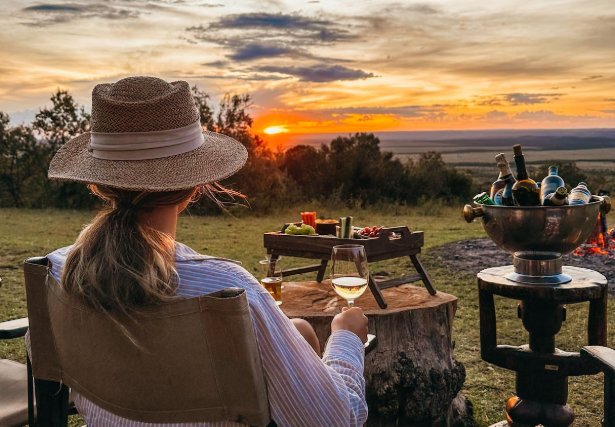
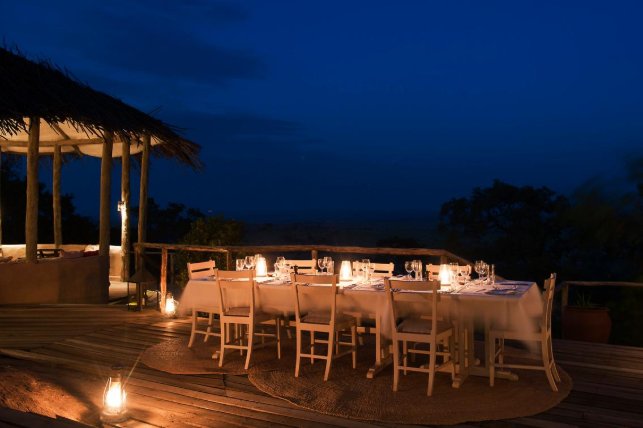
Located within Maasai Mara National Reserve itself, on the Mara River's ox-bow bend in the reserve's northwest.

A tightly-focused 9-day pursuit of the Mara River crossings from both the Kenyan and Tanzanian sides.
Itinerary ref: MC-014
This is the itinerary we build for travelers who have already seen the Great Migration once and now want to see it properly — nine days with no other agenda than the Mara River's crossing points, worked from both banks. Four nights on the Kenyan side inside the Mara Triangle, positioned at Lookout Point and Paradise Crossing with a guide reading herd tension in real time, followed by four nights on the Tanzanian side at Kogatende and the Lamai Wedge, tracking the identical herds as they push across the same river system into Serengeti territory. Nowhere else in our library dedicates this much unbroken time to a single natural event. There is no crater, no cultural detour, no beach close — just the river, the herds, and the patience to wait out a crossing on both sides of a border the wildebeest themselves have never once acknowledged.
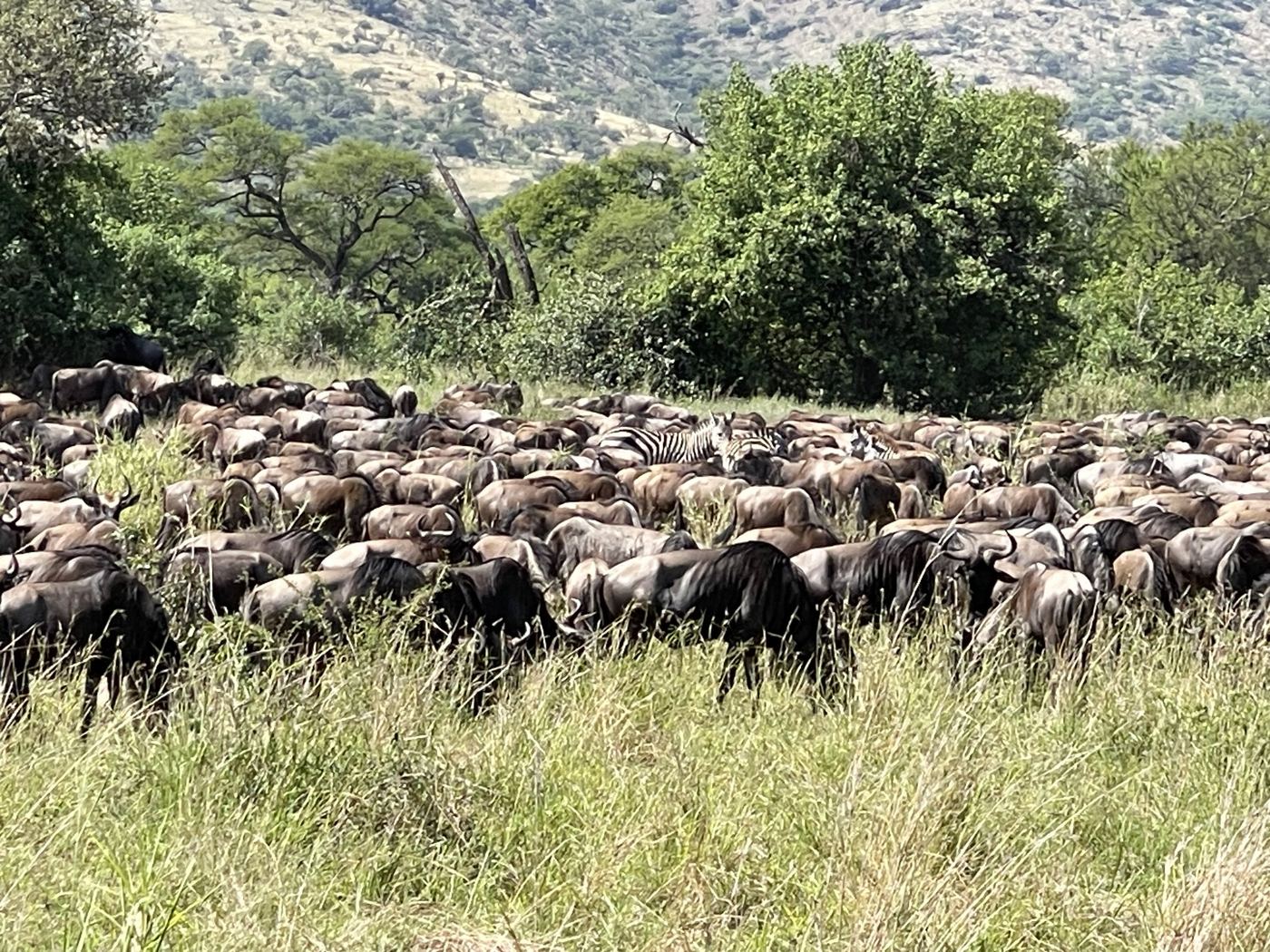
The Mara River crossing is genuinely one of the hardest wildlife events to schedule well, because the herds don't move on a fixed calendar — they move on grass, rainfall and instinct, crossing north into Kenya as Serengeti grazing thins (typically July through October) and recrossing south again from around late October. By splitting four full nights on each side rather than a rushed day-trip across the border, our guides can track a specific herd's approach over multiple days rather than gambling on a single sighting window, and reposition overnight if a crossing stalls. Repeat migration travelers consistently tell us this depth of focus is what finally delivered the crossing they'd missed on a broader first trip.
See also: Kenya & Tanzania Family Migration Safari.
See also: Ultimate Big Five & Beach: The Ultra-Luxury Journey.
Everything you need to decide, in one place. The day-by-day route, camps, inclusions and full rates are further down this page.
| When | What to expect | Book |
|---|---|---|
| August and September | The herds cross the Mara River back and forth, so both banks are active. The Kenyan side is the busier of the two. | 9 to 12 months ahead |
| July and October | July brings the first crossings in the north. In October the usual southward drift begins as the short rains arrive. July: 9 to 12 months ahead. October: 6 to 8 months ahead. | As noted in this row |
| November to June | The herds are away from the river for most of this period, so we would suggest a different itinerary. | 3 to 6 months ahead |
For July to September, book 9 to 12 months ahead. Crossing-point camps sell out months in advance. The herds follow the rain, so every month is a guide, not a guarantee.
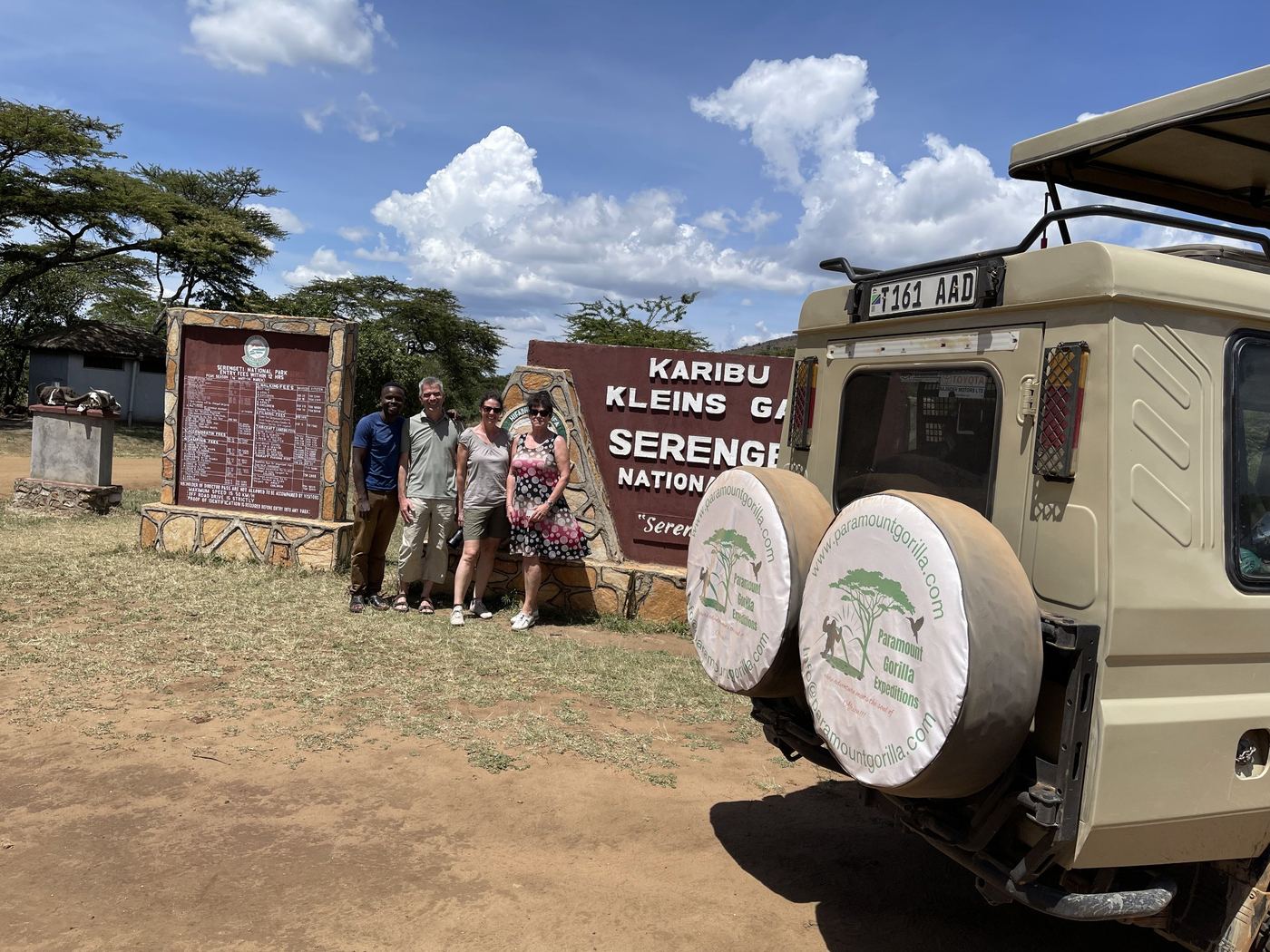
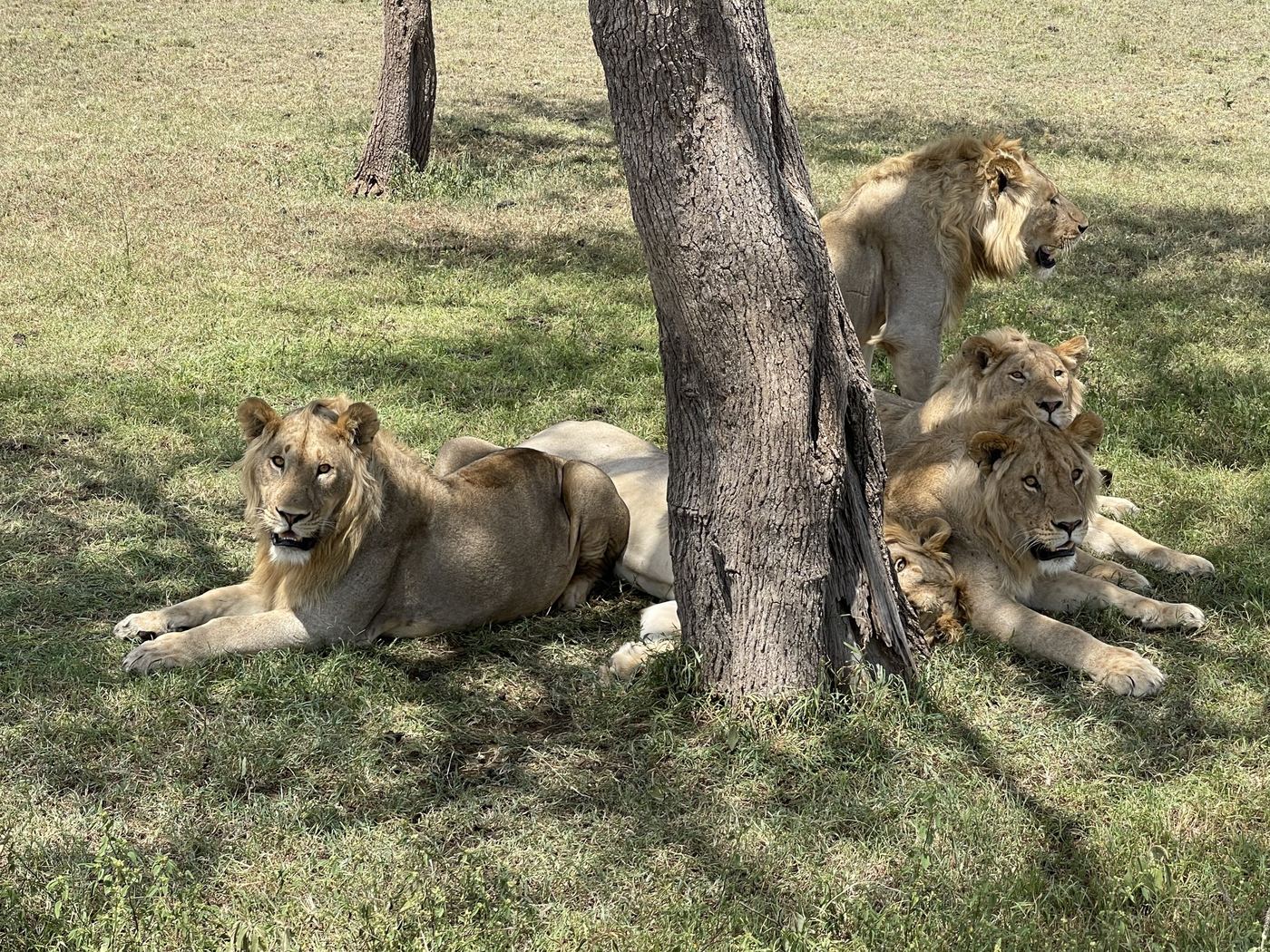
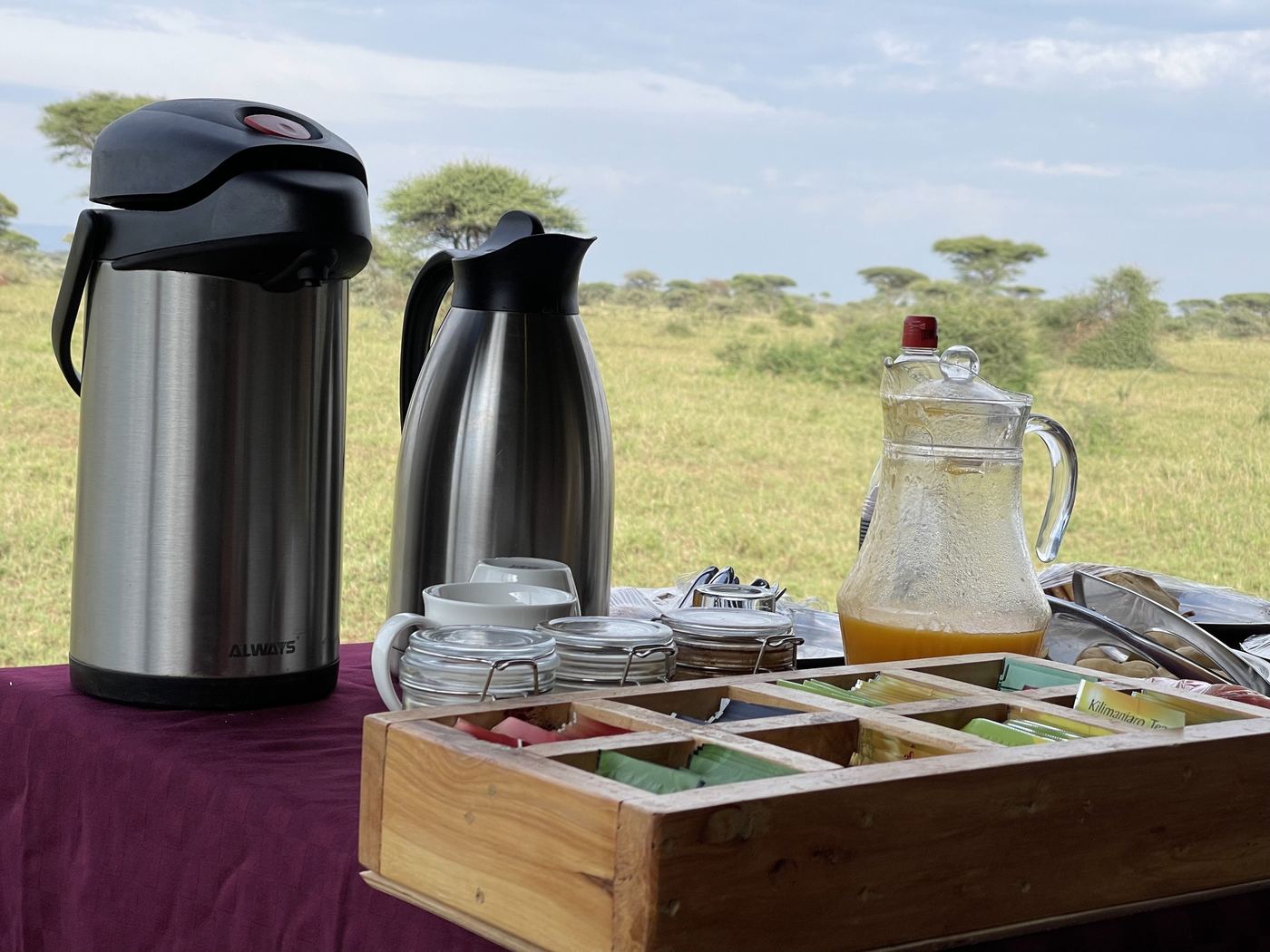
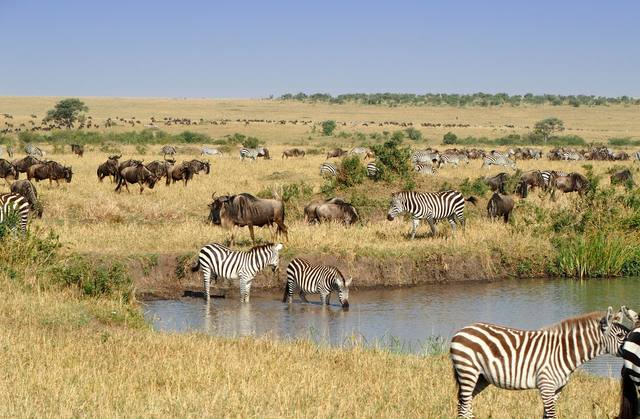
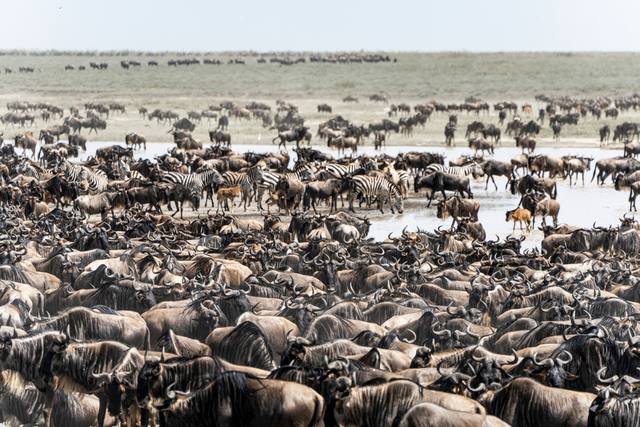
Pictures from East Africa safaris with our guides and guests.


Deposit. 40% deposite to confirm your booking
Final balance. The final balance is due 60 days before your departure date, or as stated on your written booking confirmation. If it is not received by then, the booking may be treated as cancelled, subject to the cancellation charges.
Cancellation. After the 14-day deposit window, charges are counted from the day we receive your written cancellation notice:
90 or more days before departure: the 40 percent deposit is kept.
60 to 89 days: 50 percent of the total trip cost.
30 to 59 days: 75 percent of the total trip cost.
Fewer than 30 days, or after departure: 100 percent of the total trip cost.
Gorilla and chimpanzee permits, certain fixed-departure camps and scheduled charter flights can carry earlier supplier deadlines and may be non-refundable from the booking date. Any such deadline is shown on your written quote before you pay a deposit.
Rated 4.9 out of 5 on SafariBookings (10 reviews). 12 reviews on Tripadvisor. More than 30 journeys planned.
Early-morning crossing-point positioning across the Mara Triangle.
Crossing the border to track the same herds from the Tanzanian side.
Read these before you choose dates: each one answers a single question in full.
These pages cover a six-day route on the Kenyan side and the latest sightings.
Sign in to save this safari's dates and party size to your account, so you can pick up right where you left off.
Sign in to save this itineraryA connecting flight from Nairobi's Wilson Airport carries you directly onto a private airstrip in the Aitong Hills, where your driver-guide meets you for the short transfer to your camp, set directly on a bend of the Mara River itself. Rather than a slow settling-in afternoon, you're out on your first game drive within the hour, following the river's course to scout the current position of the migration herds and the state of the main crossing points based on that morning's reports from fellow guides. Hippo pods and basking Nile crocodile line the ox-bow's banks — the same crocodiles that will feature prominently once a crossing begins in earnest — while your guide walks you through exactly how the days ahead will be structured around herd movement rather than a fixed schedule.
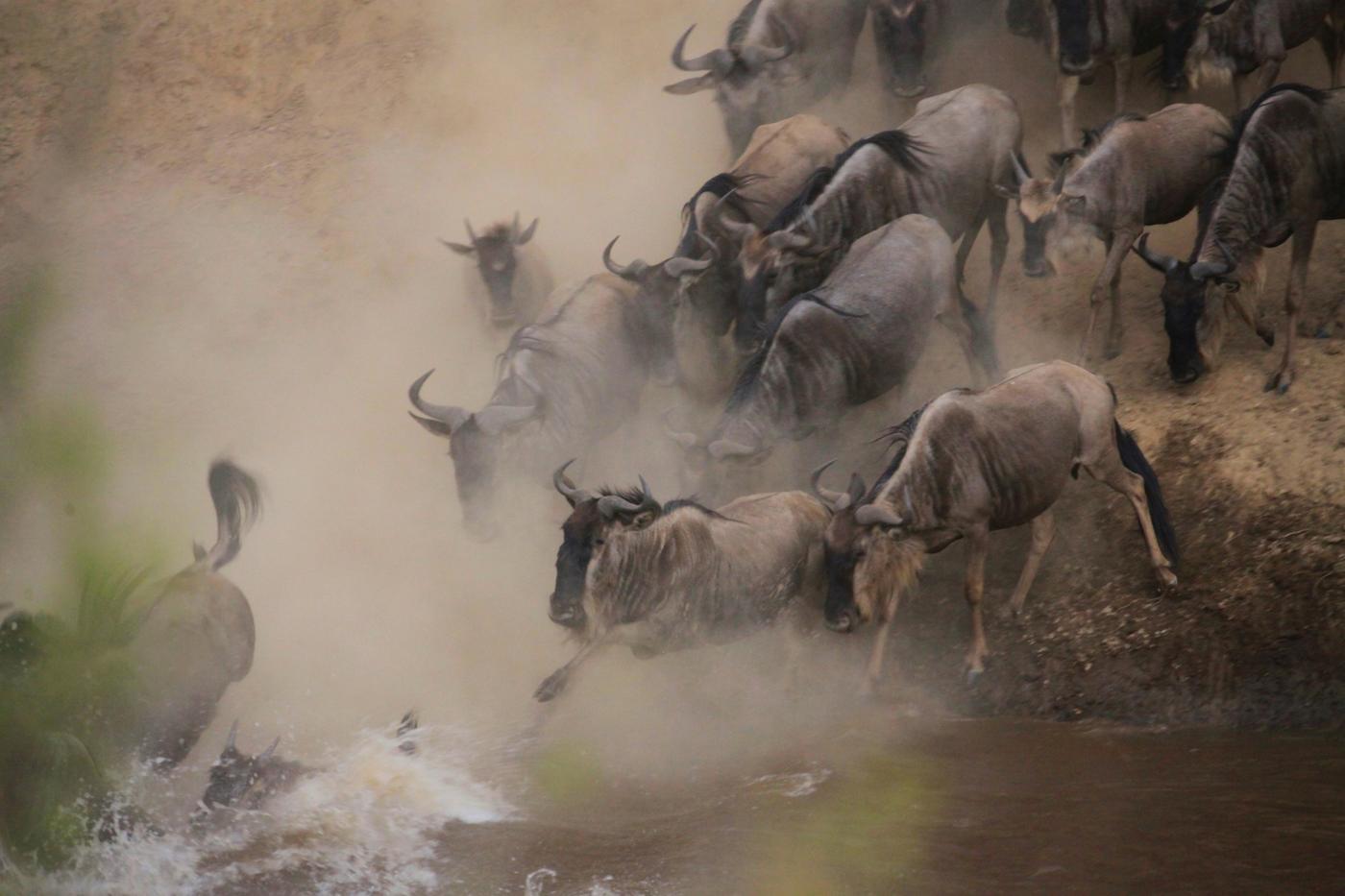
Today is built entirely around the Triangle's principal crossing points, where your guide works a live network of spotter vehicles and radio contacts to position you exactly where herd pressure is building. Wildebeest columns typically approach the water's edge in stages — a tense mass, a false start, a full retreat — before a second or third attempt finally commits several hundred animals into water where crocodiles have waited motionless, sometimes for days, without feeding. The wait itself is part of the experience: between attempts, resident lion prides denning near the riverine acacia and opportunistic hyena clans shadow the nervous herd, giving you a genuine sense of the whole predator-prey system in motion around a single decision point.
A second full day works Lookout Point and the sandbank crossings further downstream, where your guide's read of yesterday's herd behavior informs today's positioning. Crocodile behavior becomes a genuine study in itself over multiple days here — individuals hold fixed ambush positions for extended periods, striking with explosive speed only once a crossing is fully underway, and it's possible to identify the same large males from one day to the next by scarring and size. Afternoon shifts toward the Triangle's open plains for resident cheetah and, with good light, a chance at the escarpment's resident leopard population, before a sundowner positioned to catch the sky turning the Mara's famous burnt orange over the river below.
Your last Kenya morning returns to whichever crossing point your guide's accumulated three days of observation flags as most active, informed by herd size, river flow and the position of resident predators. Afternoon eases the pace with a final game drive through the Triangle's grasslands before an early dinner and a briefing on tomorrow's cross-border transfer — a reminder that the ecosystem you've spent four days studying from the Kenyan bank continues, unbroken, directly into the Serengeti you'll wake up in tomorrow. A last sundowner over the river closes out the Kenya leg on the note the whole visit has been building toward.
There's no direct flight across this border — bush airstrips on both sides have no immigration post — so today is a road transfer in your safari vehicle to the border for passport and customs clearance, then on to Kogatende in the Serengeti's far north, where the same Mara River you tracked all week continues its course through rockier, more wooded terrain. Your camp sits directly above a stretch of river favored by crossing herds, and an afternoon game drive introduces the Lamai Wedge's tighter river bends and steeper banks, which concentrate crossing activity into fewer, more predictable points than the wider Kenyan crossings. Your guide compares notes with the Kenya-side team on where the herds you followed all week have moved, giving you a genuinely continuous read on the same population across both countries.
A full day dedicated to Kogatende's crossing points, where the narrower river channel and rockier banks produce a different character of crossing than the Kenyan side — often faster, more chaotic, and with less warning before the herd commits. The surrounding kopjes and acacia woodland hold resident leopard more reliably than the open Mara Triangle, and it's not unusual to spot one draped across a low branch scanning the crossing activity below. Between attempts, your guide points out the subtler tells of an imminent crossing — a lead cow testing the water depth, the column's front ranks bunching rather than spreading — knowledge built from years of reading this specific stretch of river.
Today pushes deeper into the Lamai Wedge, a narrow tongue of Serengeti territory pressed between the Mara River and the Kenyan border, known among specialist guides as one of the most reliable crossing zones in the entire ecosystem due to its constrained geography. Cheetah coalitions work the wedge's open grassland between crossing points, and the day's pacing allows for genuine patience — settling at a promising point for hours rather than chasing radio reports across the plains. A late-afternoon crossing, when the light turns low and gold across the water, produces some of the most photographed sequences in the entire nine-day trip.
Your last full day is left deliberately flexible, returning to whichever crossing point across both countries delivered the strongest sighting, or shifting focus entirely to the Lamai Wedge's resident big cats if the herds have moved out of range. Lion prides here den in the riverine forest bordering the water, and a relaxed final game drive often turns up a pride at rest along the bank, unbothered by the crossing drama around them. A final dinner at your Kogatende camp is the natural moment to compare notes on eight days spent, quite literally, chasing the same river from two different countries.
A final unhurried morning at your Kogatende camp, with time for one last look at the river from the breakfast deck, precedes your short flight out via Kilimanjaro or Arusha for your onward or homeward journey. Our local team stays in touch through this last transfer, and given how many of our repeat travelers book this exact route a second time for a different migration month, we're always glad to help plan the next one.
Built from our own staff's real packing guidance for this trip's destinations, tailored to your dates and this exact itinerary above.
The rare opportunity to track one migration from two national vantage points
Concentrated entirely on peak crossing-season positioning
Migration-specialist guide with cross-border herd-tracking coordination
Ideal for repeat visitors chasing a specific crossing photograph
Located within Maasai Mara National Reserve itself, on the Mara River's ox-bow bend in the reserve's northwest.
Located within Serengeti National Park's northern Kogatende sector, above the Mara River.
| Accommodation Tier | Per Person Sharing (USD) | Single Supplement |
|---|---|---|
| Classic Comfort | $7,600 | +$1,350 |
| Premium | $9,900 | +$1,700 |
| Ultra-Luxury | $12,500 | +$2,150 |
Rates are per person sharing, in USD, based on double occupancy during peak crossing season (July through October); contact us for exact seasonal pricing and single-traveler rates.


Answered from our own real trip details above -- itinerary, inclusions, difficulty, and more. For an exact price, use "Enquire Now" below.
Finish your safari with a few days on the coast.
Tell us your dates and group size — a destination specialist replies within 24 hours.


Ultra-Luxury