
The Great Migration in April: Where the Herds Are and What to Expect
Where the herds are in April, how wet the month really is, what it costs and who should choose March or May instead.
Read the guide →
Where the herds are in September, how the crossings compare with August, why short grass helps predator viewing, and which base suits the month.
The Great Migration in September often matches August for river crossings, with slightly fewer visitors, short grass and good predator visibility. This page explains where the herds are, what changes between the two months and which base suits September. It also covers why the second half of the month carries lower odds. For the whole year, start with our Great Migration safari guide to every month.
Facts checked 12 October 2026. Fees, schedules and herd positions change, so we confirm them again when we quote.
In September the herds are still on both sides of the border, and the Mara River is the centre of the movement. Wildebeest and zebra graze across the Maasai Mara in Kenya and the northern Serengeti in Tanzania. They cross the river in both directions. Kenya hosts the Serengeti herds for about three to four months, so September falls in the second half of that stay.
The southward drift is generally seen from October. September therefore belongs to the northern phase of the loop, and groups still use the river in both directions. In any year the pattern can run two to four weeks early or late with the rains. We confirm herd positions again at the time of your quote.
The Serengeti in September is quietest around Kogatende, the Lamai Wedge, Bologonja and Wogakuria. These northern areas are generally quieter than the Kenyan crossing points. Our guide to the northern Serengeti migration covers the Tanzanian side.
The Masai Mara in September has a calmer mood than in August, though it is far from empty. The central reserve, the Mara Triangle and the conservancies all hold animals. Visitor numbers often ease slightly compared with August, so there is slightly more room at the crossing points.
The wildebeest migration in September is built around the same river drama as August, with a little less pressure on each viewing spot. Herds gather at the edge, mill, retreat and sometimes cross within minutes, or sometimes after days of waiting. Crossings happen many times a week in this season, but never on a fixed day. The likeliest window runs from mid-August to mid-September, so the first half of the month is the stronger part.
A crossing can last from minutes to more than an hour. Zebra often go first. Vehicles stay well back and keep the landing zones clear. Blocking a crossing can turn a herd back and lead to more drownings, which is why our guides are strict about where they park. For the crossing areas and the timing, see our Mara River crossing points guide.
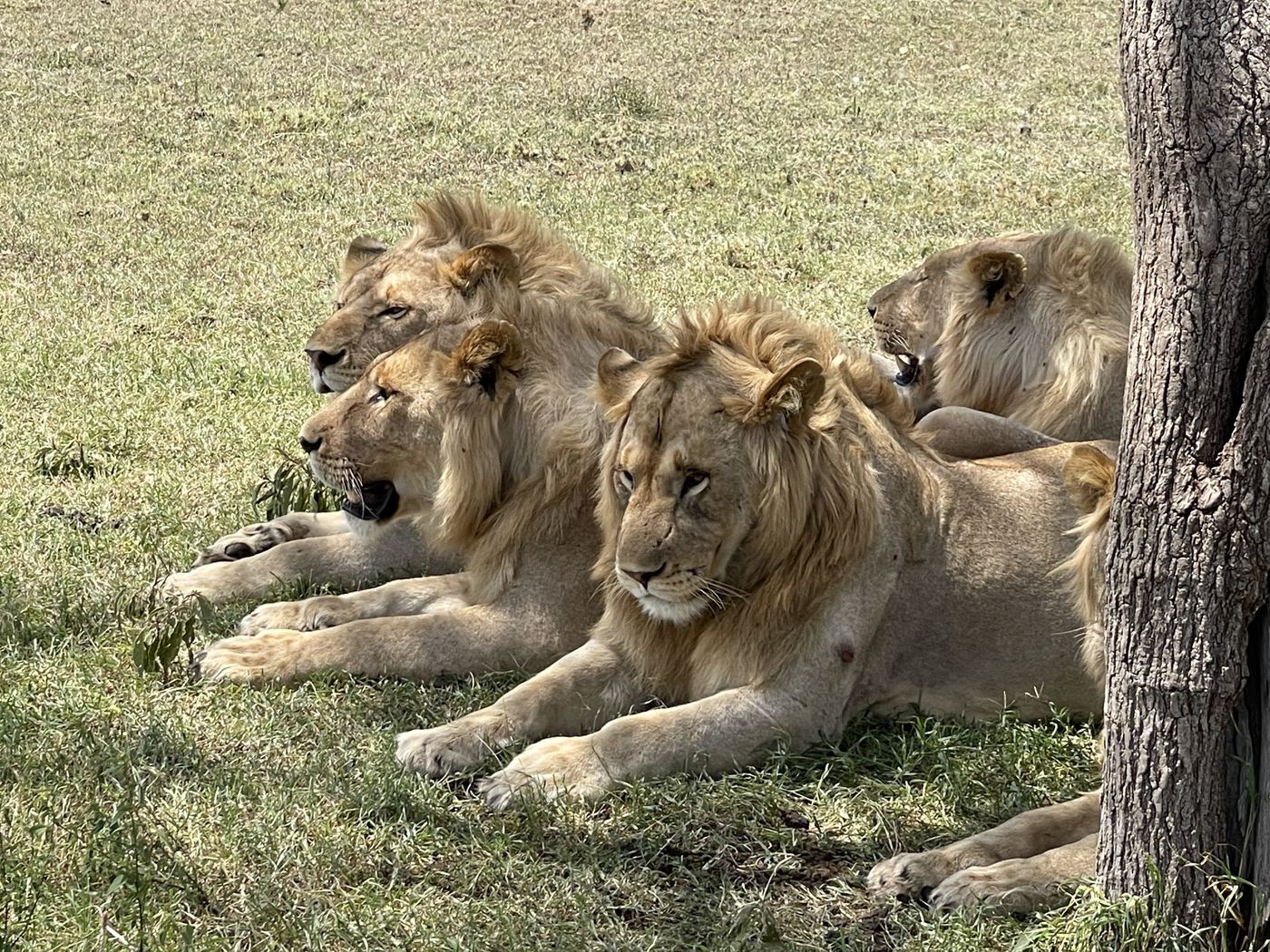
By September the herds have grazed the grass short, and that changes what you can see. Short grass gives you long sightlines. Predators work in the open.
September is very similar to August on the river, but slightly fewer people visit. If you are choosing between them, the difference is mostly about visitor numbers and grass, not about animals. Our Great Migration in August page explains the earlier, busier month in full.
| Question | August | September |
|---|---|---|
| Crossings | Likeliest window begins in mid-month | The same window continues to mid-month, then eases |
| Visitors | Peak season | Often slightly fewer |
| Grass | Dry | Short grass and good predator visibility |
| Price | Peak | Peak |
| Best suited to | Fixed dates and school holidays | Travellers with flexible dates who want more room |
The weather in September is generally dry, with warm days and cool nights. The long rains ended months earlier, and the short rains usually arrive after the month closes. Bring layers for the dawn drive. For general climate detail, see the best time to visit Kenya and the best time to visit Tanzania.
Often slightly fewer visitors come than in August, but the central Kenyan crossing points still draw the most vehicles. The Tanzanian side is generally quieter. The Mara Triangle keeps strict vehicle rules, which helps even on busy days.
September is peak season. Typical prices per person per night, sharing, are US$450–750 at Comfort level, US$750–1,300 at Premium and US$1,300–2,500+ at Luxury. These are indicative and confirmed in your quote. The Maasai Mara National Reserve ticket is US$200 per adult per day from 1 July 2026, and Serengeti fees are US$70 plus 18% VAT per 24 hours. All fees for 2027 are confirmed in your quote.
If you want to see both countries and the Ngorongoro Crater, Kenya & Tanzania Great Migration Grand Safari is a 12-day itinerary from US$8,900 per person. It includes the Mara, the Serengeti and the crater, with four nights on each side of the border, and it runs from June to October and again from late December to March. Our Ngorongoro Crater guide explains the descent.
The second half of September is when the likeliest crossing window ends, so the odds of a crossing drop. This is the honest trade-off for slightly fewer visitors.
Crossings still occur into October, often southbound, as the herds begin to drift south. If a crossing is your only goal, aim for the first half of September. If you value space, the later weeks can be rewarding. Our Great Migration in October page explains what comes next.
Where to stay in September is a choice between being close to the river and having more freedom. A conservancy base suits travellers who want freedom as well as the river. Mara North, Olare Motorogi, Naboisho, Ol Kinyei and Lemek are private, Maasai landowner-leased areas that limit beds and vehicles. Many allow off-road driving, walks and night drives that the main reserve does not.
The trade-off is that herds do not always cross the river inside conservancies. Guests drive to the reserve for crossings. Mara Plains Camp in Olare Motorogi Conservancy is a Luxury example, and Elephant Pepper Camp is a Premium example. For a river-side camp, Governors' Camp beside Musiara Marsh in the central Mara and Rekero Camp are Premium examples, and Angama Mara on the Oloololo Escarpment looks over the Mara Triangle. In Tanzania, Lemala Kuria Hills and Olakira Camp are Premium examples near Kogatende, and Sayari Camp is a Luxury example.
These are examples only. Availability and positions change every season and are confirmed in your quote. Our guide to the Mara conservancies migration safari explains how to combine a conservancy with the river.
To cover both banks, Mara to Serengeti: The Ultimate Migration Crossing Safari is a 9-day itinerary from US$7,600 per person, with four nights in Kenya and four in Tanzania. The move between the countries goes via Nairobi and Kilimanjaro or Arusha. It takes about half a day and adds cost.
The Great Migration in September suits travellers who want river crossings without the very busiest weeks. It suits people who have seen the headline version before and now want more space and strong predator viewing. It also suits photographers, because short grass and good visibility help.
To see all twelve months in one place, use our Great Migration by month overview.
Tell us when you want to travel and who is coming. We will suggest a base that gives you the best chance of space and action.
Plan my tripTwelve months compared, with a page for each one.
Where the herds are in August, the weather and who should go.
Where the herds are in October, the weather and who should go.
Camps and areas on the Kenyan side, by what you want to see.
Which side of the border suits your dates, budget and style.
For the whole picture, see our Great Migration safari guide. If you are ready to price a trip, Mara to Serengeti: The Ultimate Migration Crossing Safari starts from US$7,600 per person.
Where the herds are in April, how wet the month really is, what it costs and who should choose March or May instead.
Read the guide →Where the herds are in August, how Mara River crossings work in both directions, how Kenya and Tanzania differ for crowds, and how many nights to allow.
Read the guide →In December most herds are back on or near the southern plains on fresh grass, with calving able to start at month end. Early December is quiet; Christmas is peak-priced.
Read the guide →February is the usual peak of calving in the southern Serengeti. See where the herds are, what you will see, the weather and price, and how early to book.
Read the guide →Where the herds are in January, what the early calving season looks like, the weather and price, and whether January or February suits your safari.
Read the guide →Where the herds are in July, when the first Mara River crossings usually come, what the month costs and how to choose between Kogatende, Lamai and the Mara.
Read the guide →Where the herds are in June, why it is the month for Grumeti River crossings, and how to choose between a western and a northern base.
Read the guide →In March the herds are still on the southern Serengeti plains, calves are stronger and the long rains start late. See the weather, price and how it compares with February.
Read the guide →Where the herds are in May, what the rut sounds like, how the rains ease, what it costs and whether May or June suits you better.
Read the guide →In November the short rains send the herds streaming south through Lobo towards central Serengeti, with low-season rates and arriving migratory birds.
Read the guide →Where the herds are in October: drifting south from the Mara and northern Serengeti, with crossings still possible but never guaranteed, quieter camps and the first short rains.
Read the guide →Tell us your dates and interests — a destination specialist replies within 24 hours.
Start Planning