
Best Time to See Gorillas in Uganda
The best months to trek gorillas in Uganda are June to September and December to February, but you can trek all year. Here is what each season really means.
Read the guide →
A calm first-timer guide to gorilla trekking: who you will meet, what the forest asks of you, why the rules exist, what to wear and the order to plan in.
If you have never trekked to see gorillas, the idea can feel bigger than the practical details: a forest with a famous name, a permit that is one of the biggest lines in the trip budget, and an hour that people describe as the best of their lives. This guide is the calm version for beginners. It explains who you are going to meet, what the forest asks of you, why the rules exist, what first-timers get wrong and what to decide first, and it points to the detailed guides on this site when you want the full picture.
Most nervousness before a first trek comes from a handful of assumptions. Some are too cautious and some are too relaxed. Sorting them out early saves worry later.
| What people assume | What is closer to the truth |
|---|---|
| "I will be close enough to touch one." | You stay a few metres back, and the standard distance rule is about seven metres. Gorillas sometimes move towards a group anyway. If one does, the guide asks everyone to stay calm and step back slowly. Touching is never part of it. |
| "I need to be a serious hiker." | You need to manage several hours of slow, uneven, often muddy walking if the family is far away. Many ordinary, active people do it, and a porter helps a lot. How fit you need to be goes through it. |
| "I can book the permit once I have my flights." | Do it the other way around. Permits are limited per family per day, so the permit date should come first and the flights should follow. See how far ahead to book. |
| "The more expensive country must be better." | The encounter itself runs to similar rules in both countries. The price gap pays for different things: convenience, infrastructure and demand. Uganda vs. Rwanda compares them fairly. |
| "It is a zoo visit in a forest." | These are wild animals living their normal day. Trackers find the family before you arrive, which makes sightings reliable, but nothing is staged and nothing is timed to suit visitors. That is much of the appeal. |
A little background changes how you watch. Mountain gorillas live in family groups led by a dominant adult male called a silverback, named for the band of silver hair across his back that appears with maturity. A group usually includes several adult females, their young, and sometimes younger males. The silverback decides where the group feeds, rests and moves, which is why the family you visit may be spread through a clearing one morning and tucked into dense vegetation the next.
The gorillas you visit are habituated. That means rangers and researchers have spent a long time, usually years, getting a family used to the presence of people at a respectful distance, so that it carries on feeding, resting and playing while visitors watch. Habituation is slow and careful, and it is the reason treks are possible at all. It is also why the rules matter: a habituated gorilla is relaxed around people, but it is still a wild animal, and it can catch our illnesses.
Mountain gorillas are listed as Endangered. The most recent estimates put the world population at a little over a thousand animals, split between two populations: the Virunga volcanoes, shared by Uganda, Rwanda and the Democratic Republic of the Congo, and Bwindi Impenetrable National Park in southwest Uganda. Bwindi holds close to half of all mountain gorillas. Only a fraction of Bwindi's gorilla groups are habituated for visitors, and the rest are left alone.
If you want to see another great ape on the same trip, Uganda also offers chimpanzee trekking. The Kibale chimpanzee page introduces it, and the gorilla and chimpanzee guide hub collects the main gorilla guides in one place.
It is a fair question for a first-timer to ask, and the honest answer has two sides.
Mountain gorillas were once close to disappearing, and Bwindi's population has recovered. Counts there rose from roughly 300 animals in the late 1990s to a 2018 census that counted 459 gorillas in 36 social groups. Different surveys use different methods, so treat the figures as an encouraging trend, not a precise measurement. Gorilla tourism in Bwindi began in 1993, and conservation groups and park authorities point to permit fees and the daily presence of rangers as part of what keeps the animals protected. The main threats named are poaching, disease and loss of habitat.
Visitors are also a risk. Gorillas share most of their DNA with us and can catch many human illnesses, and infectious disease, mostly respiratory, is reported to account for around one in five sudden deaths among mountain gorillas. Habituation itself may also have made gorillas less wary of people. This is why trekking is tightly controlled, and why a beginner's most useful contribution is simply to follow the rules.
Bwindi is also a homeland. The land around it has long been home to farming communities, and the forest was the ancestral home of the Batwa, an Indigenous forest people who lived by hunting, gathering wild yams and honey, and caring for places they held sacred. When the area became a national park in 1991, the Batwa lost the right to live in the forest and use its resources, and reports say they received no national compensation. Community and conservation groups now work with Batwa families on land, education and cultural projects, and some visitors choose to include a Batwa-led cultural experience on their trip. The Mgahinga guide has a section on the Batwa and Garama Cave on the Mgahinga side, and the responsible travel guide explains what to ask any operator about how it works with local communities.
Your briefing will explain the rules in full, and the rangers enforce them, so a beginner does not need to memorise a list. It helps to know the logic instead: nearly every rule is there to keep infection and stress away from the gorillas. That is why visitors keep their distance, why only eight people may visit a family each day, why the visit is limited to one hour, why visitors must be at least 15, and why anyone with a cough or cold may be turned away. It is also why there is no flash, no eating or drinking near the animals, and no pointing or sudden movements. If you remember the reason, the rule is easy to follow even when the excitement is high.
The complete rules and the reason behind each one are set out in the trek-day guide, and the rules attached to the permit itself are on the gorilla permits page.
Bwindi Impenetrable National Park covers roughly 320 square kilometres of forest on the steep hills of southwestern Uganda. It became a national park in 1991 and a UNESCO World Heritage Site in 1994. The forest rises from about 1,200 metres to more than 2,600 metres, and more than half of the park sits above 2,000 metres. The name is earned: in places the vegetation is thick enough that guides cut the way forward with a machete.
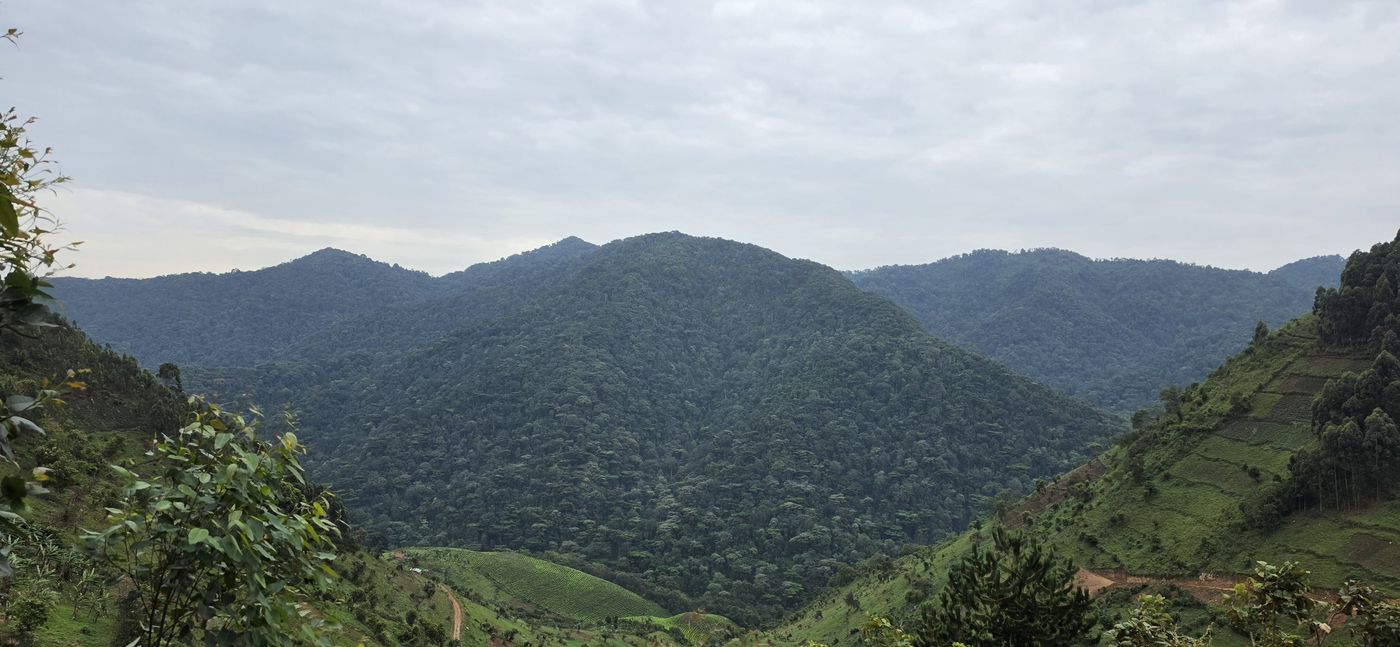
For a first-timer the practical points are these:
Almost every beginner starts with the same four questions. Each has a full guide on this site, so here is the short answer and the link to the long one.
An early start, a briefing at the trailhead, then a walk with rangers and a guide to wherever the family is. Visitors are grouped by family, with fitness taken into account, and you spend one hour with the gorillas, timed by the rangers.
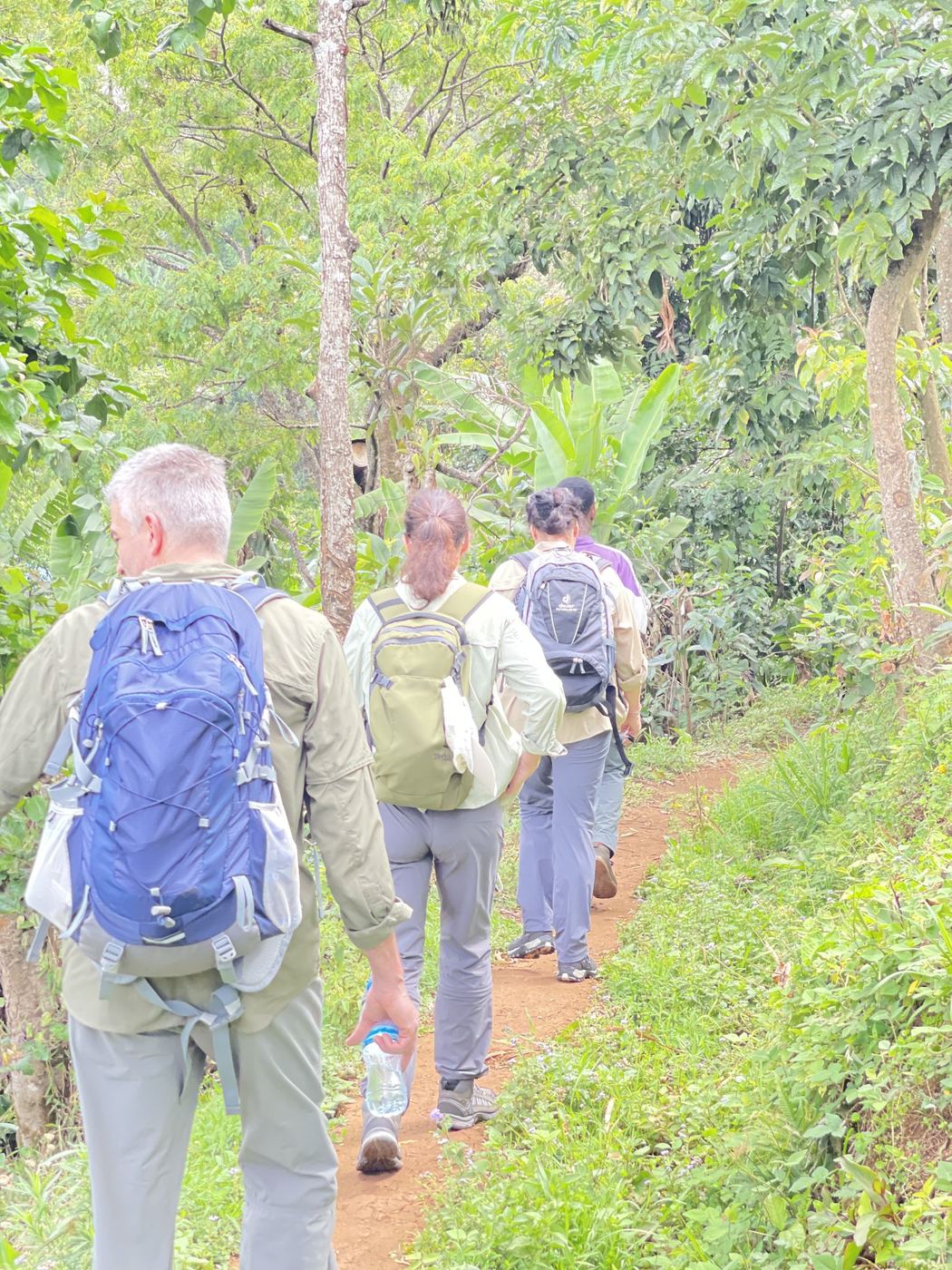
What happens on trek dayTreks range from under an hour to most of a day, on slopes that are often slippery. You do not need to be a mountain hiker, but tell us honestly how fit you are, because it affects which family and sector you are given, and consider a porter.
How fit you need to beA permit is personal, checked against your passport, and limited per family per day. Busy months sell out far ahead, so fix your dates first and secure the permit before you buy flights.
How to book permits Permit pricesA lower permit price than Rwanda, two gorilla parks and four Bwindi sectors to match to your fitness, and the option to add other primates and parks in the same country. The section further down is the honest version.
Uganda vs. Rwanda Gorilla trekking in UgandaNot sure which sector or park fits you? Tell us your dates and fitness level and we will suggest one.
Plan my tripPhotography is allowed, but flash is not, and the forest is darker than most people expect. These are general photography tips, not park rules, so follow your rangers' instructions first.
A few terms come up in every itinerary and booking message. Here is what they mean.
| Word | What it means |
|---|---|
| Silverback | The dominant adult male in a gorilla family, named for the silver hair on his back. |
| Habituated family | A gorilla group that has been gradually accustomed to the presence of people, and the only kind visitors are taken to. |
| Trackers and rangers | Park staff who locate the family and lead your group, and who decide when to move closer or step back. |
| Sector | One of Bwindi's four trekking areas: Buhoma, Ruhija, Rushaga and Nkuringo. See the sector guide. |
| Permit | Your personal, date-specific entry to a gorilla trek, checked against your passport on the day. |
| Porter | A local person you can hire at the briefing to carry your day pack and help on steep or slippery ground. |
| Habituation Experience | A separate, longer permit offered at Rushaga, where visitors spend more time with a family that is still being habituated. See the permits page. |
Choosing a country is the decision first-timers worry about most, so it deserves a straight answer, including where the popular claims need care.
The permit is the largest single cost of a gorilla trip, and Uganda's is the lower of the two main options: $800 for a foreign non-resident, compared with $1,500 in Rwanda. A lower rate has been reported for a few months of the year, but it is worth confirming at the time of booking, because permit prices are set by the park authorities and can change. Our full permit cost comparison sets out both countries.
Uganda also gives you more ways to match the trek to the traveler. There are two gorilla parks, Bwindi and Mgahinga, and four trekking sectors in Bwindi with different terrain and difficulty. That lets a trip be built around your fitness and route, rather than the other way round.
A gorilla trek feels intimate because of the rules: a small group, a respectful distance, a full hour with one family and only your own group around you. Those limits are part of the standard system, so the encounter itself is not more intimate in one country than another. What Uganda adds is atmosphere. Bwindi is dense, steep and wild, and the day tends to feel like an expedition, not a short walk to a viewing point. Stay somewhere small near the park entrance, such as Bwindi Lodge in the Buhoma sector or Mount Gahinga Lodge near Mgahinga, and the whole trip feels personal.
If you have only a few days or want to stay close to a capital city, Rwanda's Volcanoes National Park is worth a look, and our Rwanda page covers it. Some travelers do both countries, which this route guide explains. The complete comparison sets out the full trade-offs.
Compare real trips that include a gorilla trek, with transparent pricing for your dates.
See gorilla trekking safaris Gorilla trekking in UgandaThe mistake most first-timers make is booking in the wrong order. These five steps avoid it.
If you want a starting point, the classic gorilla trekking safari is the simplest route built around the trek, the Uganda primates trip adds chimpanzees, and the gorilla trek and Nile adventure adds river activities. Any of them can be reshaped around your dates and fitness. If this is also your first safari, the first-time safari planning guide covers the wider planning.
Send us your dates and a few details. We will check permit availability, suggest a sector and lodge that match your fitness, and reply within 24 hours.
The best months to trek gorillas in Uganda are June to September and December to February, but you can trek all year. Here is what each season really means.
Read the guide →Bwindi has four trekking sectors: Buhoma, Ruhija, Rushaga and Nkuringo. Here is how they differ and how to choose the one that suits your trip.
Read the guide →Kibale Forest is Uganda's best place to track wild chimpanzees. Here is what a trek is like, how it differs from gorillas and how to combine it with your trip.
Read the guide →Uganda's gorilla permit is $800 and Rwanda's is $1,500. Here is the at-a-glance comparison, what else differs and how to choose.
Read the guide →Uganda's gorilla permit costs $800; Rwanda's costs $1,500 — nearly double for the same hour with the gorillas. Here's the honest cost breakdown.
Read the guide →You do not need to be a mountain hiker to trek gorillas, but you do need steady walking fitness. Here is what the trek is really like and how to prepare.
Read the guide →Gorilla permits are limited and sell out for the dry seasons. Here is how to book one safely, what we need from you and how far ahead to start.
Read the guide →A gorilla trek day, hour by hour: the briefing, the walk, the rules and the one hour with the gorillas. Here is what really happens.
Read the guide →Tell us your dates and interests — a destination specialist replies within 24 hours.
Start Planning