Gorillas First or Last on Safari? A Decision Guide for Long Trips
Should gorilla trekking come at the start or end of a long safari? Both sides, the tie-breakers, buffer nights and what to do if a trek is cancelled, with a five-step method to choose.
October 11, 2026Published
19 minRead time
Paramount Gorilla Expeditions Team East AfricaAuthor
Gorillas first or last? On most long routes we put the trek early, unless the trip begins in Nairobi, where finishing with the trek often makes more sense. The deciding factors are not scenery. They are permit dates, delay risk, fitness, jet lag and where your flight lands. This guide gives the case for each order, a five-step method and what to do if a trek is cancelled, so you know where to put gorilla trekking in a safari.
Written by Paramount Gorilla Expeditions Team East Africa. Facts last checked 11 October 2026.
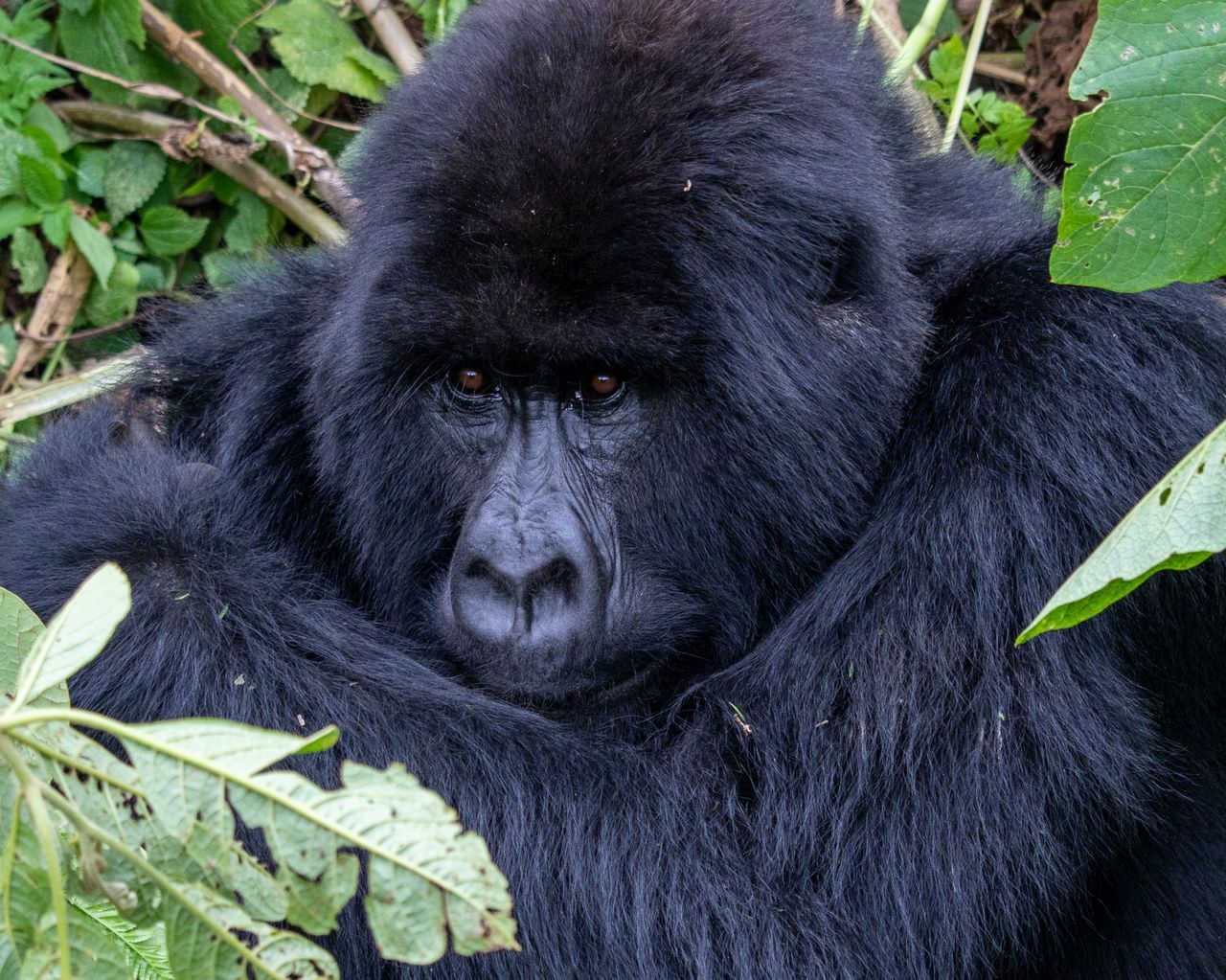
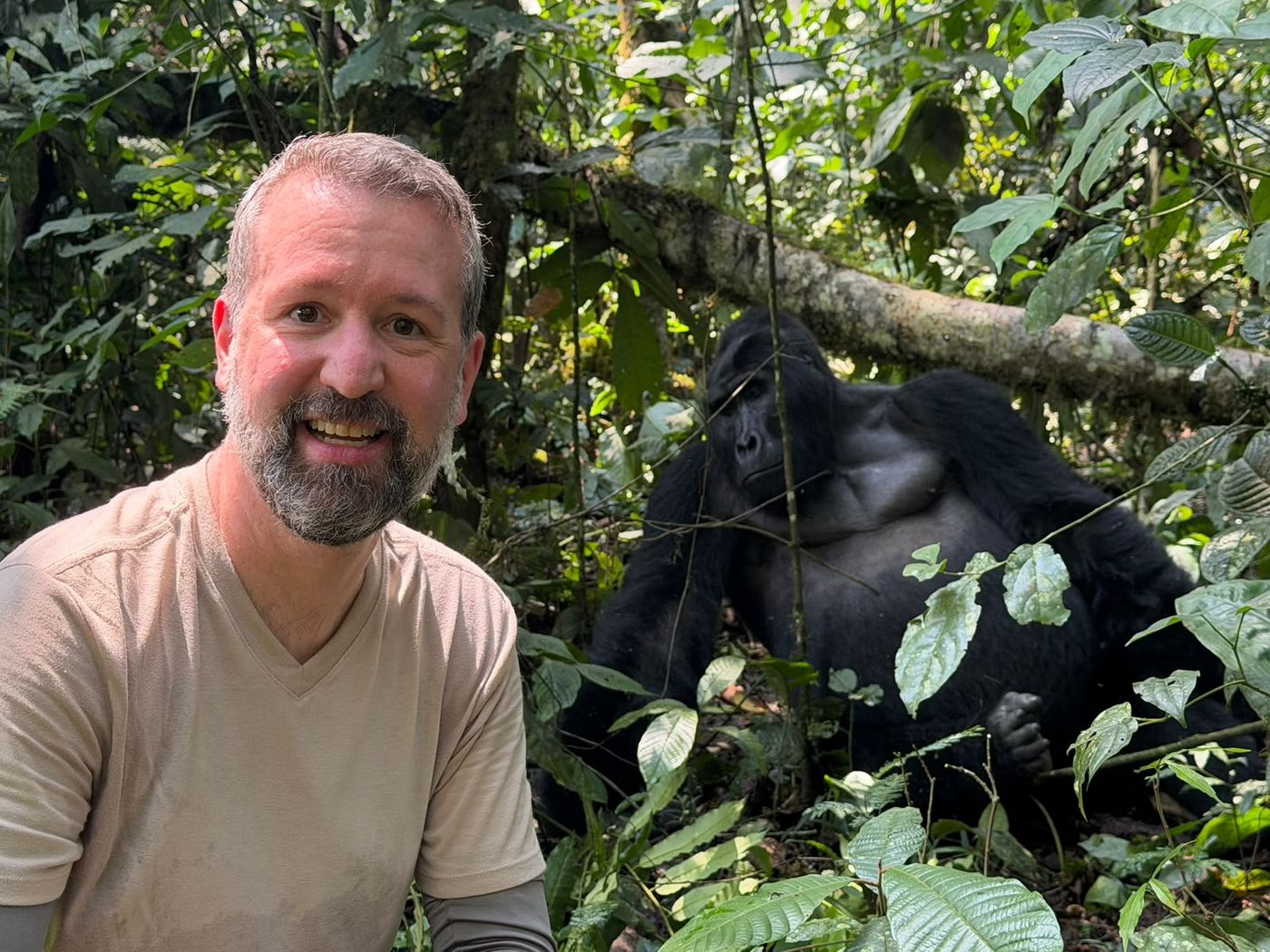
A mountain gorilla silverback. The permit date for this hour is the one fixed point in the whole itinerary.
1Permit covers one person, one trek, one date
15Minimum age to trek gorillas
Up to 8Visitors per gorilla family per day
6 to 8 hLongest treks operators report
The short answer
Neither order is always right. Fix the permit date first, because it cannot move, then place the trek where delays cannot reach it. That is usually early, with a night of buffer after you land, when the route starts in Uganda or Rwanda. Gorillas last works when you land in Nairobi and fly home from Kigali or Entebbe, with a spare day before the flight. Never trek on arrival or departure day.
Permit dates come first, whether gorillas first or last
A gorilla permit is bought for one person, one trek and one date. That makes it the least flexible item in any itinerary, and it is why permit dates come first in every route we plan. A lodge can usually move by a night, and a game drive can be swapped for another. A permit date cannot be moved without cost, and on busy dates the permits run out. Operators advise booking as early as you can, which for peak dates means months ahead. Our guides to how to book gorilla permits and the best time to book a gorilla trekking permit cover the timing.
What each country's rules mean for your dates
The Rwanda Development Board portal (official booking page, read 11 October 2026) lists USD 1,500 for foreign visitors and a briefing at Kinigi at about 7:00. It gives no refund for late arrival, a delayed flight or your own cancellation. The Uganda Wildlife Authority tariff for 2024 to 2026 (UWA tariff PDF) lists USD 800 for foreign non-residents, a 25% fine for late rescheduling and a 50% fine for tracking in a different location. Confirm the rate for your date. Operators report that Uganda permits have needed full payment at booking since 1 March 2026. They also report that the April, May and November 2026 low-season permits cannot be rescheduled. Treat both points as reported, not official.
So the sequence is permit date first, flights second, lodges third. Whether you settle on a gorilla trek first or last, the plains-game legs are the flexible part of a long safari. The order of gorilla trek and safari should protect the fixed part. If fares force you to buy flights first, ask your operator to confirm permit availability for those exact dates before you pay for anything that cannot be changed.
What many guides get wrong: some say a permit date can usually be changed with 30 days' notice. The only official figure we found is the UWA fine for late rescheduling, and sources disagree on everything else, including whether permits can be transferred. Ask for the change terms in writing.
Gorillas first or last: the case for going first
Putting the trek first is the most common answer to gorilla trekking before or after safari days, and it holds up well. One East Africa operator's published guide recommends gorillas first so that you arrive with fresh legs and the safari that follows is relaxed. It suggests two to three days of trekking, four to five days of safari, and a rest day between if possible. We agree with the logic, for four reasons.
The fixed date has the whole trip behind it. If the trek is early and something goes wrong, the rest of the itinerary is still ahead of you. A cold, a missed connection or a family that is hard to find will not unsettle everything else. The flexible plains-game days can absorb a change.
You are fittest at the start. The trek is the one physically demanding day, so doing it before a week of early starts means you meet it rested.
Entebbe and Kigali are natural doors to the forests. From Entebbe, Bwindi is 8 to 10 hours by road or about 1 hour 15 by light aircraft. From Kigali, Volcanoes is about 2 to 3 hours by road. A route that begins at either airport reaches the gorillas without crossing the region first.
The savanna legs make a gentle finish. After the forest, a seated game drive and a lodge bed suit tired legs.
What gorillas first costs you
Your international flight now sits right beside the one date that cannot move. A delayed long-haul arrival, lost luggage or a poor first night can all reach the trek. The answer is a night of buffer between landing and the trek morning, not a different order. Some travellers also feel the trip peaks too early, though that is a matter of taste.
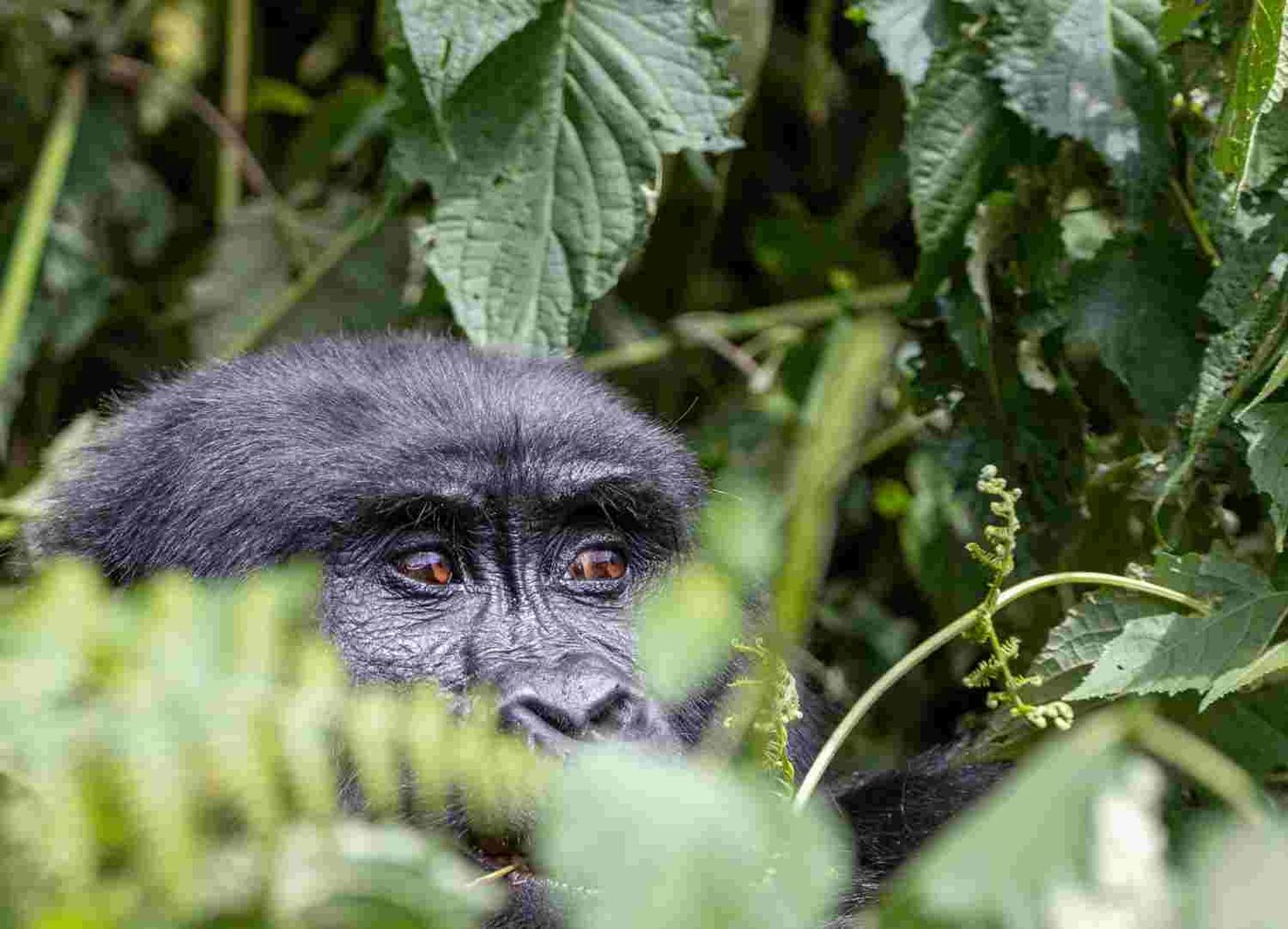
A young mountain gorilla. Treks run from under an hour to several hours, and the family decides the pace.
Gorillas first or last: the case for finishing with the trek
The other side is just as reasonable, and a fair guide has to say so. Choosing a gorilla trek at the start or end of a safari is partly a flight question. Some operators typically put the Maasai Mara first and the trek last, mainly because most long-haul flights land in Nairobi. The route then runs on toward Kigali or Entebbe for the flight home. Others treat the trek as the climax of the journey.
Your arrival airport can decide it. From Nairobi, the Mara is about 1 hour by light aircraft from Wilson Airport (about 15 kg soft bag, confirm with your operator) or about 6 hours by road. Starting there and finishing in Kigali avoids a backtrack. RwandAir links Kigali with Kilimanjaro several times a week (confirm the days), so a Tanzania leg can feed straight into a Rwanda finish.
You have settled into the rhythm. By the end of a long trip, jet lag has gone and early starts are routine.
The exit can be short. After a Volcanoes trek, Kigali is about 2 to 3 hours away. A Uganda finish is longer: 8 to 10 hours by road from Bwindi to Entebbe, or about 1 hour 15 by light aircraft, which adds weather and schedule risk.
What gorillas last costs you
Every earlier delay now lands on the one date that cannot move, with little room to recover. A bush flight that slips, a border queue, a rain-softened road or a cold picked up in week two all travel forward to the trek. If it fails, there is no later day to try again. Finishing with the trek is sound only with a spare day before it and another before the flight home. Without those, it is the riskiest order.
Fitness and fatigue: gorillas first or last for your legs
The hike is the same whenever you do it, but you are not. Operators report treks from under 1 hour to 6 or 8 hours before the hour with the family. At Volcanoes the forest is reported at roughly 2,500 to 3,000 m. Trails can be steep and slippery, and in wet weather families may range farther, which makes the walk less predictable. Trackers find each family on the day, so nobody can give you the length in advance.
The case that fresh legs matter. A rested body copes better with a long, muddy day. Going early also removes a worry: some travellers spend the first week anxious about the hike.
The case that fatigue is overrated. Safari days are mostly seated, and some people reach the forest in better shape after a week outdoors. A late trek also gives you more weeks to train at home.
One real hazard favours going early: a cold or stomach upset picked up mid-trip. Rangers can refuse anyone who may carry a contagious illness, and the Rwanda portal gives no refund in that case. An early trek leaves fewer weeks for something to go wrong.
Our advice is that preparation matters more than the order of gorilla trek and safari. Walk hills in your own boots, ask for a porter, and tell your guide accurately how fit you are, so rangers can match you with a suitable family. Our guide to how fit you need to be for gorilla trekking explains the demands, and what happens on trek day shows the shape of the hour. The minimum age is 15, which matters for families with teenagers.
Jet lag and your arrival airport
Many travellers sleep badly for a night or two after a long-haul flight. A Rwanda briefing at about 7:00 is an early start for a body clock still adjusting. That is why gorillas first never means gorillas on the first day. We build in at least one night between landing and the trek morning, and more when a bush flight or long road sits between the airport and the forest. A typical Uganda shape is a night near Entebbe, a flight to the forest on day two and the trek on day three, though schedules vary by season. Rwanda is reported to run one hour behind Uganda, so check your phone clock on a day that crosses a border.
The airport you land in often decides the order for you. A route that starts at Entebbe or Kigali leans toward gorillas first or last depending on the flights home, but usually first. Starting in Nairobi leans toward the Mara first and gorillas last, if the flights home leave from Kigali or Entebbe. Beginning at Kilimanjaro leans toward the Serengeti first, then on to Rwanda. These are tendencies, and they give way to the permit date. Our guide to safari flight logistics between East African countries lays out the legs that exist. The decision guide on which destination to visit first covers the wider question.
Entry rules can tip the order
The East Africa Tourist Visa covers Uganda, Kenya and Rwanda only, and you must enter the three-country area through the country that issued it. Leaving for Tanzania ends its usefulness. A route that goes Kenya, then Tanzania, then back into Rwanda or Uganda for the gorillas needs a separate visa or authorisation for that last entry. That is our reading of the published rules, so confirm it with immigration. Starting with gorillas and ending in Tanzania keeps the visa tidy. The full explanation is in our East Africa tourist visa guide.
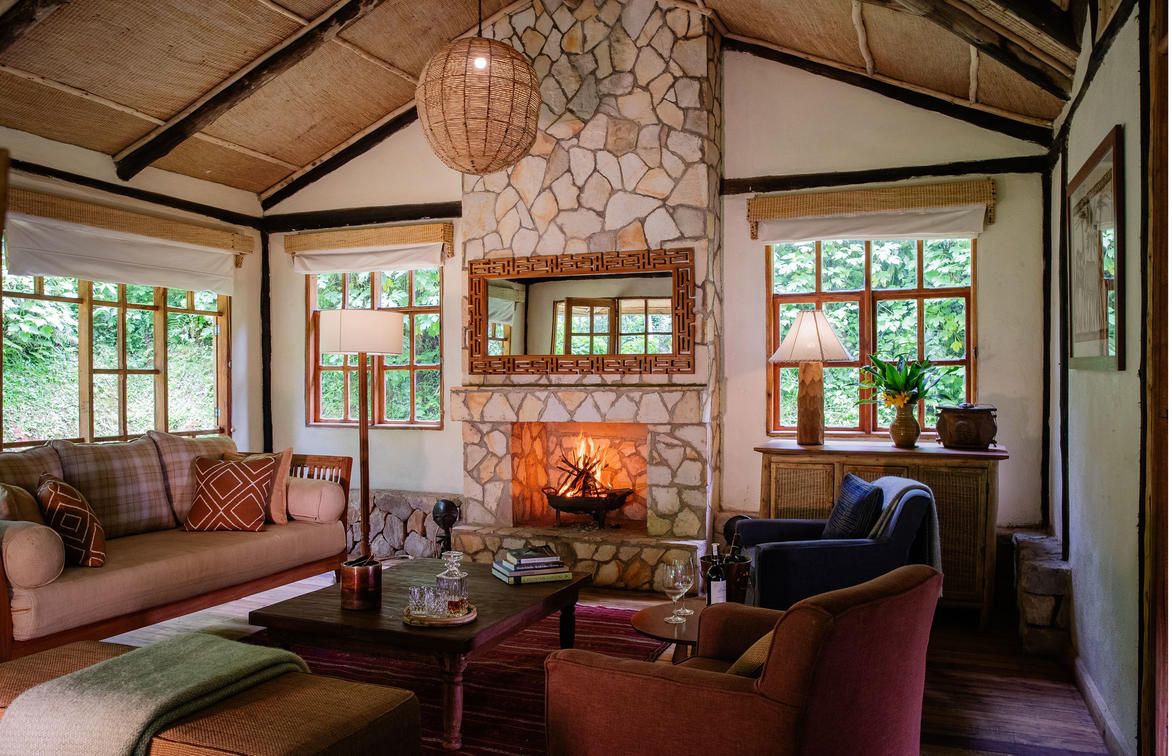
A lodge near Bwindi. A quiet night here before the trek, and another after it, is the simplest protection in the whole plan.
Delay risk for gorillas first or last: flights, roads and rain
This is where the argument for gorillas first is strongest, and most guides skip it when they discuss gorilla trekking before or after safari legs. The later the trek sits, the more links stand between you and the trailhead, and every link can slip. A trek in the last days of a long route inherits the delays of every earlier leg.
Flights, roads and borders
A long safari uses light aircraft with soft bags of about 15 kg, seasonal links and minimum passenger numbers. For example, the Mara to Serengeti air and road link on AirKenya's 2026 timetable does not run from 1 April to 20 May. It needs at least 2 passengers (4 from 1 November to 15 December). Some operators still route that leg through Nairobi and Kilimanjaro or Arusha, which adds a day. Confirm every leg for your dates. A cancelled bush flight in week two is an annoyance, but the same cancellation the day before the trek can cost the permit.
Kigali to Bwindi is about 4 to 6 hours depending on the sector, and Entebbe to Bwindi is 8 to 10 hours. At the Uganda and Rwanda crossings, allow 30 to 60 minutes and plan to cross in daylight, because opening hours are reported inconsistently. Our Uganda and Rwanda border crossing guide has the detail.
Rain, and the 2026/27 outlook
We treat rain here only as a delay risk. Wet weather makes trails slippery, can slow roads and airstrips, and makes the trek less predictable. Uganda's wetter months are reported as March to April and October to November, and Rwanda's long rains as March to May. The month by month picture is in our best time for a four country safari guide.
Rain outlook for 2026 and 2027: Kenya Met warned on 10 September 2026 of heavy October to December rain that could continue into February 2027. For any departure from now to early 2027, add a spare night around the trek, whichever order you choose.
Rwanda's portal gives no refund for a delayed flight, and Uganda fines late rescheduling, so delay risk is a money question as well as a stress one. It is the strongest single argument for putting the trek early, or at least not on the last two days.
Buffer days and a rest day after the trek
Whichever way you answer gorilla trek first or last, buffer is the simplest protection you can buy, and it is where published advice is thinnest. Competitor figures vary between two and three days with no stated reason. We therefore give a rule you can test against your own route, built from the reported trek length and the transfer times above.
How many buffer days
Situation
Buffer we plan
Why
International flight lands before the trek
At least 1 night
Absorbs a late arrival and a poor first night. Add a night if a bush flight or border sits in between.
A bush flight, border or long drive follows the trek
1 night
Treks can run long, and sore legs make a same-day transfer harder.
The flight home follows the trek
1 spare night
A trek of 6 to 8 hours plus the drive back leaves no margin for a flight on the same day.
Trek sits in the middle of the route
1 night each side
Delays from earlier legs and onward legs both stay clear of the date.
Wet month or the 2026/27 rain window
Add 1 night
Slower roads and airstrips, and less predictable treks.
These rules are our planning judgement, not an official requirement.
A rest day after the trek
The day after a trek surprises people. Legs ache, boots need drying, and the mind is still in the forest. One operator guide advises a rest day between trekking and the safari if possible, and we agree. A rest day after the trek need not be empty. A slow morning, a short community or forest visit, or a long lunch at the lodge is enough. Then the next flight or drive starts from a better place.
A spare day has a second use, which is a retry. If the family cannot be found, a spare day may allow another attempt. That needs a free permit, and on busy dates there often is not one. Treat the spare day as a cushion first and a retry second.
Planning tip: hold the last night before your flight home as a flexible night, not a fixed one. If a trek moves by a day for weather or a permit change, a spare night near the trek costs far less than a missed onward flight, and it is the cleanest answer to gorillas first or last doubts.
If a trek is cancelled, postponed or cut short
What you get back depends on why it happened, and the two countries publish different terms. Rwanda's are the clearest, so we start there.
The family cannot be found. Rwanda: if the family moves away and cannot be found, you may retry or take a full refund. If you track all day with no contact, you get 75% back.
You arrive late or your flight is delayed. Rwanda: no refund. Uganda: the tariff lists a 25% fine for late rescheduling, so a changed date has a cost.
You cancel yourself. Rwanda: no refund. Uganda: terms vary by notice and sources disagree, so we do not quote percentages. Ask for them in writing.
You or a companion are unwell. Rangers can refuse a trek to anyone who may carry a contagious illness, and the Rwanda portal gives no refund in that case. In Uganda, operators report a partial refund. Neither is a figure to plan around.
If something goes wrong, tell your operator at once, ask the rangers about the options at the start, and keep any medical or airline paperwork. Then ask your insurer what it covers. Cover for non-refundable permit costs varies, so read the wording before you buy. Our guide to travel insurance and medical evacuation cover explains what to look for.
How the order changes your options
With a gorilla trek first, a cancelled trek leaves the rest of the trip to rebook or reshuffle, and plains-game days can usually make room. With the trek last, a cancelled trek ends the story unless a spare day and a free permit exist. Travellers who want extra odds can book two permits on consecutive days, which operators routinely do. Our guide to combining Uganda and Rwanda gorilla trekking covers that choice. Health and entry alerts also change. We keep dated notes in the health alerts section of our multi-country guide, and we advise reading the live WHO, CDC and UK FCDO pages before you travel.
A five-step method to decide gorillas first or last
Use these questions in order. They replace opinions with the facts of your own trip.
Fix the permit date and sector. Ask your operator to confirm availability, then lock the date before any flight you cannot change.
Mark your fixed legs. Note where you land, where you fly home from, and any seasonal flights between.
Count the links. Each flight, border or long road before the trailhead is a place a delay can start.
Check yourself. On fitness and fatigue, if you are unsure or have a health concern, trek early and let the rest of the trip adapt.
Apply the tie-breakers. Use the table below, then add the buffer nights from the previous section.
Your situation
Leans toward
Reason
Landing at Entebbe or Kigali
Gorillas first
The forest is the nearest leg, and the rest of the route follows.
Nairobi arrival, flight home from Kigali or Entebbe
Last, or in the middle
Avoids a backtrack, if a spare day sits before the flight home.
Kilimanjaro arrival
Gorillas last
Serengeti first, then RwandAir to Kigali (confirm days).
Concerned about fitness or health
Gorillas first
Fresh legs, and time to reshuffle if the trek fails.
Wet month or the 2026/27 rain window
First, or in the middle
Fewer links ahead of the trek.
One East Africa Tourist Visa for three countries
Gorillas first
Keeps the visa in use until Tanzania ends it.
Flights and visa rules change, so confirm both when you book.
Route shapes compared
Is the middle of the itinerary the safest place for gorillas? One operator suggests it for the western Uganda circuit. We checked that logic against real route shapes. The middle helps only with spare days on both sides, and it adds legs.
Example flows are illustrations, not quotes. Nairobi to Entebbe takes about 1 hour 30 and Entebbe to Bwindi about 1 hour 15 by light aircraft. Uganda Airlines flies Entebbe to Kilimanjaro on Tuesday, Thursday and Saturday (about 1 hour 15).
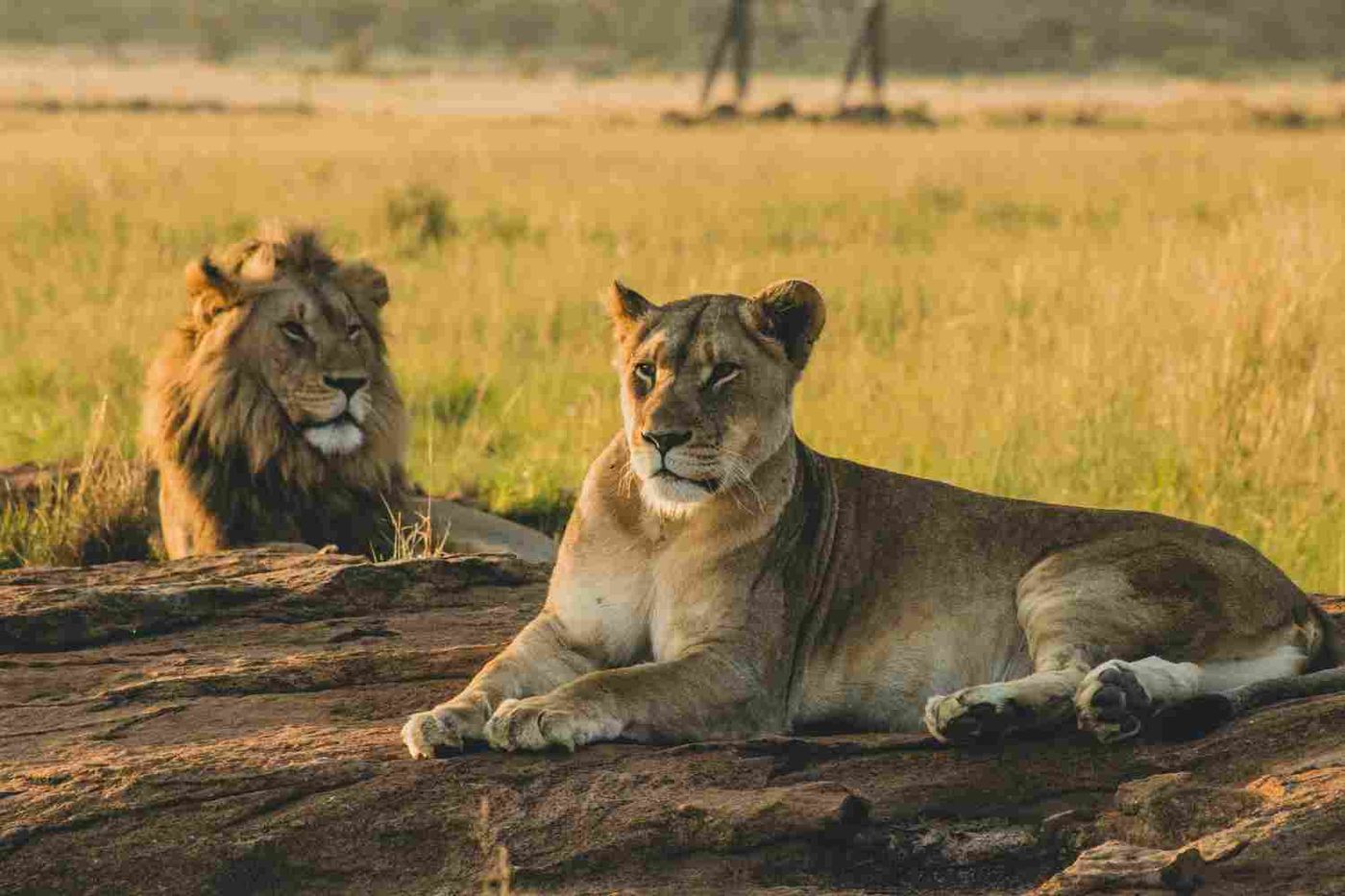
Lions in the Mara. Plains-game days are the flexible part of the route, so they can wrap around the fixed permit date.
Who each order suits: gorillas first or last by traveller
Where to put gorilla trekking in a safari depends partly on who is travelling. These are patterns we plan around, not rules.
First-time visitors: gorillas first, so the one unknown is out of the way early.
Older travellers or anyone concerned about stamina: gorillas first, with a night of rest on each side and a porter booked.
Families with teenagers: the minimum age is 15, so check every traveller's age against the permit before choosing a date. Gorillas first or in the middle usually keeps a group's schedule simplest.
Travellers who love a finale: finishing with the trek is a fair choice, with the spare day and the permit confirmed first. Fly out the day after the trek, not the same day.
Common mistakes with a gorilla trek at the start or end of a safari
Booking flights before permits. Flights can be non-refundable, and permits for a given date are not available on demand.
Trekking on arrival day or departure day. There is no margin for jet lag, a delay or a long trek.
Crossing a border on trek day. A trek can run for hours, and a crossing takes 30 to 60 minutes plus the road. Sleep after the trek and cross the next day.
Assuming a permit can simply be rescheduled. Terms differ, low-season permits are reported as not reschedulable, and fines apply.
Treating the middle as automatically safe. It is safe only with spare days on both sides.
Packing a hard suitcase. Bush flights use soft bags of about 15 kg, and boots and rain gear need room.
Giving the guide a rosier fitness picture than the truth. The rangers match your family to what you tell them.
Next steps: planning gorillas first or last with us
If you are still undecided, give us three facts: the dates you can travel, where your flight lands, and where you want to fly home from. We confirm permit availability first, then draw the route in both orders so you can compare them side by side, with the buffer nights shown. Our planners confirm every flight and entry rule for your dates in writing.
Tell us your dates, your landing airport and how you want to leave. We will confirm the permit, test both orders and show you the buffer nights before you pay for anything.
Written by Paramount Gorilla Expeditions Team East Africa. Facts last checked 11 October 2026.
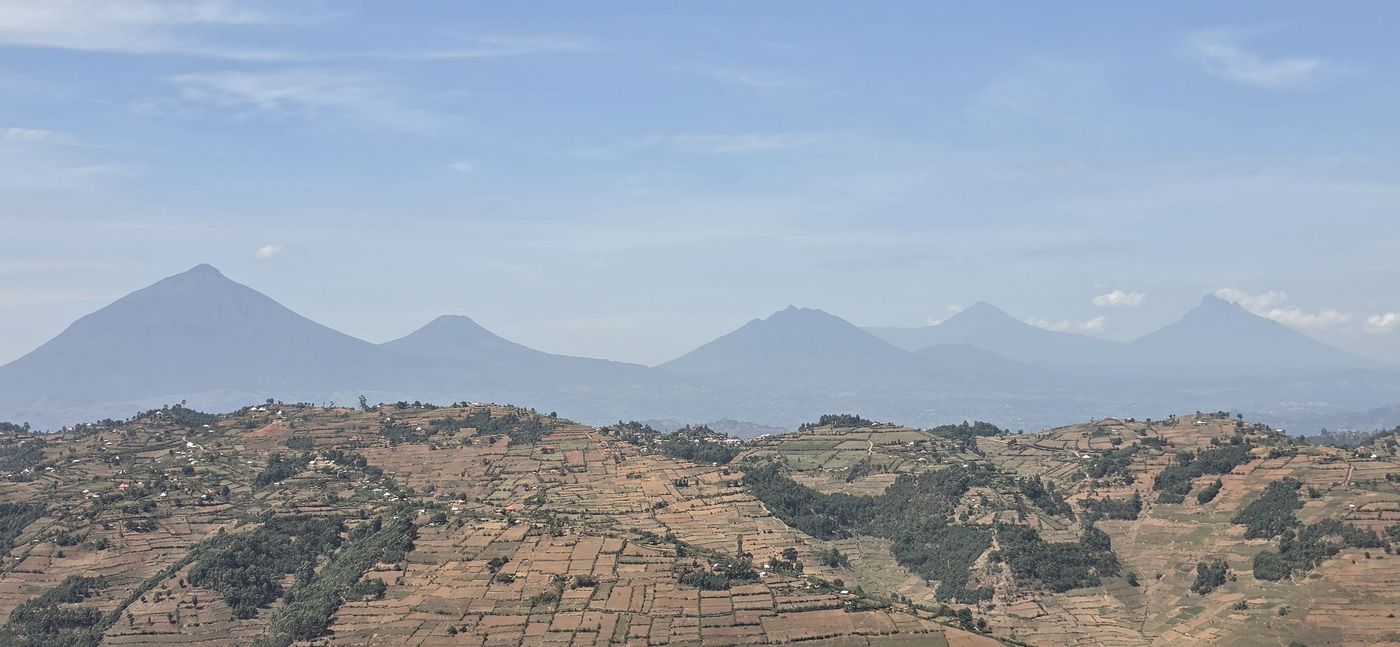
A guest and a mountain gorilla in Bwindi forest.The Virunga volcanoes rising above terraced hills.A large herd of wildebeest on green grass.
#gorillas first or last#gorilla trek order#gorilla trekking before or after safari#gorilla permit dates#safari itinerary order#gorilla trek buffer days#jet lag and gorilla trekking#multi-country safari planning#gorilla trek cancelled#east africa safari order
Late July to September is the best time for a four country safari across Uganda, Rwanda, Kenya and Tanzania. See the month by month table, the second window and the 2026/27 rain caveat.
Trek gorillas in both countries on one trip: what two permits cost, which Bwindi sector links to Rwanda, which direction to travel and how to protect a rest day between treks.
What an East Africa safari really costs: the four price drivers, official permit and park fees in Uganda, Rwanda, Kenya and Tanzania, our from-prices and how to read a quote.
The East Africa tourist visa covers Uganda, Kenya and Rwanda for USD 100 and 90 days, but not Tanzania. Fees, first-entry rule, Kenya eTA question and the Tanzania eVisa, dated.
The fixed part of a four country safari cost: permits, park fees, visas and Tanzania insurance, added up for six routes, plus the ten lines to compare in any quote.
Work out how many days a Uganda, Rwanda, Kenya and Tanzania safari needs: a nights-per-stop ledger, the transfer days you cannot skip, and what 10 to 21 days really give you.
The Kenya eTA for safari guests: official USD 30 fee, about three working days to process, 90 days validity, who is exempt, transit rules and the open question for regional visa holders.
A planner's guide to a Rwanda Kenya Tanzania safari that starts in Kigali: route order, flights, the Mara to Serengeti link, entry rules and the gorilla permit.
A planner's guide to a Rwanda and Kenya safari: start in Kigali, trek once, fly to Nairobi, then the Mara. Flights, how to split your days and the entry rules for both countries.
A planner's guide to a Rwanda and Tanzania safari: one gorilla trek, RwandAir's three-day-a-week flight, the Serengeti by air or road, and Tanzania's eVisa and insurance rules.
How flights really work between safari countries: international routes, bush flights, the 15 kg baggage limit, the Mara to Serengeti link, overland times and a realistic transit day.
Safari luggage weight limits by carrier: the 15 kg soft bag rule, who allows 20 kg, excess and freight seat prices, storing luggage at the gateway and packing for the multi-country trap.
Tanzania now requires foreign visitors to hold government inbound travel insurance. See what is verified, reported and unknown: cost, exemptions, Zanzibar, buying and enforcement.
The route we recommend for a Uganda Kenya Tanzania safari: the best order, how many days it needs, the best months, how you move between countries and what to check before you book.
Two land posts link Rwanda and Uganda for gorilla trips. Learn which suits your sector, what to carry, how long to allow and why hours differ, checked 11 October 2026.
A Uganda Rwanda Kenya safari on one East Africa Tourist Visa: the order of the three countries, the Nairobi flights, the Mara, yellow fever rules and the open Kenya eTA question.
How to plan a Uganda Rwanda Kenya Tanzania safari: the four route directions compared, the flight chain, how the East Africa Tourist Visa interacts with the order, and what to check.
A planner's guide to a Uganda Rwanda Tanzania safari: Entebbe or Kigali start, the border or flight between the forests, Kilimanjaro flights, visas and Tanzania's insurance.
Visa rules for Uganda, Kenya, Tanzania, Zanzibar and the Seychelles change often. Here is how to check them properly and what to prepare before you travel.
Uganda dropped its yellow fever entry certificate on 2 October 2026, but Kenya, Rwanda and Tanzania still ask. Journey table, 12 hour transit rule and border outcomes, dated.
Should I do gorilla trekking at the start or the end of my safari?+
Usually early, if your route starts in Uganda or Rwanda, and last only if you land in Nairobi and fly home from Kigali or Entebbe. Early gives you fresh legs and the rest of the trip to adapt if the trek fails. Last gives you a climax and a short exit, but every earlier delay lands on the permit date. Either works with one night of buffer on each side of the trek.
Does it matter if I trek gorillas before or after the Masai Mara or Serengeti?+
It matters mostly through logistics, not wildlife. Plains-game days are flexible, while the permit date is not, so the trek should sit where delays are least likely to reach it. If you land in Nairobi, the Mara first is often simpler. If you land in Entebbe or Kigali, the forest first is usually simpler. Ask your operator to draw both orders for your flights.
How many buffer days should I leave around a gorilla permit date?+
At least one night between landing and the trek morning, and one night after the trek before any flight, border or long drive. Published advice varies between two and three days with no stated reason, so we treat this as planning judgement. Add a night in a wet month, and never trek on the day you fly home. A spare day is a cushion first and a retry chance second.
What happens to my trip if a flight is delayed on trekking day?+
If you arrive late, Rwanda's booking portal gives no refund for a late arrival or a delayed flight, and Uganda's tariff lists a 25% fine for rescheduling late. A delay one day earlier is far less costly because you can still reach the briefing. That is why we avoid putting a flight on the same day as a trek and keep a night of buffer before it.
Should I book permits before flights?+
In most cases yes, especially for peak dates, which operators say can sell out months ahead. A permit is bought for one person, one trek and one date, so the flights should fit it, not the other way round. If fares push you to book flights first, ask your operator to confirm permit availability for those dates before you pay for anything that cannot be changed.
Is it better to do the hard hike first, while fresh?+
For many travellers, yes. A rested body copes better with a long, steep or muddy day, and an early trek also removes any worry for the rest of the trip. The counter-argument is that safari days are mostly seated, so fatigue builds slowly. If you are unsure of your fitness, we would go first, hire a porter and tell your guide accurately how fit you are.
Can I change my gorilla permit date after booking?+
Sometimes, but not freely, and not without cost. The Uganda Wildlife Authority tariff for 2024 to 2026 lists a 25% fine for late rescheduling, and operators report that low-season permits cannot be moved. Rwanda's portal gives no refund if you cancel yourself. Some guides claim changes are easy with 30 days' notice, but we did not find that in official sources, so ask for the terms in writing.
Is the middle of an itinerary the safest place for gorillas?+
Only if you have spare days on both sides. The middle keeps the trek away from arrival and departure days, but it adds legs and sits between two sets of possible delays. In a long multi-country route it can mean extra flights. It works best when the neighbouring legs are short, such as a light aircraft hop to the forest and back.
Does the order change if I start in Nairobi or Kigali?+
Yes, because the arrival airport often decides it. From Kigali or Entebbe, the forest is the nearest leg, so gorillas first is usual. From Nairobi, the Maasai Mara is closer and the route tends to run on toward Kigali or Entebbe, so gorillas last or in the middle is common. From Kilimanjaro, many routes head for Rwanda after the Serengeti. These are tendencies, not rules.
Do I need to be fit before the safari starts?+
You need moderate fitness for the trek, not for the safari. Treks run from under an hour to 6 or 8 hours over steep, often muddy ground at altitude, and the minimum age is 15. Walk hills in your own boots beforehand, ask for a porter and tell your guide your real fitness so rangers can match you with a suitable family.
Should I trek the day after a long-haul flight?+
We advise against it. Many travellers sleep badly for a night or two after a long flight, and a briefing at about 7:00 in Rwanda is an early start for a body clock still adjusting. Build in at least one night between landing and the trek, and more if a bush flight or border sits between the airport and the forest.
What if I get ill before the trek?+
Tell your operator at once. Rangers can refuse a trek to anyone who may carry a contagious illness, such as a cold or stomach bug, and the Rwanda portal gives no refund in that case. In Uganda, operators report a partial refund, but terms vary. Check whether your travel insurance covers non-refundable permits before you buy it, because wording differs between policies.
Tick the destinations you're drawn to — each one opens its own list of signature experiences. Tick as many as you like, tell us how to reach you, and a real destination specialist turns your selections into a tailored itinerary within 24 hours.