
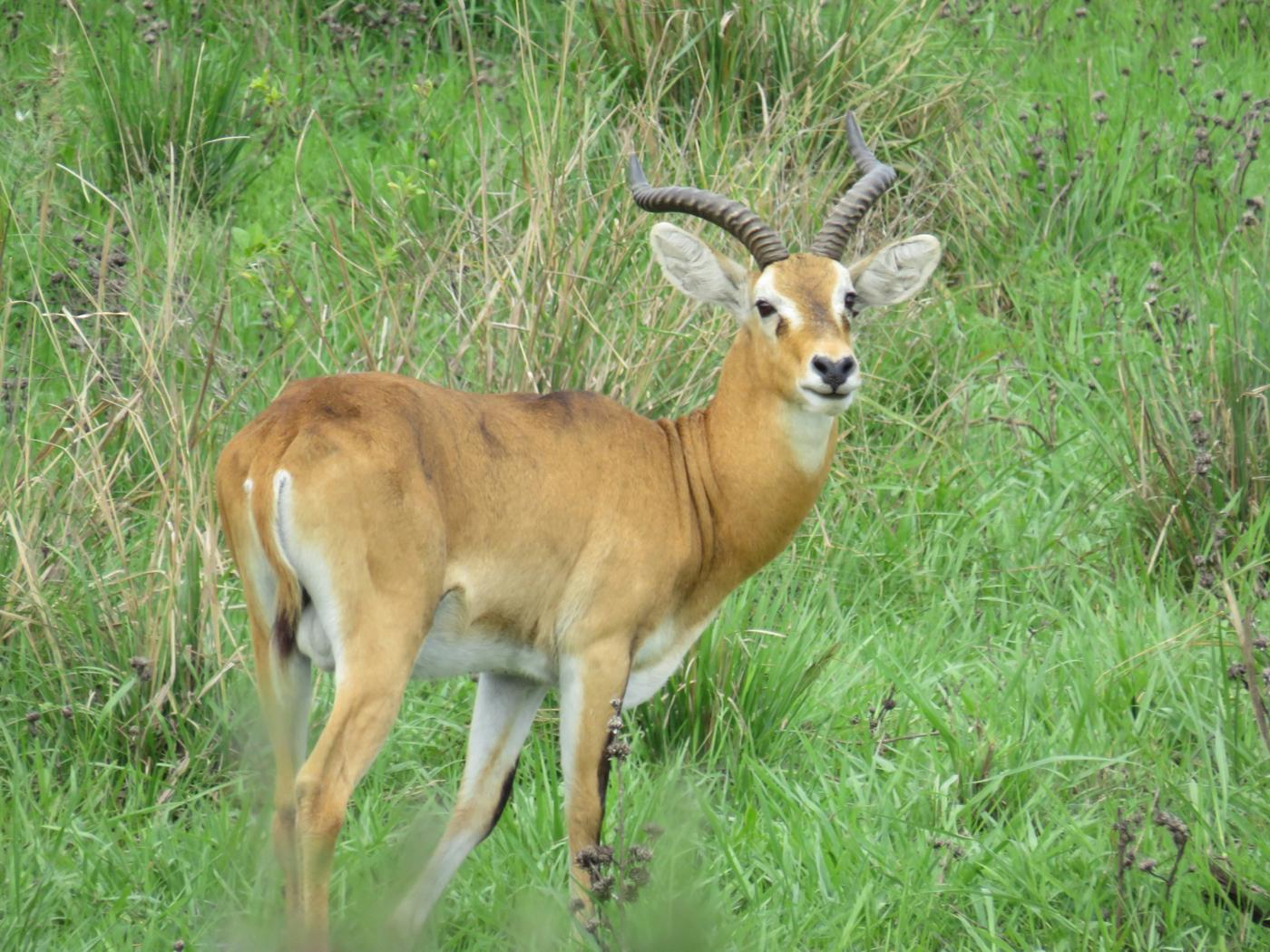
The Tanzania Big Five are lion, leopard, elephant, buffalo and rhino, and you can see all five in Tanzania, though rhino is the one you cannot count on. Lions, elephants and buffalo are common, leopards are regular in the right places and rhinos are rare and live in very few areas. This guide explains it as it stands in Tanzania: how many of each animal the latest counts list, which park gives the best chance of each, how to plan a route that gives you a real chance at all five, what a rhino sighting depends on, which months work best and the mistakes that cost sightings. People search for it as Tanzania Big Five, Big Five Tanzania, Big Five safari Tanzania, where to see the Big Five in Tanzania, Tanzania Big Five parks, Big Five in the Serengeti, Big Five in Ngorongoro and Tanzania rhino safari.
Quick answer
The best chance of all five is the Serengeti and the Ngorongoro Crater, where lions, leopards, elephants and buffalo are regular and the crater holds the surest rhino sightings in the country. Add Tarangire for elephants and Lake Manyara for tree-climbing lions. No safari guarantees a rhino, and the crater floor gives the best odds, with a few rhinos, according to the conservation area authority.
Tanzania's national wildlife counts for 2024/25, published by the wildlife research institute TAWIRI, list about 15,000 to 17,200 lions, 66,714 elephants and about 328,000 buffalo. There is no recent national leopard census. Black rhinos number roughly 260 to 300 across the whole country. Your written quotation shows the exact price.
Tanzania Big Five at a glance
| Animal | Where to see it best | How likely |
|---|---|---|
| Lion | Serengeti, Ngorongoro Crater, Lake Manyara, Tarangire | Very likely |
| Elephant | Tarangire, Serengeti, Ngorongoro, Nyerere | Very likely in Tarangire |
| Buffalo | Serengeti, Ngorongoro Crater, Lake Manyara | Very likely |
| Leopard | Seronera in the central Serengeti | Likely with patience |
| Black rhino | Ngorongoro Crater floor; Serengeti is rare | Possible, never guaranteed |
| Lion count, national | About 15,000 to 17,200 | TAWIRI 2024/25 |
| Elephant count, national | 66,714 | TAWIRI 2024/25 |
| Buffalo count, national | About 328,000 | TAWIRI 2024/25 |
| Rhino, Ngorongoro Crater floor | 20 to 30 | Conservation authority |
| Best months | June to October; January to March for calving | Dry season easiest |
Chapter 01: What are the Big Five, and why do they matter?
The Big Five were the five animals hunters found hardest to hunt on foot: lion, leopard, elephant, buffalo and rhino. Today they are a checklist for photographers, and they are a useful way to plan a route, because the five live in different habitats.
Lions live on the plains, elephants in woodland, buffalo near water, leopards in rocky outcrops and riverine trees, and the rhino in a few protected areas. If you want all five, you need a route that includes both open plains and a rhino area. Our guide to the Big Five and the Big Nine explains how the wider list compares.
Chapter 02: How many Big Five animals does Tanzania have?
TAWIRI's 2024/25 counts list about 15,000 to 17,200 lions, 66,714 elephants and about 328,000 buffalo.
The elephant figure of 66,714 is lower than earlier estimates of about 134,000 to 136,000, and counting methods differ, so do not compare the numbers as if they were the same survey. For a visitor, the practical point is that elephants are easy to see in Tarangire and the Serengeti.
There is no recent national leopard census, because leopards are solitary and hard to count. Black rhinos number roughly 260 to 300 nationally, according to published estimates that vary by source.
Chapter 03: Where is the best place to see lions?
The Serengeti has the highest concentration, and you will probably see lions on most days. The Ngorongoro Crater floor holds a resident population that is easy to find, and Lake Manyara is known for its tree-climbing lions. Our tree-climbing lions guide explains where and when.
Lions are easiest to see in the dry season from June to October and during calving from January to March, when prey is plentiful. Our Serengeti guide explains which region suits each month.
Chapter 04: Where is the best place to see elephants?
Tarangire is the best park for elephants, especially in the dry season from June to October, when herds gather at the Tarangire River. The park is about two hours from Arusha, which makes it an easy first stop. Our Tarangire guide has the detail.
The Serengeti and the Ngorongoro Crater also hold elephants, and Nyerere National Park in the south is a strong option for a southern circuit. See our Nyerere guide.
Chapter 05: Where is the best place to see buffalo?
Buffalo are common in the Serengeti, the Ngorongoro Crater and Lake Manyara, and herds can number in the hundreds. They are one of the animals you will see on almost every safari, and the crater floor gives close and easy sightings.
Chapter 06: Where is the best place to see leopards?
The best-known area is Seronera in the central Serengeti, where rocky outcrops and large trees give leopards cover and a place to rest. Leopards are most active at dawn and dusk, and a patient guide who checks the trees along the Seronera River finds them most often. Our guide to leopards in East Africa explains how to look.
No safari guarantees a leopard, and a three- or four-night stay in the Serengeti improves your odds.
Chapter 07: Can you see a rhino in Tanzania?
Yes, but it is the hardest of the five. The Ngorongoro Crater floor holds about 20 to 30 black rhinos, according to the conservation authority, and the crater is the best place in the country to see one, often at a distance. In the Serengeti the numbers are small, with about 50 or more, and sightings near the Moru Kopjes are rare.
Mkomazi National Park has a rhino sanctuary, and TANAPA lists a one-hour rhino viewing there at USD 30 per adult. It sits outside the northern circuit, so it needs its own trip.
Rhinos are shy and often far from the road. Bring binoculars, and treat any sighting as a bonus. Our rhino tracking guide explains where else in East Africa you can look. Our guide to where to see the Big Five covers the wider region.
Chapter 08: What route gives you the best chance at all five?
A route of five to seven nights across Tarangire, the Ngorongoro Crater and the central Serengeti gives you the best chance. Tarangire provides elephants and lions, the crater provides rhinos, buffalo and lions and the Serengeti provides leopards and plenty of lions.
Add Lake Manyara if you want tree-climbing lions, and give the Serengeti at least two nights so that you have time for the leopard. For a park-by-park comparison, read Tanzania national parks; for how many days to allow, read how many days for a Tanzania safari.
Chapter 09: What is the best month for the Big Five?
June to October is the easiest time, because animals gather near water. January to March brings calving in the southern and central Serengeti, which draws predators. The long rains from mid-March to May make animals harder to find. Every month is covered in best time to visit Tanzania.
Chapter 10: What rules protect the animals?
The Ngorongoro Conservation Area requires vehicles to keep 25 metres from animals, and the national parks ask visitors to give animals the same respect. Stay in the vehicle, keep your voice low and never ask a guide to approach an animal closely. A good guide follows these rules even when other vehicles do not.
Chapter 11: What should you bring?
Bring binoculars, because rhinos and leopards are often distant, a camera with a long lens and spare batteries, and neutral clothing. The complete kit list is in East Africa safari packing list.
Chapter 12: What mistakes should you avoid?
Treating a rhino as guaranteed, spending only one night in the Serengeti, skipping the crater, choosing the rainy season for a Big Five checklist, leaving binoculars behind and asking the guide to chase a sighting.
Chapter 13: What is the verdict?
For a real chance at the Tanzania Big Five, spend five to seven nights across Tarangire, the Ngorongoro Crater and the central Serengeti in the dry season. Expect lions, elephants and buffalo, work for the leopard and treat the rhino as a prize.
Tell us your dates, how many are travelling and your comfort level, and we will reply within 24 hours with a written quotation that shows the park fees and every line separately. See our Tanzania destination page and tours such as our classic Serengeti and Ngorongoro safari, our Tanzania grand migration explorer and our Kenya and Tanzania luxury private guide safari.
Tell us your dates, how many are travelling and your comfort level, and we will reply within 24 hours with a written quotation that shows the park fees and every line separately.
Request a free quotation