
10 Days Best Of Uganda Safari
From $3,500per person
10 Days
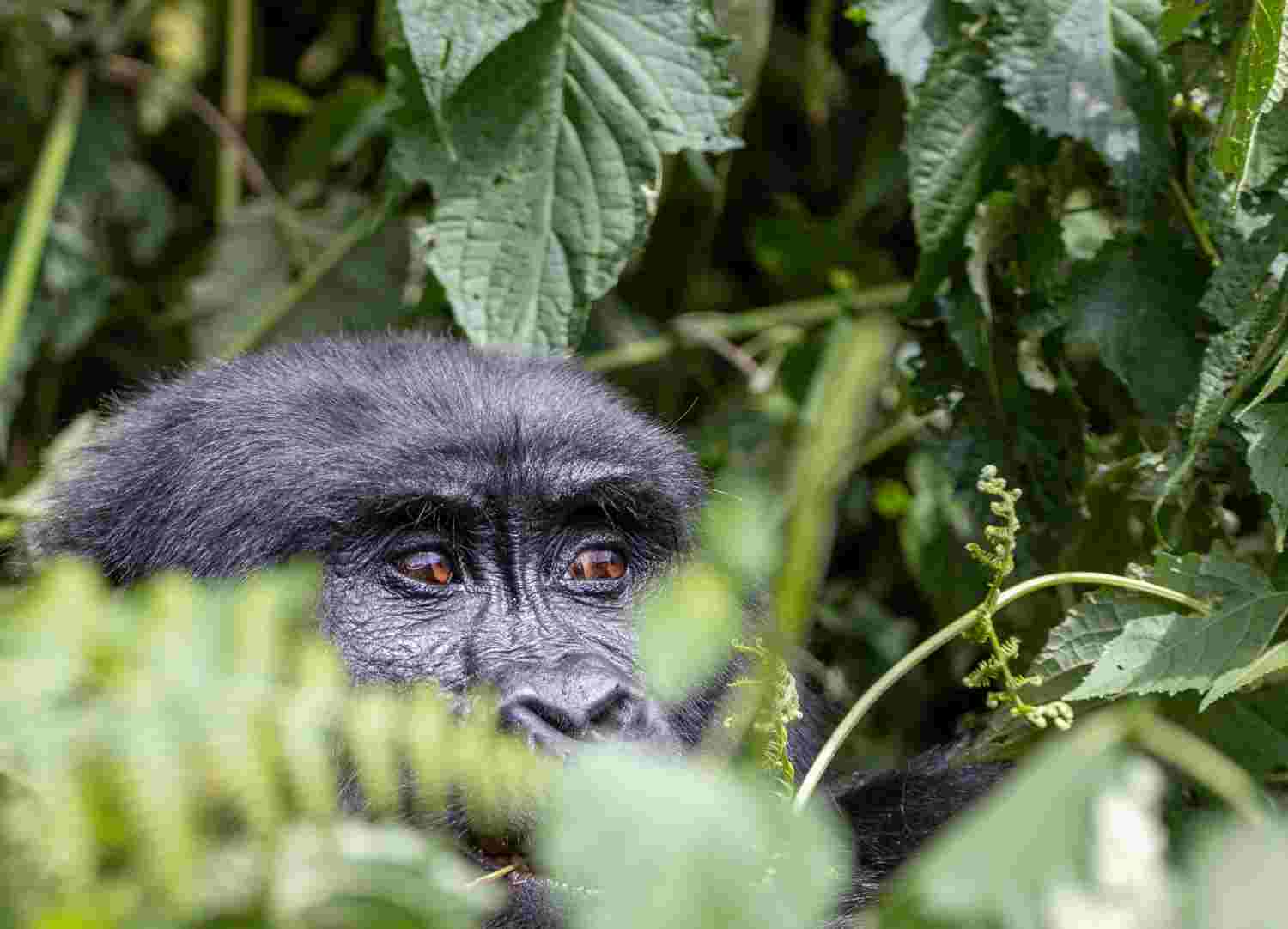
Shoebills, rhinos, chimpanzees, gorillas and golden monkeys on one loop from Entebbe to Lake Mburo
Best for: Travellers who want Uganda's birds and its big wildlife on one trip, with four primate treks and plenty of early mornings outdoors
Itinerary ref: UG-008
A 14 day Uganda wildlife and birding safari from Entebbe to Lake Mburo, built around the places where Uganda's birds and animals are easiest to find: shoebills in the Mabamba wetland and the Nile delta, white rhinos on foot at Ziwa, chimpanzees in Kibale and Kyambura Gorge, a mountain gorilla trek in Bwindi and golden monkeys at Mgahinga. It is one road loop through nine protected areas, 13 nights, and a bird list that grows every day.
Tell us your dates, how many of you are travelling and whether anyone in the group is a keen birder. We check permits and lodge space first, then send an itemised quote.
Enquire About This SafariSome safaris are built for the big cats and some for the bird list. This one is built for people who want both, and who are happy to spend most mornings outdoors early. Uganda suits that kind of trip because so much sits within a day's drive of the next stop: a Ramsar-listed papyrus swamp, a rhino sanctuary, a falls on the Nile, a forest with a dozen primate species, a savanna park with a channel full of hippos, and two lakes.
The route is a loop. It starts at Entebbe, runs north to Ziwa and Murchison Falls, turns west and south through Kibale and Queen Elizabeth, reaches the gorillas in Bwindi, crosses to Kisoro for golden monkeys, and ends with two lakes, Bunyonyi and Mburo, before the drive back to Entebbe. There are no internal flights, so a private vehicle and one driver-guide stay with you from the airport to the airport.
If you only have ten days, our 10 days Best of Uganda safari follows a similar loop without the Mabamba shoebill morning, the golden monkeys or the second chimpanzee trek. If your priority is a single gorilla trek with serious forest birding, the Uganda birding and gorilla safari flies to Bwindi and spends its days in the forests and on the Kazinga Channel. This 14 day route is the one that covers the whole country.
Thirteen nights in nine places. The drive times are the ones we plan with, and each is confirmed when you book. Four of the days are long road days, and they are marked in the table.
| Night | Place | Stay | The day |
|---|---|---|---|
| 1 | Entebbe | The Boma Hotel | Arrival |
| 2 | Ziwa Rhino Sanctuary | Amuka Lodge | Shoebill at Mabamba, then about four hours to Ziwa (long road day) |
| 3 | Murchison Falls | Pakuba Safari Lodge | Rhino tracking, then three to four hours to the park; the top of the falls, lunch at the lodge and the afternoon launch cruise to the base of the falls |
| 4 | Murchison Falls | Pakuba Safari Lodge | Nile delta cruise and an evening game drive |
| 5 and 6 | Kibale | Guereza Canopy Lodge | Day 5: six to seven hours by road, then the Bigodi wetland (long road day). Day 6: chimpanzees |
| 7 and 8 | Queen Elizabeth | Mweya Safari Lodge | Day 7: about three hours, then the Kazinga Channel. Day 8: game drive and Kyambura Gorge |
| 9 | Bwindi, Rushaga sector | Gorilla Leisure Lodge | A full day on the road (long road day) |
| 10 and 11 | Kisoro | Ichumbi Hotel | Day 10: gorilla trek, then one to two hours to Kisoro. Day 11: golden monkeys and Lake Mutanda |
| 12 | Lake Bunyonyi | Bunyonyi Rock Resort | A short transfer and a free afternoon |
| 13 | Lake Mburo | Kigambira Safari Lodge | Canoe on the lake, about four hours to Mburo, afternoon game drive |
| 14 | Departure | Transfer to Entebbe airport | Walking safari, then the drive to Entebbe |
Lodges are held for your dates when you book. If one is unavailable, we offer a close alternative in the same area before you pay.
Here is the trip in order, from the arrival at Entebbe to the drive back from Lake Mburo.
Your driver-guide meets you at Entebbe International Airport and takes you to The Boma Hotel, a few minutes away in a quiet part of Entebbe on the shore of Lake Victoria. The gardens are a gentle place to start the bird list, and a swim after the flight costs nothing. Dinner and an early night matter: tomorrow starts before sunrise.
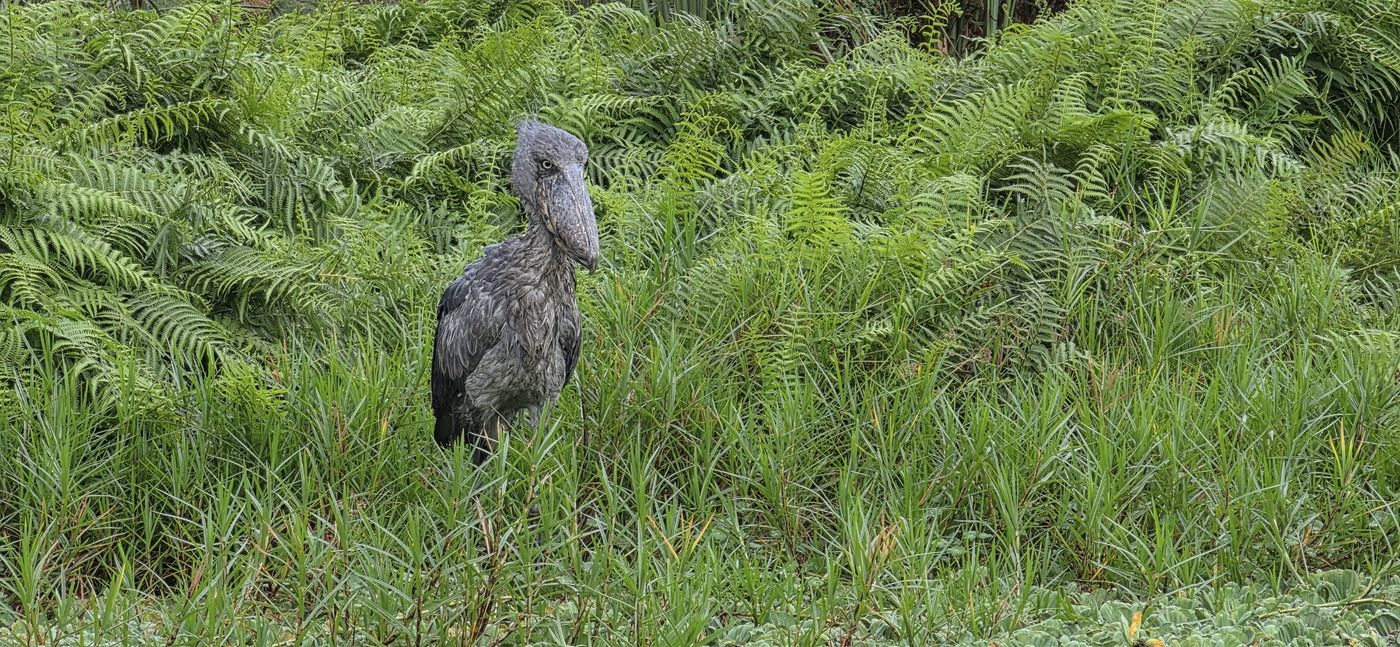
We leave at first light for the Mabamba Bay wetland, about an hour's drive from Entebbe. A local boatman takes you through narrow papyrus channels in a small boat, and you look for the shoebill. Mabamba is a Ramsar site and an Important Bird Area, and it is the swamp near Kampala where the shoebill is most often found. Morning is the better time, and the shoebill is never guaranteed. Papyrus gonolek, African jacana, African pygmy goose and malachite kingfisher are regular companions, and with luck you may spot a sitatunga in the reeds.
After the boat, the road runs north to Ziwa Rhino Sanctuary, about four hours with a lunch stop. Amuka Lodge sits on a hilltop inside the sanctuary, so you arrive at your lodge and the rhinos are already around you. The grounds are unfenced, so the lodge asks you to follow the staff's guidance after dark.
Rhino tracking is done on foot with an armed ranger, after a short safety briefing. The rhinos are southern white rhinos, and Ziwa is where Uganda's rhino population has been rebuilt after wild rhinos disappeared from the country in the 1980s. Plan on about two hours, wear closed shoes and long trousers, and you will likely be close enough to hear them eat.
Then comes the drive to Murchison Falls National Park, about three to four hours. The Nile is crossed by the Paraa bridge, so there is no waiting for a ferry. Your first stop is the top of the falls, where the whole Nile is forced through a gap about seven metres wide. From there you drive on to Pakuba Safari Lodge in the northern part of the park, check in and have lunch. In the afternoon the launch cruise takes you downriver to the base of the falls, usually two to three hours. The cruise brings hippos and crocodiles close to the boat, and birders watch for African fish eagle, African skimmer and the red-throated bee-eaters along the cliffs.
The delta cruise leaves from Paraa early in the morning, and your driver-guide crosses the Nile by the Paraa bridge on the way. The boat follows the river downstream towards Lake Albert, a round trip of about four to five hours. UWA lists the shoebill as commonly seen in the delta, and it names December to February and June to September as the best months. In other months the odds are lower. Pied kingfishers, African jacana, herons and hippos fill the rest of the trip.
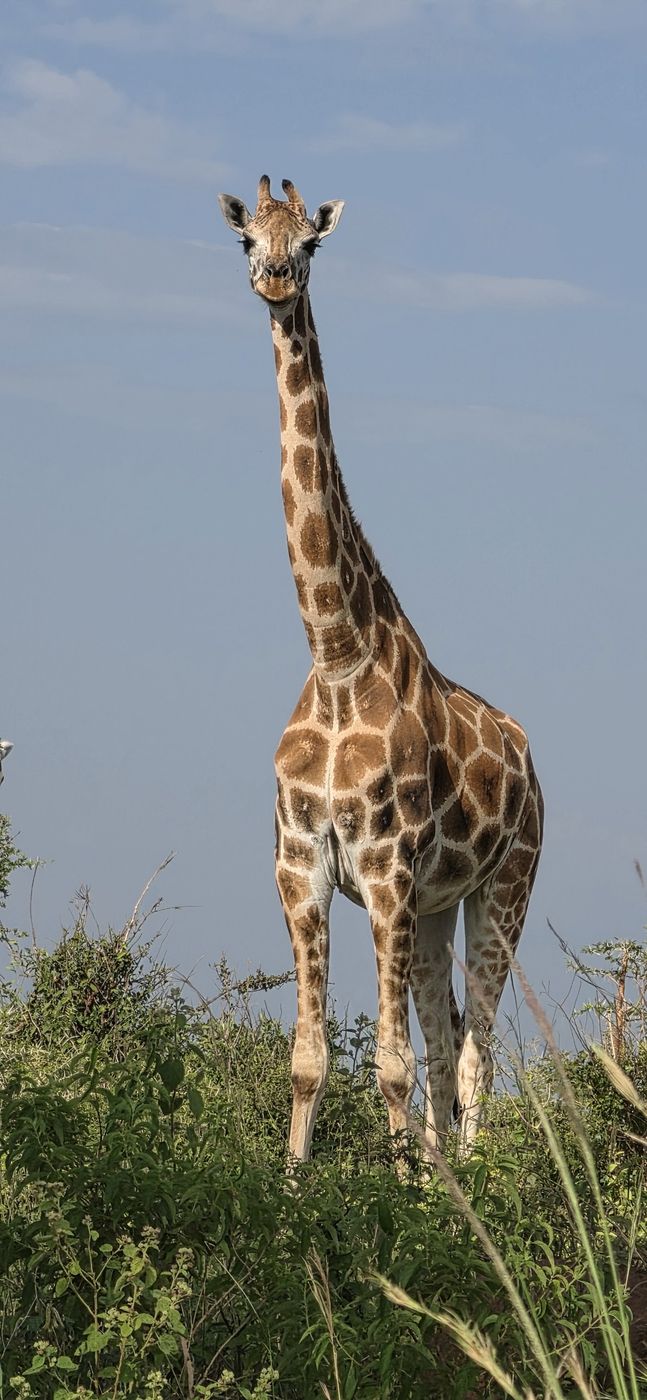
In the afternoon you rest at the lodge, and in the evening you drive the open savanna of the park's northern sector. This is the side of the park with the best game viewing, with giraffe, elephant, buffalo and Uganda kob, and with luck lions. Murchison holds most of the world's Nubian (Rothschild's) giraffes, and the Abyssinian ground hornbill is a bird of the northern grassland.
An early start, and a long road day: about six to seven hours from Murchison to Kibale, with stops. The reward is an afternoon on the boardwalk at the Bigodi Wetland Sanctuary, a community-run swamp on the edge of Kibale Forest. Over 200 bird species have been recorded here, and the great blue turaco is the one every guest wants. You can also expect black-and-white colobus, red-tailed monkeys and, in the right season, more. The walk takes around three hours, ends at a craft centre and includes a community element, because Bigodi is run by local people. Dinner and the night are at Guereza Canopy Lodge, on the edge of the forest.
You meet the rangers at the park office early. Groups are limited to six people, the trek can take anywhere from two to five hours, and once the chimps are found you stay with them for one hour. Kibale is thought to hold around 1,500 chimpanzees and 13 primate species, and its forest birdlife is rich. The age limit in the UWA tariff is 12, though the park's own page says 16, so we confirm the current rule before booking. The afternoon is free, and the lodge terrace is a good place to sit with binoculars.
The drive from Kibale to Queen Elizabeth National Park takes about three hours, across the crater-lake country. You check in at Mweya Safari Lodge, on a peninsula above the Kazinga Channel. In the afternoon you take the launch cruise, about two hours. The channel is about 40 km long and links Lake Edward and Lake George, and the banks bring hippos, buffalo, elephants and crocodiles right to the water. Pelicans and saddle-billed stork are regulars, and the park's bird list passes 600 species, one of the longest of any African park.
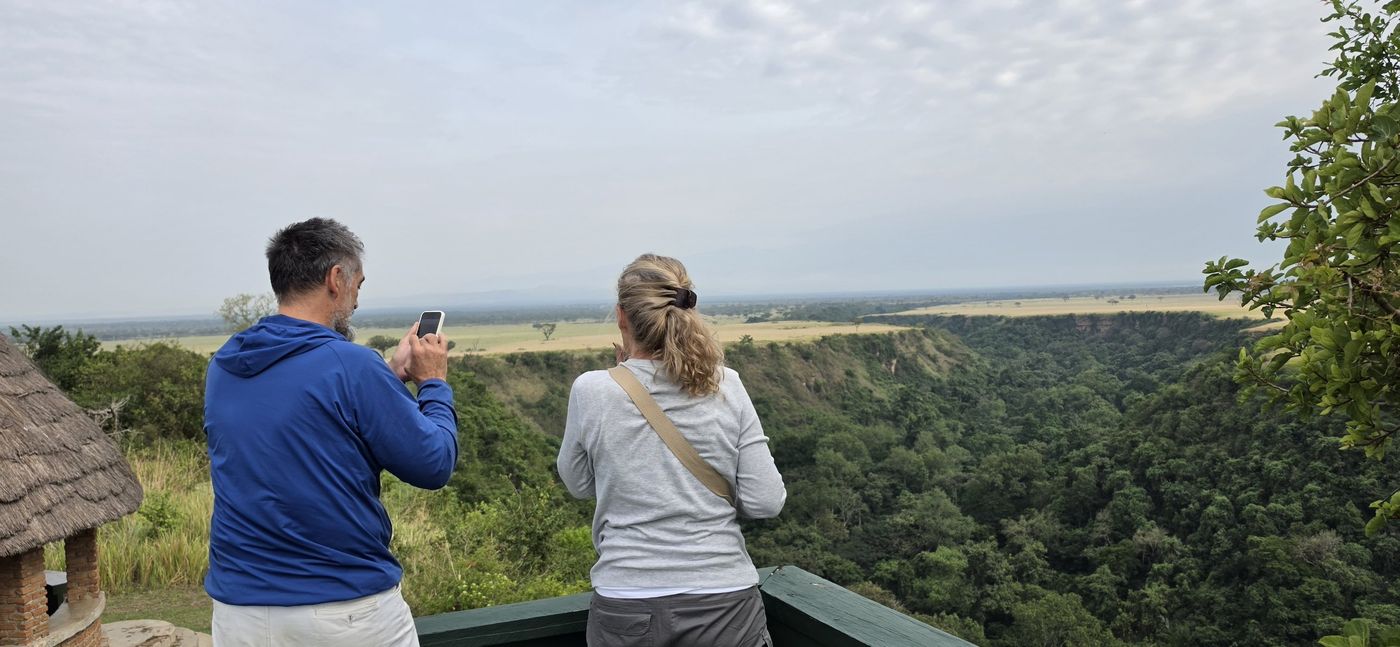
An early game drive on the savanna, usually on the Kasenyi plains, which are the best bet for lion, elephant, buffalo and kob. In the afternoon you walk down into Kyambura Gorge, a forested chasm cut into the plains, to look for the chimpanzees that live there. Groups are small, up to six, and the minimum age is 12. The trek can run from two to four hours. Sightings are likely rather than certain, and the gorge forest is worth the walk for the other primates and birds alone.
A full day on the road, about six to seven hours with stops, to the Rushaga sector in the south of Bwindi Impenetrable Forest. The route passes through the Ishasha sector of Queen Elizabeth, where the lions are known to rest in fig trees, and we stop if the light and the time allow. Seeing them is a bonus, not a promise. You sleep at Gorilla Leisure Lodge, close to the forest edge, and your guide explains the plan for the trek.
The briefing is at the park office in the morning, and rangers match you with a habituated gorilla family. Rushaga has about eight of them open to visitors. Groups are limited to eight people, the minimum age is 15, and you spend one hour with the gorillas once they are found. The walk to them can be short or most of a day. Porters can be hired locally and are worth it. After the trek and lunch, the road continues to Kisoro, one to two hours away, where you stay at Ichumbi Hotel.
In the morning you track golden monkeys in Mgahinga Gorilla National Park, a short drive from Kisoro. The troops are fast and noisy, they live in the bamboo, and an hour with them is easier on the legs than a gorilla trek. Golden monkeys are found in this part of the Virunga volcanoes. In the afternoon you take a boat out on Lake Mutanda, about 30 minutes from Kisoro, with its islands, kingfishers and sunbirds and views of the Virunga volcanoes.
A short drive takes you to Lake Bunyonyi, in the hills above Kabale. The lake has 29 islands and no hippos or crocodiles, and more than 200 bird species have been recorded around it. Bunyonyi Rock Resort sits on the lakeshore. The rest of the day is yours: sit on the terrace, walk the shore or take a dugout canoe out on the lake.
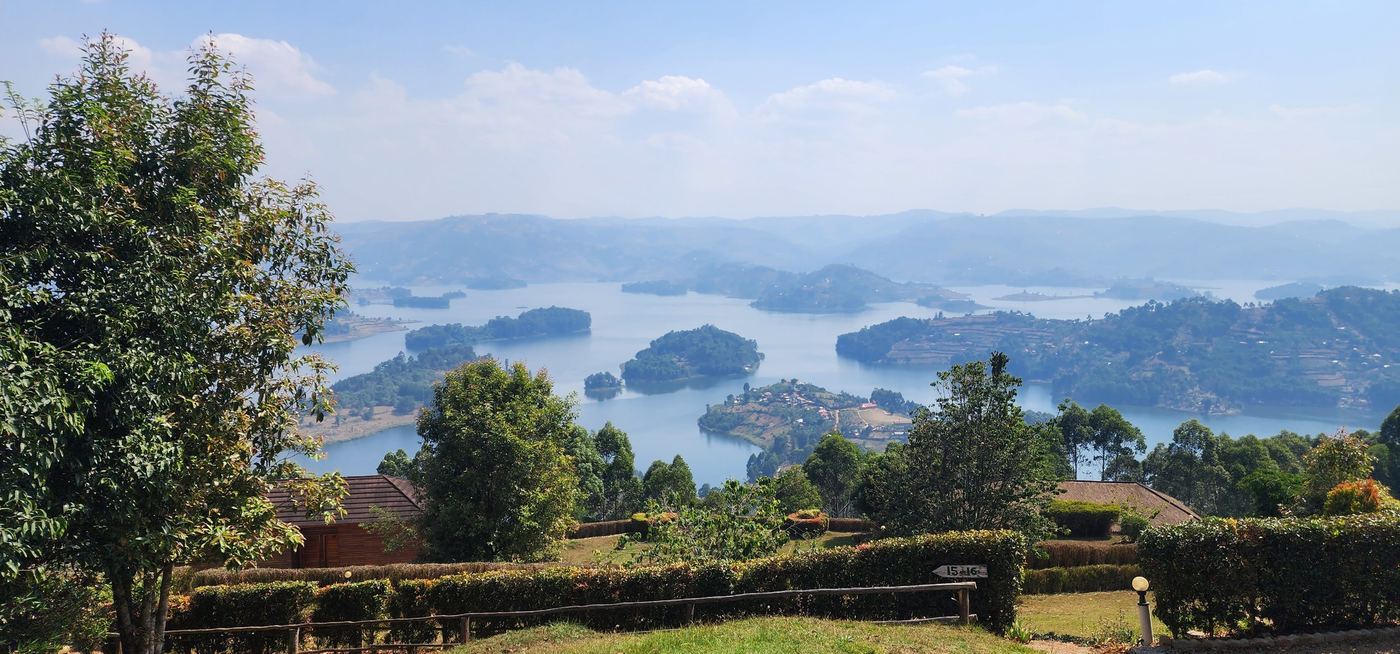
A last morning on the lake in a dugout canoe, then the drive to Lake Mburo National Park, about four hours. You arrive in time for lunch at Kigambira Safari Lodge, in the south of the park between Lake Kigambira and Rubanga Forest. The afternoon game drive finds the plains species that the other parks do not have: Mburo is the only national park in Uganda with impala, and it is one of the places in the country to see zebra. The evening is yours.
A guided walk with an armed ranger is possible here, and the early morning is the best time. Rubanga Forest is good for forest birds, including the red-faced barbet, and on the open ground you walk among zebra and impala. Then comes the drive back to Entebbe, about five to six hours with stops. Most international flights out of Entebbe leave in the evening or at night, and we plan the departure around yours. Tell us at booking if your flight is early.
Nobody sees everything in 14 days, and no operator can promise a species. What this route does is put you in the right habitat for most of the birds that visitors come to Uganda for. The guide below shows what each stop is good for. Species lists change with the season, so your guide plans each morning with you.
| Stop | Habitat | Birds to look for |
|---|---|---|
| Mabamba Bay | Papyrus swamp, Ramsar site | Shoebill, papyrus gonolek, African jacana, African pygmy goose, malachite kingfisher, blue-breasted bee-eater |
| Ziwa | Savanna, swamp and woodland | A bird list of more than 300 species is reported for the sanctuary; the shoebill is also sometimes seen here |
| Murchison Falls and the Nile delta | River, delta and northern grassland | Shoebill, African fish eagle, African skimmer, red-throated bee-eater, Abyssinian ground hornbill |
| Bigodi and Kibale | Forest and swamp | Great blue turaco and many forest birds |
| Queen Elizabeth | Savanna, lakes, channel and gorge forest | Pelicans, saddle-billed stork and a park list of more than 600 species |
| Bwindi and Mgahinga | Montane forest and bamboo | Forest species; ask your guide for the Albertine Rift endemics |
| Lake Bunyonyi | Lake and hill farmland | More than 200 species recorded around the lake |
| Lake Mburo | Savanna, lake and forest | African finfoot (best from the boat), red-faced barbet in Rubanga Forest, and a park list of more than 300 species |
For a wider view of where the birds are across the region, our East Africa birding guide explains the seasons and the hotspots. Keen birders can ask for a dedicated bird guide on any day.
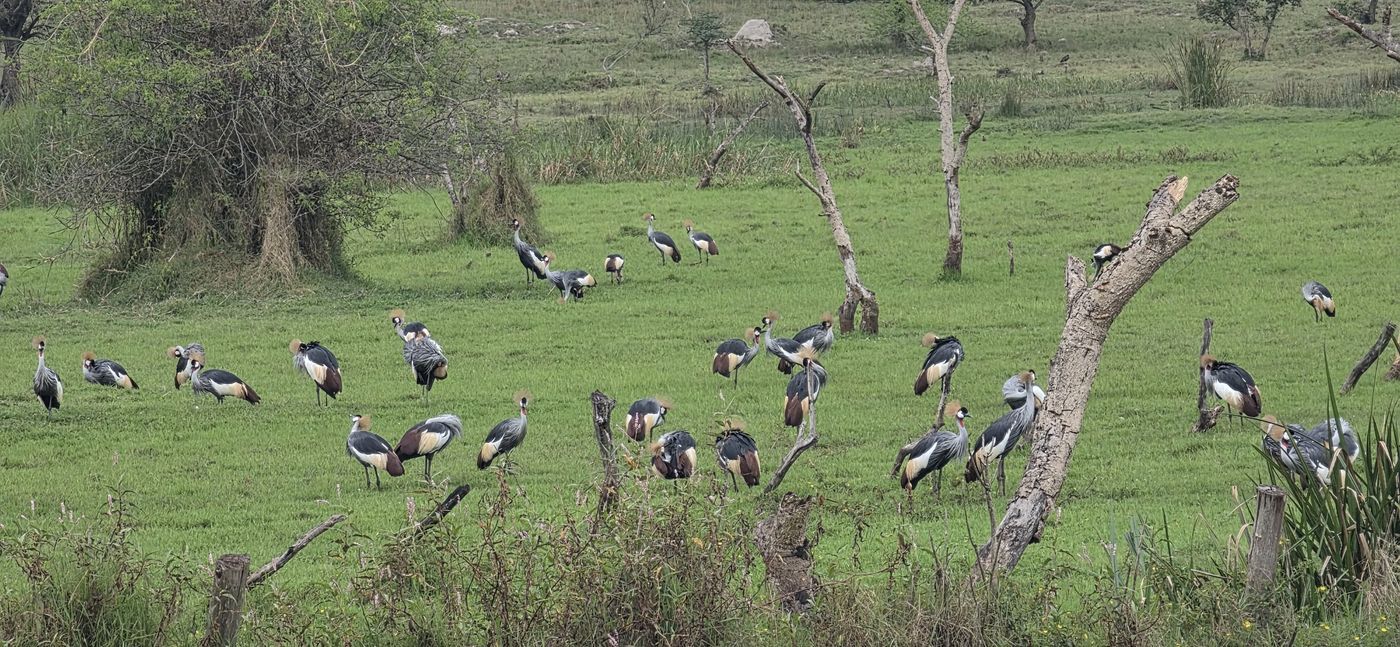
The route gives you four different primate experiences, so you can compare them, and three different safari habitats. This is what to expect from each.
Our guides to chimpanzee trekking in Kibale, Murchison Falls, Queen Elizabeth and Lake Mburo go deeper into each park.
The drier months, roughly June to September and December to February, make the forest trails and the long road days easier, and UWA names the same months as the best for shoebills in the Nile delta. The wetter months are quieter, and the migrant birds that arrive from Europe and Asia are usually around from about November to April, so keen birders sometimes prefer that window. Neither season is closed to travel. Permits are limited every day, so choose your dates early; our guide to the best time to visit Uganda compares the months.
The lodges were chosen for their position, near the activity of each day. Here is a one-line note on each.
If a lodge is full for your dates, we offer a close alternative in the same area, and you are told before you pay.
Treat the points above as checked facts rather than promises, and verify them on the official portals before you fly.
We quote this itinerary for your dates. Three things drive the price: the permits, which are set by Uganda Wildlife Authority and can change on 1 January; the lodge tier you choose at each stop; and the group size, because one vehicle and one guide are shared between the travellers. The gorilla permit was US$800 in 2026, and we quote the price that is valid for your travel date. Our Uganda safari cost guide explains each line, and the gorilla permit cost guide compares Uganda with Rwanda.
The quote covers each item in the left column. Items in the right column are paid separately.
Read these before you fix your dates.
Tell us your preferred dates and the size of your group. We check permits and lodge space first, then send an itemised quote.
Request This ItinerarySign in to save this safari's dates and party size to your account, so you can pick up right where you left off.
Sign in to save this itineraryBuilt from our own staff's real packing guidance for this trip's destinations, tailored to your dates and this exact itinerary above.
Four steps from your first message to your safari.
Send your dates, group size and the places you want to see. A specialist replies within 24 hours.
We shape this journey around your dates and budget and send you a quote that shows what is and is not included.
A 40% deposit confirms your booking. Where your trip needs gorilla or park permits, we buy them once your deposit has been received and confirmed.
The final balance is due 60 days before departure, unless your booking confirmation says otherwise.
Cancellations and refunds follow our booking terms, and how we protect your trip and your payment explains how your money and permits are handled. Questions first? You can contact us at any time.
.jpg)
Answered from our own real trip details above -- itinerary, inclusions, difficulty, and more. For an exact price, use "Enquire Now" below.
Some guests like a few quiet days by the sea after trekking. It is entirely optional.
Tell us your dates and group size — a destination specialist replies within 24 hours.