
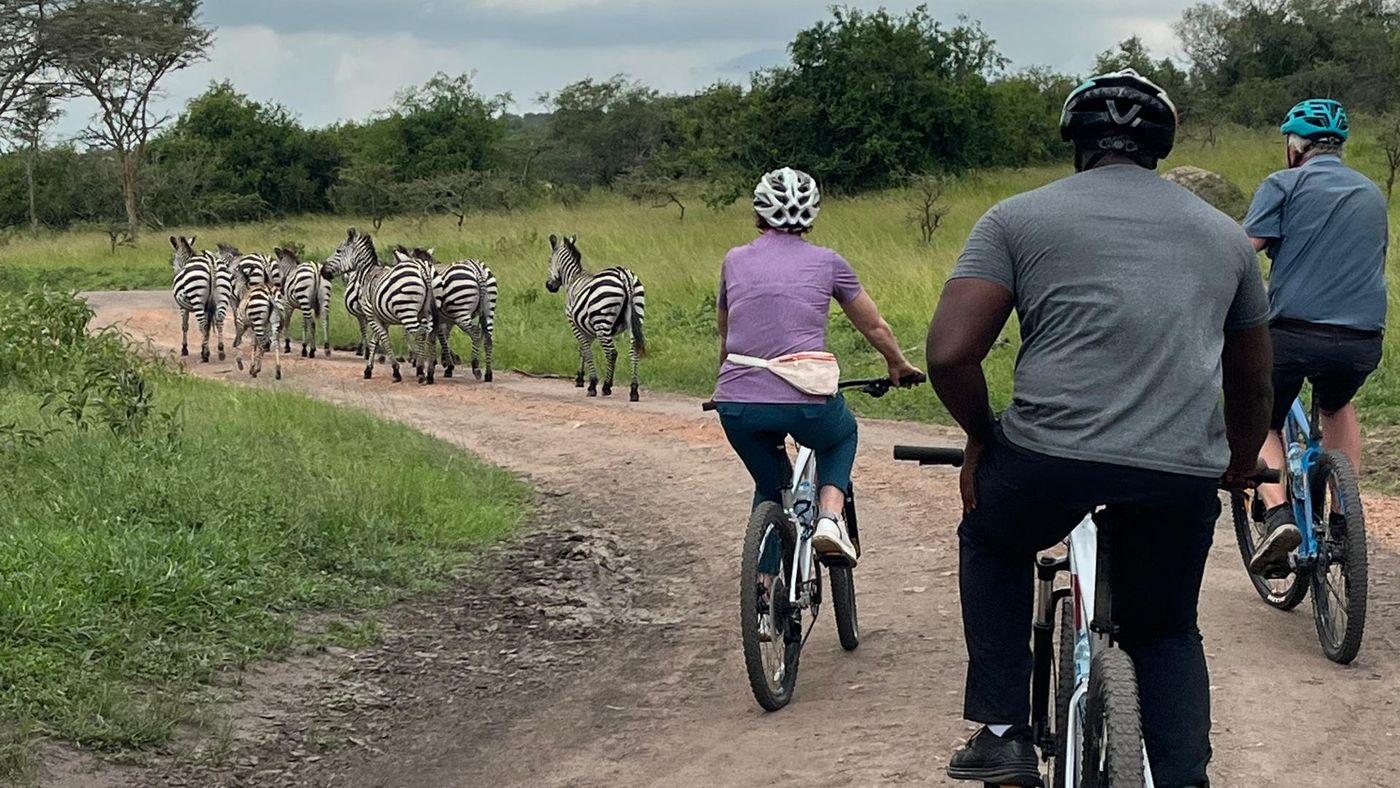
You can do a cycling safari in Uganda in two very different places. At Lake Mburo National Park you ride mountain bikes with a ranger guide through open acacia savanna beside zebra, impala, eland and giraffe. Around Lake Mutanda near Kisoro, in the far south-west, you ride red dirt roads between terraced hills with the Virunga volcanoes in view. Lake Mburo is the one for wildlife; Lake Mutanda is the one for scenery and village life.
A cycling safari, also called a bike safari, biking safari or bicycle safari, swaps the roof of a safari vehicle for a saddle. It is quiet, slow and close to the ground, and in Uganda it is one of the few ways to cover wild country on two wheels. This guide covers both places where the activity is done, what each one is really like, how to choose between them and how to fit a ride into a trip that also includes gorilla trekking.
What is a cycling safari?
A cycling safari is a guided ride on mountain bikes through wild or rural country, where the point is to see, hear and smell the landscape rather than cover distance. Operators also call it a bike safari, a mountain bike safari, a cycle safari, a guided bike tour or simply cycling tours. The pace is an easy ride with frequent stops, so it suits anyone who can ride a bicycle comfortably on rough ground.
It differs from a normal game drive in four ways.
- Sound and scent. With no engine, you hear birds, hooves and rustling grass, and you can smell rain on dry soil. You can also stop quickly and quietly whenever your guide sees something.
- Scale. Sitting at bicycle height, a giraffe or a zebra herd looks bigger and closer than it does from a vehicle.
- Effort. You are using your legs, so even a short ride feels like part of the landscape and not a view through glass.
- Limits. There is no roof, and a rider covers less ground than a 4x4 does. For that reason, cycling is offered only where the wildlife is manageable and a guide is on hand.
Think of it as an addition to a classic safari, not a replacement. Our guide to the main types of safari shows where a cycling day fits among game drives, boat trips and walks.
Where can you do a cycling safari in Uganda?
Two places are well suited to it, and they offer opposite things.
| Lake Mburo National Park | Lake Mutanda and Kisoro | |
|---|---|---|
| Main reward | Wildlife seen from a bike | Scenery, villages and volcano views |
| What you ride | Park tracks through acacia savanna, with a ranger guide | Red dirt roads and hill tracks around the lake and the hills |
| Animals | Zebra, impala, eland, topi, buffalo, warthog, waterbuck and giraffe | Few large animals; birds, otters and farm life |
| Terrain | Rolling savanna and woodland | Steep hills at altitude, about 1,800 m |
| Best for | First cycling safari, wildlife lovers, a break on the road to Bwindi | Active travellers, photographers, a rest day around gorilla trekking |
| Nearest town | Kiruhura District, on the road from Kampala to the south-west | Kisoro, about 20 km from the lake |
Park and lake facts are from the Uganda Wildlife Authority and East African Trails; see Sources.
Cycling at Lake Mburo National Park
Lake Mburo is the best-known place in Uganda for cycling among wildlife, and a bike safari at Lake Mburo is the easiest way to try the activity. The reason is simple: it is a small savanna park of rolling hills, acacia woodland, wetlands and lakes, and it has no elephants and no established resident lion population. Without those animals, riding with a ranger guide is a realistic proposition, and the open country lets you see animals from a long way off. The Uganda Wildlife Authority calls it Uganda’s smallest savanna park, with five lakes inside its borders. Biking in Lake Mburo needs no special experience beyond confident riding. Our full park profile is the Lake Mburo National Park guide.
What you can see from a bike at Lake Mburo
The park is known for plains game, and the open tracks are where you meet it.
- Zebra are the signature animal. The park is one of Uganda’s best places to see them, often in family groups close to the tracks.
- Impala. Lake Mburo is the only park in Uganda with impala, so this is the place to see them.
- Eland, Africa’s largest antelope, are frequently spotted. Topi, defassa waterbuck, reedbuck, bushbuck and warthog are common as well.
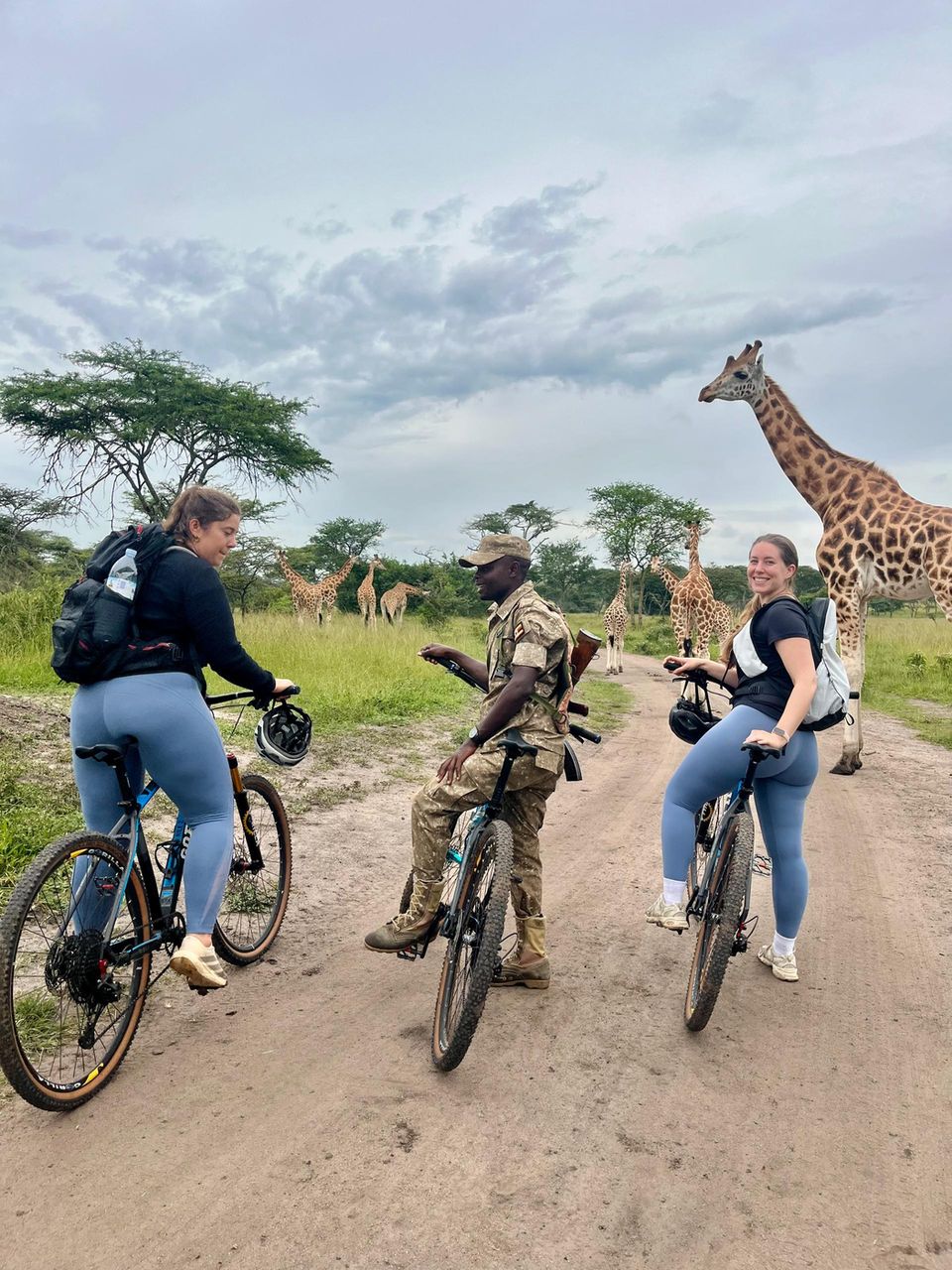
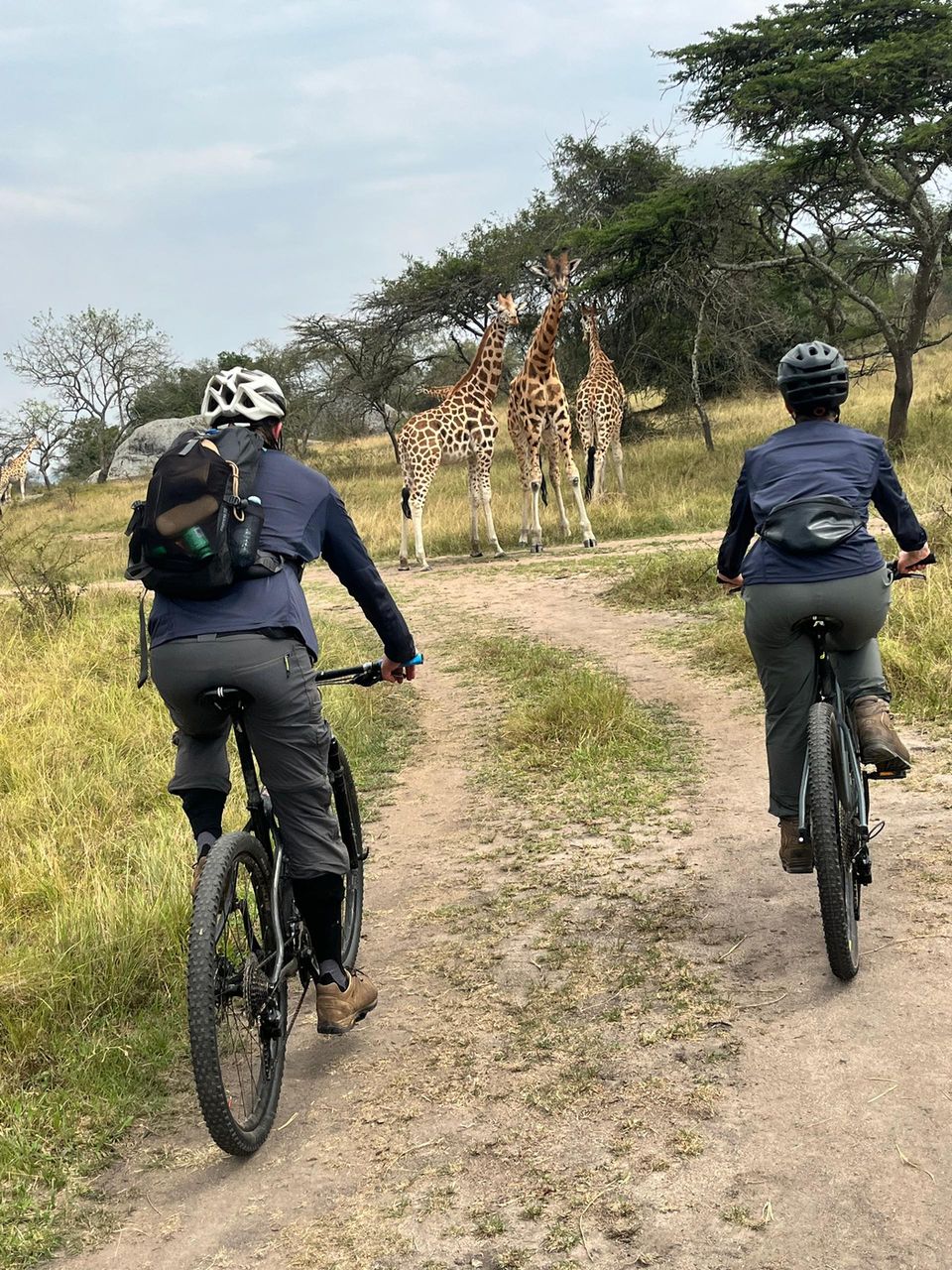
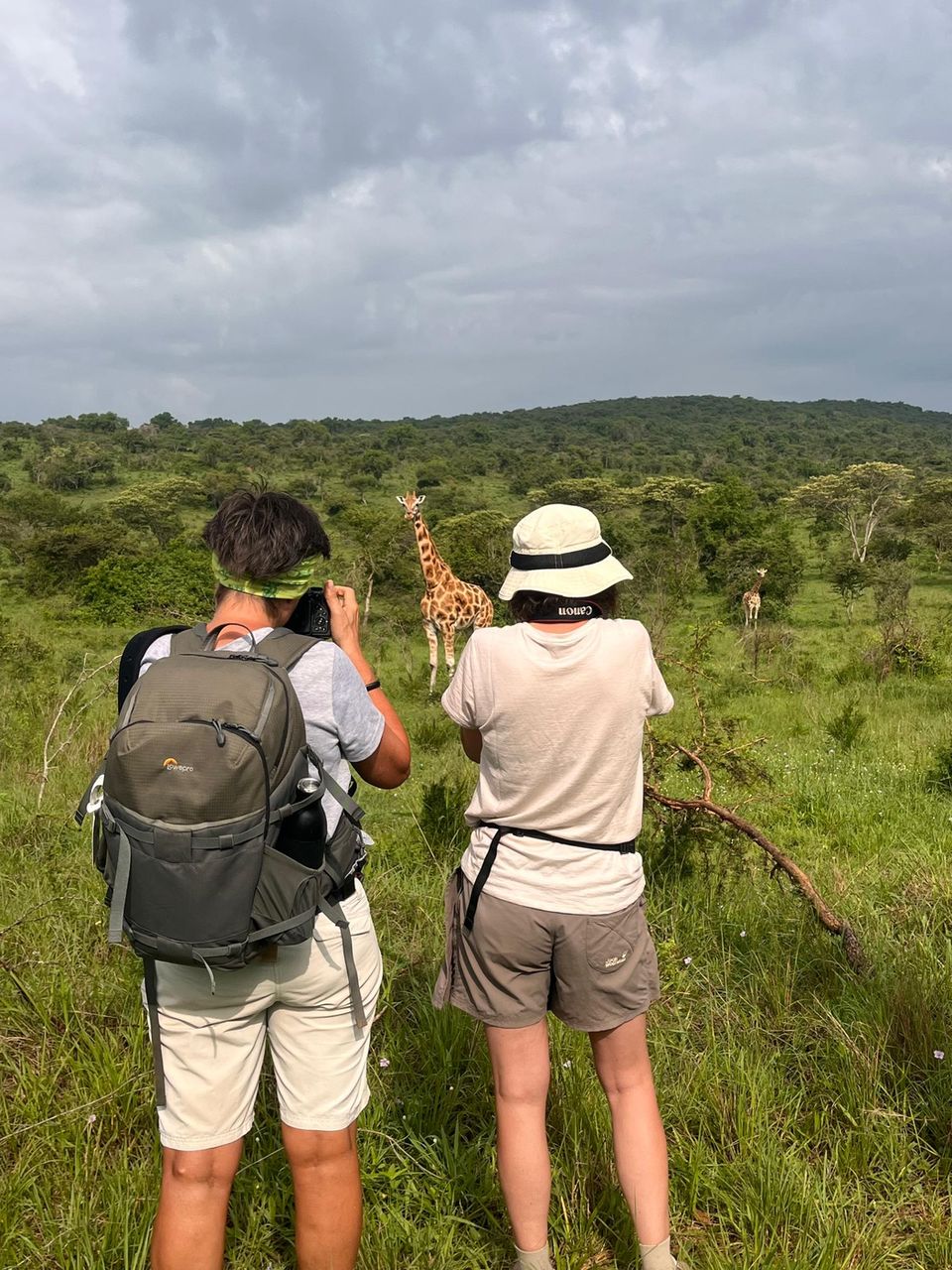
- Giraffe. In 2015 the Uganda Wildlife Authority moved 15 Rothschild’s giraffes from Murchison Falls to Lake Mburo, according to the Daily Monitor, and riders now meet giraffes on the tracks.
- Buffalo graze the savanna in herds. They are the animal your guide will watch most closely.
- Birds. The park lists more than 300 bird species, and a slow ride is a good way to find them. Bring binoculars.
Leopard and spotted hyena live in the woodland, but sightings are rare, and hippo and Nile crocodile stay around the lakes. A cycling safari at Lake Mburo is therefore a plains-game experience, not a big-cat one. If you want predators, plan a drive in Queen Elizabeth or Murchison Falls as well.
How a cycling safari at Lake Mburo works
Wildlife rides in the park go out with a ranger guide, and you ride the tracks your guide chooses. A typical outing follows this shape.
- Briefing. Your guide explains the route, how to behave around animals and what signals mean.
- The ride. You ride in single file or in a loose group behind the guide, stopping often to look, listen and photograph. The ranger reads the bush ahead and chooses where to go.
- Stops. Expect pauses at viewpoints, near the lakes and wherever animals are close to the track.
- Finish. Rides can be short loops or longer half-day routes, depending on the route and on how fit the group is.
Morning is the best time. It is cooler, animals are more active and the light is soft. A late-afternoon ride can work too, but your guide will make sure you are out of the open before dark. Bikes are usually mountain bikes that you hire through the operator or your lodge, and you can bring your own if you prefer. Tell us your height and riding experience when you ask for a quote so that the right bike is waiting for you.
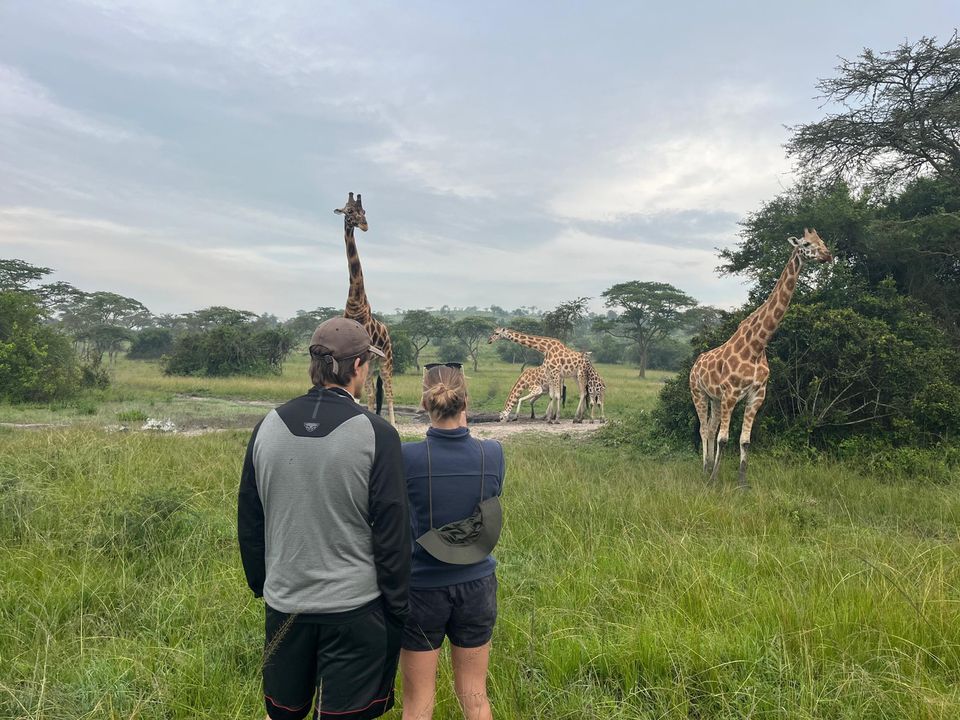
Many guests also add other activities in the same stay: a boat cruise on the lake, game drives, a guided nature walk, or a horseback safari at Mihingo Lodge, which is the only place in Uganda that offers one. The night drives and walking safaris guide explains how those on-foot activities differ from riding.
Is cycling safe around wildlife at Lake Mburo?
It is safe when you follow the rules, and the rules exist for good reasons. Buffalo are the animal that deserves the most respect, and hippo are dangerous on land near the lakes. A ranger guide, who knows where the animals are and how they are likely to behave, is the main protection.
- Stay behind your guide and on the track your guide chooses.
- Stop when you are told to stop, and do it at once.
- Keep your distance from every animal, and never ride toward one for a better photograph.
- Do not feed, call or chase animals.
- Do not ride in the dark, and keep to the times your guide gives you.
Check that your travel insurance covers cycling in a national park before you go, and read our guide to travel insurance and medical evacuation. The safety guide covers wider concerns about travelling in East Africa.
Getting to Lake Mburo
The park is about 228 km from Kampala, roughly 3½ hours by road according to the Uganda Wildlife Authority. It has two main entrances, Nshara Gate and Sanga Gate, and the park headquarters at Rwonyo are about 2 km from each. The park sits on the main road between Kampala and the south-west, so it is a natural stop on the way to Bwindi and Mgahinga. Two of our existing itineraries already pass through it: the Classic Gorilla Trekking Safari begins there, and the 10 Days Best of Uganda Safari includes a stay there. Ask us to add a ranger-guided ride to either of them.
Cycling around Lake Mutanda and Kisoro
Lake Mutanda is the second place to ride a bike in Uganda, and it is a different kind of day. The lake lies about 20 km north of Kisoro town in the far south-west, at an altitude of around 1,800 m. From its shores you can see three of the Virunga volcanoes, Muhabura, Gahinga and Sabinyo, the same peaks that form Mgahinga Gorilla National Park.
Be clear about what to expect. This is not a wildlife ride. You will not meet zebra or giraffe here. What you get is scenery: red dirt roads, steep terraced hillsides, banana groves, villages and a lake dotted with islands, with the volcanoes as a backdrop. The lake has around fifteen islands, and local people paddle dugout canoes on it. East African Trails describes mountain biking in the landscape around the lake as exhilarating with a good bike.
What a ride around Lake Mutanda is like
- Terrain. Rugged dirt roads and hill tracks with steep slopes. It is hillier and more demanding than Lake Mburo, and a good level of fitness helps.
- Pace. Rides are usually between a short morning loop and a full day with stops, depending on your route and your legs.
- Bikes. Mountain bikes can usually be arranged in Kisoro, and you can bring your own. Tell us what you need when you ask for a quote.
- Villages. You ride through farming communities. Greet people, ask before you photograph anyone and move slowly past children and animals on the road.
- The lake. Many travellers pair a ride with a canoe trip on the water, which gives a different view of the same volcanoes.
Kisoro is also the base for gorilla trekking in the south. The Rushaga and Nkuringo sectors of Bwindi are the nearest, and Mgahinga is about 15 km south of Kisoro town. A bike ride is a good use of a rest day after a trek, since it uses different muscles and shows the landscape from the ground. Read the Bwindi sector guide to see which sector suits you, and how and when to book gorilla permits before you fix dates. Kisoro is also close to the Rwandan border; see the Uganda–Rwanda border crossing guide if you plan to cross.
To get there, you can fly from Entebbe to Kisoro in about 1h15 by small aircraft, or drive, which takes many hours from Kampala. Our 12 Day Uganda, Rwanda and Tanzania Safari flies to Kisoro for exactly that reason.
Which one should you choose?
Choose Lake Mburo if…
- You want to see animals from a bike.
- This is your first cycling safari.
- You are driving to or from Bwindi and want a break on the road.
- You prefer rolling terrain to steep hills.
Choose Lake Mutanda if…
- You want scenery, villages and volcano views.
- You are already in Kisoro for gorilla trekking.
- You are fit and happy on steep dirt roads.
- You want a quiet rest-day activity.
You can do both in one trip, and it makes a good pairing: wildlife at the start, scenery near the end. Your bike days then sit on either side of the gorilla trek, which is the main event.
Fitting a cycling safari into a Uganda itinerary
A ride takes a morning or part of a day, so it slots into a longer trip without much effort. A common shape for a Uganda bike tour for travellers heading south-west is this.
- Day of arrival. Fly into Entebbe and drive south-west toward Lake Mburo.
- Lake Mburo. Ride in the morning, then add a boat cruise or a walk in the afternoon.
- Drive on to Bwindi or Kisoro for your gorilla trek. Read the gorilla trekking day guide so you know what to expect.
- Rest day at Kisoro. Ride around Lake Mutanda, or take a canoe.
- Onward. Cross to Rwanda, continue to the Queen Elizabeth area or return to Entebbe.
Our itineraries and full list of safaris show where Uganda trips already pass through Lake Mburo or Kisoro, and we can add a cycling morning to any of them. For help choosing the right route, read which destination to visit first and Uganda’s ten national parks compared. If you are planning your first trip, start with first-time safari planning.
Best time for a cycling safari in Uganda
Uganda’s main dry spells fall roughly between December and February and between June and August, and these are the easiest months for riding. Dry tracks are firm and grip well, and dust is the only drawback. In the rains, dirt roads become muddy and slippery, and rides at Lake Mutanda can be hard work on steep slopes. Rain also brings fresh grass, fewer visitors and lush views, and the savanna at Lake Mburo is at its greenest. Wet-season riding is still possible, but it needs a good guide, a flexible mood and a waterproof layer.
Plan the ride around the gorilla trek, which is fixed by your permit date. Our best time to visit Uganda guide and best time to see gorillas explain the seasons in detail, and safari weather 101 covers what to expect from the weather.
Fitness and what to bring
You need to be able to ride a bicycle confidently, brake smoothly and stay in the saddle on rough tracks for a couple of hours. You do not need to be an athlete at Lake Mburo, where the ride is steady. At Lake Mutanda, expect hills, so train beforehand if you want to enjoy the climbs.
Wear and carry
- A helmet that fits (ask us whether one is provided).
- Padded cycling shorts or comfortable trousers.
- Closed shoes with grip.
- Sun protection: hat, sunscreen and sunglasses.
- Neutral, earthy colours. Avoid camouflage patterns.
- Gloves, for grip and for rough handlebars.
Bring along
- Water, and a small day pack.
- Binoculars and a camera with a strap.
- A light rain jacket.
- A copy of your passport, which is useful at park gates and checkpoints.
- Insect repellent.
Our safari packing list covers the rest. Read malaria, yellow fever and vaccinations before you travel, and visa requirements for your entry.
Rules and responsible riding
A bike is quiet, and that is a privilege. Keep it that way by following a few habits.
- Ride where the guide tells you, and nowhere else.
- Take all litter with you.
- Keep your voice low near animals.
- Ask permission before photographing people, and respect a no.
- Tip your guide and ranger fairly. See our safari tipping guide.
Twenty percent of park entrance fees at Lake Mburo go to nearby community projects, according to our park guide. For the wider picture, read about responsible and sustainable safari travel.
Booking a cycling safari
Cycling is normally a short activity that is added to a longer safari, so the best way to book it is to build it into your itinerary from the start. When you ask any operator, including us, check these points.
- Who guides the ride, and is a ranger with the group?
- Which bikes are used, and are helmets provided?
- How long is the ride, and what is the terrain?
- What happens if the weather turns?
- What is included, and what is extra?
Our guide to ten questions to ask a safari operator lists the rest. Paramount Gorilla Expeditions is a licensed tour operator in Uganda, and you can see the details on our licence page and how we protect your trip. For costs, read the Uganda safari cost guide and how much an East Africa safari costs, since activity fees depend on the operator and the season. Travellers writing from abroad can also see our pages for travellers from the USA and travellers from the UK.
Add a cycling morning to your Uganda safari
Tell us your dates, who is travelling and how confident you are on a bike. We reply with an itinerary that puts the ride where it fits best.
Start planningRelated guides
| For | Read | What it covers |
|---|---|---|
| New to safaris | What Is a Safari? Types of Safari and How to Choose | The start-here guide to every kind of safari. |
| The park | Lake Mburo National Park | Lakes, wildlife, fees and where to stay. |
| The south-west | Mgahinga Gorilla National Park · Bwindi sectors | Gorillas and volcanoes near Kisoro. |
| Planning | First-time safari planning · Uganda: a local specialist’s guide | Step by step, from dates to booking. |
| Timing | Best time to visit Uganda · When to book | Seasons and lead times. |
| Routes | Uganda destination page · East Africa safaris · Lodges and camps | Where to go and where to stay. |
Sources and how we checked this guide
Park facts come from the park authority and from regional sources, and details of rides come from our own guiding experience. Rules and routes can change, so confirm the day’s arrangements with your guide. Spotted something out of date? Tell us.
- Lake Mburo: Uganda Wildlife Authority, Lake Mburo National Park (wildlife, lakes, distance from Kampala and gates); Daily Monitor on moving giraffes from Murchison Falls to Lake Mburo.
- Lake Mutanda: East African Trails, Lake Mutanda; Uganda Safari Tours, Lake Mutanda.