
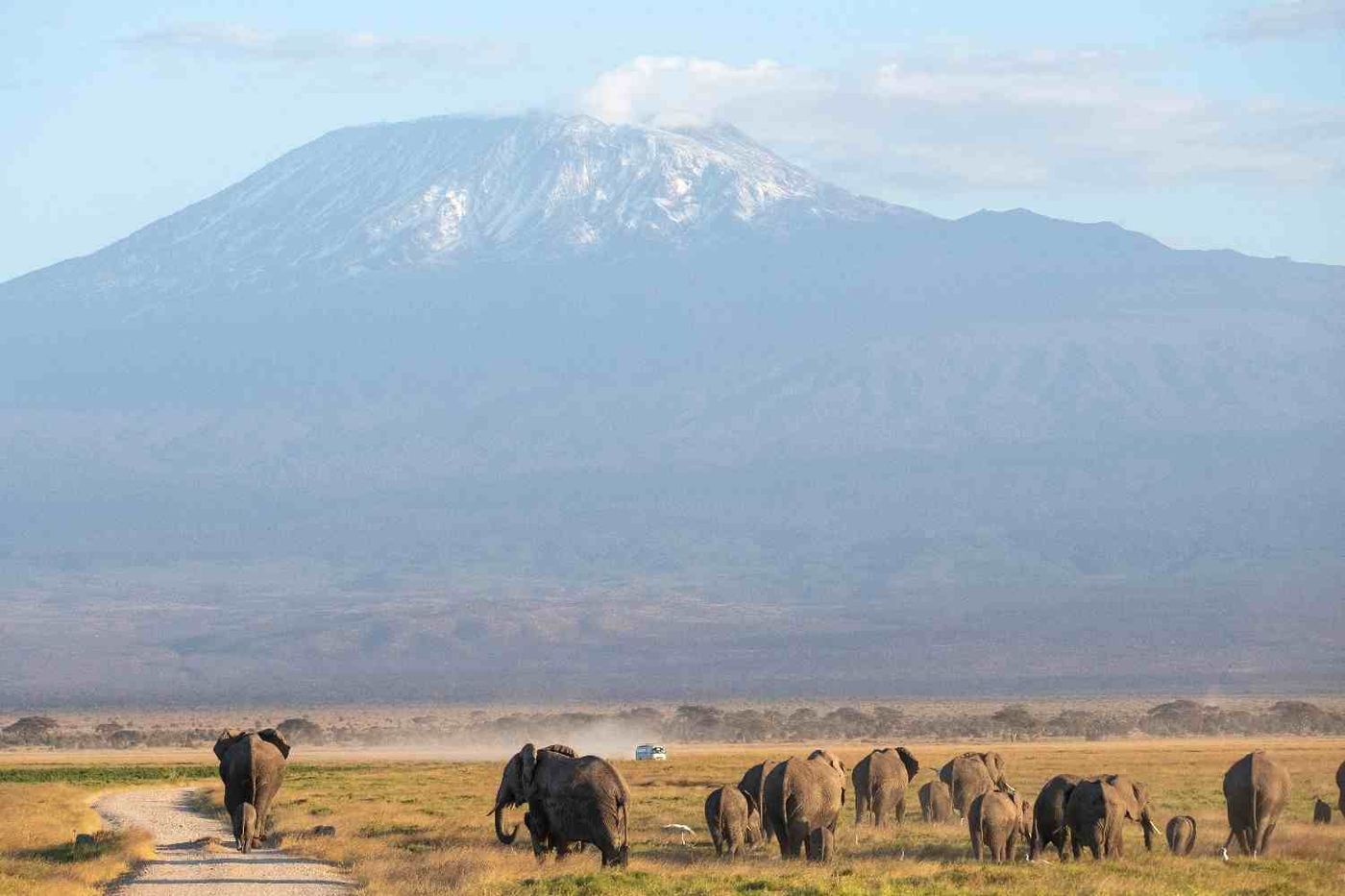
A safari is a journey to watch wild animals in their natural habitat, usually from a vehicle with a trained guide. In East Africa it also includes tracking mountain gorillas on foot, walking with a ranger, cruising a river and floating over the plains in a balloon. Most trips combine two or three of these, and this page shows you how to choose and where to read next.
If you are new to the idea, start here. This page explains what a safari is, the main kinds of safari, how people travel and where they stay, and which country suits which wish. It does not try to answer every question itself. Where a topic needs depth, such as what a safari costs or how to plan your first one, it points you to the guide written for that question.
What is a safari?
The word safari comes from Swahili, where it means a journey, and the word reached Swahili from Arabic. Travellers in East Africa used it for long overland trips long before tourism, and today it means a trip to see wildlife in the wild rather than in a zoo.
Many people picture only game drives and the Big Five. That is one part of a much wider picture. A safari can be a morning with a family of mountain gorillas in a misty forest, a week following wildebeest across the Serengeti and the Maasai Mara, a boat trip past hippos and crocodiles, or a quiet walk where your guide reads tracks in the dust. You choose the mix.
East Africa is a popular choice because so many different habitats sit close together: open savanna, rainforest, lakes, rivers, volcanoes and mountains, and a warm Indian Ocean coast to finish on. Paramount Gorilla Expeditions is based in Uganda and plans safaris in Uganda, Rwanda, Kenya and Tanzania, with Zanzibar and the Seychelles as beach endings. Our full range of trips is on the East Africa safaris page.
What does a day on safari look like?
Safari days follow the animals, not the clock. Wildlife is most active when the air is cooler, so the day usually has two parts.
- Early morning. You leave the lodge around sunrise, often with a hot drink in hand, and spend a few hours on a game drive. Predators that hunted overnight are often still out, and the light is good for photographs.
- Midday. You return for breakfast or lunch and a rest. Animals shelter from the heat, so this is a good time for the pool, a nap, or a talk with your guide.
- Late afternoon. A second drive begins as it cools. Many guides finish with a sundowner, a drink watched against the sunset, before you return for dinner.
Your guide is the most important part of the trip. A good guide finds animals by sound and sign, reads their behaviour, keeps everyone safe and explains what you are seeing. Vehicles are usually 4x4s with a pop-up roof or open sides so everyone has a window seat. In most parks you stay in or beside the vehicle unless your guide says otherwise.
The main types of safari
Most itineraries mix several of these. Read them as a menu, not as a choice of just one.
Game-drive safari
The classic safari: you travel by vehicle through a park or reserve and look for animals. It works best in open savanna such as the Serengeti, the Maasai Mara, Amboseli, Queen Elizabeth and Murchison Falls, where animals are easy to see. Lion, elephant, giraffe, zebra and buffalo are common sights, and leopard is the prize that takes patience. If the Big Five is your goal, read Big Five vs. Big Nine and where to see the Big Five.
Gorilla and chimpanzee trekking
Mountain gorillas live in only three countries, and two of them, Uganda and Rwanda, are among the places we plan trips. You walk through forest with a guide and trackers until you find a gorilla family, and then you spend one hour with them. Visits need a permit, groups are small, and the walk can be easy or demanding depending on where the family is that day. Chimpanzee trekking works the same way in forests such as Kibale.
Good places to continue: what actually happens on a trek, how and when to book permits, how fit you need to be and Uganda vs Rwanda. Our gorilla trips are on the Uganda gorilla trekking and Rwanda gorilla trekking pages, and the gorilla permits page explains the permit process.
Migration safari
Each year, huge herds of wildebeest, with zebra and gazelle alongside them, move through the Serengeti in Tanzania and the Maasai Mara in Kenya, following rain and fresh grass. The famous river crossings are the highlight, but the herds are always somewhere worth seeing, and where they are depends on the month. Start with how the Great Migration works, then see where the herds are month by month and how to plan a migration safari. For the current position, use our where is the migration now page.
Walking and night safaris
On foot, you notice what vehicles miss: tracks, insects, plants, bird calls and the scale of an elephant at a safe distance. Walks are led by a qualified guide or ranger. Night drives show a different cast, including civets, genets and bushbabies. Neither is allowed everywhere, because rules differ by park and by private conservancy. Our guide to night drives and walking safaris explains where each is possible.
Boat safaris
Some of the best wildlife viewing happens from the water. A boat trip along the Kazinga Channel in Queen Elizabeth National Park brings you close to hippos, buffalo, elephants and many birds. On the Nile below Murchison Falls, you can see crocodiles, hippos and waterbirds from the deck. Boats are quiet, and animals relax when they see them.
Balloon flights and extras
A dawn balloon flight over the Serengeti or the Maasai Mara gives a view of the plains that no vehicle can, and it usually ends with a breakfast in the bush. Other add-ons include birding, Maasai cultural visits, climbing Kilimanjaro and a beach stay on Zanzibar or in the Seychelles.
How you travel: road or air, private or group
Two choices shape the feel of a trip more than any other, and both are covered in full elsewhere.
Road or fly-in
- Road safaris use a 4x4 with a driver-guide, and you see the country between parks.
- Fly-in safaris use light aircraft between airstrips and save long drives, with limits on luggage.
- Many trips use both. See fly-in vs. road safari and luggage limits on bush flights.
Private or group
- A private safari gives you your own vehicle, guide and schedule.
- A group safari shares a vehicle and follows set dates and a set route.
- Pace, privacy and cost differ. See private vs. group safari.
Where you stay
Accommodation is part of the experience, and it comes in three broad forms.
- Lodges are permanent buildings with rooms or cottages, a restaurant and often a pool. They suit travellers who want comfort and a fixed base.
- Tented camps have permanent tents with real beds and private bathrooms. You hear the bush at night and still sleep comfortably.
- Mobile camps move with the seasons so that guests stay close to the wildlife. They are simple, personal and close to nature.
Where a lodge sits matters as much as how it looks, because a lodge inside or beside a park saves hours of driving. Browse our lodges and camps, read where to stay in Tanzania, or see our luxury safari page if you want the highest level of comfort.
Where to go: six places, six different trips
Each destination is known for something different, and the table below is a map of those strengths. Open the destination page for the full picture.
| Destination | Best known for | Read next |
|---|---|---|
| Uganda | Mountain gorillas in Bwindi and Mgahinga, chimpanzees in Kibale, savanna and boat safaris at Queen Elizabeth and Murchison Falls, and the source of the Nile at Jinja | Uganda · local guide · ten parks compared |
| Rwanda | Mountain gorillas in Volcanoes National Park and chimpanzees in Nyungwe, in a small and well-organised country | Rwanda · four parks compared |
| Kenya | The Maasai Mara and the Migration, elephants under Mount Kilimanjaro at Amboseli, Samburu in the north and private conservancies | Kenya · complete guide |
| Tanzania | The Serengeti, the Ngorongoro Crater, Tarangire and the quieter southern parks of Ruaha and Nyerere | Tanzania · complete guide |
| Zanzibar | Beaches, Stone Town and spice farms, usually added at the end of a safari | Zanzibar · adding it to a safari |
| Seychelles | Island beaches and clear water, for a few days of rest after the bush | Seychelles · island by island |
Cannot decide? Which destination should you visit first? helps you choose, Tanzania vs. Kenya compares the two best-known savanna countries, and our guide to multi-country safaris shows how to join countries into one trip. You can also browse every country on the destinations page.
When to go
Two broad patterns apply across the region. In the dry seasons, vegetation is thinner and animals gather near water, so wildlife is generally easier to see. In the green seasons after the rains, the landscape is lush, there are fewer visitors and birdlife is at its best. Gorilla trekking runs all year, though trails are muddier in the rains.
Rainfall and seasons differ by country, so the right months depend on where you are going. Use Uganda, Kenya and Tanzania, or start with safari weather 101. If you are weighing the quieter months, read why the green season can be good value. Popular dates sell out, so also read how far ahead to book.
Who a safari suits
A safari fits more kinds of traveller than people expect. These guides cover the common cases.
- First-timers: first-time safari planning walks through the decisions in order.
- Families: the best age for a family safari and family camps with real kids’ programmes.
- Couples: a honeymoon safari with a Zanzibar beach and milestone and proposal safaris.
- Solo travellers: solo travel on safari.
- Three generations together: multigenerational safari planning.
- Travellers wanting the highest comfort: our luxury safari page and Kenya’s private conservancies.
Which guide answers your question?
This is the part to bookmark. Find your question in the left column and open the guide on the right.
| Your question | Start with |
|---|---|
| How much does a safari cost? | How Much Does an East Africa Safari Cost?. By country: Uganda, Kenya, Tanzania, Rwanda |
| How do I plan the trip, step by step? | First-Time Safari Planning |
| Which country or route should I pick? | East Africa safaris · Which destination first? · Uganda, Kenya and Tanzania route |
| When should I go? | Uganda, Kenya, Tanzania, weather basics |
| How early must I book? | How far in advance to book a safari and gorilla permits |
| I want to see gorillas | Gorilla and chimpanzee trekking in Uganda · permit costs, Uganda vs. Rwanda |
| I want to see the Great Migration | How the Great Migration works · Serengeti or Masai Mara? |
| Fly or drive? Private or group? | Fly-in vs. road · Private vs. group |
| What do I need to pack and arrange? | Packing list · visas · vaccinations · insurance · tipping |
| Is it safe? | Is East Africa safe for travellers? |
| How do I choose an operator? | 10 questions to ask before booking · responsible and sustainable safari travel |
Choosing a safari operator
The operator you book with decides who guides you, which camps you use and how problems are handled. A few checks protect you: confirm the company is licensed, ask who your guide will be, ask exactly what the price includes and excludes, and ask how your payments are handled. Ten questions to ask before booking gives the full list.
Paramount Gorilla Expeditions is a licensed tour operator in Uganda, and you can see our licence and how we look after your booking on the licence page and the how we protect your trip page. Read what past travellers say on our reviews page.
From reading to booking in five steps
- Pick the experience you care about most. Gorillas, the Migration, big cats or a mix. Everything else is arranged around it.
- Choose the country and the season. Use the destination table and the best-time guides above.
- Decide how you will travel. Road or fly-in, private or group, and the style of camp.
- Set a budget. Use the cost guide so you know what is a fixed fee and what is a choice.
- Ask for a written itinerary. A good quote lists what is included, day by day. For the detailed version of these steps, see first-time safari planning.
Tell us what you want to see
Share your dates, who is travelling and what you hope to see. We reply with an itinerary built around your answers.
Start planningAlso useful if you are travelling from abroad: safaris from the USA and safaris from the UK. Prefer a ready-made route? Browse our itineraries or the full list of safaris.
How we wrote this page
This page is a general introduction and gives no prices or fees, because those change and are different for each country and park. Where a figure matters, we link to the guide that shows it with its official source. Spotted something out of date? Tell us.