
Where to stay in the Masai Mara for the migration depends on which bank of the Mara River you want to be near, and that choice is made by the camp, not the date. The central reserve has the best-known crossing areas and the most vehicles. The Mara Triangle in the west has its own ticket, stricter rules and the Oloololo Escarpment above it. This page compares the two, covers the Sand River briefly, and says when the Mara is the wrong place to stay at all.
Facts checked 12 October 2026. Fees, schedules and herd positions change, so we confirm them again when we quote.
Where to stay in the Masai Mara for the migration: the three places
There are three places to base yourself for the migration in Kenya: the central reserve, the Mara Triangle and, for a short early-season visit, the Sand River. Each is defined by where it sits against the Mara River, which rises in the Mau Forest, runs south through the Maasai Mara and carries on into Tanzania's northern Serengeti.
- Central reserve. The main part of the Maasai Mara National Reserve, with the Lookout hill area and the Paradise Crossing area. It has the best-known Kenyan crossings and the most vehicles in peak weeks.
- Mara Triangle. The western part of the reserve, across the river from the main reserve. A non-profit, the Mara Conservancy, manages it, and it has strict vehicle rules.
- Sand River. On the Kenya and Tanzania boundary, where northbound herds may first enter the Mara. Its crossings are smaller and often signal that the movement has begun.
We treat the Sand River as an early-season signal rather than a place to build a stay around, so the rest of this page compares the first two. Our Great Migration safari guide shows where this stretch of the river sits in the herds' wider loop. If you also want a private conservancy base, read our guide to the Mara conservancies. For the sectors, wildlife and culture of the reserve as a whole, our Maasai Mara National Reserve guide is the place to start.
Crossing points themselves are covered separately, with names, timing and the right way to watch. Use our Mara River crossing timing guide for that, and use this page to choose where you sleep.
Central Mara migration camps: where most crossings are watched
For many travellers the best place to stay in the Masai Mara for the migration is the central reserve, because it is the best-known area for Kenyan crossings. Around Lookout hill the river is narrow, with sheer drops, and the most famous Kenyan crossings are here. The Paradise Crossing area is another well-known point. The central Mara crossings draw the most vehicles in peak weeks.
Governors' Camp, for example, sits beside Musiara Marsh in the central Mara, and Rekero Camp and Elephant Pepper Camp are premium examples elsewhere in the Maasai Mara. We name camps only as examples. Which camps have rooms, and where they sit that season, is confirmed in your quote.
What a central reserve stay feels like
Expect a busy river in peak weeks. Good guides hold the vehicle back until the herd commits and leave the landing zones open. A crossing can last minutes or over an hour, and herds may gather, mill and retreat for days, so patience matters.
Mara Triangle migration stays: the Triangle and the Oloololo Escarpment
Among Mara River crossing camps, those in the Mara Triangle, the western part of the reserve, suit travellers who want order at the river and long views over the plains. The Triangle lies across the Mara River from the main reserve. The non-profit Mara Conservancy manages it, charges its own cashless ticket and runs strong ranger patrols. Roads are well kept and vehicle rules are strict.
It has several recognised crossing areas along the river, so a Mara Triangle migration stay gives you choices rather than a single famous spot. Purungat Bridge is a vehicle bridge linking the Triangle and the main reserve. It is a road link, not a wildlife crossing point, so do not expect herds there.
The Oloololo Escarpment
The Oloololo Escarpment rises above the Triangle and gives the area its long views. Angama Mara, a luxury example, sits on the escarpment above the Mara Triangle. Whatever the view, ask how long the drive from the camp to the river takes before you choose.
Mara Triangle vs main reserve: the two areas side by side
The Mara Triangle vs main reserve choice comes down to crowds, rules and character. Both sit on the Mara River, and both are inside the Maasai Mara National Reserve, so the wildlife is the same ecosystem. The table sets out what differs.
| Factor | Central reserve | Mara Triangle |
|---|---|---|
| Character | The most famous crossing areas, including the Lookout hill area and the Paradise Crossing area | Several recognised crossing areas along the river, with the Oloololo Escarpment above |
| Vehicles | Busiest with vehicles in peak weeks | Medium crowds, with strict vehicle rules and strong ranger patrols |
| Management | The main reserve | The non-profit Mara Conservancy |
| Ticket | Reserve ticket | Its own ticket, cashless |
| Patrols and roads | Confirmed in your quote | Strong ranger patrols and well-kept roads |
| Camp examples | Governors' Camp beside Musiara Marsh | Angama Mara on the Oloololo Escarpment |
| Off-road driving and night drives | Not allowed | Not allowed |
Purungat Bridge links the two areas for vehicles. Each side charges its own ticket, and your quote shows both if your itinerary uses them.
Mara Triangle vs Mara North: reserve or conservancy?
Mara Triangle vs Mara North is a different choice. The Triangle is part of the national reserve, with strict rules and no off-road driving. Mara North is a private conservancy, where bed numbers and vehicles are limited and off-road driving, night drives and walks are allowed in many conservancies. Herds do not always cross the river inside conservancies, so guests can drive to the reserve for crossings. Our Mara conservancies guide owns that decision and explains how to combine the two.
Masai Mara crossing camps and migration camps by class
Masai Mara crossing camps and migration camps range from comfort tents to luxury camps, and the class you choose sets the price band. The examples below are placed as we use them. Availability and positions change every season and are confirmed in your quote.
| Class | Examples in the Maasai Mara | Typical price per person per night, sharing (indicative) |
|---|---|---|
| Comfort | Ashnil Mara Camp, Basecamp Masai Mara | US$350 to 550 in the green season, US$450 to 750 in peak |
| Premium | Rekero Camp, Governors' Camp (beside Musiara Marsh, central Mara), Elephant Pepper Camp | US$550 to 900 in the green season, US$750 to 1,300 in peak |
| Luxury | Angama Mara (Oloololo Escarpment above the Mara Triangle), Mara Plains Camp (Olare Motorogi Conservancy) | US$900 to 1,700 in the green season, US$1,300 to 2,500 or more in peak |
Rates are typical and indicative. Peak means July to September and Christmas; June and October are shoulder months that are often lower, but each camp sets its own calendar. They are confirmed in your quote.
These are Masai Mara migration lodges and camps of very different kinds. Some are seasonal or mobile camps that move two or three times a year to follow the herds, and permanent lodges have pools and larger rooms, so ask which kind you are booking. Ask the distance to the river as well.
How to read Masai Mara migration lodge descriptions
A camp's description tells you about its setting, not its drive to a crossing area. Ask for the drive time in minutes, and ask whether the camp is permanent or seasonal, since seasonal camps are placed to follow the herds.
A typical morning in crossing season starts with a wake-up at 05:45, first light at 06:15 and a bush breakfast. Waiting at the river often runs from 10:00 to 14:00, with a picnic lunch, and the day ends with sundowners. A camp close to the water makes that rhythm easier.
How to get to the Maasai Mara for the migration
Where to stay in the Masai Mara for the migration also decides how you arrive. The quickest way to the Maasai Mara is a light-aircraft flight from Nairobi Wilson to a Mara airstrip, which takes about 45 to 60 minutes. The alternative is a drive of five to six hours. Flying saves most of a day, so the choice is time against cost.
- By air. Fly from Nairobi Wilson to the airstrip nearest your camp. Expect roughly US$250 to 500 per person for an internal flight, and light aircraft restrict luggage to roughly 15 kg per person, soft bag, hand luggage included.
- By road. Allow five to six hours from Nairobi. We arrange a private vehicle and a specialist guide.
- Entry paperwork. Kenya requires an eTA before departure, including for children, and your passport must be valid for six months beyond departure.
If you are also visiting Tanzania, note that you cannot fly straight from a Mara airstrip to a Serengeti airstrip. The link runs through Nairobi Wilson and Kilimanjaro or Arusha, and takes about half a day. Our guide to Serengeti vs Masai Mara migration explains when to combine them.
Fees and rules in the Masai Mara reserve
The reserve charges US$200 per adult per day from 1 July 2026. From 1 January to 30 June 2026 the fee was US$100 per adult per day. Children aged 9 to 17 pay US$50 each, children under 9 are free, and the ticket is valid from 06:00 to 18:00. These are published tariffs for 2026, and fees for 2027 are confirmed in your quote.
The Mara Triangle charges its own ticket, which is cashless. Conservancy fees usually sit inside the camp rate, so they are not a separate line. Your quote shows reserve and Triangle tickets for the days you use them.
Rules that shape your stay
The reserve does not permit off-road driving, night drives or walks. If you want a night drive or a walking safari, you need a conservancy camp or a private reserve. In the reserve you drive on tracks, in daylight, and the rules at a crossing are strict: wait back, leave the landing zones open and never block a bank.
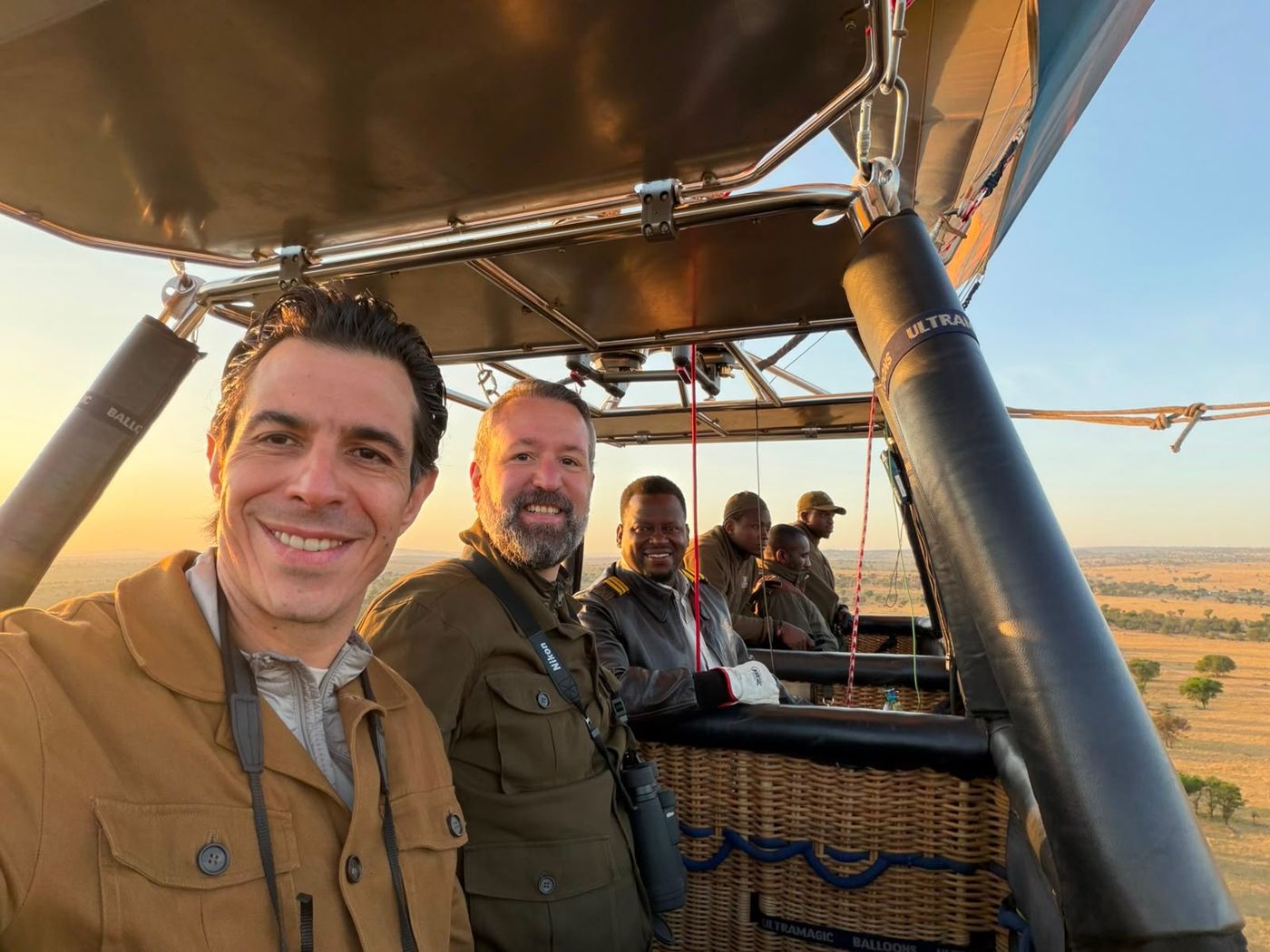
A hot air balloon flight adds a view from above. Balloon flights, offered in the Serengeti and the Mara, are priced at roughly US$550 to 750 per person, last about an hour in the air and end with a bush breakfast. They depend on the weather, and they sell out in peak months, so book early. Our guide to hot air balloon safari cost has the details.
Masai Mara migration accommodation: how many nights do you need?
For Masai Mara migration accommodation, plan at least four nights near the river, because a crossing can come on any morning and can also decline to come at all. Our nine-day crossing safari and our Zanzibar escape each give the Mara four nights. Fewer nights leave little room for a herd that hesitates.
On a longer trip, a split stay is usually three nights in each of two places, such as a river camp and a conservancy. Our Kenya Migration Explorer: Maasai Mara River Crossings runs eight days, from US$6,100 per person. It uses the Mara Triangle, the central Mara and the Mara North Conservancy in a private 4x4, and it fits late July to early October.
If you want a beach at the end, our Kenya Migration & Zanzibar Escape runs nine days, from US$5,450 per person, with four nights on the Mara River crossings and four on Zanzibar's north coast, between July and October.
The planning rule for the Mara is the same as for any peak window. For July to September, book at least nine to twelve months ahead, because the camps closest to the crossing points sell out first. Our guides to the Great Migration in August and the Great Migration in September show what each month looks like at the river.
When the Masai Mara is the wrong place to stay
The Mara is the wrong place to stay before July and after October, however good the camp. The herds are in Tanzania for most of a typical year and in Kenya for only roughly three to four months, so a Mara stay in February or April is a stay without the Serengeti herds. That can still be a good safari for resident wildlife, but it is not a migration trip.
The edges are soft. Herds can turn up two to four weeks sooner or later than the calendar suggests, and the first Mara crossings can come in late June in an early year. Even so, the first and last weeks of the window carry the most risk. If your dates are outside July to October, look at the Serengeti instead. Our Great Migration in Kenya guide sets out the Kenyan season in full, and the northern Serengeti migration guide covers the Tanzanian bank of the same river, which is generally quieter.
The best place to stay in the Masai Mara for the migration: who each area suits
The best place to stay in the Masai Mara for the migration is the one that matches how you travel. The central reserve suits travellers who want the best-known crossing areas and accept company. The Mara Triangle suits those who value order at the river and the views from the Oloololo Escarpment. A conservancy suits travellers who want off-road driving, night drives and walks alongside a trip to the river.
- First-time visitors: the central reserve, with a camp close to the water and a guide who knows the crossing areas.
- Photographers: the Triangle or the central reserve, either works. Shoot at 1/1600 s or faster, use continuous autofocus and rest the lens on a beanbag.
- Couples: the Oloololo Escarpment for views, or a split stay that adds a private conservancy.
- Families: ask about minimum ages before you choose a camp, because some camps set them at 6, 8 or 12.
Next steps for where to stay in the Masai Mara for the migration
- Confirm that your dates fall between July and October.
- Decide between the central reserve, the Mara Triangle or a split of the two with a conservancy.
- Ask each camp for its drive time to the nearest crossing area, in minutes.
- Reserve nine to twelve months out at the least for July to September.
- Send us your dates, group size and passport nationality, and your quote will name the camps and flights and list the fees.
Choose your Mara base with a specialist
Tell us your dates, who is travelling and how close to the river you want to be. We will name the area, the camps and the flights, and list every fee.
Plan my tripFor the wider picture of the herds' loop, read our Great Migration safari guide. If the northern Serengeti might suit your dates better, see the Kogatende and the northern Serengeti first.
Keep reading: related Great Migration guides
Mara conservancies for the migration
Quieter private land beside the reserve and how it fits a migration trip.
Northern Serengeti and Kogatende
The northern Serengeti, Kogatende and the Mara River banks.
Great Migration month by month
Twelve months compared, with a page for each one.
Great Migration in July
Where the herds are in July, the weather and who should go.
Great Migration in October
Where the herds are in October, the weather and who should go.
How the Great Migration works
The yearly cycle, why the herds move and what drives the timing.
How to plan a migration safari itinerary
How many nights, which areas and in what order.
For the whole picture, see our Great Migration safari guide. If you are ready to price a trip, Kenya Migration Explorer: Maasai Mara River Crossings starts from US$6,100 per person.