
The Great Migration in April: Where the Herds Are and What to Expect
Where the herds are in April, how wet the month really is, what it costs and who should choose March or May instead.
Read the guide →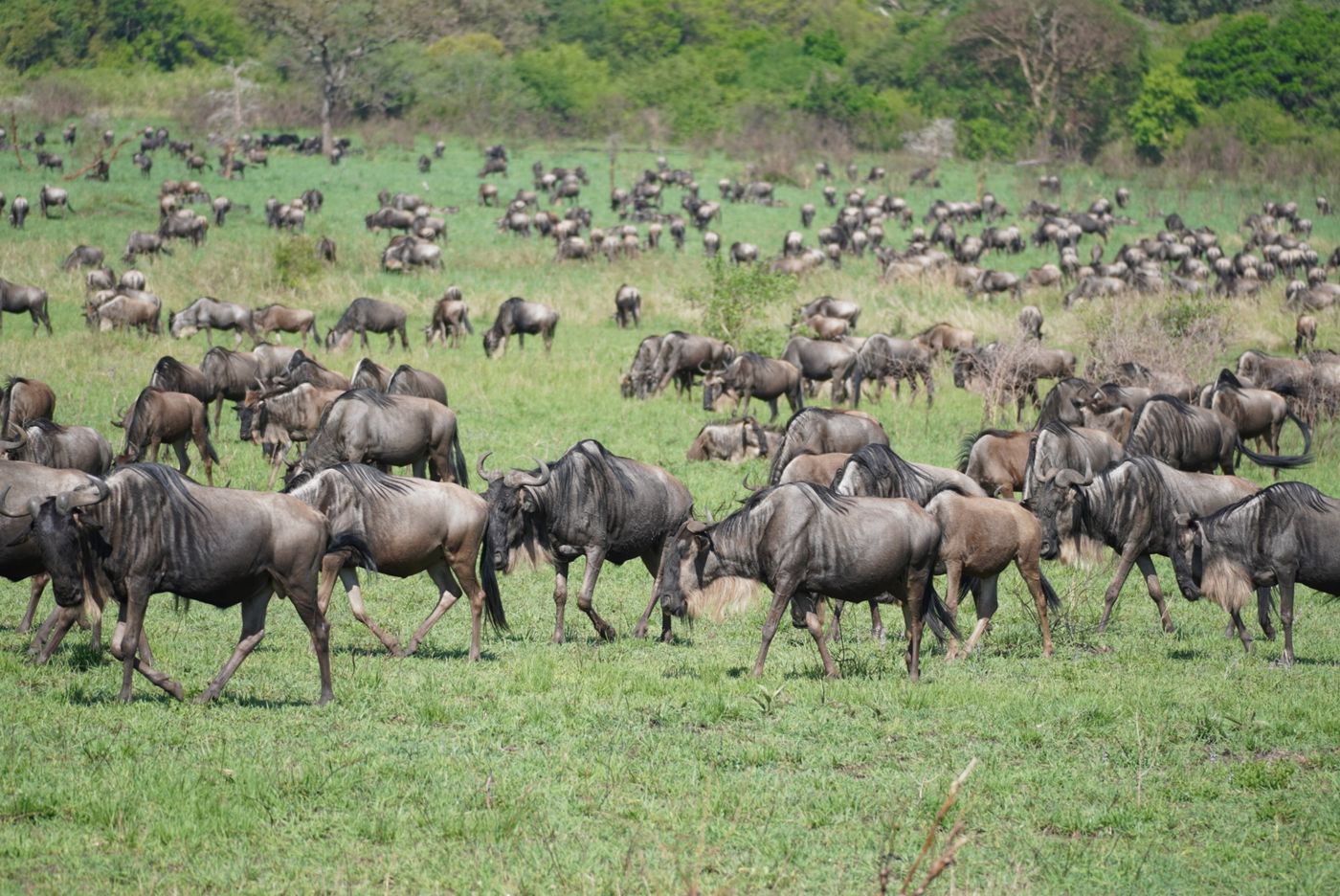
Where the herds are in July, when the first Mara River crossings usually come, what the month costs and how to choose between Kogatende, Lamai and the Mara.
The Great Migration in July is a month of arrival. The herds usually reach the northern Serengeti. The first Mara River crossings often begin, and Kenya's Maasai Mara starts to fill with wildebeest. It is also the month where timing luck matters most, because the animals follow rain and grass, not the calendar. This page settles where the herds usually are and what you can realistically expect to see. It also helps you choose between early and late July. For the wider year, read our Great Migration safari guide.
Facts checked 12 October 2026. Fees, schedules and herd positions change, so we confirm them again when we quote.
In a typical year most of the herds are in the northern Serengeti in July. They gather around Kogatende and the Lamai Wedge, with advance groups pressing toward the Mara River. The wildebeest migration in July is not one column. The herds arrive in groups over several weeks.
The herds travel a clockwise loop of roughly 800 to 1,000 km. In June the herds are in the Western Corridor around Kirawira and the Grumeti River. Late in June part of the herd turns north through Ikorongo and Lobo. In July that movement reaches the river country. The whole sequence can run two to four weeks early or late, depending on the rains, so wildebeest migration July dates vary by weeks. We explain the mechanics in how the Great Migration works.
| Area | What usually happens in July |
|---|---|
| Western Corridor (Grumeti) | Grumeti River crossings usually run from late May to early July, so only the tail of that movement is left early in the month. |
| Ikorongo and Lobo | The route north: part of the herd passes through from late June onward. |
| Kogatende and Lamai Wedge | The centre of gravity for the month on the Tanzanian side, with herds gathering above the Mara River. |
| Sand River | On the Kenya–Tanzania boundary, where northbound herds may first enter the Mara. Smaller crossings here often signal that the movement has started. |
| Maasai Mara | Begins to fill, helped by the smaller Loita herd arriving from the east. |
The Serengeti in July is a northern story. Kogatende is the ranger post just south of the Mara River. It is the base most travellers mean when they talk about the Tanzanian crossings. The Lamai Wedge lies between the river and the Kenya border. It is remote, with low crowds. It also holds a well-known productive spot called Crossing Point Number Four.
Further east, the Bologonja and Wogakuria areas offer quieter hills and tracks. Our guide to the northern Serengeti migration around Kogatende goes through each area. The Tanzanian side is generally quieter than central Kenya. That suits travellers who want space.
The Masai Mara in July changes character within a few weeks. Kenya hosts the Serengeti herds for roughly three to four months, from about July to October. July is when that window opens. The smaller Loita wildebeest population, which lives on the Loita Plains to the east, arrives around the same time.
So the Maasai Mara can look very different at the start and the end of the month, because the herds are still arriving. The Mara Triangle on the western side and the central reserve around Lookout Hill are the Kenyan crossing areas to watch. For the country overview, see our guide to the Great Migration in Kenya.
The first Mara River crossings often come in July, but the date moves every year. The river is the main barrier on the loop. It rises in Kenya's Mau Forest and runs south through the Maasai Mara. It then crosses into northern Serengeti and turns west to Lake Victoria. Herds cross it in both directions over the following months. July is the start of a long run, not a single event.
A crossing can last minutes or more than an hour. Herds gather on the bank, mill, retreat and sometimes repeat that for days. Zebra are often the first to commit. When the grunting rises and then drops, and dust appears near the bank, a crossing may be close. Our guides park well back until the herd commits. A vehicle that blocks a landing zone can turn a whole herd away.
Early July and late July behave like two different months. Early July suits travellers who value space over drama, because peak season is only starting. Late July is the better choice if a crossing is the priority, because more groups have reached the river by then.
| Question | Early July | Late July |
|---|---|---|
| Where are the herds? | Tail of the Grumeti movement, groups through Ikorongo and Lobo, first arrivals at Kogatende | Gathering in the north, with more groups entering the Maasai Mara |
| Crossing chances | Lower, though an early year can bring one in late June or the first days of July | Higher, as more groups reach the river |
| Crowds | Peak season is only starting | Peak season is under way; central Kenyan crossing points draw the most vehicles |
| Best suited to | Flexible travellers who enjoy resident wildlife as much as the herds | Travellers who want the best July chance of a crossing |
Our Kenya-focused itinerary suits the later part of the month. Kenya Migration Explorer: Maasai Mara River Crossings is an 8-day private 4x4 safari from US$6,100 per person. It runs from late July to early October across the Mara Triangle, the central Mara and Mara North Conservancy.
July is dry, with cool mornings and grass starting to turn gold. Dress in layers for the early start, because a crossing-season morning begins with a wake-up call at about 05:45. For the wider climate picture, see the best time to visit Kenya and the best time to visit Tanzania.
July is the start of peak season. Crossing-point camps sell out months ahead, and rates step up. The central Kenyan crossing points draw the most vehicles as the month goes on. The Tanzanian side stays quieter.
Kenya's reserve fee rises in July. The Maasai Mara National Reserve charges US$200 per adult per day from 1 July 2026, compared with US$100 from 1 January to 30 June 2026. Children aged 9 to 17 pay US$50 and under-9s are free. In Tanzania the Serengeti conservation fee is US$70 plus 18% VAT (about US$82.60) per 24 hours. A concession fee of about US$60 plus VAT per night applies when you stay inside the park. All fees for 2027 are confirmed in your quote.
| Camp level | Typical peak price per person per night, sharing (indicative) |
|---|---|
| Comfort | US$450–750 |
| Premium | US$750–1,300 |
| Luxury | US$1,300–2,500+ |
These bands are indicative and confirmed in your quote. For the full picture of what a trip costs, read our guide to Great Migration safari cost.
Where to stay in July depends on which bank you want and how far you will move. There are three main options: Kogatende, the Lamai Wedge, or a Kenyan base in the Mara or one of its conservancies. Each puts you near a different set of crossing points.
These are examples only. Availability and positions change every season and are confirmed in your quote. Mobile and seasonal camps move two or three times a year to follow the herds. Permanent lodges have pools and larger rooms. Always ask how far the camp is from the action. A camp 20 minutes from the river can give about two extra hours of viewing a day compared with one 90 minutes away.
Because the first crossing is uncertain in July, we recommend at least four nights in the main migration area. On a longer trip, a split stay of three nights at Kogatende and three in a Mara conservancy keeps your options open if the herds favour one bank. Our guide on where to stay in the Masai Mara for the migration compares the Kenyan options.
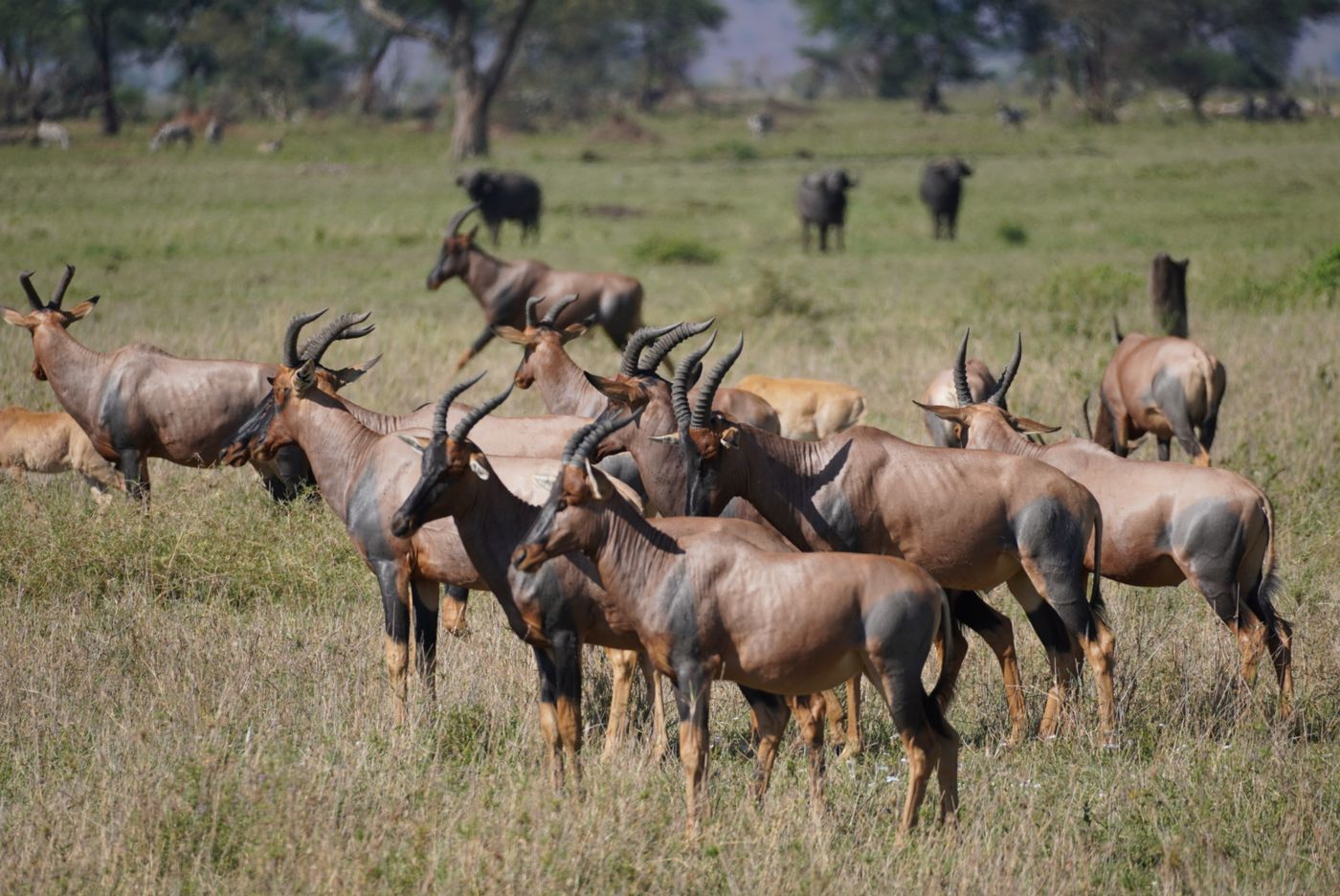
To cover both countries, Mara to Serengeti: The Ultimate Migration Crossing Safari runs 9 days from US$7,600 per person. It has four nights in Kenya and four in Tanzania, with time on both banks of the Mara River, and fits July to October. No flight links the Mara and the Serengeti directly. The move goes via Nairobi and Kilimanjaro or Arusha, which takes about half a day and adds cost.
The Great Migration in July suits flexible, patient travellers. It is right for anyone happy with a trip that may deliver a crossing but does not depend on one. It also suits people who prefer the quieter Tanzanian side.
To compare all twelve months side by side, use our Great Migration by month overview.
Tell us your dates and who is travelling. We will show you where the herds are likely to be and which camps are worth holding.
Plan my tripTwelve months compared, with a page for each one.
Where the herds are in June, the weather and who should go.
Where the herds are in August, the weather and who should go.
Which side of the border suits your dates, budget and style.
For the whole picture, see our Great Migration safari guide. If you are ready to price a trip, Mara to Serengeti: The Ultimate Migration Crossing Safari starts from US$7,600 per person.
Where the herds are in April, how wet the month really is, what it costs and who should choose March or May instead.
Read the guide →Where the herds are in August, how Mara River crossings work in both directions, how Kenya and Tanzania differ for crowds, and how many nights to allow.
Read the guide →In December most herds are back on or near the southern plains on fresh grass, with calving able to start at month end. Early December is quiet; Christmas is peak-priced.
Read the guide →February is the usual peak of calving in the southern Serengeti. See where the herds are, what you will see, the weather and price, and how early to book.
Read the guide →Where the herds are in January, what the early calving season looks like, the weather and price, and whether January or February suits your safari.
Read the guide →Where the herds are in June, why it is the month for Grumeti River crossings, and how to choose between a western and a northern base.
Read the guide →In March the herds are still on the southern Serengeti plains, calves are stronger and the long rains start late. See the weather, price and how it compares with February.
Read the guide →Where the herds are in May, what the rut sounds like, how the rains ease, what it costs and whether May or June suits you better.
Read the guide →In November the short rains send the herds streaming south through Lobo towards central Serengeti, with low-season rates and arriving migratory birds.
Read the guide →Where the herds are in October: drifting south from the Mara and northern Serengeti, with crossings still possible but never guaranteed, quieter camps and the first short rains.
Read the guide →Where the herds are in September, how the crossings compare with August, why short grass helps predator viewing, and which base suits the month.
Read the guide →Tell us your dates and interests — a destination specialist replies within 24 hours.
Start Planning