
The Great Migration in April: Where the Herds Are and What to Expect
Where the herds are in April, how wet the month really is, what it costs and who should choose March or May instead.
Read the guide →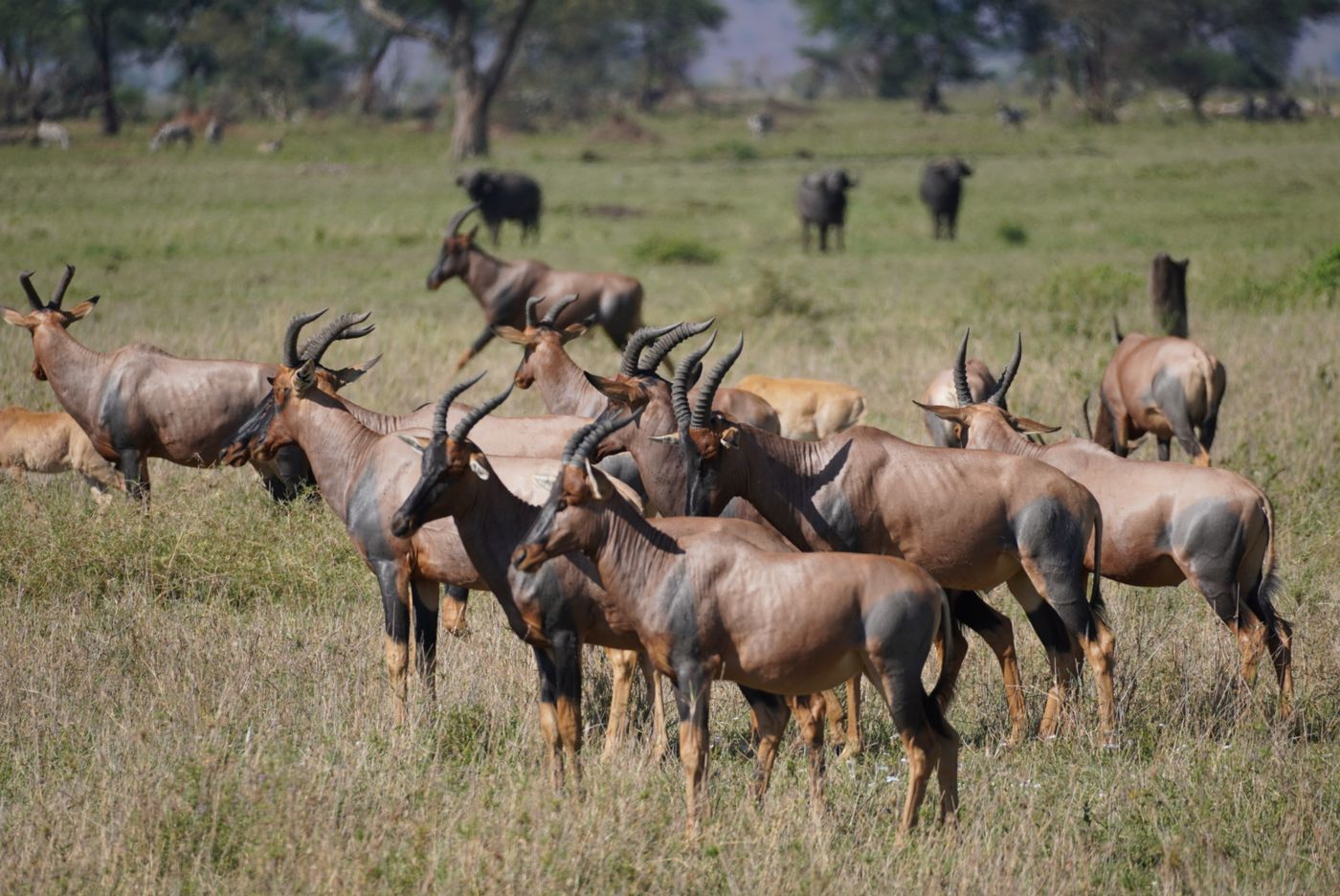
Where the herds are in October: drifting south from the Mara and northern Serengeti, with crossings still possible but never guaranteed, quieter camps and the first short rains.
The Great Migration in October is a month of leaving. The herds that spent August and September around the Mara River begin to drift south, back towards Tanzania. The crossings that filled the peak weeks thin out and often run southbound. This page settles where the wildebeest are likely to be, what you can expect to see, and how weather, crowds and rates behave. It also says when September or November would suit you better.
Facts checked 12 October 2026. Fees, schedules and herd positions change, so we confirm them again when we quote.
In a typical year the herds are spread across a long stretch of country in October, from the Mara River in the north to the Lobo area in the east. The whole movement leans south. This describes a typical year, because the herds run two to four weeks early or late with the rains. A date that finds the herds well south in one year can find them still near the river in another.
That spread is the main difference from August and September, when the herds were spread across the Mara and the northern Serengeti. Our Great Migration safari guide explains the clockwise loop of about 800 to 1,000 km, and the month-by-month migration calendar shows where October sits inside it.
The northern Serengeti may still hold herds early in the month, around Kogatende and in the Lamai Wedge, between the river and the Kenya border. The hills of Bologonja and Wogakuria are quieter country with few vehicles. As the month goes on, the leading groups head south and east through Lobo. That is the Serengeti in October: a landscape in motion. Our northern Serengeti migration guide covers this country in detail.
Kenya hosts the Serengeti herds for only three to four months, roughly July to October. October is therefore the end of the Masai Mara chapter. The central Mara and the Mara Triangle can still hold wildebeest and zebra early in the month. Animals that cross south into Tanzania leave the Kenyan side quieter. Our Maasai Mara National Reserve guide describes the reserve itself.
| Part of October | What the herds are likely to be doing | What it means for your plan |
|---|---|---|
| First days | Still around the Mara River and the northern Serengeti, with crossings possible in either direction | The best chance of a river scene, though never a promise |
| Middle of the month | Scattered into many groups, some heading south through Lobo | Fewer massed views; plan for plains drives and predators |
| Late October | The first short rains may arrive and set more animals moving | Positions change quickly; a flexible base matters |
The wildebeest migration in October is a slow retreat from the north, driven by rain and grass. Wildebeest follow fresh short grass, and fresh grass follows rain. The first short rains can arrive late in the month. By December the herds are on or near the southern plains, which sit on volcanic ash rich in phosphorus and calcium.
Because the movement is a drift and not a charge, the herds are more scattered than in August and September. A herd that fills the whole horizon is less predictable in October.
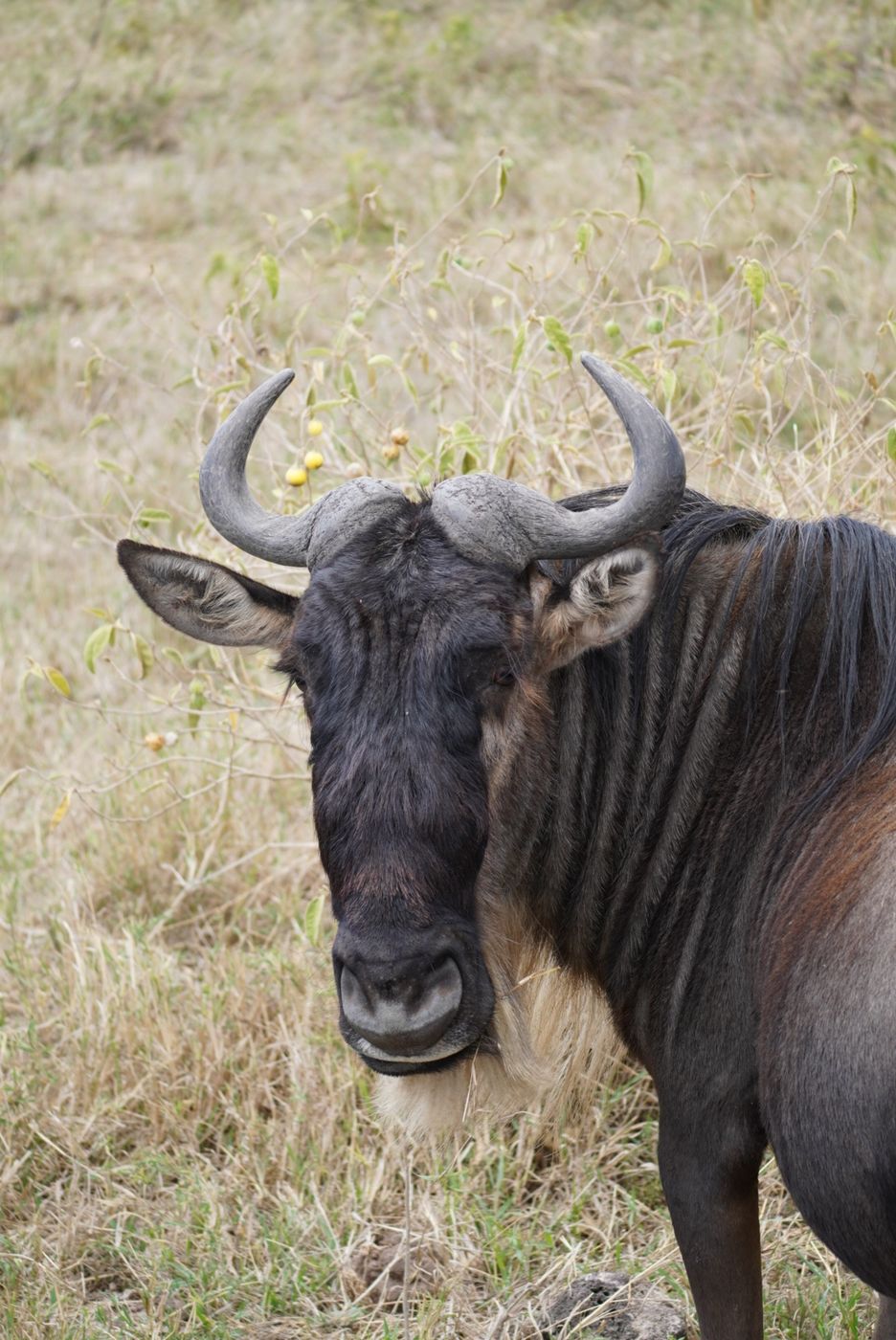
Predators remain part of the picture. Lions and spotted hyena follow the herds, cheetah hunt on the open plains, leopards use riverine trees and Nile crocodiles remain in the Mara River. A good October plan puts predators on the list beside the wildebeest.
Yes, Mara River crossings can still happen in October, but they are no longer the reason to choose the month. In a typical year they still occur, often southbound. No crossing is ever guaranteed, and none happens on a fixed day. Herds gather at the bank, mill, retreat and sometimes wait for days before they commit.
The likeliest window for crossings is mid-August to mid-September, so the odds in October are lower. A crossing can last minutes or over an hour. Vehicles wait well back until the herd commits, and they keep the landing zones clear. Our Mara River crossing timing guide explains the timing and the crossing points, so we will not repeat it here.
October is quieter and generally lower-priced than August and September. It is dry, with the first short rains possibly arriving late in the month. The general climate of each country belongs in our guides to the best time to visit Kenya and the best time to visit Tanzania. For the migration, one point matters most. Great Migration October weather is mostly a question of when the first short rains fall, because the herds follow the rain.
October is quieter than the peak weeks. Even in busy weeks the Tanzanian side is generally quieter than Kenya's central Mara, where the Lookout area draws the most vehicles. That makes October a sound month for guests who dislike queues of vehicles.
Rates in October are usually lower than at the height of the season. The size of the step depends on the camp, because each camp sets its own calendar. October is a shoulder month, so a camp may price it nearer the peak bands or the green-season bands. As an indicative guide, the typical peak bands per person per night, sharing, are US$450 to US$750 for Comfort, US$750 to US$1,300 for Premium and US$1,300 to US$2,500 or more for Luxury. The green-season bands are US$350 to US$550 for Comfort, US$550 to US$900 for Premium and US$900 to US$1,700 for Luxury. The exact figures are confirmed in your quote.
Our quotes normally include park fees. For a non-resident adult in 2026, the figures are:
These tariffs may change at short notice, and all fees for 2027 are confirmed in your quote. Our East Africa safari cost guide shows how the pieces add up.
The short answer on where to stay in October is to choose the area first and the camp second, with at least four nights in the main area. The herds are moving south, so the best base keeps you close to the animals you most want to see. On a longer trip, a split stay of three nights around Kogatende or the Lamai Wedge and three in a Mara conservancy builds in flexibility. Build flexibility into the plan, not just the dates.
These are examples only. Camp availability and positions change every season, and we confirm them in your quote. Ask one question of any camp: how far is it from the action? A camp 20 minutes from the river can give about two extra hours of viewing a day compared with one 90 minutes away. Our guides to where to stay in the Masai Mara and to the Mara conservancies go deeper on the Kenyan side.
A Great Migration October safari fits inside a longer trip, with the herds as one part of the plan. The Kenya & Tanzania Great Migration Grand Safari runs 12 days across the Maasai Mara, the Serengeti and the Ngorongoro Crater. It spends four nights each side of the border and costs from US$8,900 per person. It fits June to October and late December to March. It suits a first migration trip that includes the crater.
If you only want Kenya, the Kenya Migration Explorer: Maasai Mara River Crossings is 8 days in the Mara Triangle, the central Mara and Mara North Conservancy, from US$6,100 per person. It is built for late July to early October, so it fits only the first days of the month. By then the Masai Mara is at the tail of its season.
There is no direct flight between the Maasai Mara and the Serengeti. Moving between them goes through Nairobi (Wilson) and Kilimanjaro or Arusha, which takes about half a day and adds cost. The reasons to cross are covered in our guide to combining Kenya and Tanzania, and the crater itself in the Ngorongoro Crater guide.
October suits travellers who value space, predators and a calm pace more than a reliable spectacle. It rewards guests who accept that the herds may be anywhere, and it pairs naturally with a second park.
Whichever month you pick, our migration safari planning guide shows how to turn the choice into an itinerary.
Plan a Great Migration in October trip at least six to eight months ahead. Early booking matters more than perfect dates, and the peak crossing-point camps sell out first.
Tell us your dates and who is travelling. We will suggest where the herds are likely to be, which camps cover that country, and what the quote will include.
Plan my tripTwelve months compared, with a page for each one.
Where the herds are in September, the weather and who should go.
Where the herds are in November, the weather and who should go.
Which side of the border suits your dates, budget and style.
For the whole picture, see our Great Migration safari guide. If you are ready to price a trip, Kenya & Tanzania Great Migration Grand Safari starts from US$8,900 per person.
Where the herds are in April, how wet the month really is, what it costs and who should choose March or May instead.
Read the guide →Where the herds are in August, how Mara River crossings work in both directions, how Kenya and Tanzania differ for crowds, and how many nights to allow.
Read the guide →In December most herds are back on or near the southern plains on fresh grass, with calving able to start at month end. Early December is quiet; Christmas is peak-priced.
Read the guide →February is the usual peak of calving in the southern Serengeti. See where the herds are, what you will see, the weather and price, and how early to book.
Read the guide →Where the herds are in January, what the early calving season looks like, the weather and price, and whether January or February suits your safari.
Read the guide →Where the herds are in July, when the first Mara River crossings usually come, what the month costs and how to choose between Kogatende, Lamai and the Mara.
Read the guide →Where the herds are in June, why it is the month for Grumeti River crossings, and how to choose between a western and a northern base.
Read the guide →In March the herds are still on the southern Serengeti plains, calves are stronger and the long rains start late. See the weather, price and how it compares with February.
Read the guide →Where the herds are in May, what the rut sounds like, how the rains ease, what it costs and whether May or June suits you better.
Read the guide →In November the short rains send the herds streaming south through Lobo towards central Serengeti, with low-season rates and arriving migratory birds.
Read the guide →Where the herds are in September, how the crossings compare with August, why short grass helps predator viewing, and which base suits the month.
Read the guide →Tell us your dates and interests — a destination specialist replies within 24 hours.
Start Planning