
The Great Migration in April: Where the Herds Are and What to Expect
Where the herds are in April, how wet the month really is, what it costs and who should choose March or May instead.
Read the guide →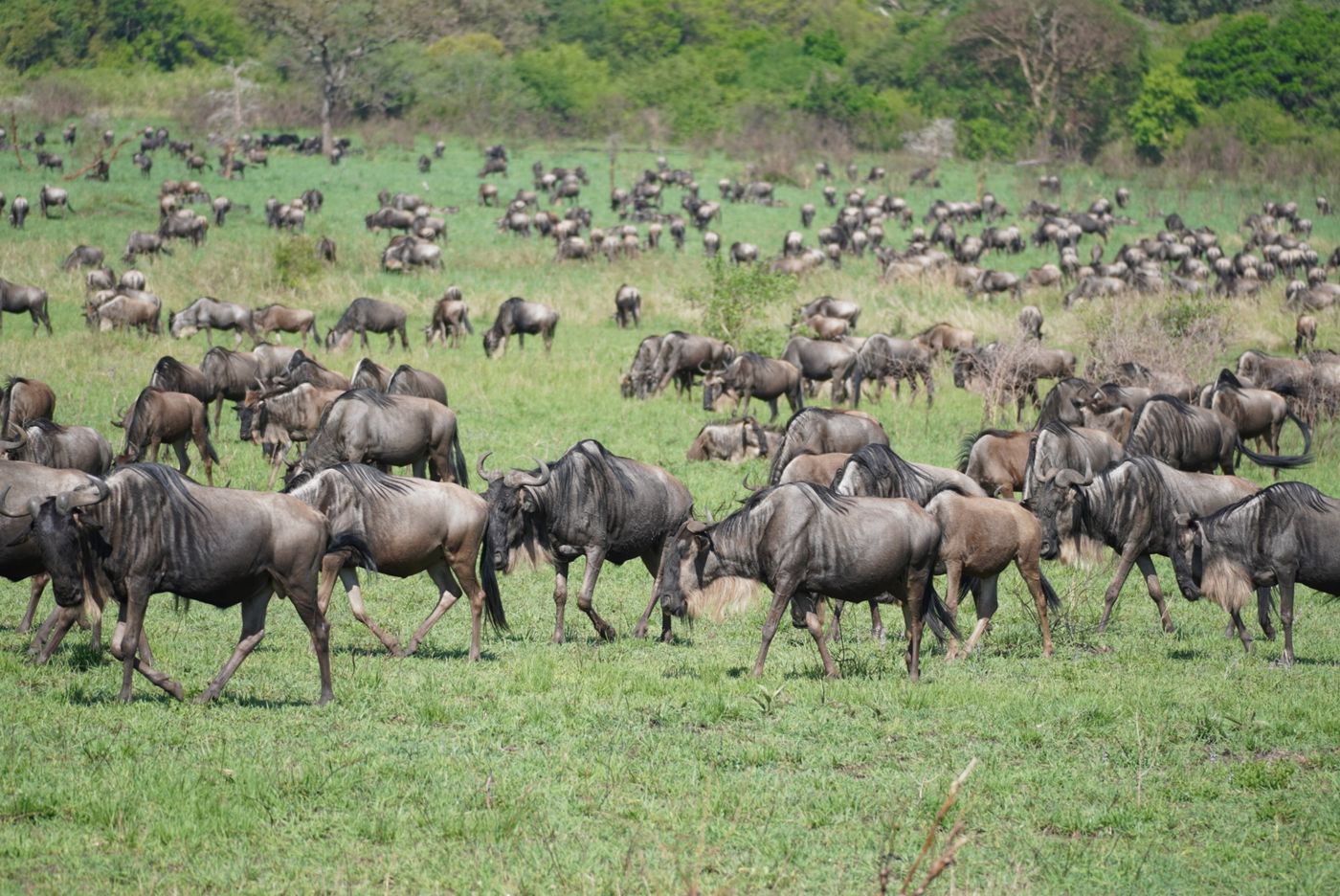
The Great Migration by month: a twelve-month calendar of where the herds are, calving, the rut and river crossings, with weather, rates and booking lead times.
The Great Migration by month is a question of where 1.3 to 1.5 million wildebeest are standing in any given week, and the answer changes completely across the year. This page is the calendar: twelve months of herd position, calving, rut and river crossings, with the likeliest base, the rain and the booking lead time for each. Every month links to its own page for the detail. For what the migration is and when to go overall, read the full Great Migration safari guide.
Facts checked 12 October 2026. Fees, schedules and herd positions change, so we confirm them again when we quote.
When is the Great Migration? It never stops, because the herds are moving or grazing all year in a loop through the Serengeti–Mara ecosystem. Why they move is covered in how the Great Migration works, but the short version is rain: it brings fresh short grass, and the herds follow it. Use the Great Migration calendar below to see where the herds are in each month, whether river crossings are likely and how far ahead to book. It is a wildebeest migration calendar and a Serengeti migration calendar in one.
| Month | Where the herds are | What happens | Crossings? | Rain and rates | Book ahead (at least) |
|---|---|---|---|---|---|
| January | Southern plains: Ndutu, Kakesio, Lake Masek, Naabi Hill | Calving can begin; most births usually come from late January. | None expected | Warm and fairly dry, with short afternoon showers; rates lower than February | 6–8 months |
| February | Southern plains and southern and eastern Serengeti | Peak calving, with most calves born within two to three weeks. Lion and cheetah hunts in the open; hyena clans follow. | None expected | Warm, with occasional storms; often priced as peak in the southern Serengeti | 9–12 months |
| March | Southern plains, then gathering | Calves grow stronger; herds form larger groups before they move. | None expected | Green season, lower rates; afternoon storms more frequent, long rains usually begin towards the end of the month | 3–6 months |
| April | Leaving the plains for the north-west via Moru Kopjes and Seronera | The wettest month. Some camps close. | None expected | Wettest month; parks quiet; green-season rates | 3–6 months |
| May | Central Serengeti, pushing west | The rut starts, mainly May to June. First gatherings on the Grumeti late in the month. | Grumeti only, late in the month | Rains ease; green-season rates | 3–6 months |
| June | Western Corridor: Kirawira and the Grumeti | Grumeti crossings usually late May to early July, June the most reliable. Late June, part of the herd moves north via Ikorongo and Lobo. | Grumeti usually; first Mara crossings possible late June in an early year | Dry season begins and skies clear; a shoulder month, often lower than July to September | 6–8 months |
| Month | Where the herds are | What happens | Crossings? | Rain and rates | Book ahead (at least) |
|---|---|---|---|---|---|
| July | Northern Serengeti: Kogatende and Lamai; Kenya's Mara begins to fill | First Mara River crossings often come in July. The smaller Loita herd arrives in the Mara from the east. | Often | Dry, with cool mornings; peak season begins | 9–12 months |
| August | Spread across the Mara and the northern Serengeti | Crossings can happen many times a week in both directions, never on a fixed day. Kenyan central-Mara points are busiest. | Likeliest from mid-August | Dry; peak rates; busy | 9–12 months |
| September | Spread across the Mara and the northern Serengeti | Repeated crossings. Often slightly fewer visitors than August; short grass and good predator visibility. | Likeliest to mid-September | Dry, warm by day and cool at night; peak rates | 9–12 months |
| October | Drifting south, more scattered | Crossings continue, frequently heading south. | Possible | Quieter; a shoulder month, often lower than July to September; dry, with the first short rains possibly late in the month | 6–8 months |
| November | Streaming south along the eastern side: Lobo and eastern Serengeti, toward central Serengeti | Migratory birds arrive. A few crossings are still possible early in the month. | Early in the month, few | Short rains; green-season rates, low season | 3–6 months |
| December | On or near the southern plains | Calving can start at the very end of the month. Early December is quieter. | None expected | Green and warm, with the short rains tailing off; Christmas and New Year are peak-priced and busy | 10–12 months for Christmas |
A typical year. Herd timing varies with the rains, and we confirm lead times for your dates when we quote.
If you already know what you want to see, work backwards from it. This second table matches each goal to the months and the place, and links to the month page that holds the detail.
| What you want to see | Months | Where | Detail |
|---|---|---|---|
| Newborn calves and predators hunting in the open | Late January to March, peak in February | Southern Serengeti plains around Ndutu and Kakesio | The February page |
| Grumeti River crossings | Late May to early July, June the most reliable | Western Corridor | The June page |
| Mara River crossings | July to October, likeliest mid-August to mid-September | Kogatende, Lamai and the Mara | The August page |
| Fewer vehicles at a crossing | July to September on the Tanzanian side; June on the Grumeti | Northern Serengeti or Western Corridor | The July page |
| The rut | May to June | Central Serengeti, moving west | The May page |
| Quiet parks and lower rates | April and November | Central Serengeti is best in both | The April page and the November page |
| A looser, quieter migration | October | Northern Serengeti and Mara, heading south | The October page |
| Short grass and predator visibility | September | The Mara and northern Serengeti | The September page |
The Great Migration timeline breaks into four chapters, and each has its own guide with the full detail. Read together they run from calving to the return south.
Calving on the southern plains, December to March. The herds graze the short grass around Ndutu, Kakesio, Lake Masek, Naabi Hill and the Gol Kopjes. Most calves are born within two to three weeks, with the peak in February. Our Serengeti calving season guide covers this chapter and the southern Serengeti migration covers where to stay. The Tanzania Grand Migration Explorer (10 days, priced from US$7,200 per person) is timed for the calving months, late December to March.
The move west and the Grumeti, April to early July. Herds leave the plains, pass Moru Kopjes and Seronera, and push west into the Western Corridor, where the Grumeti River holds very large Nile crocodiles. The Grumeti River crossings guide has the detail.
The Mara River crossings, July to October. The herds reach Kogatende, Lamai and Kenya's Mara and cross the river in both directions. Read the Mara River crossing points guide for the likeliest weeks and the etiquette at the bank. The Kenya & Tanzania Great Migration Grand Safari runs 12 days and starts from US$8,900 per person. It covers June to October and again late December to March, with four nights in each country.
The return south, October to December. The herds drift south along the eastern side through Lobo and the eastern Serengeti toward central Serengeti, and finally back to the southern plains. Crossings fade, the short rains arrive and the camps move to lower rates.
The herds can run two to four weeks early or late, because rain moves them, not the date. In an early year the Grumeti River gatherings can come sooner than the usual late May and the first Mara crossings can arrive in late June. In a late year the same events slide into the following weeks. The months in the Great Migration calendar are the likeliest picture in a typical year, so use the Great Migration by month as a guide to the pattern, not a timetable.
Plan for that variation instead of trying to beat it. A stay that sits in the middle of a window is safer than one at the edge, and we recommend at least four nights in the main migration area rather than a single night. Flexibility matters as much as the dates themselves: on a longer trip, a split stay of three nights at Kogatende and three in a Mara conservancy is one way to build it in. A move between Tanzania and Kenya is routed through Nairobi and Kilimanjaro or Arusha and uses half a day plus extra cost, so decide that split early.
Booking early matters more than finding the perfect week. The peak crossing-point camps and the calving-zone camps sell out first, which is why the lead times in the table are given as at least. Our booking lead-time guide goes into each one.
For most of the year the herds are in Tanzania, and they are in Kenya for roughly July to October. The Serengeti hosts the herds for about nine months, while the Maasai Mara (also written Masai Mara) hosts them for three to four. Calving takes place in the Serengeti and Ndutu only, Grumeti crossings are in Tanzania only, and the Mara River can be crossed from either side.
Both countries can be combined in one trip in July to September, but not with a direct hop between the airstrips. The route runs via Nairobi and Kilimanjaro or Arusha. Our comparison of the Serengeti and Masai Mara migration helps you choose between the two.
Where you sleep decides what you see, so each region has its own guide, and each fits a different part of the Serengeti migration calendar. Pick the region that matches the months you can travel.
| Region | Best months | Guide |
|---|---|---|
| Southern and central Serengeti: Ndutu, Kakesio, Seronera | December to March for calving; central is best April to May and in November | Southern and central Serengeti migration |
| Western Corridor and the Grumeti | Late May to early July | Western Corridor and Grumeti |
| Northern Serengeti: Kogatende and Lamai | July to October | Northern Serengeti migration |
| Maasai Mara reserve: the Mara Triangle and the central Mara | July to October | Masai Mara camps for the migration |
| Mara conservancies: Mara North, Olare Motorogi and Naboisho, plus Ol Kinyei and Lemek | July to October | Mara conservancies migration safari |
Camps and lodges change every season, and mobile camps shift two or three times in a year as they follow the herds. Availability and positions change every season and are confirmed in your quote.
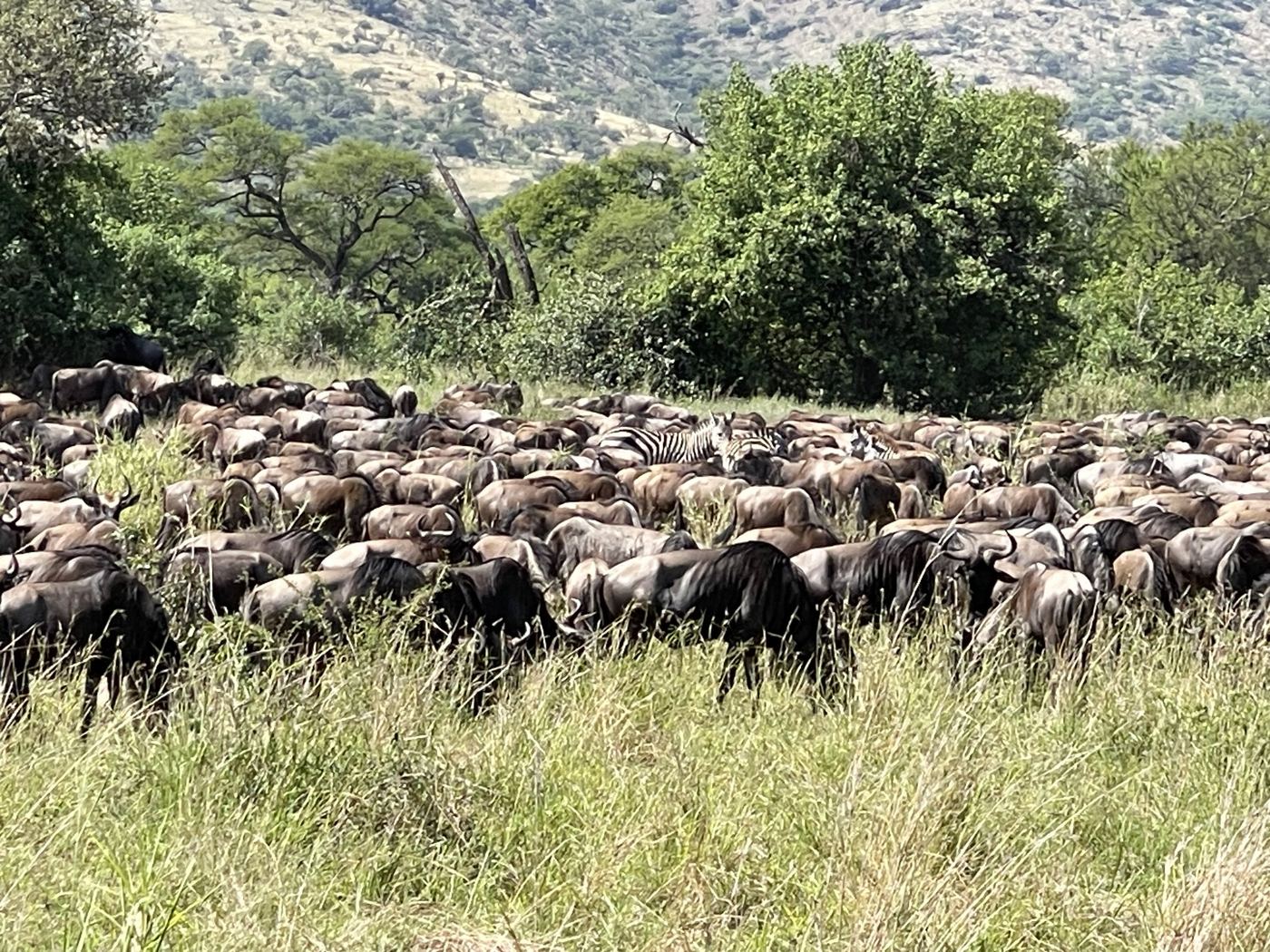
Tell us the weeks you can travel and what you most want to see. We will place you in the right region for the Great Migration by month, and say honestly if another month suits you better.
Plan my tripFor costs, see the Great Migration safari cost guide.
The yearly cycle, why the herds move and what drives the timing.
Which side of the border suits your dates, budget and style.
What a balloon flight costs on each side and what it includes.
An honest look at crowds, expectations and who should choose another trip.
How many nights, which areas and in what order.
For the whole picture, see our Great Migration safari guide. If you are ready to price a trip, Tanzania Grand Migration Explorer starts from US$7,200 per person.
Where the herds are in April, how wet the month really is, what it costs and who should choose March or May instead.
Read the guide →Where the herds are in August, how Mara River crossings work in both directions, how Kenya and Tanzania differ for crowds, and how many nights to allow.
Read the guide →In December most herds are back on or near the southern plains on fresh grass, with calving able to start at month end. Early December is quiet; Christmas is peak-priced.
Read the guide →February is the usual peak of calving in the southern Serengeti. See where the herds are, what you will see, the weather and price, and how early to book.
Read the guide →Where the herds are in January, what the early calving season looks like, the weather and price, and whether January or February suits your safari.
Read the guide →Where the herds are in July, when the first Mara River crossings usually come, what the month costs and how to choose between Kogatende, Lamai and the Mara.
Read the guide →Where the herds are in June, why it is the month for Grumeti River crossings, and how to choose between a western and a northern base.
Read the guide →In March the herds are still on the southern Serengeti plains, calves are stronger and the long rains start late. See the weather, price and how it compares with February.
Read the guide →Where the herds are in May, what the rut sounds like, how the rains ease, what it costs and whether May or June suits you better.
Read the guide →In November the short rains send the herds streaming south through Lobo towards central Serengeti, with low-season rates and arriving migratory birds.
Read the guide →Where the herds are in October: drifting south from the Mara and northern Serengeti, with crossings still possible but never guaranteed, quieter camps and the first short rains.
Read the guide →Where the herds are in September, how the crossings compare with August, why short grass helps predator viewing, and which base suits the month.
Read the guide →Tell us your dates and interests — a destination specialist replies within 24 hours.
Start Planning