
Grumeti River crossings come before the Mara River crossings in a typical year, and they happen in the Western Corridor of the Serengeti, weeks before the herds reach the northern river. The Mara is better known, and the Grumeti dates are less fixed, so the right week is easy to miss. This guide explains when the herds reach the Grumeti, how the river differs from the Mara, where to stay and what the Western Corridor cannot promise. It is one part of our Great Migration safari guide.
Facts checked 12 October 2026. Fees, schedules and herd positions change, so we confirm them again when we quote.
Where is the Western Corridor in the Serengeti?
The Western Corridor is the western arm of Serengeti National Park, and its two best-known names are Kirawira and the Grumeti River. The herds reach it from central Serengeti, where Seronera lies, after the rains ease in May.
Two things set the area apart. It is Tanzanian ground only, so any trip here is a Tanzanian trip. Private reserves such as the Grumeti reserve also lie in this part of the country, and they follow different rules for walking and night drives from the national park. Both matter when you choose a camp.
For the other parts of the park, from Ndutu to Kogatende, our Serengeti National Park guide covers each region in turn. The north is the subject of our northern Serengeti migration guide.
When are the Grumeti River crossings? Grumeti crossings in June and the weeks around it
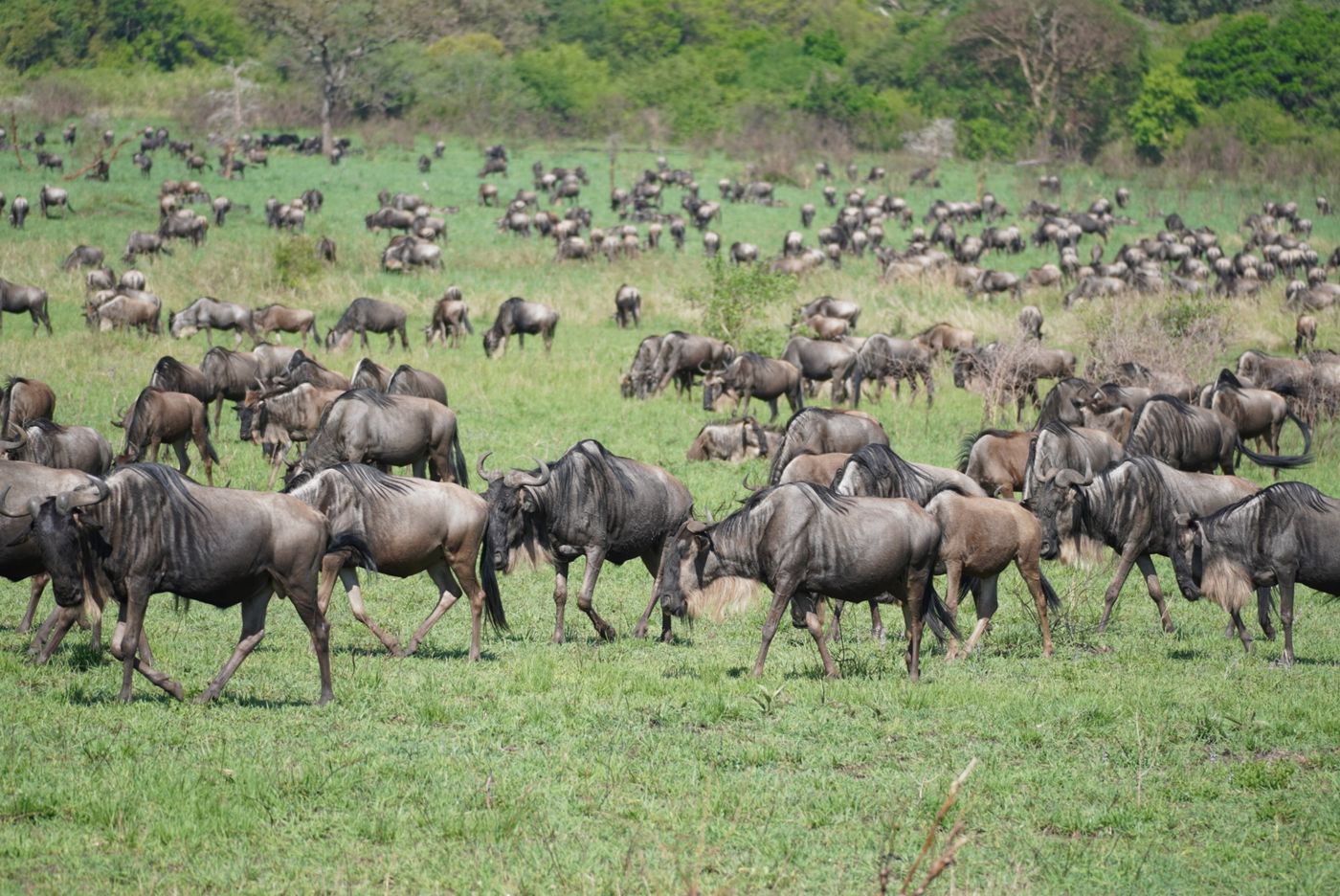
Grumeti River crossings usually fall between late May and early July, and June is the most reliable month. The Western Corridor migration follows the rains, so the whole sequence can shift two to four weeks in either direction.
- May. The rains ease, the rut is under way and the herds in central Serengeti push west. The first gatherings on the Grumeti River come in late May.
- June. The Western Corridor is the focus. Herds gather at the river around Kirawira and the Grumeti, and crossings are likeliest this month.
- Late June to early July. A portion of the herd heads for Ikorongo and Lobo on its way towards the Mara River. The Grumeti season closes as the northern one opens.
A late or early rainy season shifts the whole sequence, and a herd may stay in the centre of the park longer than expected. We advise travelling in the middle of the window rather than at its edges.
The month-by-month picture sits in our Great Migration in May guide and our Great Migration in June guide, which cover rain, rates and what else the herds are doing. Read both before you fix dates.
Grumeti vs Mara River crossings: how they differ
The Grumeti River is smaller and slower than the Mara, and its crossings are less concentrated and far less crowded. The Grumeti is a quieter, less concentrated spectacle than the Mara River, and it helps to say so plainly before you book.
| Feature | Grumeti River | Mara River |
|---|---|---|
| Season in a typical year | Late May to early July, June most reliable | July to October, mid-August to mid-September likeliest |
| Size of river | Smaller and slower; in the dry season it shrinks to deep pools | Narrow, with sheer drops at the Lookout area |
| Crocodiles | Very large Nile crocodiles | Nile crocodiles |
| How crossings happen | Less concentrated, and slower | Repeated crossings in both directions, concentrated at known areas |
| Vehicles | Far fewer | Many at the best-known Kenyan points in peak weeks |
| Country | Tanzania only | Kenya and Tanzania |
If the drama of the biggest river crossings is your single reason for coming, the Mara River is the stronger choice, and our guide to the Mara River crossing points shows how it works. If you prefer fewer vehicles and an earlier season, the Grumeti is the better match.
The seasons differ too: the Mara sees repeated crossings in both directions in August and September, after the Grumeti season has closed. If you are weighing Kenya against Tanzania, the Serengeti vs Masai Mara migration guide compares the two.
What to expect at a Grumeti River crossing
At a Grumeti River crossing you will usually wait, and you will usually wait with few other vehicles around. The herds gather on the bank, mill and sometimes retreat. When they commit, the crossing can last minutes or well over an hour. Zebra often go first.
- The river. The river holds very large Nile crocodiles, and in the dry season it shrinks to deep pools.
- The rut. Males grunt and chase from May into June, so expect noise as well as movement.
- The listening. Listen before you look. The grunting rises, drops and dust appears near the bank.
- The day. Plan a full day out with a picnic lunch. A herd that is deciding sets the pace, not the clock.
The same rules protect the herds here. Vehicles hold back until the herd has committed and leave the landing zones clear, because a blocked crossing can send a whole herd back and mean more drownings.
Where to stay for the Grumeti River crossings: Western Corridor camps
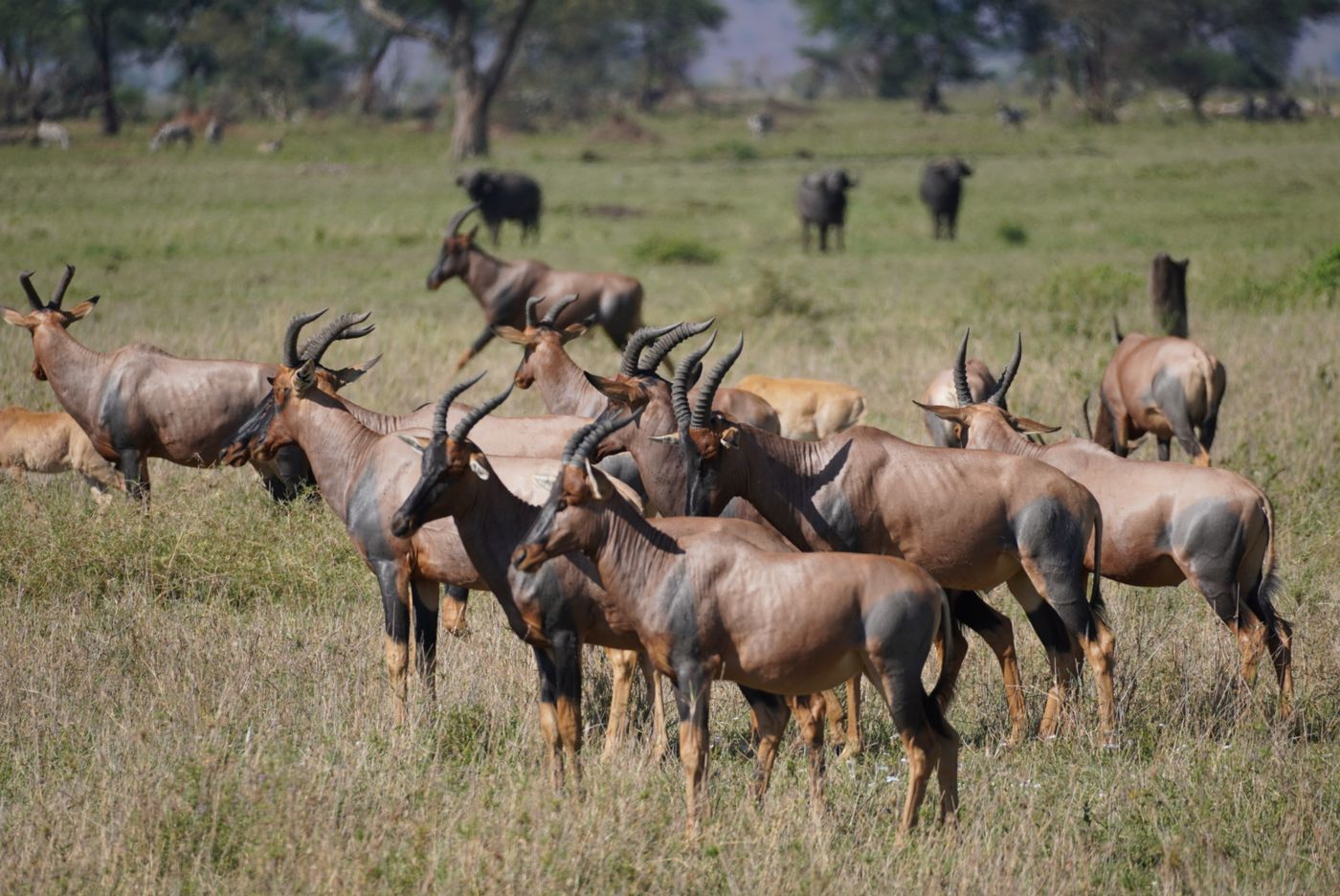
Western Corridor camps cluster around Kirawira and the Grumeti, and the choice runs from comfort to luxury, inside the park and in a private reserve. We name examples so you can see the styles. Camp availability and positions shift each season, so the quote confirms what is open on your dates.
- Comfort. Kirawira Serena Camp.
- Premium. &Beyond Grumeti Serengeti Tented Camp.
- Luxury. Singita Sasakwa and Singita Faru Faru, which sit in a private reserve.
The private reserve matters because rules differ. Walks and night drives are not allowed inside the national park, but they are allowed in a private reserve such as Grumeti. If a walk or a night drive is part of your wish list, ask for a camp in the reserve.
Typical peak rates are indicative and confirmed in your quote. They run from US$450 to US$750 per person per night, sharing, at Comfort level, US$750 to US$1,300 at Premium and US$1,300 to US$2,500+ at Luxury. June is a shoulder month that is often priced lower than July to September, but each camp sets its own calendar. Park and reserve fees follow the published tariffs, which can change at short notice, and we confirm them in your quote.
Combining the Western Corridor with the northern Serengeti
The Western Corridor pairs well with the northern Serengeti because the herds move from one to the other in late June and early July. The timing of your trip decides which half comes first. We recommend at least four nights in the main migration area, and on a longer trip a split stay is usually three nights in each of two places.
- Late May to mid-June. Spend the longer part of the trip in the west.
- Late June to early July. Give the north equal weight, because the Mara River season may begin in an early year.
- July onwards. The Grumeti season has closed or is closing, so the north takes the weight.
Our Tanzania Grand Migration Explorer costs from US$7,200 per person for ten days. Its flights link Ndutu, Seronera and Kogatende, and its departures are timed either for the southern plains in the calving months or for the late-June-to-September river weeks. If you want the west added, tell us your dates and we confirm what is possible when we quote.
For a first migration trip with the crater included, our Kenya & Tanzania Great Migration Grand Safari runs twelve days from US$8,900 per person, with four nights each side of the border. It covers the Mara, the Serengeti and the Ngorongoro Crater, and it fits June to October and late December to March.
The Mara River is a separate leg. The Mara and Serengeti airstrips have no direct link, so adding Kenya routes you through Nairobi (Wilson) and Kilimanjaro or Arusha, with half a day of travel and extra cost. Our guide to the Great Migration and how the herds move explains the full loop.
The honest limits of the Western Corridor
The Western Corridor does not give you what the Mara River gives you, and it is better to know that before you book.
- The dates are less fixed. The herds follow the rains and can run two to four weeks early or late, so a herd may cross before you arrive or after you leave.
- It is a smaller spectacle. The river is smaller and slower, and the crossings are less concentrated than at the best Mara points.
- It is never guaranteed. Nobody can promise a crossing here, in June or any other month.
- It ends early. After early July the herds have usually moved on, and a trip planned for August should aim at the northern Serengeti or the Mara instead.
What the west gives you in return is space, the rut in May and June and the chance to combine a river with a private reserve. For some travellers that is a better trade than a crowded bank.
Who the Western Corridor migration suits
- It suits you if you can travel from late May to early July, prefer fewer vehicles, and want walks or night drives in a private reserve.
- Choose the northern Serengeti or the Mara instead if your dates fall between mid-July and October, or if the biggest river crossings are the only goal.
- Choose the southern plains instead if you travel between December and March, when calving is the draw.
- Think again if you cannot be flexible. A herd that crosses early or late will not wait for a fixed itinerary.
The Grumeti works best as part of a wider route, not a single-purpose stop. Used that way, it opens the river season before the Mara River crossings begin.
Next steps for your Grumeti River crossings safari
- Choose your window: late May to early July, with June the strongest month.
- Decide whether you want the west alone or a split with the northern Serengeti.
- Tell us whether walks and night drives matter, because that decides between the park and a private reserve.
- Send your dates, party size and passport nationality so that we can check flights and entry rules.
- Book early for June, because river camps and reserve camps sell out first.
Plan your Grumeti River crossings trip
Tell us when you can travel and what matters most, and we will build a private safari around the Western Corridor, with the terms shown on each itinerary page.
Plan my tripKeep reading: related Great Migration guides
Great Migration in June
Where the herds are in June, the weather and who should go.
Great Migration in May
Where the herds are in May, the weather and who should go.
Great Migration month by month
Twelve months compared, with a page for each one.
How to plan a migration safari itinerary
How many nights, which areas and in what order.
Southern and central Serengeti
Ndutu, the southern plains and Seronera across the year.
For the whole picture, see our Great Migration safari guide. If you are ready to price a trip, Tanzania Grand Migration Explorer starts from US$7,200 per person.