
The Great Migration in April: Where the Herds Are and What to Expect
Where the herds are in April, how wet the month really is, what it costs and who should choose March or May instead.
Read the guide →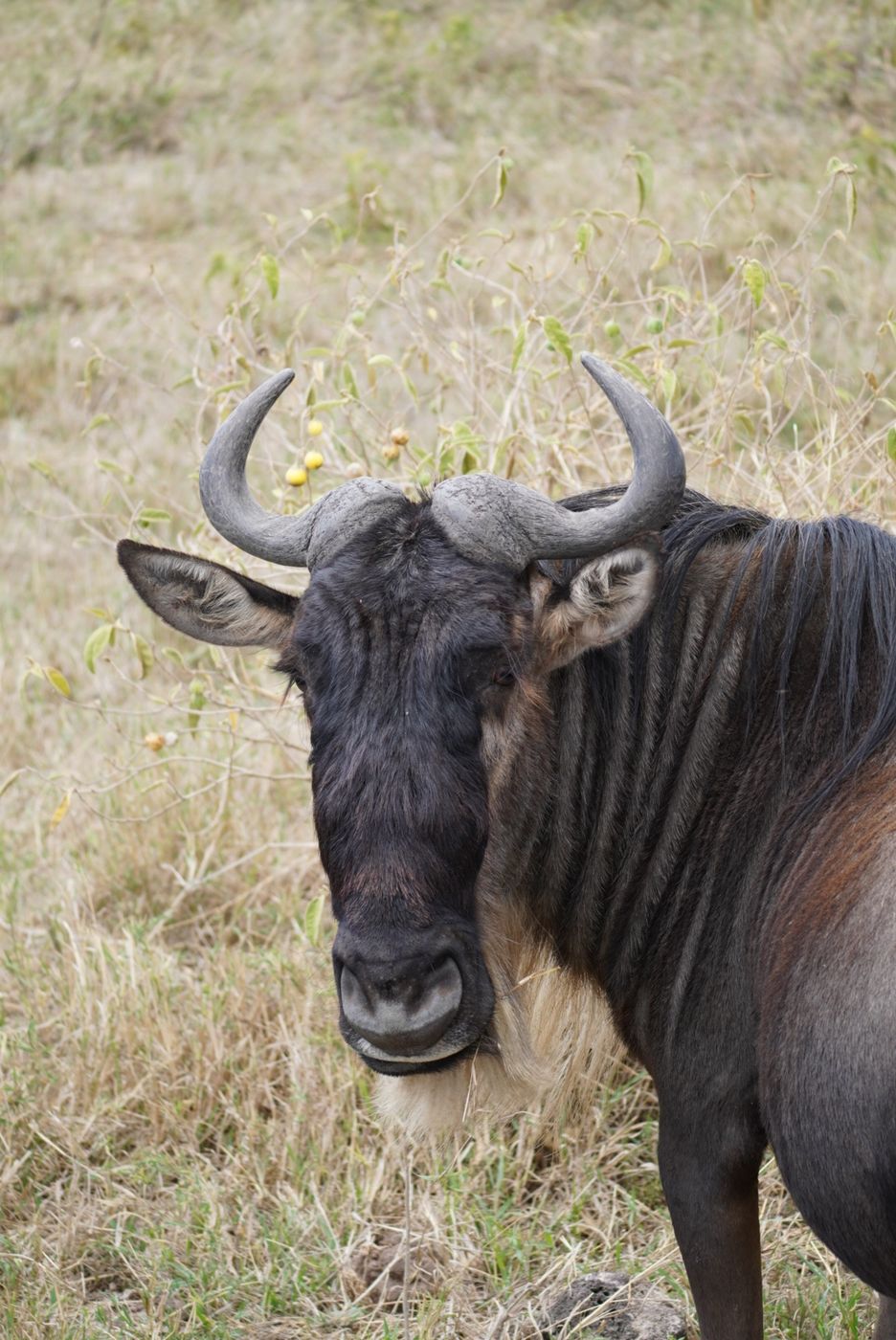
Where the herds are in May, what the rut sounds like, how the rains ease, what it costs and whether May or June suits you better.
In the Great Migration in May the herds are loud before they are close. The rut is under way, males grunt and chase, and the wildebeest are pushing west across the Serengeti towards the Western Corridor. Planners ask where is the Great Migration in May because the herds are in transit and the answer shifts week by week. This page gives you the positions, the weather, the price and an honest view of May against April and June. For the whole year, use our full Great Migration safari guide.
Facts checked 12 October 2026. Fees, schedules and herd positions change, so we confirm them again when we quote.
In May the main body of the herds is in the central Serengeti and moving west. They have left the southern plains behind, and by late May the first groups are gathering on the Grumeti River in the Western Corridor, around Kirawira and the Grumeti. The wildebeest migration in May is therefore a westward drift, not a standing herd.
Three things are reasonably dependable, and one is not:
May sits between two cleaner stories. April is the exit from the south, which we describe in the Great Migration in April, and June is the Grumeti month. May is the hinge month, so build flexibility into the plan.
The signature of May is sound, not scale. The rut, the wildebeest mating season, runs mainly through May and June. Males grunt and chase.
It is a different sight from the calving plains. You watch behaviour rather than numbers, and photographers do best with continuous autofocus and a beanbag on the window frame.
The herds move because rain brings fresh short grass, and the grazing follows an order of zebra, then wildebeest, then gazelle. In May that chain is heading west, towards the Western Corridor and, later in the year, the north and the Mara River. For the full mechanics, our guide to how the Great Migration works explains the loop.
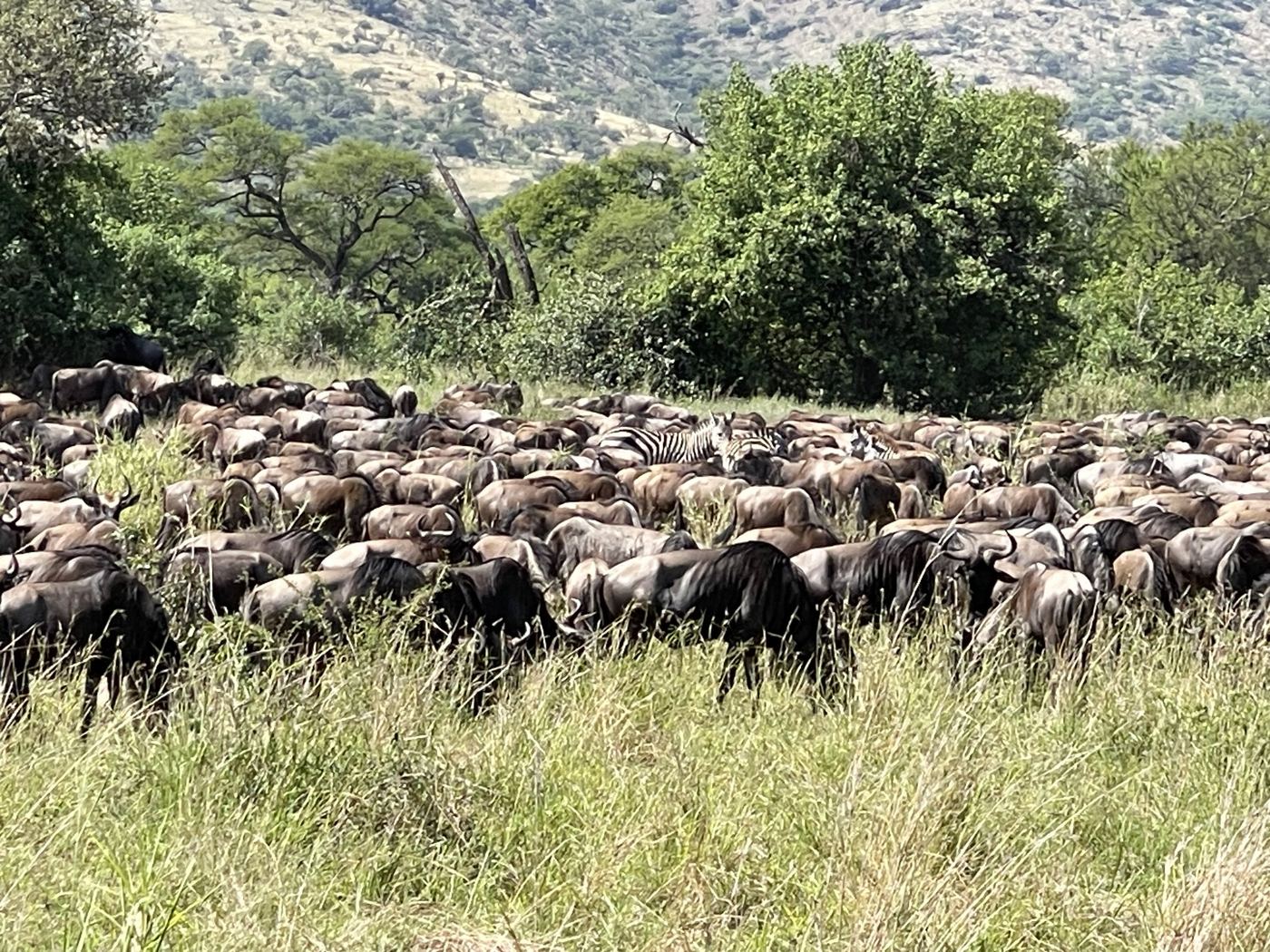
The Great Migration May weather is easing rather than settled: the rains ease after the wet of April. Expect a green landscape, and plan for some rain.
Country-wide climate belongs to our Tanzania seasons guide and Kenya seasons guide. For a wildebeest migration May plan, what matters is that rain shapes the herds' timing, which is why they can run two to four weeks early or late.
For the migration, choose the Serengeti in May. The Serengeti hosts the herds for roughly nine months, while the Masai Mara, also written Maasai Mara, sees them from about July to October. In May the Mara has no migration to offer, so our Serengeti against Masai Mara comparison is the better read if you are still deciding the country. Kenya hosts the herds roughly from July to October, which our Great Migration in Kenya guide covers.
May is a green-season month, so rates are lower. June and October are shoulder months, often lower than July to September, but each camp sets its own calendar, confirmed in your quote.
As an indicative example, a Premium camp sharing runs about US$550 to US$900 per person per night in the green season against US$750 to US$1,300 at peak. A Comfort camp runs about US$350 to US$550 against US$450 to US$750. Luxury runs about US$900 to US$1,700 against US$1,300 to US$2,500 and above. All of these are confirmed in your quote.
Park fees come on top of the room rate. For a non-resident adult, the Serengeti conservation fee is US$70 plus 18% VAT (about US$82.60) for each 24 hours. Staying inside the park adds a concession charge of roughly US$60 plus VAT a night. The 2026 tariffs can change, and your quote confirms the 2027 figures.
Allow at least three to six months, which is the usual lead time for the green season; July to September needs far longer. If you want the camps nearest the Grumeti River in the last week of May, book towards the longer end of that range. The whole table sits in our booking lead-time guide.
Two of our packages are worth comparing for this month. The Tanzania Grand Migration Explorer is a 10-day trip from US$7,200 per person across Ndutu, the central Serengeti, the north and the Mara River. It is timed for calving from late December to March or crossings from late June to September, so May is not its design month. We can adapt it and confirm the price for your dates. The Classic Serengeti and Ngorongoro Crater Safari costs from US$4,650 per person for seven days and suits a first safari. It is built around resident big cats, not the herds' position, and its strongest months are June to October and late December to February.
Where to stay in May depends on the week. For early and mid-May, stay in the central Serengeti around Seronera, which is at its best in April, May and November. For the last week of May, or if you can move bases, the Western Corridor around Kirawira and the Grumeti River becomes the better choice.
Premium examples here are Dunia Camp and Serengeti Pioneer Camp, and Luxury examples are Four Seasons Safari Lodge Serengeti and Namiri Plains. Tented camps around Seronera also suit predator viewing in any month.
The corridor suits May to July. Kirawira Serena Camp is a Comfort-level example, &Beyond Grumeti Serengeti Tented Camp is a Premium example, and Singita Sasakwa and Singita Faru Faru are Luxury examples. Singita sits in a private reserve, where walks and night drives are allowed, which is not possible across most of the national park. Camp availability and positions change every season; your quote confirms what is open on your dates.
Whichever side you choose, ask how far the camp is from the herds on the day you arrive. Mobile and seasonal camps shift two or three times a year. Twenty minutes from the action rather than ninety is worth about two more hours of viewing each day. Our Serengeti Western Corridor and Grumeti guide explains how the corridor works.
Choose June if the Grumeti River is the main goal, and May if the rut and low rates matter more. The Grumeti window usually opens in late May and closes in early July, with June the most reliable month. May catches only the start of it, so the river is a possibility in late May and not a plan.
| Question | May | June |
|---|---|---|
| Grumeti River | First gatherings in late May | The most reliable month for crossings |
| The rut | Under way | Continues |
| Rain | Easing, with some showers | The dry season begins |
| Rates | Green season | Shoulder month, often lower than July to September; each camp sets its own calendar |
| Lead time | 3 to 6 months | 6 to 8 months |
If you are torn, read the Great Migration in June before you decide. The Grumeti is smaller and slower than the Mara River and the crossings are less concentrated, though far fewer vehicles are there. We do not promise a crossing in either month.
The Great Migration May safari suits travellers who like behaviour and green landscapes more than a single dramatic moment. It works well for these groups:
Choose a different month in these cases:
To plan the Great Migration in May well, work through the steps below.
Tell us when you can travel and we will say honestly whether May, April or June suits your plans.
Plan my tripTo see how the calendar fits together, read the Great Migration by month guide, or compare May with the Serengeti calving season.
Twelve months compared, with a page for each one.
Where the herds are in April, the weather and who should go.
Where the herds are in June, the weather and who should go.
For the whole picture, see our Great Migration safari guide. If you are ready to price a trip, Tanzania Grand Migration Explorer starts from US$7,200 per person.
Where the herds are in April, how wet the month really is, what it costs and who should choose March or May instead.
Read the guide →Where the herds are in August, how Mara River crossings work in both directions, how Kenya and Tanzania differ for crowds, and how many nights to allow.
Read the guide →In December most herds are back on or near the southern plains on fresh grass, with calving able to start at month end. Early December is quiet; Christmas is peak-priced.
Read the guide →February is the usual peak of calving in the southern Serengeti. See where the herds are, what you will see, the weather and price, and how early to book.
Read the guide →Where the herds are in January, what the early calving season looks like, the weather and price, and whether January or February suits your safari.
Read the guide →Where the herds are in July, when the first Mara River crossings usually come, what the month costs and how to choose between Kogatende, Lamai and the Mara.
Read the guide →Where the herds are in June, why it is the month for Grumeti River crossings, and how to choose between a western and a northern base.
Read the guide →In March the herds are still on the southern Serengeti plains, calves are stronger and the long rains start late. See the weather, price and how it compares with February.
Read the guide →In November the short rains send the herds streaming south through Lobo towards central Serengeti, with low-season rates and arriving migratory birds.
Read the guide →Where the herds are in October: drifting south from the Mara and northern Serengeti, with crossings still possible but never guaranteed, quieter camps and the first short rains.
Read the guide →Where the herds are in September, how the crossings compare with August, why short grass helps predator viewing, and which base suits the month.
Read the guide →Tell us your dates and interests — a destination specialist replies within 24 hours.
Start Planning