
The southern Serengeti migration is where the herds spend December to May, and the right base changes with the month. Ndutu, Kakesio, Naabi Hill, Moru Kopjes and Seronera all belong to the same story, but not to the same season. This guide places each one, says which months matter where, and explains where to stay, how to get there and how many nights to allow. It also covers the central Serengeti, which is the better base in April, May and November. For the wider picture, start with our Great Migration safari guide.
Facts checked 12 October 2026. Fees, schedules and herd positions change, so we confirm them again when we quote.
Where is the southern Serengeti migration? Ndutu, Kakesio, Moru and Seronera
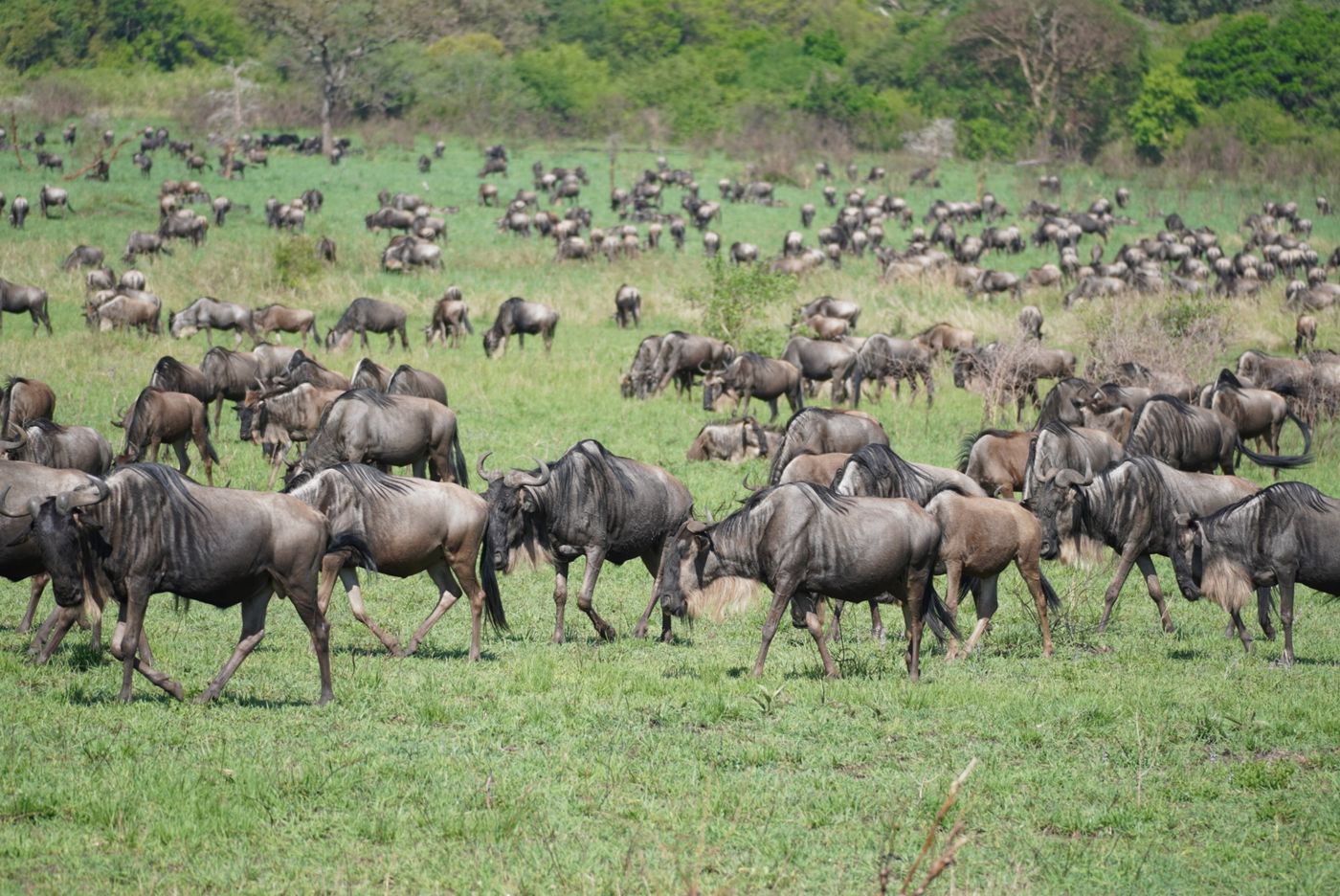
The southern Serengeti migration takes place on the short-grass plains at the south of the ecosystem, and the central Serengeti migration follows it as the herds move north-west. Ndutu, Lake Masek and Kakesio belong to the southern plains. Naabi Hill and Gol Kopjes sit on the southern and eastern plains. Moru Kopjes and Seronera lie in the central Serengeti, on the route the herds take when the rains arrive.
| Place | Part of the Serengeti | When the herds matter here |
|---|---|---|
| Ndutu | Southern plains, on the edge of the Ngorongoro Conservation Area | December to March |
| Lake Masek | Southern plains | December to March |
| Kakesio | Southern plains | December to March |
| Naabi Hill | Southern and eastern plains | December to March |
| Gol Kopjes | Southern and eastern plains | December to March |
| Moru Kopjes | Central Serengeti, on the route north-west | April and May |
| Seronera | Central Serengeti | All year for predators; herds in April, May and November |
Drive times are confirmed in your quote, because they depend on the roads, the rains and the position of seasonal camps. For the park's other regions, see our Serengeti National Park guide.
Southern Serengeti migration by month: which part to choose
Choose the south from December to March and the centre in April, May and November. The table shows the typical position, though the herds may arrive two to four weeks ahead of it or behind it.
| Month | Where the herds are | Best base |
|---|---|---|
| December | On or near the southern plains. Calving can start at the very end of the month. | Ndutu area, Lake Masek or Kakesio |
| January | On the southern plains, with the main calving wave usually building from late in the month. | Southern plains |
| February | The usual calving peak on the southern plains. | Southern plains |
| March | Calves are stronger and the herds gather in larger groups. The long rains usually begin late in the month. | Southern plains |
| April | The wettest month. The herds depart the south, heading north-west via Moru Kopjes and Seronera. | Central Serengeti |
| May | The rains ease, the rut begins and the herds push west through the centre. | Central Serengeti, then the Western Corridor |
| November | The short rains set in and the herds drift back towards the centre by the eastern side. | Central Serengeti |
June to October is not a southern season. The herds are in the Western Corridor, the north and the Mara, and they start drifting south in October. If those months are your only option, our Grumeti River crossings and northern Serengeti migration guides are the better starting point.
Ndutu and the southern plains: the Ndutu Great Migration from December to March
The Ndutu Great Migration is the December to March stage, when the herds graze and calve on the short grass around Ndutu. The soil here is volcanic ash, high in phosphorus and calcium, and pregnant and nursing females need those minerals. That is why the herds return. Early December is quieter, while Christmas and New Year are peak-priced and busy.
The calving itself is a subject of its own. The main calving wave builds from late January through March and peaks in February, and our guide to Serengeti calving season covers the births, the predators and the choice of weeks. This page covers where to base yourself.
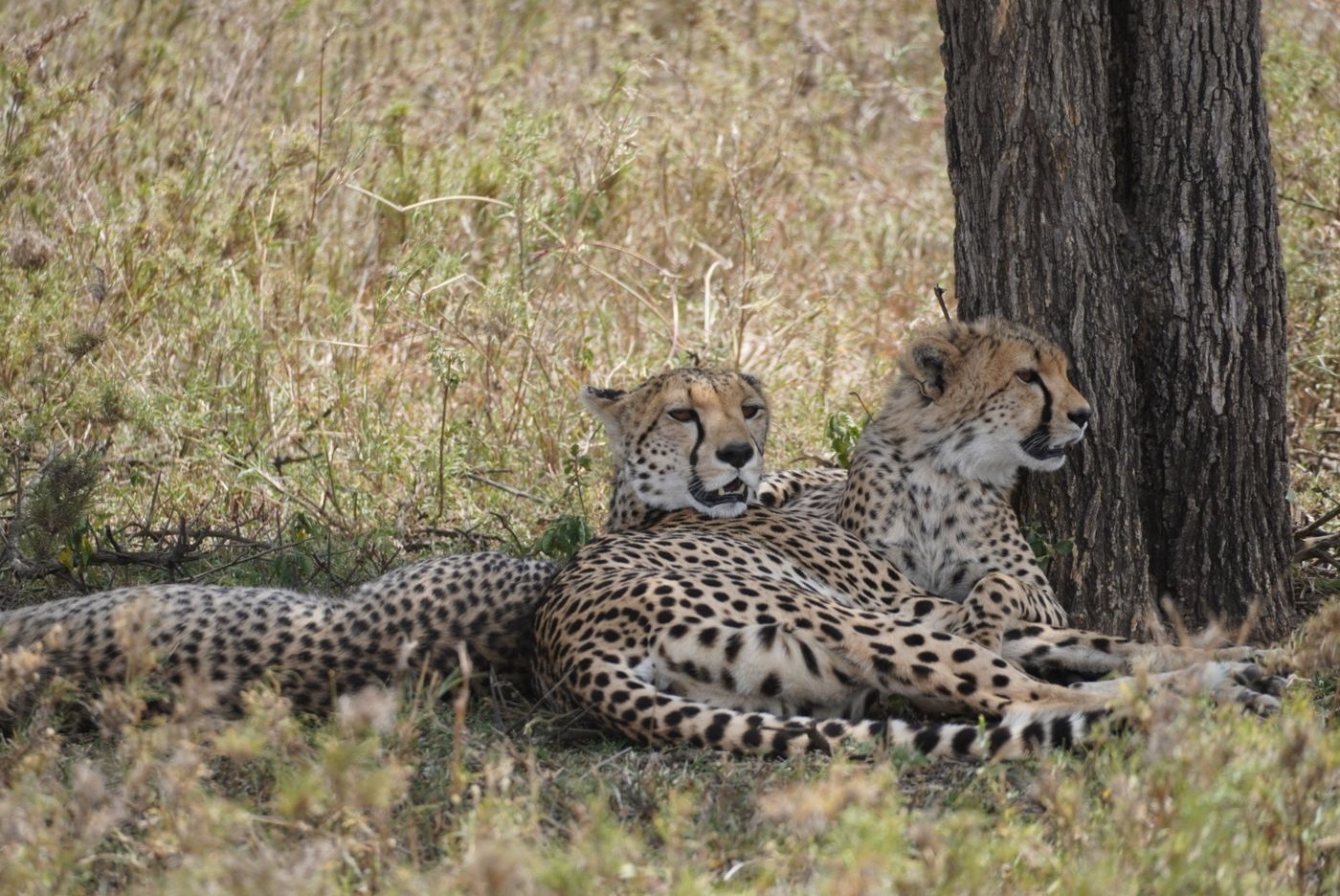
The southern Serengeti migration has other strengths besides the calves. Cheetah hunt on the open southern plains, lions work the same grass, and hyena clans follow the herds. The country is open, so you see a long way, and camp position matters.
Central Serengeti and Moru Kopjes: the Seronera Serengeti migration in April, May and November
The central Serengeti migration, or Seronera Serengeti migration, happens twice a year, as the herds leave the south in April and May and return along the east in November. Seronera is the usual base, and the tented camps around it offer year-round predators when the herds are elsewhere.
April and the Moru Kopjes migration route
The Moru Kopjes migration is the route the herds take out of the south. In April, the wettest month, the herds depart the southern plains and head north-west via Moru Kopjes and the Seronera area. Some camps close, the parks are quiet and prices drop. The central Serengeti is the better base now, because the herds have left the south. Our Great Migration in April guide covers the month in more detail.
May and the rut
In May the rains ease, and the rut, the mating season, runs mainly from May to June. Males grunt and chase, and the herds in the centre push west. Late in the month the first gatherings reach the Grumeti River.
November and the return
The short rains arrive in November. The herds then travel back by the eastern side, passing Lobo and eastern Serengeti on the way to the centre. Migratory birds arrive too, and the season is low priced. The centre is again the better base until the herds reach the south in December.
The green seasons, March to May and November, are booked at least three to six months ahead and carry lower rates. June, October and January are at least six to eight months, and Christmas and New Year at least ten to twelve.
Where to stay in the southern Serengeti: camp examples by style
Where to stay in the southern Serengeti depends on the month, because the herds move. The examples below are placed by season and by style. Availability and positions change every season and are confirmed in your quote.
Kakesio camps, Lake Masek and the choice of style
A mobile camp is rebuilt in a new spot two or three times a year, so it can sit near the herds. A permanent lodge has a pool and larger rooms but stays where it is. The Kakesio camps in our examples are seasonal mobile camps. Ask which type a camp is before you choose.
| Area and season | Comfort | Premium | Luxury |
|---|---|---|---|
| Southern Serengeti and Ndutu, December to March | Ndutu Safari Lodge, Lake Masek Tented Camp | Lemala Ndutu, seasonal mobile camps near Kakesio | &Beyond Serengeti Under Canvas, Nomad Serengeti Safari Camp (seasonal) |
| Central Serengeti, all year (best April, May and November) | Tented camps around Seronera, level confirmed in your quote | Dunia Camp, Serengeti Pioneer Camp | Four Seasons Safari Lodge Serengeti, Namiri Plains |
Is Ndutu open all year? Ndutu is a December to March base for the herds. Some camps close in April, and we confirm which camps are open for your dates when we quote.
Typical rates
Indicative nightly prices per person, sharing, are typically as shown below, and your quote confirms them. February and Christmas to New Year are often priced as peak in the southern Serengeti.
| Level | Green season | Peak |
|---|---|---|
| Comfort | US$350 to 550 | US$450 to 750 |
| Premium | US$550 to 900 | US$750 to 1,300 |
| Luxury | US$900 to 1,700 | US$1,300 to 2,500+ |
How to get to the southern and central Serengeti
The quickest way to reach the southern Serengeti migration, and the centre of the park, is a light aircraft from Arusha or Kilimanjaro, which takes about one to two and a half hours. Flights land at Serengeti airstrips including Seronera and Ndutu. Internal flights often cost about US$250 to 500 per person per leg, and the price is confirmed in your quote.
- Fly to Ndutu or Seronera. This suits travellers with limited time. See our fly-in vs road safari comparison.
- Drive via the Ngorongoro Conservation Area. Ndutu lies in the Ngorongoro Conservation Area, so a road route combines naturally with a crater visit. We confirm drive times for your route when we quote.
- Pack for the aircraft. Light aircraft luggage is usually about 15 kg per person including hand luggage, in a soft bag. We confirm the limit for each flight when we quote.
What you can and cannot do: off-road driving and walking
The rules differ across the area. Vehicles may drive off-road in parts of the Ndutu area, inside the Ngorongoro Conservation Area, but not in most of Serengeti National Park. Walks and night drives are not allowed in Serengeti National Park either. If walks or night drives matter to you, ask us about private reserves such as Grumeti.
Fees also change with the boundary. The figures below are for a non-resident adult in 2026, come from published tariffs and may change at short notice. Fees for 2027 are confirmed in your quote.
| Fee | Where it applies | Amount |
|---|---|---|
| Ngorongoro Conservation Area fee | The Ndutu area | US$70 + VAT (about US$82.60) per 24 hours |
| Serengeti conservation fee | Serengeti National Park, including Seronera | US$70 + 18% VAT (about US$82.60) per 24 hours |
| Serengeti concession fee | Staying inside the park | About US$60 + VAT per night |
Combining the south with the Ngorongoro Crater and Tarangire
A southern Serengeti migration safari combines easily with the Ngorongoro Crater and Tarangire, and those stops make a longer trip. The crater has a service fee of about US$295 per vehicle per descent. Our Ngorongoro Crater guide and Tarangire National Park guide cover each stop.
Two of our packages work with this region.
- The Classic Serengeti and Ngorongoro Crater Safari is a seven-day trip from US$4,650 per person through Tarangire, central Serengeti around Seronera and the crater. Its best months are June to October and late December to February, and its focus is resident big cats rather than the herds' position, so it suits a first safari in one week.
- The Tanzania Grand Migration Explorer takes 10 days, from US$7,200 per person, and moves from Ndutu and the southern Serengeti to the centre, the north and the Mara River, with flights between Ndutu, Seronera and Kogatende. Choose a December to March departure for the south, or a late June to September one for the crossings.
How many nights for a southern Serengeti migration safari?
We recommend at least four nights in the main migration area for a southern Serengeti migration safari. From December to March that area is the southern plains, and one wet or quiet morning should not decide the trip.
- Southern plains, December to March: at least four nights.
- Central Serengeti, April, May or November: at least four nights if the centre is your main area. A shorter stay works only as part of a longer trip, where a split stay is usually three nights in each of two places.
- Crater or Tarangire add-on: we confirm the nights for each stop when we quote.
If you are working out the whole route, our guide to first-time safari planning helps with the sequence.
Next steps for your southern Serengeti migration safari
- Decide the month. December to March points to the south, and April, May or November points to the centre.
- Book early. February and Christmas to New Year need at least nine to twelve and ten to twelve months respectively, and the green season three to six months.
- Send your dates, group and nationality, so we can check visas and fees.
- Ask for a quote. We confirm camp positions, availability and prices then, and each itinerary page shows its terms.
Plan your southern Serengeti migration safari
Tell us the month you can travel. We will match a base in the south or the centre, and we will say so if that month may not suit you.
Plan my tripFor a full list of migration packages, see our Great Migration safari packages.
Keep reading: related Great Migration guides
Serengeti calving season guide
The short-grass plains in the calving season and where to base yourself.
Great Migration in February
Where the herds are in February, the weather and who should go.
Great Migration month by month
Twelve months compared, with a page for each one.
How the Great Migration works
The yearly cycle, why the herds move and what drives the timing.
How to plan a migration safari itinerary
How many nights, which areas and in what order.
Serengeti or Masai Mara for the migration
Which side of the border suits your dates, budget and style.
For the whole picture, see our Great Migration safari guide. If you are ready to price a trip, Tanzania Grand Migration Explorer starts from US$7,200 per person.