
The Great Migration in April: Where the Herds Are and What to Expect
Where the herds are in April, how wet the month really is, what it costs and who should choose March or May instead.
Read the guide →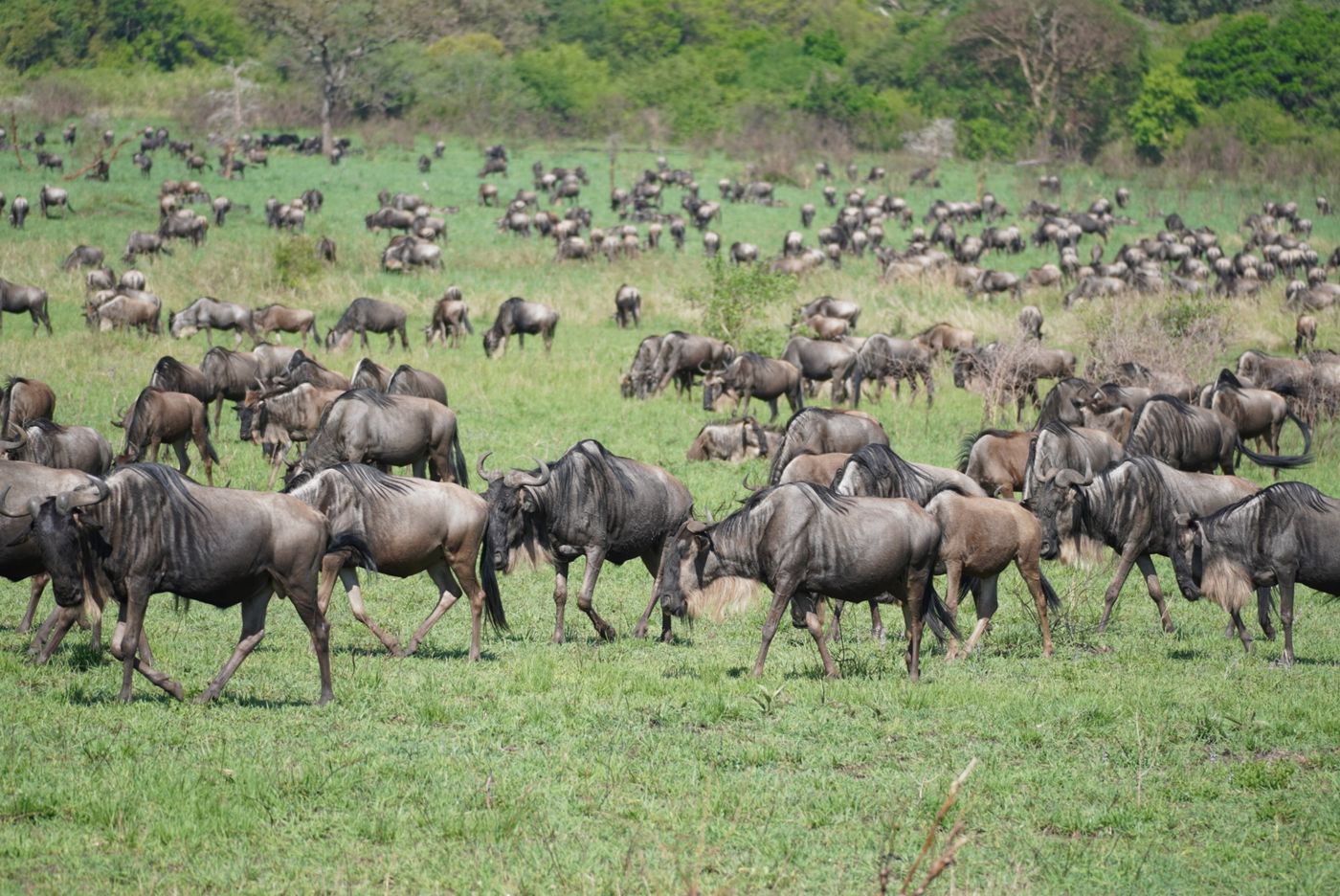
February is the usual peak of calving in the southern Serengeti. See where the herds are, what you will see, the weather and price, and how early to book.
The Great Migration in February is the usual calving peak in the southern Serengeti: hundreds of thousands of calves, most born within a few weeks, on open plains where cheetah, lion and hyena hunt. This page settles where the herds stand, why the births bunch together, what a normal morning looks like, what you pay and how early you must book. It is equally clear about the limits. There are no river crossings, not every morning brings a birth, and some days belong to the storms.
Facts checked 12 October 2026. Fees, schedules and herd positions change, so we confirm them again when we quote.
In February the Great Migration is concentrated on the short-grass plains of the southern Serengeti and the Ndutu area. The landmarks are Ndutu, Kakesio, Lake Masek, Naabi Hill and the Gol Kopjes, along with the southern and eastern Serengeti and the edge of the Ngorongoro Conservation Area. The wildebeest share this ground with plains zebra and Thomson's and Grant's gazelle.
Serengeti in February is therefore a southern story. Central Serengeti around Seronera keeps its resident predators, but the wildebeest migration in February is not where the herds are, and nor is the northern Serengeti. The southern and central Serengeti migration guide explains how those areas relate.
The Masai Mara in February sits outside the story. Kenya hosts the Serengeti herds roughly from July to October, and calving happens only on the Tanzanian side. If Kenya is your destination, our Great Migration in Kenya guide covers the right months.
February is the usual peak because the herds are on the short-grass southern plains. The volcanic ash underneath the grass is rich in phosphorus and calcium, minerals that pregnant and nursing females need. The herds stay in this region while the calves arrive.
Calving starts in late December or January and usually runs from late January into March. February is the usual peak, with most calves born inside a window of two to three weeks and hundreds of thousands of calves on the plains. The timing can slip by two to four weeks in either direction, so the exact days cannot be named in advance.
For the biology and the full season, read our Serengeti calving season guide. For the wider loop the herds follow all year, see our Great Migration safari guide.
A February morning on the plains brings large herds, calves beside their mothers and predators nearby. What you see on a given day varies, so treat what follows as a likely pattern, not a schedule.
Births are the headline, because most calves arrive within a short window. A birth in progress is possible but never promised. Calves already moving with the herd are still a sight worth the drive.
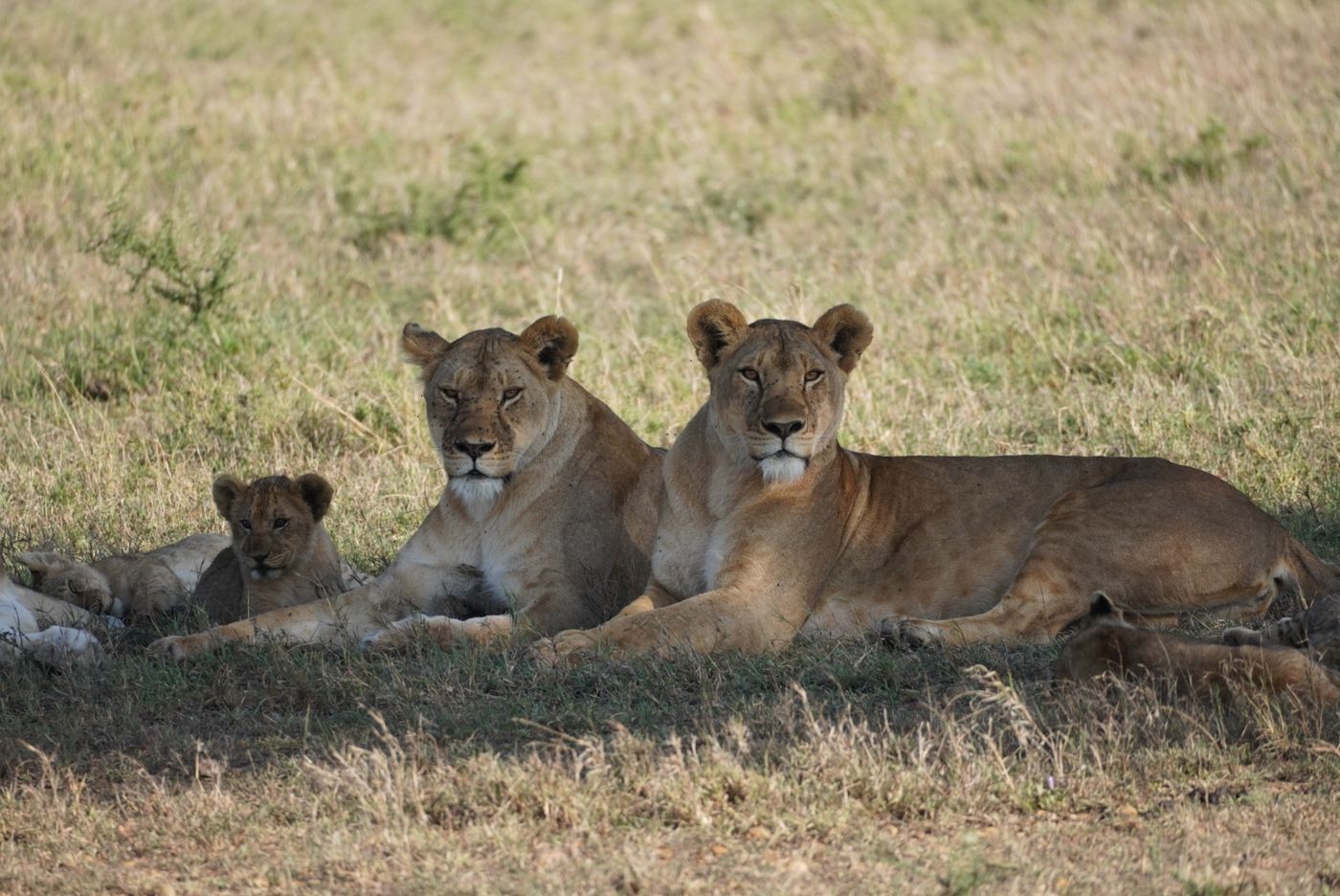
Cheetah hunt on the open southern plains, and lions hunt the same herds. Hunts play out in open country, and your guide will tell you whether to wait or move on.
Spotted hyena clans follow the herds, so they are part of the calving-plains picture alongside the cats.
Ndutu lies in the Ngorongoro Conservation Area, where off-road driving is permitted in some stretches, unlike most of Serengeti National Park. That allowance is one reason to spend part of the trip at Ndutu.
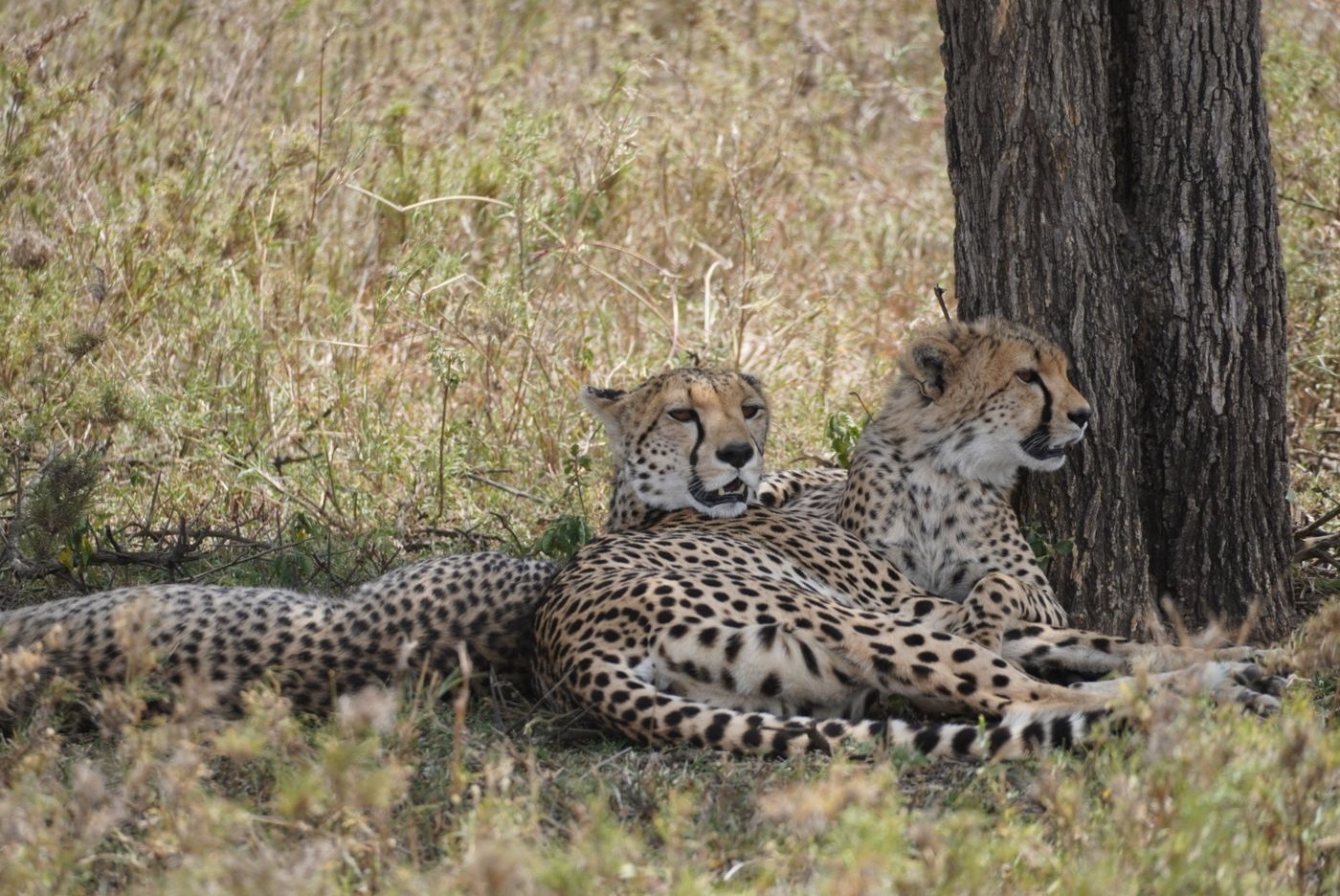
Great Migration February weather is warm, with occasional storms, so pack for rain as well as sun. Our best time to visit Tanzania guide holds the general climate picture.
Demand is the pressure point. The best calving-zone camps sell out first, so February needs one of the longest booking lead times of the year.
Price reflects demand. February is often priced as peak in the southern Serengeti, while March, April and May are green-season months. As an indicative guide, Premium camps usually sit at US$750 to 1,300 per person per night when priced as peak, and Luxury camps at US$1,300 to 2,500 or more. Comfort camps typically range from US$450 to 750. Your quote confirms the exact figure for your dates.
Park fees are charged per person, and our quotes normally include them. These are the published 2026 figures for non-resident adults, and the 2027 tariff is confirmed in your quote.
| Fee | Published 2026 figure |
|---|---|
| Ngorongoro Conservation Area fee (applies to Ndutu) | US$70 plus 18% VAT, about US$82.60 per 24 hours |
| Serengeti National Park conservation fee | US$70 plus 18% VAT, about US$82.60 per 24 hours |
| Serengeti concession fee when staying in the park | About US$60 plus VAT per night |
For a fuller view of what a trip costs, see our Tanzania safari cost guide.
Where to stay in February is decided by distance to the calving herds, so choose the area first and the camp second. Camp positions and availability shift each season, and your quote confirms them.
| Level | Example camps |
|---|---|
| Comfort | Ndutu Safari Lodge; Lake Masek Tented Camp |
| Premium | Lemala Ndutu; seasonal mobile camps near Kakesio |
| Luxury | &Beyond Serengeti Under Canvas; Nomad Serengeti Safari Camp (seasonal) |
Mobile camps shift position two or three times a year, while permanent lodges offer pools and larger rooms. Ask every camp how far it is from the action. A camp 20 minutes from the herds rather than 90 can add roughly two hours of viewing a day.
For a Great Migration February safari we recommend at least four nights in the calving zone, so a single quiet or stormy morning does not decide the trip. Add nights in central Serengeti or the Ngorongoro Crater if you want a broader first Tanzania safari, and our Ngorongoro Crater guide shows what the crater adds.
Book at least nine to twelve months ahead. Peak calving-zone camps sell out first, and early booking matters more than finding the perfect dates. The month-by-month windows are tabled in our guide to how far ahead to book a migration safari.
The package built for this month is the Tanzania Grand Migration Explorer, ten days from US$7,200 per person, timed for calving (late December to March) or for crossings (late June to September), flying between Ndutu, Seronera and Kogatende. Its terms sit on the itinerary page. Hops between airstrips are priced separately unless the itinerary lists them, typically at about US$250 to 500 per person for each leg.
A balloon flight over the plains costs roughly US$550 to 750 per person and is weather-dependent, so book it early. Our hot air balloon safari cost guide covers the details.
February suits travellers whose priority is the births and the predators that follow them.
Choose a different month if river crossings are the goal, since those come mainly from July onwards. Choose the Great Migration in January if you want lower rates and can accept arriving before the peak. Choose the Great Migration in March if you prefer green-season rates and can accept that the calves are already stronger.
Send us your dates and group, and we will check which calving-zone camps still have space and what they would cost.
Plan my tripStill weighing other months? Compare them in the Great Migration by month calendar, or follow the full routine in how to plan a migration safari.
Twelve months compared, with a page for each one.
Where the herds are in January, the weather and who should go.
Where the herds are in March, the weather and who should go.
Which side of the border suits your dates, budget and style.
For the whole picture, see our Great Migration safari guide. If you are ready to price a trip, Tanzania Grand Migration Explorer starts from US$7,200 per person.
Where the herds are in April, how wet the month really is, what it costs and who should choose March or May instead.
Read the guide →Where the herds are in August, how Mara River crossings work in both directions, how Kenya and Tanzania differ for crowds, and how many nights to allow.
Read the guide →In December most herds are back on or near the southern plains on fresh grass, with calving able to start at month end. Early December is quiet; Christmas is peak-priced.
Read the guide →Where the herds are in January, what the early calving season looks like, the weather and price, and whether January or February suits your safari.
Read the guide →Where the herds are in July, when the first Mara River crossings usually come, what the month costs and how to choose between Kogatende, Lamai and the Mara.
Read the guide →Where the herds are in June, why it is the month for Grumeti River crossings, and how to choose between a western and a northern base.
Read the guide →In March the herds are still on the southern Serengeti plains, calves are stronger and the long rains start late. See the weather, price and how it compares with February.
Read the guide →Where the herds are in May, what the rut sounds like, how the rains ease, what it costs and whether May or June suits you better.
Read the guide →In November the short rains send the herds streaming south through Lobo towards central Serengeti, with low-season rates and arriving migratory birds.
Read the guide →Where the herds are in October: drifting south from the Mara and northern Serengeti, with crossings still possible but never guaranteed, quieter camps and the first short rains.
Read the guide →Where the herds are in September, how the crossings compare with August, why short grass helps predator viewing, and which base suits the month.
Read the guide →Tell us your dates and interests — a destination specialist replies within 24 hours.
Start Planning