
The Great Migration in April: Where the Herds Are and What to Expect
Where the herds are in April, how wet the month really is, what it costs and who should choose March or May instead.
Read the guide →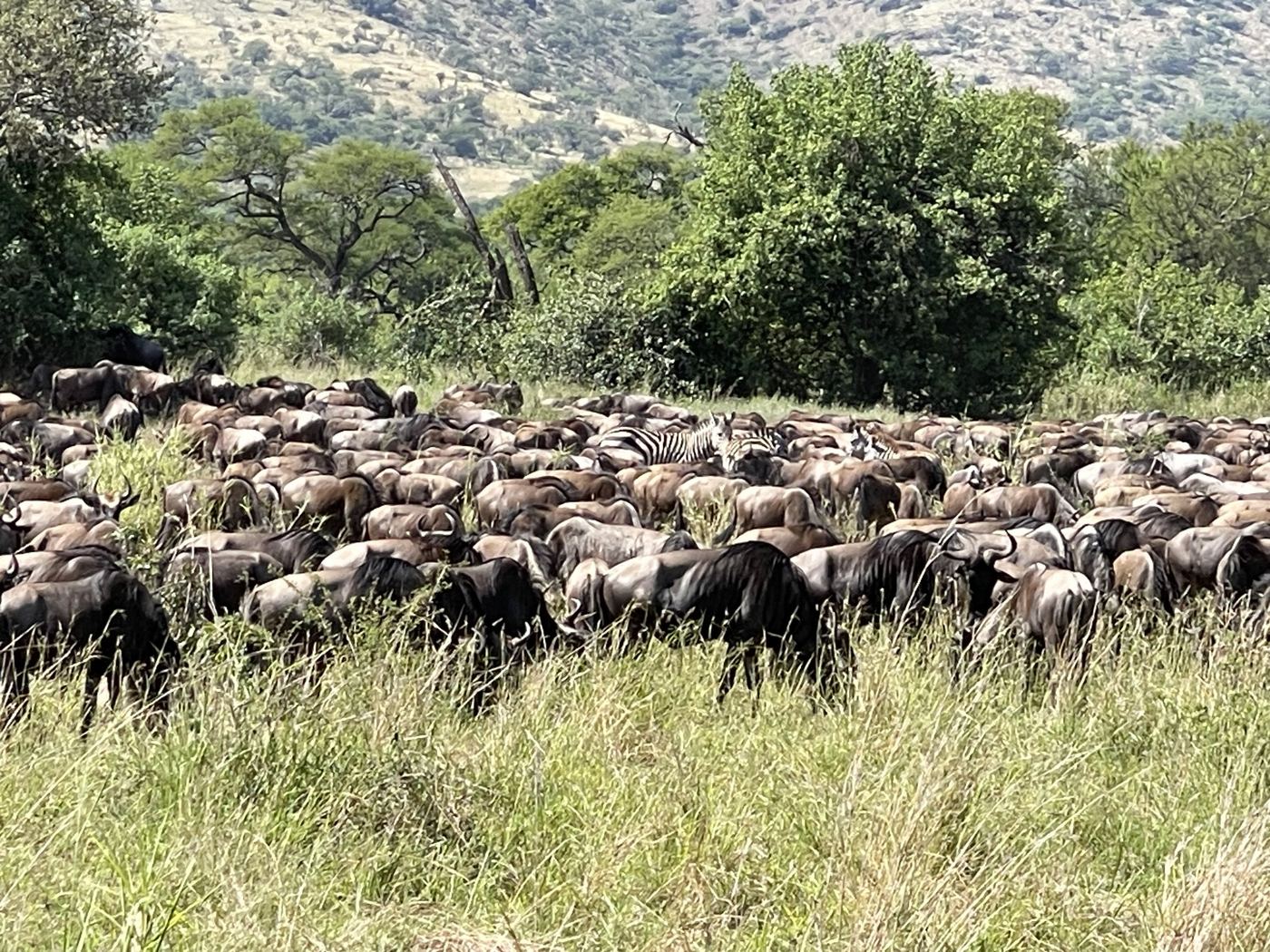
In November the short rains send the herds streaming south through Lobo towards central Serengeti, with low-season rates and arriving migratory birds.
The Great Migration in November is decided by rain. When the short rains arrive, the wildebeest leave the north and stream south along the eastern side of the Serengeti. This page settles where the herds are likely to be in November, what a safari in this low-season month looks like, and how to plan around animals that move with the rain. It also says plainly when November is the wrong choice and a neighbouring month would serve you better.
Facts checked 12 October 2026. Fees, schedules and herd positions change, so we confirm them again when we quote.
In a typical year the Great Migration in November is on its way from the northern Serengeti to the centre of the park, and it is travelling on the eastern side. The herds pass through the Lobo area and eastern Serengeti and then continue towards central Serengeti around Seronera. Timing can slip two to four weeks in either direction, depending on when the rain falls.
It helps to think of the month as a route, not a place. Roughly, a herd in November follows this order:
Our guide to how the Great Migration works explains why the animals follow this circuit, and our Great Migration safari guide places it inside the whole year.
The Serengeti in November is a low-season, green-season destination, with the short rains bringing fresh grass. For the country the herds are heading towards, read our southern and central Serengeti migration guide.
The wildebeest migration in November is a movement south along the eastern side of the Serengeti, not a single herd in one place. Positions change with the rain, so the spot that is right in the first week may be wrong by the last.
That changes how to plan. Choose the area first and the camp second, and allow at least four nights in the main area. Mobile and seasonal camps move two or three times a year to follow the herds, so ask where each camp will stand on your dates.
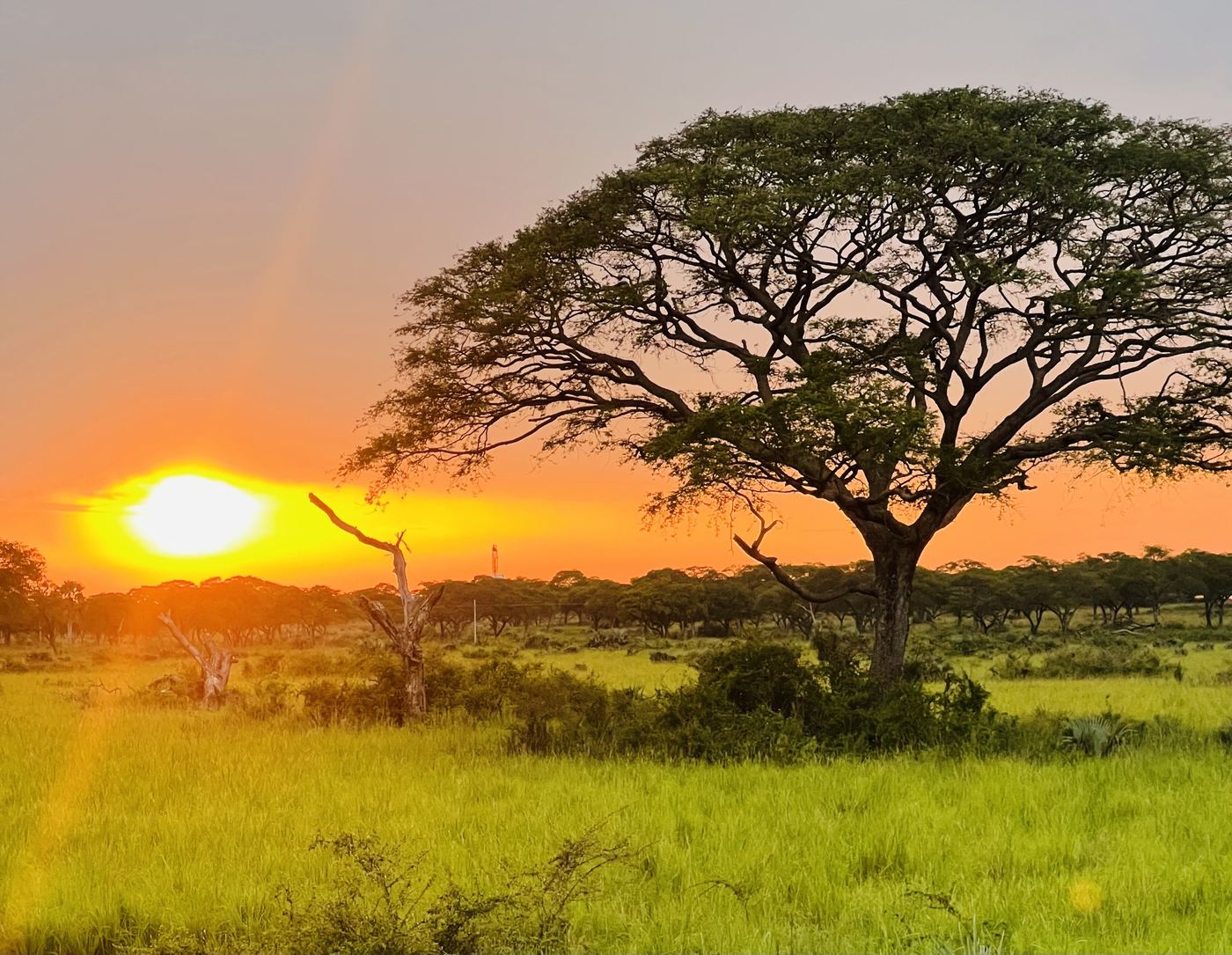
Lions, spotted hyena and cheetah live along the route, and the tented camps around Seronera are known for year-round predator viewing. Cheetah favour the open southern plains, which the herds reach as the season turns. November also brings migratory birds, which gives keen birders a second reason to come.
The short rains shape what the herds do in November, and they arrive at different times from year to year. Great Migration November weather is therefore the main driver of where you will find the animals. Rain brings fresh short grass, and the herds follow it south. Timing can run two to four weeks early or late.
| If the rains arrive | Where the herds are likely to be | What it means for your trip |
|---|---|---|
| Early | Already streaming through Lobo and the eastern Serengeti | Ask about the east and central Serengeti |
| On time | Moving across the east and into central Serengeti by the second half of the month | Ask about central Serengeti |
| Late | Lingering in the northern Serengeti, with a few crossings possible | Ask about the northern Serengeti as well |
Country-wide climate is covered in the guides to Tanzania's best season and Kenya's best season. The Great Migration November weather question that matters for planning is simpler: the short rains mean showers, so pack a light waterproof layer. For the park itself, our Serengeti National Park guide adds the detail.
The Masai Mara in November is largely without the Serengeti herds, which spend roughly July to October in Kenya and then return to Tanzania. If your reason for travelling is the wildebeest migration in November, the Serengeti is the place to be. The Mara remains a fine reserve for other wildlife, but it is not the migration country this month.
If you want both countries, a July to September trip fits better, and our guide to combining Kenya and Tanzania explains the routing. Going between the Mara and the Serengeti means routing through Nairobi (Wilson) and Kilimanjaro or Arusha. That takes about half a day and adds cost.
November is a low-season month, and rates are lower than in July to September. That is the main practical argument for the month.
These are typical, indicative prices per person per night, sharing, in the green season. Your quote confirms the exact figure for your camp and dates.
| Level | Typical green-season price |
|---|---|
| Comfort | US$350 to US$550 |
| Premium | US$550 to US$900 |
| Luxury | US$900 to US$1,700 |
Park fees sit inside our quotes. In 2026 a non-resident adult pays a Serengeti conservation fee of US$70 plus 18% VAT (about US$82.60) for each 24 hours, and a concession fee of about US$60 plus VAT for each night spent in the park. Rates for 2027 are confirmed when we quote.
Book at least three to six months ahead for November. That is a shorter lead time than for crossings or calving. Early booking still beats perfect dates.
The best answer on where to stay in November is central Serengeti, with the southern plains as a second area on a longer trip. Central Serengeti is best in November, and the herds are heading towards it and then the southern plains. A split stay of three nights in each of two places suits a longer trip.
Use these as examples, not offers. What is open, and where, changes every season, and your quote confirms it. The most useful question to ask any camp is how far it sits from where the herds are walking that week.
If this is your first safari, the Classic Serengeti & Ngorongoro Crater Safari is the option to ask about. It is 7 days through Tarangire, central Serengeti (Seronera) and the crater, from US$4,650 per person. It is not built around the herds' position, because its focus is the resident big cats, so treat the wildebeest as a bonus. Its best months are June to October and late December to February, so November sits outside them, and we say so plainly when we quote.
Families should look at the Kenya & Tanzania Family Migration Safari, an 11-day itinerary paced for families, with a junior-ranger programme, from US$8,300 per person. Its dates are July to August and the December school holidays, so ask us what we can offer for November. Minimum ages are set by individual camps, and your quote confirms them.
A migration safari in November suits travellers who like lower rates and a little uncertainty. It rewards a flexible plan and a guide who reads the herds.
Our Great Migration by month page compares all twelve months side by side.
A Great Migration in November safari is easiest to plan with a flexible plan and early booking, at least three to six months ahead. Work through these steps and we can do the rest.
Tell us when you can travel and who is coming. We will suggest where the herds are likely to be and confirm every fee in your quote.
Plan my tripTwelve months compared, with a page for each one.
Where the herds are in October, the weather and who should go.
Where the herds are in December, the weather and who should go.
Which side of the border suits your dates, budget and style.
For the whole picture, see our Great Migration safari guide. If you are ready to price a trip, Classic Serengeti & Ngorongoro Crater Safari starts from US$4,650 per person.
Where the herds are in April, how wet the month really is, what it costs and who should choose March or May instead.
Read the guide →Where the herds are in August, how Mara River crossings work in both directions, how Kenya and Tanzania differ for crowds, and how many nights to allow.
Read the guide →In December most herds are back on or near the southern plains on fresh grass, with calving able to start at month end. Early December is quiet; Christmas is peak-priced.
Read the guide →February is the usual peak of calving in the southern Serengeti. See where the herds are, what you will see, the weather and price, and how early to book.
Read the guide →Where the herds are in January, what the early calving season looks like, the weather and price, and whether January or February suits your safari.
Read the guide →Where the herds are in July, when the first Mara River crossings usually come, what the month costs and how to choose between Kogatende, Lamai and the Mara.
Read the guide →Where the herds are in June, why it is the month for Grumeti River crossings, and how to choose between a western and a northern base.
Read the guide →In March the herds are still on the southern Serengeti plains, calves are stronger and the long rains start late. See the weather, price and how it compares with February.
Read the guide →Where the herds are in May, what the rut sounds like, how the rains ease, what it costs and whether May or June suits you better.
Read the guide →Where the herds are in October: drifting south from the Mara and northern Serengeti, with crossings still possible but never guaranteed, quieter camps and the first short rains.
Read the guide →Where the herds are in September, how the crossings compare with August, why short grass helps predator viewing, and which base suits the month.
Read the guide →Tell us your dates and interests — a destination specialist replies within 24 hours.
Start Planning