
The Great Migration in April: Where the Herds Are and What to Expect
Where the herds are in April, how wet the month really is, what it costs and who should choose March or May instead.
Read the guide →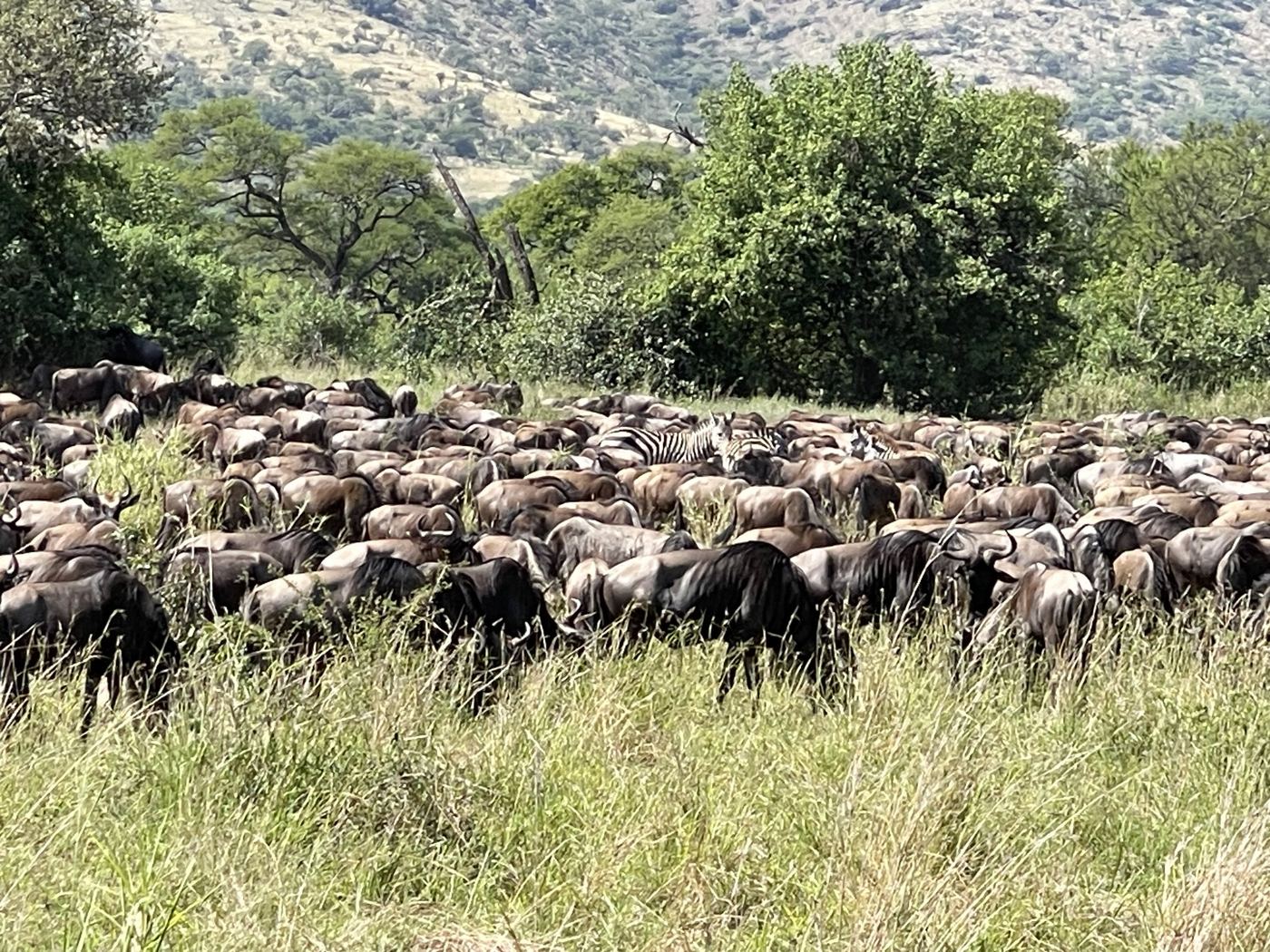
In March the herds are still on the southern Serengeti plains, calves are stronger and the long rains start late. See the weather, price and how it compares with February.
The Great Migration in March keeps the herds on the southern Serengeti plains, with stronger calves and long rains that usually begin towards the end of the month. In return for fewer very new calves, you get green-season rates. This page settles where the herds stand, what you gain and lose against February, how the weather behaves, and when March suits your dates.
Facts checked 12 October 2026. Fees, schedules and herd positions change, so we confirm them again when we quote.
Through most of March the herds remain on the short-grass southern plains. Look for them around Ndutu, Kakesio, Lake Masek, Naabi Hill and the Gol Kopjes, and on into the southern and eastern Serengeti and the edge of the Ngorongoro Conservation Area. The cast is the same as in February, with zebra and gazelle grazing among the wildebeest.
What changes is the grouping: the herds gather in larger groups before they move on. The cycle can run two to four weeks ahead of schedule or behind it, so in an early year the Serengeti migration in March can begin its move towards the central park before the month ends. In a late year the herds stay on the southern plains longer.
That small shift is why the wildebeest migration in March rewards a flexible plan. Our Great Migration safari guide explains the full loop, and the southern and central Serengeti migration guide shows what each area offers as the herds start to leave.
The Masai Mara in March has no migration herds, which makes a Kenyan camp the wrong base for this month. The Great Migration in Kenya guide covers when to go instead.
Serengeti in March is the month when the calves are stronger. Calves born in the weeks before now keep pace with the herd. A birth in progress is possible but never promised, and you see the season after the surge rather than the surge itself.
Predators remain close. Lions and cheetah still hunt around the herds on the open plains, and hyena clans stay with them. For the full story of the births, see our guide to the Serengeti calving season.
The gap shows in the details. February offers more very new calves. March offers sturdier young animals and bigger gatherings. For a first-time visitor who values the sheer spread of the herds, either month works. For someone who will be disappointed without a birth, February is the stronger choice.
Afternoon storms are more frequent in March, the long rains usually begin towards the end of the month, and some tracks are muddy. Most of the month therefore comes before the main wet spell.
For the general climate in each country, use the Tanzania and Kenya best-time guides. Rain keeps the grass green, and the herds follow the grass.
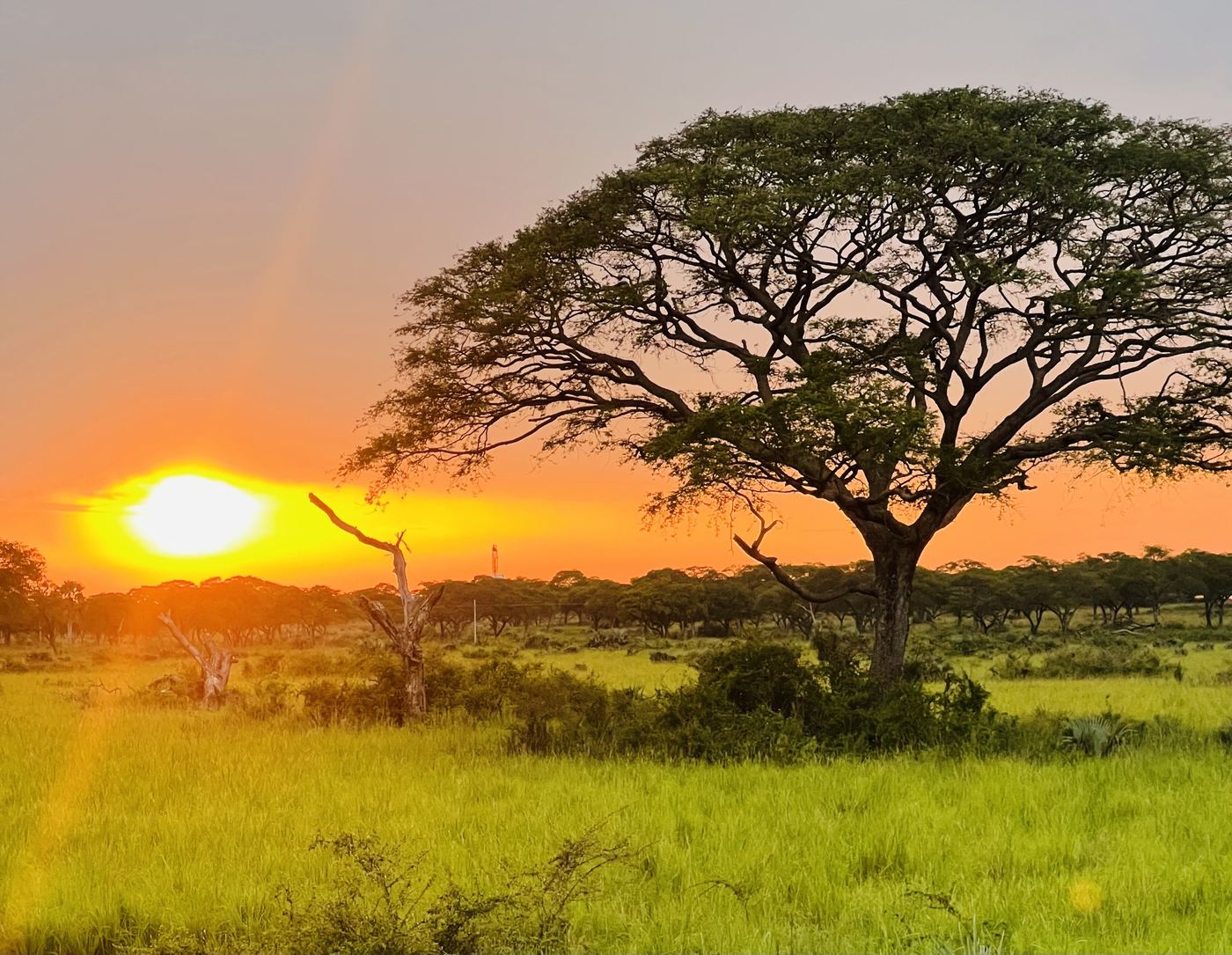
Heavy skies can make a strong backdrop for a herd, so bring a wide lens for scale and a beanbag for the vehicle window. Pack a waterproof layer and a cover for the camera.
March is a green-season month, so rates are lower than in February, which is often priced as peak in the southern Serengeti. Indicative figures per person per night, sharing, are:
The quote names the band for your dates. On timing, we advise booking at least three to six months ahead, which is far shorter than February needs.
A typical quote covers lodging, meals while on safari, a private vehicle and specialist guide, park and conservation fees, airport transfers and any internal flights we list. International flights, visas, travel insurance with medical evacuation, balloon flights and tips are extra. As a rule of thumb, allow about US$20 to 30 per day per group for the guide and US$10 to 15 per guest per day for camp staff. The wider cost picture is in our Tanzania safari cost breakdown.
Where to stay in March depends on whether you want to stay with the herds in the south or position yourself for their move. Which camps are open, and where, is settled in your quote.
For the south, Ndutu Safari Lodge and Lake Masek Tented Camp are Comfort options, Lemala Ndutu is a Premium one, and &Beyond Serengeti Under Canvas is a Luxury choice. These put you near the plains while the herds remain there. Mobile camps move two or three times a year to follow the herds, so ask where yours will stand when you arrive.
For a trip that shifts north-west, central Serengeti around Seronera becomes more useful as the season turns. Dunia Camp and Serengeti Pioneer Camp are Premium options there, and Four Seasons Safari Lodge Serengeti and Namiri Plains are Luxury ones. Central Serengeti is at its best from April to May and again in November, and tented camps around Seronera keep predator viewing strong all year.
Whichever you pick, ask how far the camp is from the action. A camp 20 minutes away can give about two extra hours of viewing a day compared with one 90 minutes away.
The comparison below shows what you give up and gain either way. For the neighbouring months in detail, read our pages on the Great Migration in February and the Great Migration in April.
| Question | February | March | April |
|---|---|---|---|
| Herds | On the southern plains | Still in the south, gathering | Leaving for the north-west via Moru Kopjes and Seronera |
| Young calves | Peak births | Calves stronger | Herds have left the calving grounds |
| Rain | Warm with occasional storms | Afternoon storms more frequent; long rains usually begin late in the month | Wettest month |
| Camps | Calving-zone camps sell out first | Shorter booking lead time | Parks quiet, some camps close |
| Rates | Often peak in the south | Green season | Green season; prices drop |
| Book ahead | 9 to 12 months | 3 to 6 months | 3 to 6 months |
In short, February is for the births, and April is for the wettest weather, quiet parks and green-season rates. March is the month to pick if you want to see the herds before they depart and prefer a shorter booking lead time.
A Great Migration March safari suits travellers who put lower rates ahead of the very newest calves. It is a good choice for these travellers:
Choose another month if river crossings are the aim (they come mainly from July to October), if you want the calving peak (February), or if you dislike the risk of showers and muddy tracks (the dry months in the middle of the year suit you better).
For the herds themselves, the Tanzania Grand Migration Explorer is the better fit: ten days, timed for calving (late December to March) or crossings (late June to September), starting from US$7,200 per person. Tell us which part of March you prefer and we will advise on timing.
The Classic Serengeti and Ngorongoro Crater Safari runs seven days from US$4,650 per person. Its best months are June to October and late December to February, so March sits outside them. It is not built around the herds' position, so choose it for a first week-long safari in which resident big cats and the crater matter most. The Ngorongoro Crater guide explains what the descent involves, and the terms are on each itinerary page.
Tell us your dates and the kind of safari you want. We will check where the herds are likely to be and which camps suit you.
Plan my tripWant every month side by side? Open the Great Migration by month guide, or work through migration safari itinerary planning.
Twelve months compared, with a page for each one.
Where the herds are in February, the weather and who should go.
Where the herds are in April, the weather and who should go.
Which side of the border suits your dates, budget and style.
For the whole picture, see our Great Migration safari guide. If you are ready to price a trip, Tanzania Grand Migration Explorer starts from US$7,200 per person.
Where the herds are in April, how wet the month really is, what it costs and who should choose March or May instead.
Read the guide →Where the herds are in August, how Mara River crossings work in both directions, how Kenya and Tanzania differ for crowds, and how many nights to allow.
Read the guide →In December most herds are back on or near the southern plains on fresh grass, with calving able to start at month end. Early December is quiet; Christmas is peak-priced.
Read the guide →February is the usual peak of calving in the southern Serengeti. See where the herds are, what you will see, the weather and price, and how early to book.
Read the guide →Where the herds are in January, what the early calving season looks like, the weather and price, and whether January or February suits your safari.
Read the guide →Where the herds are in July, when the first Mara River crossings usually come, what the month costs and how to choose between Kogatende, Lamai and the Mara.
Read the guide →Where the herds are in June, why it is the month for Grumeti River crossings, and how to choose between a western and a northern base.
Read the guide →Where the herds are in May, what the rut sounds like, how the rains ease, what it costs and whether May or June suits you better.
Read the guide →In November the short rains send the herds streaming south through Lobo towards central Serengeti, with low-season rates and arriving migratory birds.
Read the guide →Where the herds are in October: drifting south from the Mara and northern Serengeti, with crossings still possible but never guaranteed, quieter camps and the first short rains.
Read the guide →Where the herds are in September, how the crossings compare with August, why short grass helps predator viewing, and which base suits the month.
Read the guide →Tell us your dates and interests — a destination specialist replies within 24 hours.
Start Planning