
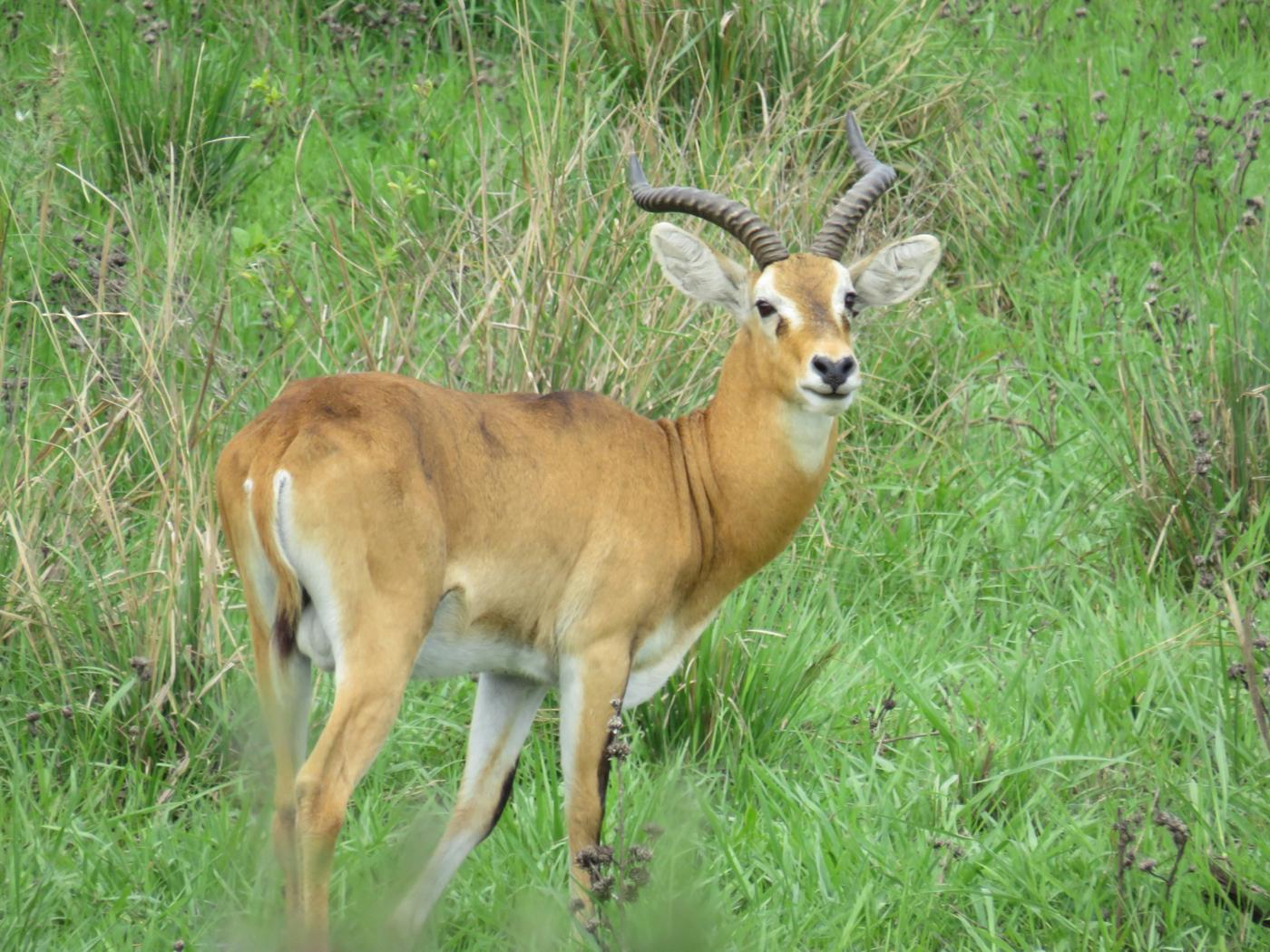
Ziwa Rhino Sanctuary is a fenced reserve of about 70 square kilometres in Nakasongola District, central Uganda, where southern white rhinos have been bred since 2005 after the species died out in Uganda in the early 1980s, and it is the one place in the country where you can walk up to rhinos on foot with a ranger. This guide is written on 14 November 2026. It explains how to get there, what you do, what you can see besides rhinos, what the sources say about fees, how the rhino count and the plan to move animals to other parks stand today, and how to fit the sanctuary into a Murchison Falls or a Kidepo route. People search for it as Ziwa Rhino Sanctuary, Ziwa rhino tracking, rhino tracking in Uganda, Ziwa Rhino and Wildlife Ranch, Ziwa Rhino Sanctuary entry fee, Ziwa shoebill and where to see rhinos in Uganda.
Quick answer
Visit Ziwa for a half day on the way between Kampala or Entebbe and Murchison Falls, track the rhinos on foot with a ranger in the morning or late afternoon, and add the dawn shoebill trip if you can stay a night. It is about 176 kilometres from Kampala, a drive of around three hours, on the highway to Gulu, and it suits families, birders and anyone who wants a close encounter that does not need a long hike.
The sanctuary is not a wild park. It is fenced, the animals are managed and the rhinos are used to people, so you can approach to about six or seven metres. That is the point: Uganda lost its wild rhinos, and Ziwa is where the rebuilding began. Our general rhino tracking guide compares it with Laikipia and Ol Pejeta in Kenya, and our Murchison Falls National Park guide covers the next stop.
Ziwa Rhino Sanctuary at a glance
| Question | What we found |
|---|---|
| Where | Nakasongola District, on the Kampala to Gulu highway |
| Distance | About 176 kilometres from Kampala; around three hours by road |
| Size | About 70 square kilometres (7,000 hectares); one source also gives 16,000 acres |
| Fence | Electric fence around the sanctuary |
| Rhinos | Southern white rhinos; 48 reported as of July 2025 |
| Main activity | Rhino tracking on foot with a ranger |
| Other activities | Shoebill trip at dawn, birding, nature walks, night walks |
| Birds | Over 300 species in most sources; some say 340 to 350 |
| Rhino viewing distance | About six or seven metres |
| Time needed | Half a day; one night is better |
| Best time | Dry seasons, June to September and December to February |
Chapter 01: How did Ziwa begin?
Uganda had rhinos in the 20th century, but poaching and years of conflict wiped them out in the early 1980s. Sources give 1982 or 1983 for the last wild rhino. In 1997 a group of Ugandans and friends formed Rhino Fund Uganda to bring them back. In 2005, working with the Uganda Wildlife Authority, the group opened Ziwa on private ranchland owned by Captain Joseph Roy Ziwa and moved the first rhinos in. Most sources say six animals arrived that year, four from Solio Ranch in Kenya and two from Disney's Animal Kingdom in the United States. One source says four animals came from Disney in 2006, so the early record is not fully settled.
The sanctuary was closed in mid-April 2021 after a dispute between the landowner and the fund, and reopened to visitors on 10 June 2021, according to one operator. The herd has grown since. Sources reported 33 rhinos in late 2021, 41 in June 2024 and 48 in July 2025, and we found no 2026 count. Our guide to rhino tracking in East Africa explains why rhino numbers are a good measure of a reserve's success.
Chapter 02: How do you get there?
Ziwa lies on the main road from Kampala to Gulu and Murchison Falls, about 176 kilometres north of Kampala, and the drive takes about three hours in normal traffic. Sources describe it as three to four hours from Kampala or Entebbe. The sanctuary entrance is off the highway at Nakitoma, and the gate is a few kilometres along a side road. Our Entebbe day trips guide and Kampala travel guide cover the start of the journey, and the Uganda national parks guide shows how Ziwa fits the northern circuit.
Murchison Falls National Park is about three hours further, according to one operator, so Ziwa is the natural stop on the way north. A common plan is to leave Entebbe early, reach Ziwa for a mid-morning rhino walk and lunch and continue to Murchison in the afternoon. Our Uganda safari itinerary guide and the Uganda family safari guide show how the northern routes are built.
Chapter 03: What is rhino tracking like?
You meet a ranger at the visitor centre, drive or walk into the sanctuary and follow tracks to where the rhinos are resting or feeding. The animals are kept in groups that rangers monitor daily, so finding them is usually easy. You walk on foot in a line, stop at about six or seven metres and watch. Sources differ on how long the walk takes: some say 1.5 to 2.5 hours in total, another says 30 to 90 minutes, and a visitor account describes about 40 minutes of walking to find the animals. The length depends on where the rhinos are that day.
Rhinos have poor eyesight and a good sense of smell, and the rangers manage the approach. The experience is quiet and close. White rhinos graze like cattle, with calves close to their mothers, and the scale of the animals is what stays with you. Photography is allowed, and our photography safaris guide covers kit. If you are with children, tell the ranger so the group can stay calm. Sources give a child rate up to age 12 but no minimum age, so check when you book.
Chapter 04: What else can you do at Ziwa?
- Shoebill trip. A dawn canoe ride or walk in the swamp, usually between 6 and 9 am, looks for the shoebill, the stork-like bird that visitors travel far to see. Sightings are not guaranteed. Our Mabamba swamp shoebill guide covers the other well-known place to see it, near Entebbe.
- Birding. More than 300 species are reported, including swamp birds, savanna birds and forest birds. Our East Africa birding safari guide lists where else to go.
- Nature walks. Guided walks follow the swamp edges and woodland, and you can see antelope such as waterbuck, Uganda kob and bushbuck. One source also lists oribi, zebra and giraffe, so check what is in the sanctuary on the day.
- Night walks. Several operators describe a night walk after dinner, usually starting around 8 to 10 pm. See our night drives and walking safaris guide for what to expect.
Sources disagree on mammal lists, and some include species that are not in the sanctuary, so we name only what several pages agree on.
Chapter 05: What does it cost?
Fees change, and the sources we read give different figures, so we report what one dated source says and ask you to check. A 2025 and 2026 table from one operator lists US$50 for a foreign non-resident adult, US$45 for a foreign resident and 30,000 Ugandan shillings for an East African citizen, as a combined entrance and tracking fee, with a canoe or shoebill ride at US$20 and a birding guide at US$15. Another operator gives US$60 for an adult and US$30 for a child, with no year, so the two do not match. A third source says tracking is included in the entrance fee. On payment, one source says the sanctuary is cashless and another says it takes cash, cards and mobile money.
We confirm the current fees and payment methods for your date and show them as separate lines in your quotation. For the wider cost of a Uganda safari, our Uganda safari cost guide and Uganda safari packages give context.
Chapter 06: When is the best time to go?
The sanctuary is open all year. The dry seasons, June to September and December to February, are the easiest for walking, and one source advises avoiding March to May and October to November when the rains make tracks slippery. Another says the wet months are good for birding. Early morning and late afternoon are the cooler times for walking, and the dawn shoebill trip needs an early start. Our best time to visit Uganda guide explains the seasons across the country.
Chapter 07: Where do you stay?
Amuka Lodge is the upmarket option inside the sanctuary, with chalets or tents, a restaurant and a pool, according to several sources. Simpler options are mentioned, including bandas, a guesthouse and a campsite, and one source lists a Rhino Fund guesthouse from US$30 and camping from US$10 per person, though we cannot confirm those prices. If you stay, you can do the dawn shoebill trip and a night walk, which most day visitors miss. Our Uganda lodges by park guide and luxury safari lodges in Uganda guide cover the rest of the route.
Chapter 08: What is the future of Ziwa's rhinos?
The plan is to return rhinos to the wild. Sources describe a long-term goal of reintroducing animals to Murchison Falls National Park and Kidepo Valley National Park. One news report from September 2025 says about 20 or more rhinos would move to Ajai Wildlife Reserve, in the West Nile region, while about 28 would stay at Ziwa, under a 10-year strategy. Another operator says 20 rhinos would move to Ajai in 2025, and a third source says translocations had already begun. These accounts do not match, so we do not claim a date. Check the current position before you plan a visit around a specific animal. Our Kidepo Valley guide covers the second park on the list.
Chapter 09: How does Ziwa fit with the rest of your trip?
Ziwa suits three kinds of trip. On a classic northern circuit it is the break between Kampala and Murchison, as above. On a family trip it is a good first wildlife stop, because it is short, flat and safe for children. On a primate-and-wildlife trip it adds a savanna animal that gorilla and chimpanzee routes lack. Our 14 day Uganda wildlife and birding safari and complete Uganda safari cover the wider options. For the Big Five, you will need Kenya or Tanzania, and our where to see the Big Five guide explains why Uganda is not a Big Five destination, since it has no wild rhinos.
Chapter 10: Is it worth the stop?
Yes, if you are driving north. A rhino walk at six or seven metres is something few places offer on foot, and the sanctuary tells a real conservation story. It is not worth a special trip from Kampala for a short stay, and it is not a replacement for a wild rhino experience in Kenya, which our Laikipia conservancy guide and Ol Pejeta guide cover. Treat it as one good half day.
Chapter 11: Where do the sources disagree?
We read six pages. They agree on the location, the activities and the story, and disagree on the size (70 square kilometres or 16,000 acres), the village name at the gate, the date of the last wild rhino, the number of rhinos from Disney, the current rhino count, the length of the walk, the entrance fee, whether the sanctuary takes cash, the safe viewing distance and the status of the Ajai move. We have shown the range or said we do not know. We could not find general opening hours, and one source gives map coordinates that do not match the rest. Ask us for the current position when you book.
Tell us your dates and route, and we will reply within 24 hours with a written plan, the stop at Ziwa and a quotation that shows every line separately.
Request a free quotation