
3 Day Masai Mara Safari from Nairobi
Ask for pricingper person
3 Days

A four-day private safari: a night at Lake Nakuru for rhinos and giraffes, then two nights in the Masai Mara.
Best for: travellers who want the Masai Mara plus a second park, and can spare four days
Itinerary ref: KE-012
This 4 day Masai Mara safari starts at Lake Nakuru, a small fenced park known for black and white rhinos and Rothschild's giraffes, and then continues to the Masai Mara for two nights. The extra day turns a short Mara trip into two different habitats, and it breaks the long road from Nairobi into two shorter pieces.
Tell us your dates and group size and we will send a written quote for this safari.
Request a quoteChoose this itinerary if you want the Masai Mara and a second park, and you have four days. Lake Nakuru is closer to Nairobi than the Mara, so the first day is a three-hour drive and a full afternoon of game viewing instead of a day mostly spent on the road. You travel in your own 4x4 with a driver-guide, and the pace is set by what you want to see.
It suits first-time visitors, couples and families. It is also a good choice if rhinos matter to you, because Lake Nakuru is one of the more reliable places in Kenya to see them. If you only have three days, the 3 day Masai Mara safari goes straight to the reserve, and if you have a week the 8 day Kenya safari adds Naivasha and Amboseli.
Your driver-guide collects you in Nairobi in the morning and drives north-west over the escarpment, with a stop at the Great Rift Valley viewpoint. The road to Nakuru takes about three hours, and you reach the park in time for lunch and a long afternoon game drive.
Lake Nakuru National Park is small and compact, which means you cover a lot of it in one afternoon. The drive follows the lake shore, crosses open grassland where white rhinos graze, and climbs through acacia and euphorbia woodland. Rothschild's giraffes, buffalo, waterbucks and baboons are common, and lions and leopards live in the park, though they take more patience. The flamingos that made the lake famous move with the water level and the algae, so their numbers change from year to year and cannot be promised.
An early drive in the park gives you the best chance of the rhinos and the big cats while it is cool. The park has both black and white rhinos, and our guides know the areas where they usually feed. Back at the lodge you have breakfast and check out.
The drive to the Masai Mara takes about five to six hours with a lunch stop, through Narok and onto the dirt road into the reserve. It is the longest travelling day of the trip, so the afternoon is kept light: you check in to your camp, and if time allows, take a short sundowner drive. The Masai Mara guide explains the reserve before you arrive.
Camp wakes before dawn, and you are out on the grassland with a picnic lunch packed for the day. Lions, elephants, giraffes, zebras and buffalo live here all year, and the country is open enough that several species often share the same view. Cheetahs hunt on the short grass, and leopards keep to the riverine woodland, where they are harder to find.
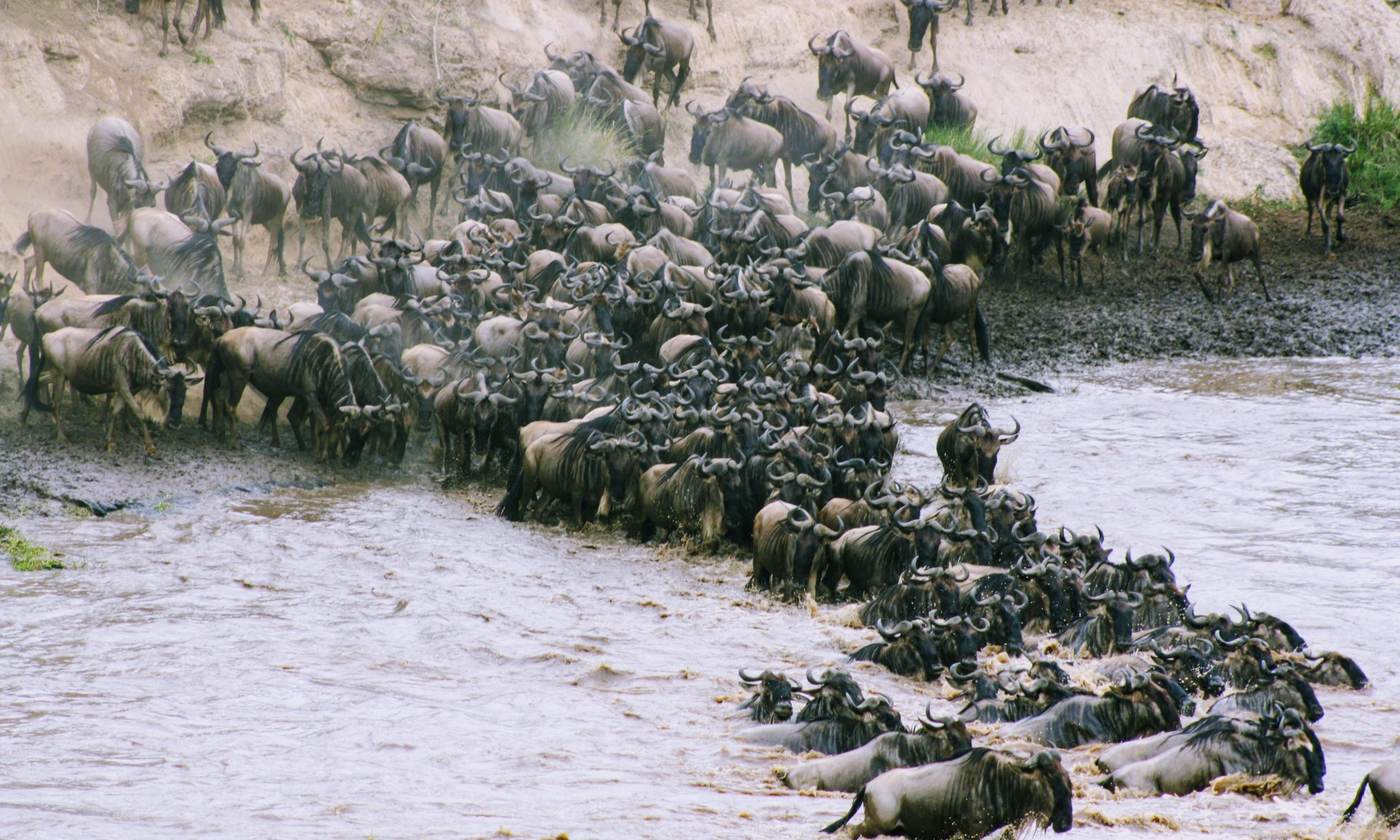
From July to October the Great Migration herds move through the Mara, and the river crossing points are on the route. Nobody can tell you which day a herd will cross, and a good guide waits for the animals instead of pushing them. Read how crossings are timed before you travel. If you want a sunrise balloon flight or a Maasai village visit, ask for them with your quote; both are priced separately.
There is time for one more early drive before breakfast and check-out. The return to Nairobi is a five to six hour journey, lunch included, and the clock depends on the road surface and the traffic into the city. Your driver-guide ends the tour at your Nairobi hotel or at the international airport. Anyone flying home that evening should choose a departure after 8 p.m.

The properties are named in your written quote once your dates are fixed. Both are mid-range, or a similar property of the same standard.
Both parks are open every month. The dry months of July to October bring the migration herds to the Mara and the easiest roads. January and February are hot and dry, and the reserve is often less crowded. From about April to May the long rains slow some tracks and turn everything green, and short rains return in November. The flamingos at Lake Nakuru follow water levels, not the calendar, so no month guarantees them.
For more on timing, see the best time to visit Kenya guide and Great Migration by month. If rhinos are a priority, our guide to rhino tracking in East Africa explains where else they can be seen.
Tell us when you want to travel and how many of you are going. We reply within 24 hours with a written quote and can add Naivasha, a balloon flight or a night in Nairobi.
Request a quote See all Kenya safarisSign in to save this safari's dates and party size to your account, so you can pick up right where you left off.
Sign in to save this itineraryBuilt from our own staff's real packing guidance for this trip's destinations, tailored to your dates and this exact itinerary above.
Four steps from your first message to your safari.
Send your dates, group size and the places you want to see. A specialist replies within 24 hours.
We shape this journey around your dates and budget and send you a quote that shows what is and is not included.
A 40% deposit confirms your booking. Where your trip needs gorilla or park permits, we buy them once your deposit has been received and confirmed.
The final balance is due 60 days before departure, unless your booking confirmation says otherwise.
Cancellations and refunds follow our booking terms, and how we protect your trip and your payment explains how your money and permits are handled. Questions first? You can contact us at any time.

Answered from our own real trip details above -- itinerary, inclusions, difficulty, and more. For an exact price, use "Enquire Now" below.
Finish your safari with a few days on the coast.
Tell us your dates and group size — a destination specialist replies within 24 hours.