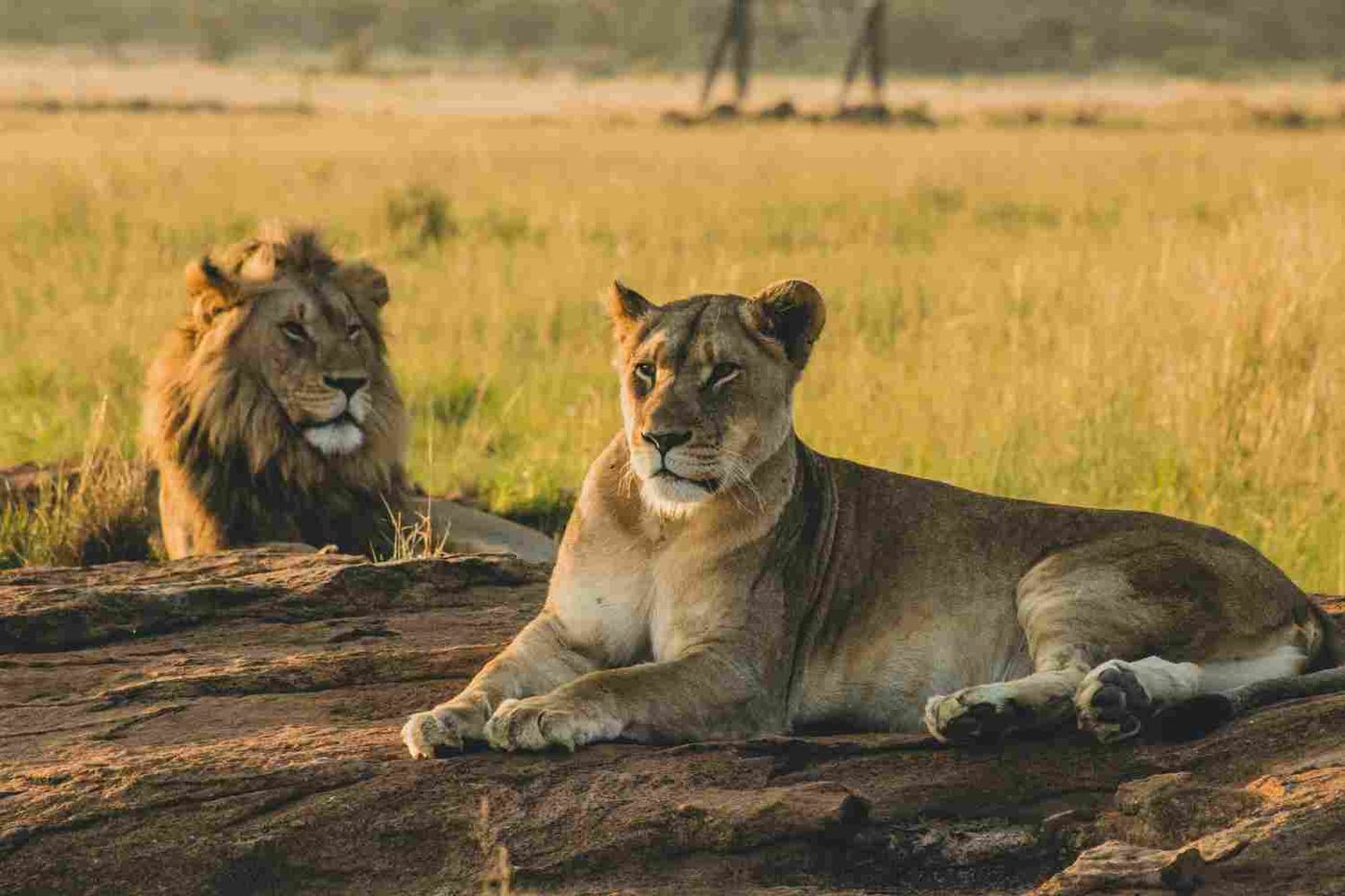
Kenya Photographic Big Cat Safari
A specialist-guided pursuit of Kenya's lion, leopard and cheetah populations, built for serious wildlife photographers.
From US$8,200 per personView itinerary →
The Kenya eTA for safari guests: official USD 30 fee, about three working days to process, 90 days validity, who is exempt, transit rules and the open question for regional visa holders.
The Kenya eTA is the online electronic travel authorisation that most visitors must have approved before they fly to Kenya for a safari. The official portal, etakenya.go.ke, charges USD 30 for the standard Kenya eTA, and approval usually takes about three working days, though it can take longer. This guide covers the fee, how to apply, who is exempt, what to type in the accommodation box when you sleep in camps, and the points where the published rules are unclear.
Written by Paramount Gorilla Expeditions Team Kenya. Facts last checked 11 October 2026.
Government pages carry no update date, so the rules can change without notice. Confirm on the portal before you pay.
The Kenya eTA, which stands for Kenya electronic travel authorisation (the same thing is often written as a Kenya travel authorization in American spelling), is an online permission tied to your passport. Kenya moved from conventional visas to this system in early January 2024, according to the sources we read. Those sources give the exact start day as 1, 4 or 5 January, so we say early January and leave it there. Visas issued before the change stay valid until they expire, according to UK FCDO advice.
Three points are worth fixing in your mind before you start the Kenya eTA application.
Only one website should receive your passport details and your fee: the official portal at etakenya.go.ke. The Department of Immigration also has an eTA page at immigration.go.ke/eta. Many commercial sites sell help with a Kenya travel authorization, and they may add charges for something you can do yourself in minutes. The fee section below gives you the quickest test.
If you are planning a longer route that touches Kenya, our hub page on entry alerts keeps the dated warnings for all four countries in one place.
Kenya eTA requirements apply to nearly every foreign visitor who is not on the exempt list, including guests who come for a three-night safari. If you hold a passport from the United States, the United Kingdom, Europe, Australia, Canada or most of Asia, plan on applying.
Exempt does not always mean document-free. Exempt travellers still need a valid passport, and some may be asked for other papers at the border.
The East African Community exemption is based on citizenship. We found no rule that exempts a foreign national who simply lives in Uganda or Rwanda, so a resident of one of those countries who holds another passport should ask Kenya's helpdesk before assuming anything. The same caution applies to anyone relying on a previous Kenyan visa.
Anyone holding the East Africa Tourist Visa belongs in this second-look group too. The answer is unsettled, so it has its own section below.
The portal's eligibility page is the place to test your nationality: etakenya.go.ke/eligibility. If your passport is not clearly on the exempt list, apply.

The Kenya eTA fee depends on the type of authorisation. These are the figures published on the official portal.
| Type | Official fee | What to know |
|---|---|---|
| Standard eTA | USD 30 | The one most safari guests need. Processing about 3 working days, sometimes longer. |
| Transit eTA | USD 20 | For connecting passengers in the portal's transit category. See the transit section below. |
| Expedited option | Adds USD 100 | Immediate processing, added on top of the standard fee. |
| Multiple-entry options | USD 300 (one year); USD 185 (five years, shown for US nationals) | Listed on the eligibility page. Not needed for a single safari. Options may differ by nationality. |
The portal does not date these pages, so confirm the figure on the day you pay.
You will see a Kenya eTA fee of USD 32.50 or USD 34 on several operator and agent pages. We found neither figure on the official portal. The likely cause is a third-party service charge or a card-processing add-on, which is our inference rather than a published fact. The practical rule is simple: if the amount at checkout is higher than the official fee and the address is not etakenya.go.ke, stop.
The portal says standard processing takes about 3 working days and can take longer. The UK FCDO advises applying at least 2 weeks before you travel, and we agree. A safari booking involves flights that cannot be moved easily, and airlines may refuse boarding to a passenger without an approved authorisation. There is also a reported penalty fee on arrival for travellers who turn up without one, though we have not found the amount.
The Kenya eTA is valid for 90 days from the date of issue, within which you must travel. Officers set the length of your stay at the border. This creates a timing window: apply too late and you risk missing the deadline, apply too early and the authorisation may lapse before you land. Our planners suggest applying two to four weeks before arrival, once flights and camps are confirmed.
Here is the process we advise for a safari traveller. The portal's own checklist is the final word, and the form can change.
The portal lists email and WhatsApp contact options for questions. If your question is about your own situation, ask there and keep the reply.
Many safari guests stay in tented camps that have no street address. The published sources do not tell us what the form accepts, so this is our advice rather than a portal rule. Enter the camp or lodge name exactly as it appears on your booking voucher, and add the nearest town or the park or conservancy named on that voucher. For a trip with several Kenyan stops, enter the first night's accommodation. Carry the vouchers on your phone as well, in case an officer asks about the rest.
The transit eTA costs USD 20 on the official portal. Transit passengers who stay airside are exempt, which means they never pass through Kenyan immigration, so they have no authorisation to obtain. That covers a simple change of plane at Nairobi's main airport on the way between two other countries.
The picture changes when you leave the airside area. A safari route often brings an international flight into Nairobi's Jomo Kenyatta airport and a light aircraft out of Wilson Airport, the city's second airfield. You clear immigration between the two, so our planners treat that connection as a Kenya entry and advise the standard eTA. The same applies if you sleep in Nairobi because of a late arrival.
| Your Nairobi situation | What we advise |
|---|---|
| Same-terminal change of plane, staying airside throughout | No eTA expected, because transit passengers who stay airside are exempt. Confirm with your airline. |
| Land at JKIA, clear immigration, fly onward from Wilson to the Mara | Apply for the standard eTA (USD 30). |
| Overnight in Nairobi before or after a safari | Apply for the standard eTA (USD 30). |
| You are unsure whether the transit category fits | Use the portal's eligibility guidance and ask the helpdesk before paying. |
The advice column is our planning judgement, not a published rule.
Timing matters too. Delays at Nairobi are common, so build a long buffer between an international arrival and a bush flight on the same day. Our guide to flights between safari countries sets out the connections we use.
This is the question that most needs a careful answer, because the published sources disagree. The East Africa Tourist Visa, known as the EATV, covers Uganda, Kenya and Rwanda for USD 100 and 90 days. It is issued by the country where you first enter the three-country area. The question is whether a traveller who holds it also needs a separate Kenya eTA.
Here is where the evidence stands on the date we checked.
| Source | What it says | How much weight |
|---|---|---|
| A Kenyan embassy page | Holders of an e-visa issued earlier, including an EATV issued by member states, are exempt from the eTA. | Official, undated and not backed up on the portal. |
| etakenya.go.ke eligibility page | Shows an "East African Tourist eTA" as coming soon. Has no text on an EATV exemption. | The portal itself, so the most relevant, but silent on the point. |
| Operator and blog pages | Several say no eTA is needed. We found none that cites an official statement. | Low. |
Here is how we would handle it. Write to Kenya's immigration helpdesk with your passport nationality and your EATV details, and keep the reply. If Kenya is on your route and you cannot get a clear written answer before you fly, an eTA costs USD 30 and removes the risk of a problem at check-in. Whether the EATV is the right choice at all is a separate decision, and it belongs to our East Africa tourist visa guide, which gives the same answer on the exemption.
A trip that takes in Uganda, Rwanda, Kenya and Tanzania raises questions that a single-country guide never covers. Our four-country route guide and the Rwanda, Kenya and Tanzania route guide cover the order. What follows is the Kenya eTA side of it.
Whatever the order, the Kenya eTA must be approved before you board the flight into Nairobi. An Entebbe to Nairobi flight takes about 1 hour 30, and the airline may check your authorisation at Entebbe. Because Kenya sits in the middle of many routes, a guest who applied at the beginning of the planning stage may find that the 90-day window has closed by the time the Kenya leg arrives. Apply once the dates are fixed, and count from the day you will land in Kenya.
The evidence on re-entry is mixed. One embassy page says an eTA is generally single entry but that re-entry from another East African Community state is permitted. One lodge page says multiple entry applies only if the trip includes certain East African Community states. We could not settle this from official text. If your route leaves Kenya for Tanzania and returns, perhaps because your flight home goes through Nairobi, ask the helpdesk. Tell them your full itinerary on the form and keep the reply.
A route that goes into Kenya once and then on to Tanzania, with the flight home from Kilimanjaro, never returns to Kenya, so one authorisation is enough. Our 14 day four country safari and our 10 day Rwanda Kenya Tanzania safari both include a Kenya leg, so the eTA applies to them, and we confirm the order with you when we plan. If you are adding Tanzania, note that it has its own entry rule on insurance, covered in our Tanzania travel insurance guide.
The Kenya eTA application is tied to one passport, so each traveller needs their own, and the form is filled in by or for each person. For a family or a group, one organiser can easily end up filling out ten forms, which is where typing errors creep in. We recommend that each adult checks their own approval PDF against their own passport before departure.
Our approach is to apply for every traveller, children included. Sources conflict here: one independent guide lists children as both exempt and needing an eTA. We could not find an official statement on infants or on a reduced child fee. Until the portal says otherwise, allow for the full fee per person, and ask the helpdesk about infants if the amount matters to you.
Our planners check the dates and lodge names you plan to enter against your itinerary, so the details match the vouchers.
The Kenya eTA does not replace health requirements. Two things to know, both time-stamped.
Kenya asks for a yellow fever certificate from travellers arriving from countries with yellow fever transmission risk, for age 1 and over (UK FCDO Kenya page, 30 September 2026, and the WHO list). Uganda posted a notice on 2 October 2026 saying a certificate is no longer mandatory for entry into Uganda, and UK FCDO removed its Uganda line on 8 October. Whether Kenya counts Uganda as a risk country is not stated on any official page we read. If you have a certificate, carry it. If you do not, ask your clinic or Kenya's helpdesk. Our guide to malaria, yellow fever and vaccinations covers the medical side.
Here is the state of play as of 9 to 10 October 2026, and it can change daily. Kenya confirmed its first imported Bundibugyo virus case on 6 October. The outbreak is centred on DR Congo. Uganda declared its own outbreak over on 27 August. WHO advises against travel or trade restrictions. The US State Department's Kenya guidance of July 2026 says travellers from DR Congo, South Sudan and Uganda complete an electronic health surveillance form on entry. UK FCDO notes that some countries may screen arrivals from Kenya.
Advisory levels differ by government and some pages lag behind events, so we quote none here. Read the live pages: the UK FCDO Kenya health page, the WHO outbreak notice and the CDC situation summary. Our hub keeps a dated note under health alerts.
This guide suits safari guests from non-exempt countries who are planning a Kenya leg, whether alone, as a family or as part of a longer route. These are the errors worth avoiding, and each is easy to prevent.
Our reading of the competing pages found four recurring errors. Fees of USD 32.50 and USD 34 are quoted as if official, though neither is on the portal. Start dates appear as 1, 4 and 5 January 2024, when the safe statement is early January. Several pages say no eTA is needed for the regional visa without citing an official source. And at least one page lists the regional visa as a type of eTA, which mixes two different documents. We have tried to avoid all four, and we flag where a point is our inference.
Start with the dates, because the Kenya eTA follows them. Once your flights and camps are confirmed, you can apply on the official portal, usually two to four weeks before you arrive. If you hold the East Africa Tourist Visa or are unsure about your nationality, write to the helpdesk first.
A short checklist keeps the process calm: fix your dates, check passport validity and blank pages, confirm your nationality on the eligibility page, apply on etakenya.go.ke only, save the approval offline, and compare every detail with your passport. If any step raises a question, ask the helpdesk before you pay rather than after you land.
For the rest of your entry paperwork, read our guide to visa requirements for five destinations, and combining Kenya and Tanzania if your plan crosses that border. Our three-country route guide shows how the entry steps fit together. If Kenya is only part of the trip, our 8 day Rwanda Kenya safari includes a Kenya leg, so the eTA applies to it.
The eTA is one of the fixed entry costs on a Kenya route. Our four country safari cost guide shows it beside the permits, park fees, visas and Tanzania insurance.
Tell us your passport nationality, your dates and the countries on your route. We will confirm which entry papers apply, set the order of the trip and check the camp names that go on your forms.
Plan my tripSee also: Kenya travel information (visas, health, money).
Keep planning with our Kenya safari destination guide. National park fees are set by the Kenya Wildlife Service, and Magical Kenya, the Kenya Tourism Board, publishes official visitor information. We confirm the current fees for your dates in every quote.
Entering Kenya to climb? See our Mount Kenya guide for the plan.
For the safety advice that applies to your trip, see our is Kenya safe to visit guide.
For the rest of the entry process and the practical side of a trip, including the East Africa Tourist Visa, Nairobi airport arrival, money and health, see our Kenya travel guide.
Each one shows the day-by-day route, where you stay and what is included, and can be moved to the dates you choose.
A specialist-guided pursuit of Kenya's lion, leopard and cheetah populations, built for serious wildlife photographers.
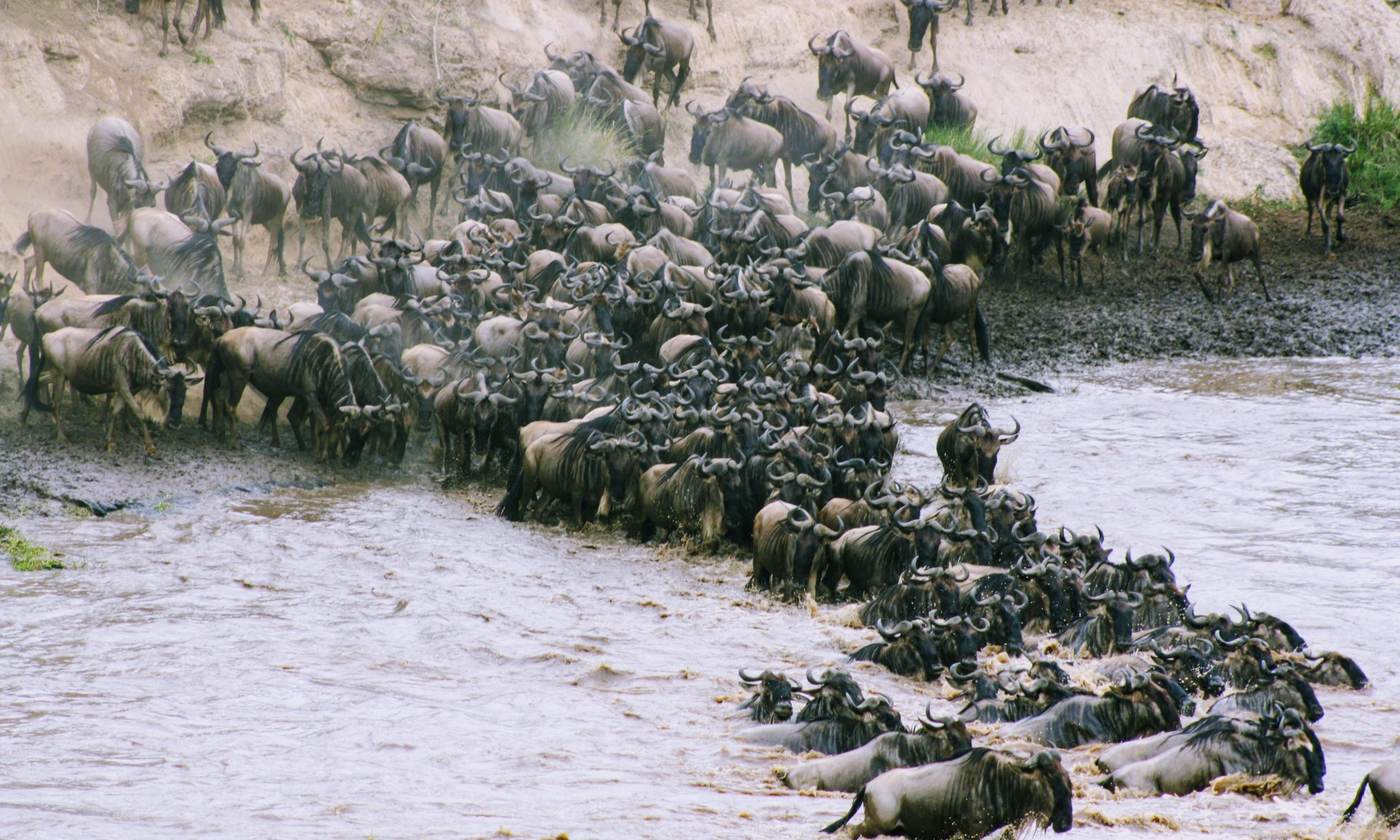
A dedicated Mara-only itinerary built entirely around positioning you at the Great Migration's dramatic river crossings.
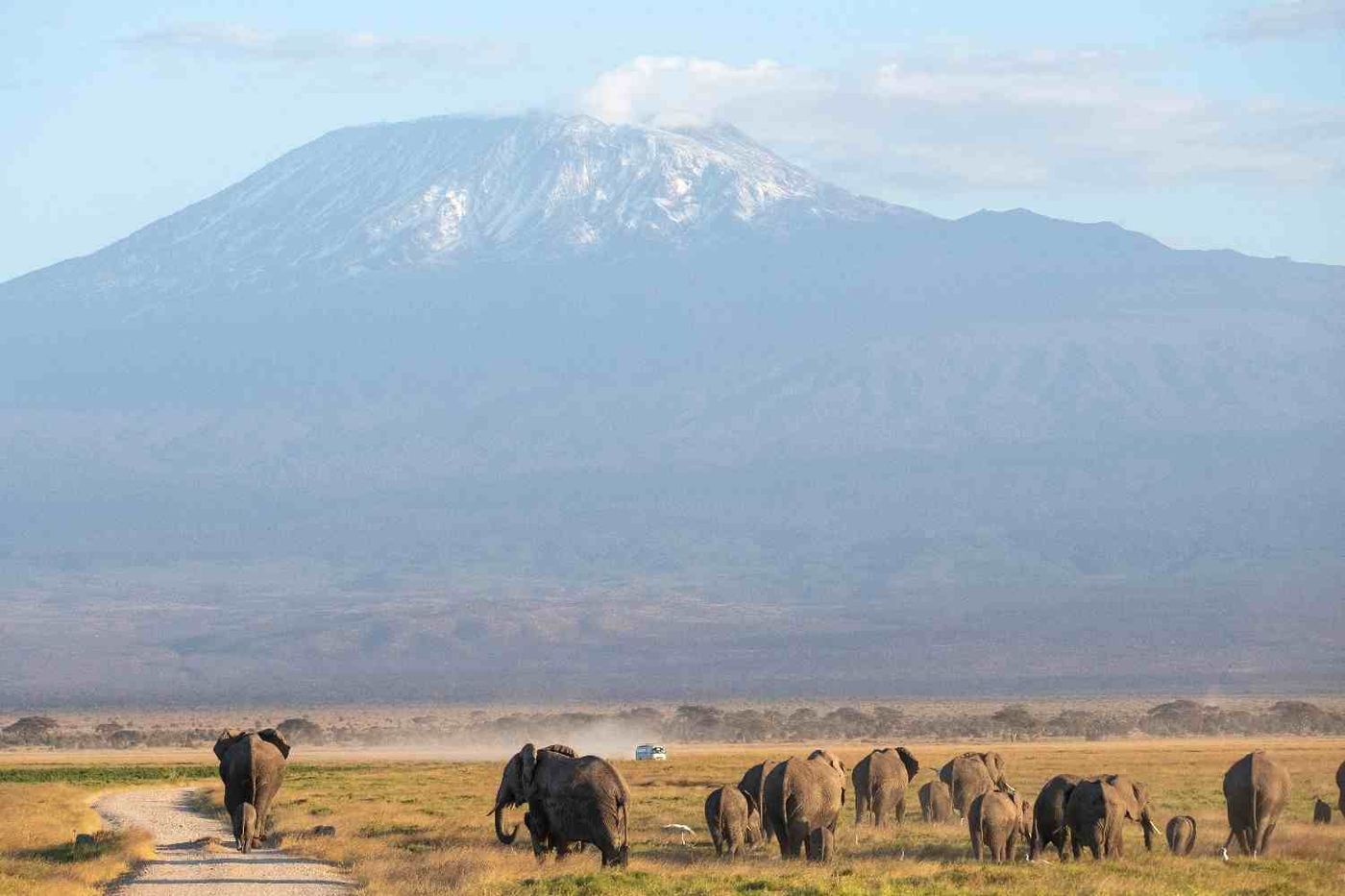
A seven-day private road safari through three of Kenya's great parks: the Masai Mara, Amboseli and Tsavo West.
Late July to September is the best time for a four country safari across Uganda, Rwanda, Kenya and Tanzania. See the month by month table, the second window and the 2026/27 rain caveat.
Read the guide →Trek gorillas in both countries on one trip: what two permits cost, which Bwindi sector links to Rwanda, which direction to travel and how to protect a rest day between treks.
Read the guide →The East Africa tourist visa covers Uganda, Kenya and Rwanda for USD 100 and 90 days, but not Tanzania. Fees, first-entry rule, Kenya eTA question and the Tanzania eVisa, dated.
Read the guide →The fixed part of a four country safari cost: permits, park fees, visas and Tanzania insurance, added up for six routes, plus the ten lines to compare in any quote.
Read the guide →Should gorilla trekking come at the start or end of a long safari? Both sides, the tie-breakers, buffer nights and what to do if a trek is cancelled, with a five-step method to choose.
Read the guide →How to combine gorillas and the Great Migration in one trip: the months that overlap, Uganda or Rwanda, the Mara or Serengeti, and the nine nights you need.
Read the guide →Work out how many days a Uganda, Rwanda, Kenya and Tanzania safari needs: a nights-per-stop ledger, the transfer days you cannot skip, and what 10 to 21 days really give you.
Read the guide →East Africa safari prices per person per day, official park and permit fees in Uganda, Rwanda, Kenya and Tanzania, three worked budgets and what quotes leave out.
Read the guide →A planner's guide to a Rwanda Kenya Tanzania safari that starts in Kigali: route order, flights, the Mara to Serengeti link, entry rules and the gorilla permit.
Read the guide →A planner's guide to a Rwanda and Kenya safari: start in Kigali, trek once, fly to Nairobi, then the Mara. Flights, how to split your days and the entry rules for both countries.
Read the guide →A planner's guide to a Rwanda and Tanzania safari: one gorilla trek, RwandAir's three-day-a-week flight, the Serengeti by air or road, and Tanzania's eVisa and insurance rules.
Read the guide →How flights really work between safari countries: international routes, bush flights, the 15 kg baggage limit, the Mara to Serengeti link, overland times and a realistic transit day.
Read the guide →Safari luggage weight limits by carrier: the 15 kg soft bag rule, who allows 20 kg, excess and freight seat prices, storing luggage at the gateway and packing for the multi-country trap.
Read the guide →Tanzania now requires foreign visitors to hold government inbound travel insurance. See what is verified, reported and unknown: cost, exemptions, Zanzibar, buying and enforcement.
Read the guide →The route we recommend for a Uganda Kenya Tanzania safari: the best order, how many days it needs, the best months, how you move between countries and what to check before you book.
Read the guide →Two land posts link Rwanda and Uganda for gorilla trips. Learn which suits your sector, what to carry, how long to allow and why hours differ, checked 11 October 2026.
Read the guide →A Uganda Rwanda Kenya safari on one East Africa Tourist Visa: the order of the three countries, the Nairobi flights, the Mara, yellow fever rules and the open Kenya eTA question.
Read the guide →How to plan a Uganda Rwanda Kenya Tanzania safari: the four route directions compared, the flight chain, how the East Africa Tourist Visa interacts with the order, and what to check.
Read the guide →A planner's guide to a Uganda Rwanda Tanzania safari: Entebbe or Kigali start, the border or flight between the forests, Kilimanjaro flights, visas and Tanzania's insurance.
Read the guide →Visa rules for Uganda, Kenya, Tanzania, Rwanda, Zanzibar and the Seychelles change often. Here is how to check them properly and what to prepare before you travel.
Read the guide →Not sure where to start? Choose by what matters most: the migration, gorillas, a beach, budget or a first African trip. Here is how.
Read the guide →Uganda dropped its yellow fever entry certificate on 2 October 2026, but Kenya, Rwanda and Tanzania still ask. Journey table, 12 hour transit rule and border outcomes, dated.
Read the guide →Tell us your dates and interests — a destination specialist replies within 24 hours.
Start Planning