
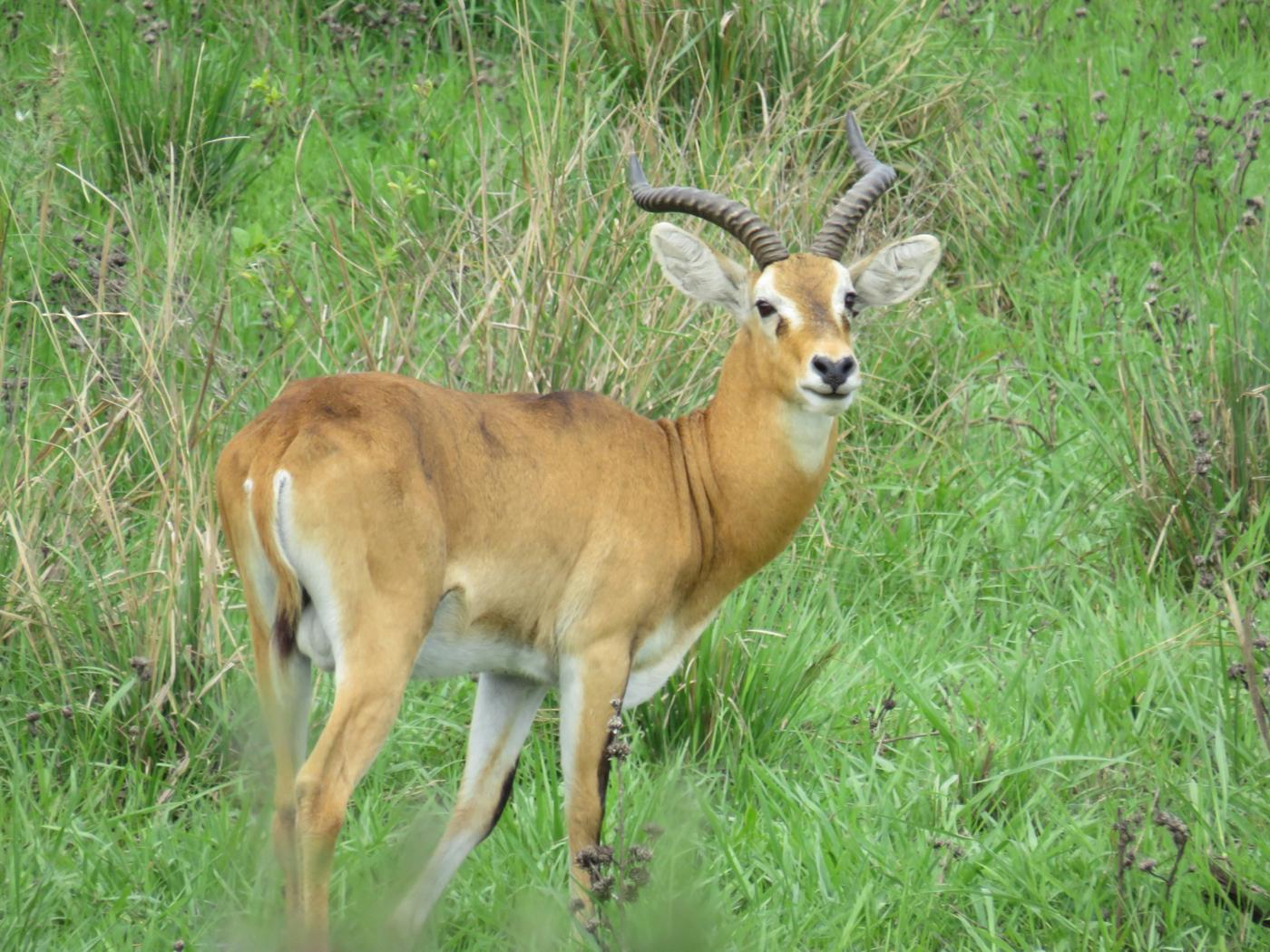
Bigodi Wetland Sanctuary is a community-run swamp walk beside Kibale National Park in western Uganda, where local guides lead you along a boardwalk and trail through papyrus and forest edge to see monkeys, great blue turacos and other birds, with money from the fees going to the village. This guide is written on 14 November 2026. It explains where the sanctuary is, how the walk works, which primates and birds you can expect, what the sources say about fees, how the community benefits and how to fit a half day at Bigodi around a Kibale chimpanzee trek. People search for it as Bigodi Wetland Sanctuary, Bigodi swamp walk, Bigodi Wetland Kibale, Bigodi birding, Bigodi primates, Magombe Swamp and things to do near Kibale besides chimpanzee trekking.
Quick answer
Go to Bigodi for a guided morning or afternoon walk of two to three hours, either on the day you trek chimpanzees in Kibale or on the rest day after it. It is a good place to see monkeys and birds in a swamp, it is cheaper and easier than a forest trek, and it is run by the village through the Kibale Association for Rural and Environmental Development, known as KAFRED.
You should treat sightings as a bonus. One 2026 visitor review in a booking site reported plenty of birds and no primates on the day, so the walk is best for people who enjoy watching and listening. For the main primate event at Kibale, read our Kibale chimpanzee trekking guide, and for the rare cat in the forest, our golden cat tracking guide.
Bigodi Wetland Sanctuary at a glance
| Question | What we found |
|---|---|
| Where | Magombe Swamp, Bigodi village, bordering Kibale National Park |
| From Kanyanchu | About four to six kilometres, depending on the source |
| From Fort Portal | About 35 to 40 kilometres; roughly 45 to 60 minutes |
| From Kampala | About 320 kilometres; five to six hours |
| Run by | KAFRED, formed in 1992 |
| Walk | About 4.5 kilometres on a trail and boardwalk; two to three hours |
| Guides | Local community members; guide included in the fee |
| Primates | Red-tailed, blue, L'Hoest's, black-and-white colobus, grey-cheeked mangabey, red colobus, baboon, vervet |
| Birds | Reported from over 130 to over 200 species |
| Start times | Early morning or mid-afternoon |
| Fees | Sources disagree; confirm before you go |
Chapter 01: What is Bigodi Wetland Sanctuary?
The sanctuary protects the Magombe Swamp, a papyrus and forest wetland in Bigodi village on the edge of Kibale. The community group that runs it, KAFRED, was formed in 1992 by local people who wanted tourism to pay for village projects and to protect the swamp. Sources agree on the date and on the community model. A tour operator says the group began with three members, and another names a former ranger guide as manager and says a women's group helps run it, but those details come from one source each.
The wetland sits outside Kibale National Park, according to one operator, so the rules differ from the park's. Whether you need a Kibale permit to walk it is something none of our sources states, so we confirm for each booking. Our Uganda national parks guide and Uganda complete local guide place Bigodi in the western circuit with Fort Portal and Queen Elizabeth.
Chapter 02: How do you get there?
Bigodi village lies on the road between Fort Portal and the Kamwenge area, near the turn-off to the Kanyanchu visitor centre. Sources say the turn-off is about four to six kilometres before the sanctuary, and that the drive from Fort Portal is 35 to 40 kilometres, about 45 to 60 minutes. From Kampala, the drive is around 320 kilometres and takes five to six hours. Many guests stay near Kibale or at a crater-lake lodge and walk Bigodi as part of the Kibale stay. Our Uganda lodges by park guide lists lodges around Kibale, and the Queen Elizabeth National Park guide covers the next stop south.
Chapter 03: What is the walk like?
A guide from the village meets you at the reception. The trail is about 4.5 kilometres, with a wooden boardwalk across the papyrus, and takes two to three hours at a slow birdwatching pace. One operator gives three to four hours. Sources describe gum boots being lent at reception, but the boardwalk can be wet or underwater in the rains, so wear shoes you do not mind getting muddy. The ground is flat. It is a gentle walk, much easier than a chimpanzee trek or a gorilla trek, and suits older visitors and families, as our senior and accessible safaris guide and Uganda family safari guide describe.
Walks start in the early morning, around 7:30 or 8 am, or in the mid-afternoon, around 3 pm. Mornings are usually best for birds, and the village guides know where the troops tend to move. Bring binoculars, a hat, insect repellent and water.
Chapter 04: Which primates can you see?
The sanctuary is home to a mix of monkeys that live in Kibale and use the swamp edge. Most sources agree on these:
- Red-tailed monkey, the most commonly seen, with a white nose spot and red tail.
- L'Hoest's monkey, a dark, shy species of the Albertine Rift forests.
- Blue monkey, grey and slender.
- Black-and-white colobus, with long white tails and mantles.
- Grey-cheeked mangabey, which a booking site calls the Uganda mangabey.
- Ugandan red colobus, listed in most but not all sources.
- Olive baboon and vervet monkey, in several sources.
Chimpanzees pass through occasionally, but sightings are rare. Sources also list sitatunga, bushbuck, mongoose, bush pig and butterflies, and one mentions otters. Counts of primate species range from eight to 13, depending on the source, and one source says elephants might pass through while another says there are none, so we make no promise. Our gorilla versus chimpanzee trekking guide explains how Bigodi compares with a proper primate trek, and Semuliki National Park is the other lowland forest in the west.
Chapter 05: Which birds can you see?
Birds are the main reason for many visitors. Bird counts differ between sources, from more than 130 on an older operator page to more than 200 on newer ones, and we do not claim a number. Species named by several sources include:
- Great blue turaco, which one source calls almost guaranteed.
- Papyrus gonolek, a red-and-black skulker of the papyrus.
- White-spotted flufftail, which is rarely seen and often heard.
- Yellow-billed barbet.
- Shining blue kingfisher and black bee-eater.
- African pitta, which one source says appears from November to March, though we have only that source.
We could not confirm the black-and-white casqued hornbill at Bigodi, although it is a Kibale bird, so we do not list it. Our East Africa birding safari guide and Bwindi birding guide cover other birding areas, and our 14 day Uganda wildlife and birding safari fits Kibale into a longer route.
Chapter 06: How does the community benefit?
The sanctuary exists to bring money and jobs to Bigodi. Sources describe a women's craft group of more than 40 members who make beads, baskets and bags and sell them to visitors, along with a school, a health centre, water projects and micro-loans funded by fees. Only one source names the secondary school and the water project, and another says funds built "secondary schools" in the plural, so we treat the detail as reported, not audited. One operator says every entrance fee goes directly to community projects, which is a marketing claim we have not verified. No source gives amounts.
You can help the village in simple ways: use the village guides, buy crafts from the women's group, visit a homestay if your operator offers one and tip your guide. Our responsible and sustainable safari travel guide and cultural experiences in Uganda guide show other ways to put money into villages, and our why gorilla trekking costs so much guide explains how park revenue sharing works.
Chapter 07: What does it cost?
Fees differ so much between sources that we do not quote one. A 2025 table on one operator's site lists 50,000 Ugandan shillings for a foreign non-resident adult, 40,000 for a foreign resident, 30,000 for an East African citizen and 20,000 for students, with children under 12 free and guide and boardwalk maintenance included. Two other sources give US$25 and US$30 for foreign visitors, without a year. Those two figures are roughly double the shilling table at current exchange rates, so at least one set is out of date or describes a different service. KAFRED sets the fee, so we confirm it with the group before we quote your trip. Our Uganda safari cost guide gives the bigger picture.
Chapter 08: When is the best time to go?
Bigodi is open all year. The drier months, around June to September and December to February, make the boardwalk easier, and one source gives January to February and June to July as the driest. Wet months are good for birds but muddy. Our best time to visit Uganda guide and best time to see gorillas in Uganda guide cover the seasons, which are similar in the west.
Chapter 09: How do you fit Bigodi into your trip?
Bigodi works best as a half day. A common pattern is: chimpanzee trek in Kibale early in the morning, lunch and rest, then a mid-afternoon Bigodi walk. A second pattern is a Bigodi walk at 7:30 am before the drive to Queen Elizabeth National Park, though that makes a hurried morning. Visitors who want the forest at night can add a night walk in Kibale, which our night drives and walking safaris guide covers. A full Kibale stay of two nights gives you the trek, Bigodi and a rest. See our Uganda safari itinerary guide and Uganda safari packages for routes, and our Uganda primates, gorillas and chimpanzees tour for a combined plan.
Chapter 10: Is it worth the time?
Yes, if you like birds and quiet walks, or if you want a gentler way to meet the forest than a long trek. No, if you expect a guaranteed primate encounter or a big-game safari. It is most valuable for what it is: a village project that shows how local people profit from conservation. If you have only one day in Kibale, spend it on the chimpanzees first.
Chapter 11: Where do the sources disagree?
We read six pages, from tour operators, booking marketplaces and an independent guide. They agree on the community model, the 1992 founding date and the main species. They disagree on the distance from Kanyanchu, the length of the wetland, the number of birds and primates, whether elephants visit, the walk time, the start times, the fees, the origin of the name and the places to stay. Several operators list lodges nearby, but we could not confirm them, so we give no names. We also could not confirm whether a Kibale permit is needed. Ask us for the current position when you book.
Tell us your dates and route, and we will reply within 24 hours with a written plan, the Bigodi walk at the right time of day and a quotation that shows every line separately.
Request a free quotation