
A gorillas and migration safari puts two of Africa's defining wildlife meetings into one trip. You spend an hour with a mountain gorilla family in the forest, then days on the open plains with the wildebeest herds. The pairing works well, but only with the right months, the right gateway country and enough days for each half. This page settles those choices, and sends you to the specialist guides for the details each half needs.
Facts checked 12 October 2026. Permit tariffs, schedules and herd positions change, so we confirm them again when we quote.
Why do the forest and the plains pair so well?
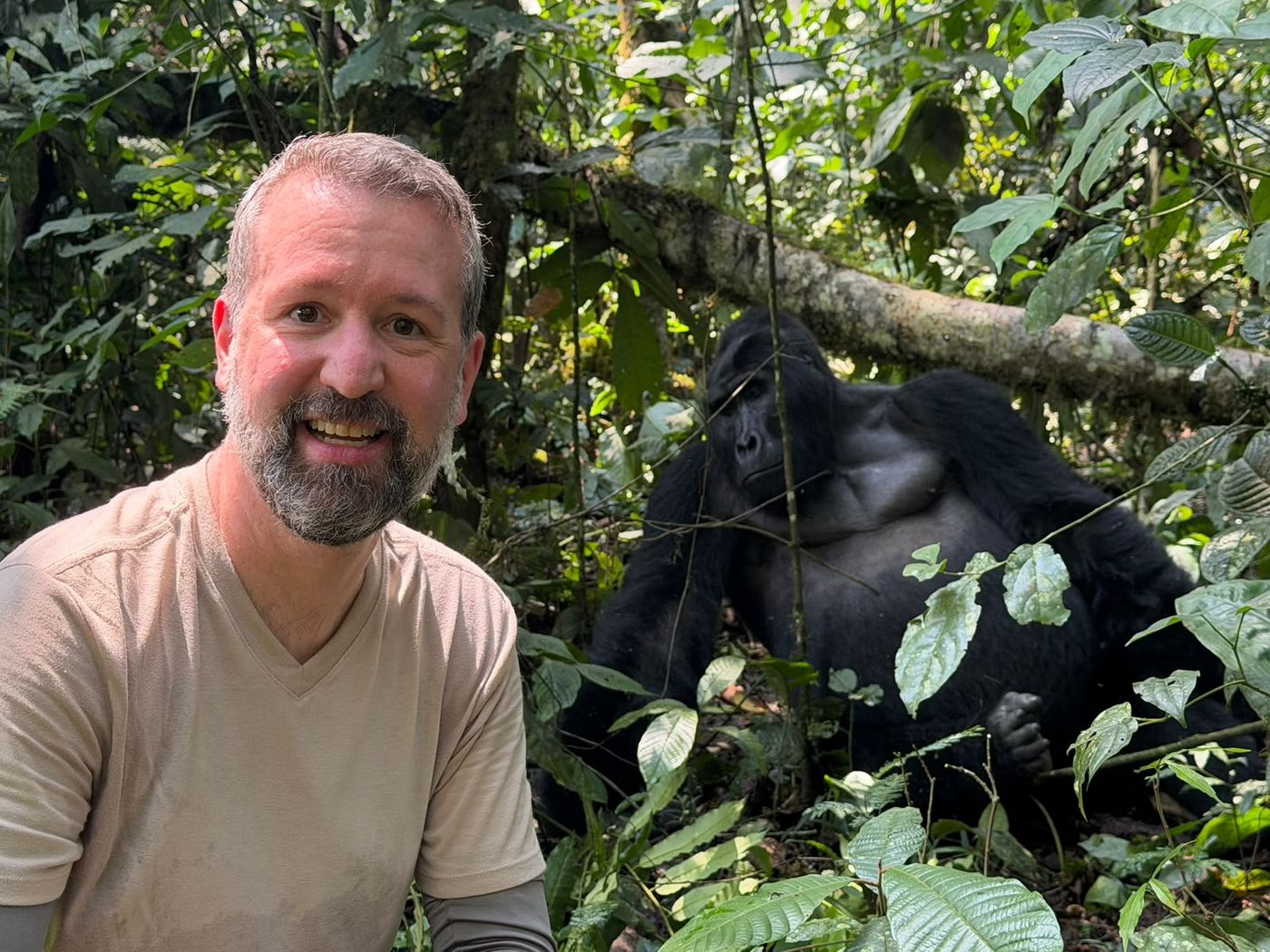
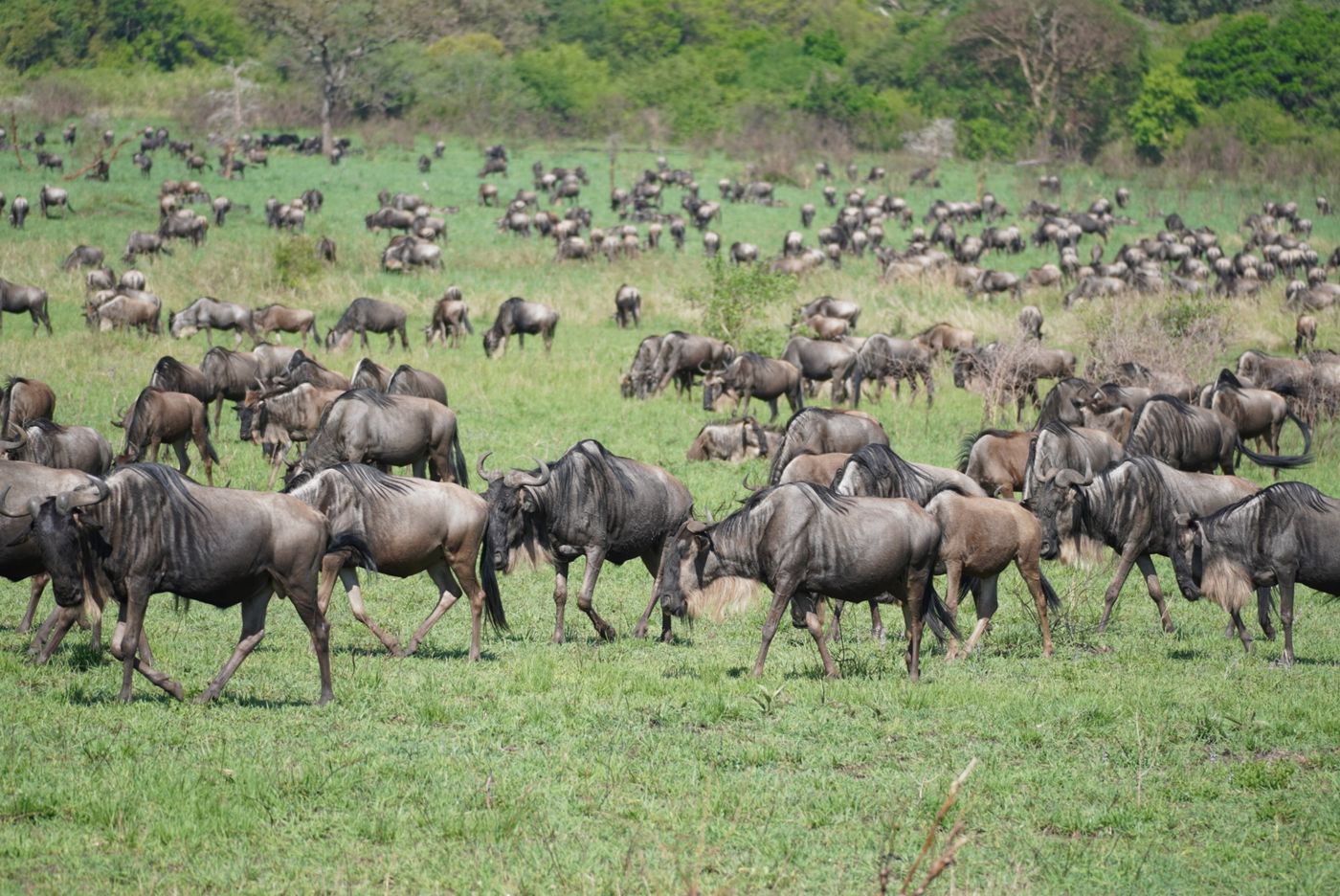
The two experiences contrast almost completely, and that is why a gorillas and migration safari works so well. A gorilla trek is quiet, close and slow. You walk through steep forest, then spend one hour a few metres from a family that ignores you. The migration is wide, loud and unscheduled. A plain fills with animals, and a river is where the herds gather, wait and sometimes cross.
They also ask different things of you. The trek asks for fitness and a permit booked far ahead. The migration asks for patience and enough nights near the river. A gorilla and migration trip that respects both needs two separate blocks of time. A connection through Nairobi or Kigali joins them. Short or rushed versions usually disappoint on one side.
If you want the plains side first, our Great Migration safari guide covers the cycle, the regions and the cost in one place. This page assumes you have decided to add gorillas and want to know how.
What the pairing asks of you
It asks for roughly nine nights, a moderate level of fitness and a permit booked far ahead. It does not ask for any experience of safari travel.
Best months for a gorillas and migration safari
Late July to mid-September is the best window for a gorillas and migration safari. Bwindi has one of its two drier spells then. The herds are in the Maasai Mara and the northern Serengeti, where the Mara River crossings usually peak in August and September. Neither half is ever guaranteed, but these weeks give you the best odds on both.
| Window | Gorilla side | Migration side | Verdict for the pairing |
|---|---|---|---|
| June to mid-July | Dry spell in the forest; easier trails | Herds in the Western Corridor and moving north; first Mara crossings come only in an early year | Good for gorillas, uncertain for the Mara. Consider the Serengeti side instead. |
| Late July to mid-September | Dry spell; permits and lodges sell out first | Herds in the Mara and the northern Serengeti; crossings likeliest from mid-August | The strongest overlap. Peak rates on both sides. |
| Late September to October | Outside the usual dry windows, so trails are likelier to be wet | Herds begin to drift south; crossings still occur, often southbound | Possible, with quieter camps. Choose September if a crossing is the priority. |
| December to February | Second dry spell | Herds on the southern Serengeti plains; calving begins late December to February | Pair the gorillas with the southern Serengeti, not the Mara. |
| March to May, and November | Rains; slippery trails | Transit months or short rains; herds scattered | The weakest overlap. Lower rates are the only argument. |
Reading the table
The two dry spells in the forest are roughly June to September and December to February. Our guide to the best time to see gorillas in Uganda explains the forest side month by month. For the herds, the Great Migration in August and Great Migration in September pages cover the two peak months.
Uganda or Rwanda, Mara or Serengeti: four ways to build the route
There are four sensible gorilla and migration routes, and the choice is mostly about paperwork and connections, not about which animals are better. The East Africa Tourist Visa covers Uganda, Kenya and Rwanda but not Tanzania. Pairing gorillas with the Mara keeps entry simple. Pairing them with the Serengeti adds a separate Tanzanian visa and a Kilimanjaro or Arusha leg.
| Route | How the connection works | Entry papers | Shortest route we plan |
|---|---|---|---|
| Uganda gorillas and the Mara | Entebbe, light aircraft to Bwindi, back to Entebbe, flight to Nairobi, light aircraft to the Mara | One East Africa Tourist Visa for both countries | Ten days, nine nights |
| Rwanda gorillas and the Mara | Kigali, about 2.5 hours by road to Volcanoes, flight Kigali to Nairobi, light aircraft to the Mara | One East Africa Tourist Visa for both countries | Nine days, eight nights |
| Uganda gorillas and the Serengeti | Through Nairobi to Kilimanjaro or Arusha, then a light aircraft into the park | East Africa Tourist Visa plus a Tanzanian visa | Longer than the Mara versions; we quote it for your dates |
| Rwanda gorillas and the Serengeti | Kigali to Kilimanjaro on a limited weekly schedule, then a light aircraft into the park | Rwanda entry plus a Tanzanian visa | See the Rwanda and Tanzania route below |
Our fixed routes
We sell the first row as a fixed route. The 10 day gorilla trekking and migration safari links Bwindi and the Maasai Mara, with the price quoted on request for your dates. For the Rwanda versions see the 8 day Rwanda Kenya safari and the 9 day Rwanda Tanzania safari. If you also want a second gorilla trek and the Serengeti, the 12 day Uganda Rwanda Tanzania safari covers it.
Our Uganda Rwanda Kenya safari route guide explains the one-visa route step by step. The East Africa tourist visa guide covers how to apply.
Choosing the gorilla side of a gorillas and migration safari
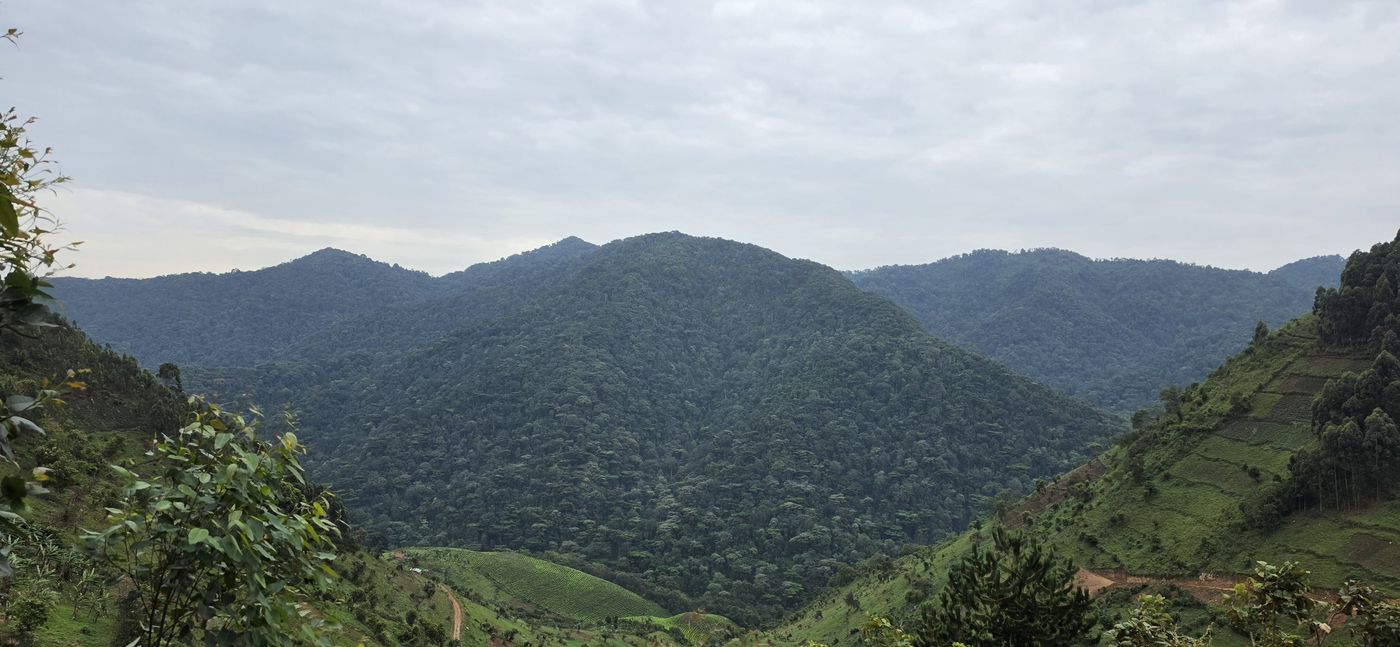
Choose Rwanda if time is your tightest limit and Uganda if the permit price and the forest matter more. Volcanoes National Park is about 2.5 hours by road from Kigali, so the trek can start the day after you land. Bwindi is a long road journey from Entebbe. A combined trip normally flies in by light aircraft, which adds a connection but saves most of a day each way.
The permit tariffs differ. In 2026 the Uganda Wildlife Authority charged US$800 per person and Rwanda charged US$1,500. Uganda's 2027 tariff is reported differently in different places, so we confirm it in your quote before you pay. The full comparison is in our Uganda or Rwanda gorilla trekking guide and the gorilla permit cost comparison.
Two rules shape every combined trip. The minimum age to trek is 15, and a visiting group is limited to eight people per gorilla family. The briefing is early, at about 07:00, and the hour with the family starts only when the trackers find them. Our gorilla trekking fitness guide explains what the walk asks of you.
Mara or Serengeti: choosing the migration side of your gorilla and migration trip
For a gorillas and migration safari that starts with the forest, the Maasai Mara is the simpler partner. It sits one light-aircraft flight from Nairobi and falls under the same visa as Uganda and Rwanda. From July to October the herds and the Mara River crossings are within reach of a river camp. The Serengeti holds the herds for about nine months of the year and offers calving in the south, but it adds a visa and a second set of connections.
Our guide to Serengeti or Masai Mara for the migration settles that choice on its own merits. Once you pick the Mara, read where to stay in the Masai Mara for the migration. It compares the river camps, the Mara Triangle and the conservancies.
The route from Uganda to the Mara has its own timing traps. The Mara flights leave from Wilson Airport, not from Nairobi's main airport. Our Entebbe to Masai Mara safari guide works through the flights, the Nairobi night and the baggage rules.
How many days does a gorillas and migration safari need?
Nine nights is the shortest route we plan around Bwindi and the Maasai Mara, and eight nights works around Volcanoes. The arithmetic is below. Shorter versions exist, but they cut the river nights first, and the river nights are what the pairing is for.
| Block | Uganda route | Rwanda route | Why |
|---|---|---|---|
| Arrival night | 1 (Entebbe) | 0 | The Bwindi flight leaves the morning after you land; Volcanoes is a drive from Kigali |
| Gorilla block | 2 | 2 | One arrival evening, one trek day, then leave |
| Connection night in Nairobi | 1 | 1 | The Mara flights leave from Wilson Airport, an hour or more from the main airport |
| River block in the Mara | 4 | 4 | Our minimum for the main migration area |
| Final night in Nairobi | 1 | 1 | Bush flights can be delayed by cloud or wind, so do not fly home the same day |
| Total nights | 9 | 8 | One more day than nights |
Why four river nights
Four nights near the river is the shortest block that gives a real chance at the herds. Three nights is a split stay for longer trips, not a minimum. If you have more time, add nights to the Mara or add a second block, such as the Mara plus a conservancy. The days for a four country safari guide covers the longer, multi-country versions.
What to book first: the gorilla permit, then the river camp
For any gorilla and migration itinerary, book the gorilla permit before anything else, then the river camp, then the flights. Permits are issued per day and per sector, and the peak weeks sell out well ahead. Peak river camps do too, and both hold their best dates for the early bookers. For July to September we advise booking at least nine to twelve months ahead.
The trek date also decides the order of the trip. Most travellers do the gorillas first, so the permit date anchors everything that follows. The right order still depends on fitness, jet lag and delay risk. We cover that in gorillas first or last on safari. The booking process is in how to book gorilla permits. The lead times for the herd side are in how far ahead to book a migration safari.
What drives the price of a gorilla and migration trip?
Five lines set the price of a gorilla and migration tour. They are the gorilla permit, the river camp, the light-aircraft flights, the Mara reserve fee and the length of the trip. The permit is a fixed government tariff and the same whatever lodge you choose. The river camp is the largest and most variable line, and peak weeks cost more than the green season.
| Cost line | What decides it | Indicative figure |
|---|---|---|
| Gorilla permit | Set by the wildlife authority of the country you trek in | US$800 Uganda, US$1,500 Rwanda (2026) |
| Mara reserve fee | Per adult, per day, from 1 July 2026 | US$200 |
| Light-aircraft legs | Number of legs and baggage | Confirmed in your quote |
| Camps and lodges | Tier, season and distance from the action | Confirmed in your quote |
| Balloon flight (optional) | Weather and season | US$550 to US$750 |
Price anchors
For scale, our eight-day Kenya Migration Explorer starts from US$6,100 per person. The fourteen-day Gorillas, Migration and Zanzibar Honeymoon starts from US$11,800 per person. The ten-day route without a beach is quoted on request, because the permit tariff and the camps depend on your dates. All fees for 2027 are confirmed in your quote.
Who a gorillas and migration safari suits, and who should choose one half
A gorillas and migration safari suits travellers with at least nine nights who can trek on foot and will accept that wildlife keeps its own schedule. It suits couples, friends and adult families. It also suits repeat visitors who have done one half before and want the other.
It suits a few people less well. If your children are under 15, they cannot trek, so the family does the Mara together and the gorilla half waits for later. If you have only a week, one focus gives more. Choose either the Bwindi trek with the park circuit, or the Mara with the full river block. If your wish is calving, the pairing is gorillas with the southern Serengeti in February, which our Serengeti calving season guide explains.
Six mistakes that cost time and good weather
These six mistakes cost travellers the most time and the most good weather on a gorilla and migration trip.
- Choosing the dates before the permit. Fix the permit first, because the camps can flex more than the permit.
- Giving the river only two or three nights. The herds decide the timing, and a short stay gives the crossing too few chances.
- Booking the Mara flight on the day you land from Uganda. The flight leaves from Wilson Airport, and the transfer alone can take an hour or more.
- Packing for the forest and the plains in one hard suitcase. Bush flights set a limit of about 15 kg in a soft bag, so carry only what both halves need.
- Treating the Tanzanian visa as an afterthought. The East Africa Tourist Visa does not cover Tanzania.
- Skipping the yellow fever card. Kenya asks for a certificate from travellers arriving from countries on its list, and Uganda is on it. Read the yellow fever certificate guide before you fly.
Plan your gorillas and migration safari
- Choose your window: late July to mid-September for both halves, or December to February for gorillas and calving.
- Choose the gateway: Uganda for the forest and the permit price, Rwanda for the shortest transfers.
- Tell us your dates, group size and whether anyone is under 15, and we check permits first.
- We then confirm the river camp, the flights and the entry papers, and quote the route line by line.
Plan gorillas and the Great Migration in one trip
Send us your dates and who is travelling. We check the permit first, then the river camp and the flights, and quote the whole route.
Plan my tripRelated reading: the Entebbe to Masai Mara safari guide covers the flights between the two halves. Uganda and Kenya together makes the wider case for combining the two countries.