Best Time for a Four Country Safari in Uganda, Rwanda, Kenya and Tanzania
Late July to September is the best time for a four country safari across Uganda, Rwanda, Kenya and Tanzania. See the month by month table, the second window and the 2026/27 rain caveat.
October 11, 2026Published
16 minRead time
Paramount Gorilla Expeditions Team East AfricaAuthor
The best time for a four country safari across Uganda, Rwanda, Kenya and Tanzania is late July to September, when the forest trails are at their driest, river crossings are under way in the Mara and the Serengeti is at its strongest. January and February is the second window, and March to May is the hardest. This guide gives a month by month table, the trade-offs behind each window, and what to plan for the 2026/27 rains.
Written by Paramount Gorilla Expeditions Team East Africa. Facts last checked 11 October 2026.
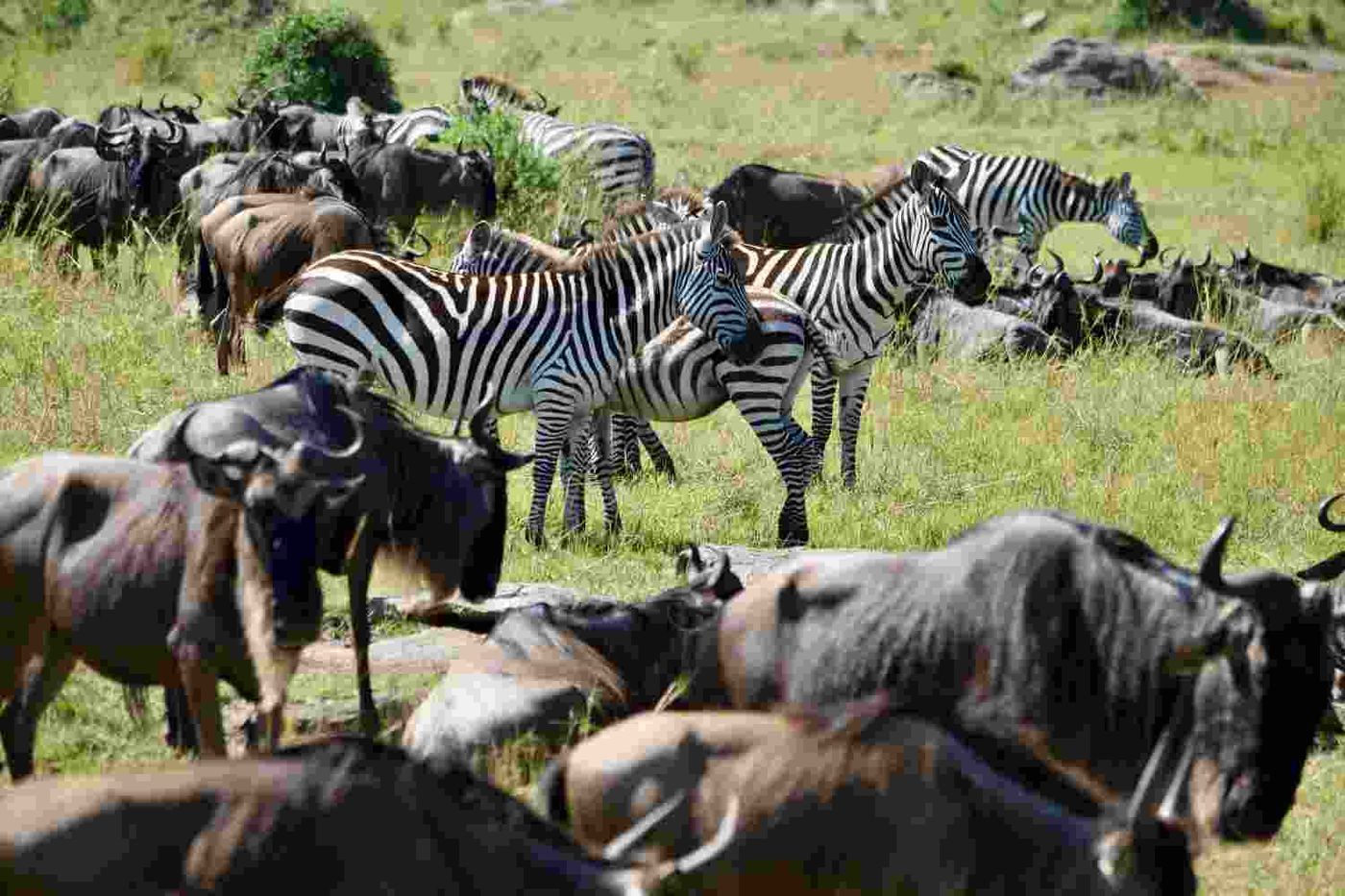
Wildebeest and zebra on the open plains. Where the herds are decides half of the calendar.
Jul to OctRiver crossings in the Mara, peak August to September
Jun to mid-SepRwanda's long dry season
Jan to MarCalving season in the southern Serengeti
Mar to MayLong rains across most of the route
The short answer
The best time for a four country safari is late July to September. Forest trails in Uganda and Rwanda are dry, herds usually reach the Mara from late July, and river crossings run from about July to October, peaking in August and September. January and February is the second window, with calving in the south and dry gorilla trails but no Mara crossings. March to May is the weakest. Treat every window as a planning guide, not a promise.
The month ratings are our own planning view, not measured data.
Late July to September: the best time for a four country safari
In our planning view, late July to September is the best time for a four country safari because it is the only stretch where the three things that matter overlap. Rwanda's long dry season runs from June to mid-September, and Bwindi in Uganda is dry from about May or June to September, so forest trails are at their firmest. Herds usually reach the Mara from late July, and river crossings run from about July to October. One operator season guide rates the Serengeti as excellent from July to October.
August and September are the strongest months for all four countries at once, and September is slightly less crowded than August. Because Rwanda's dry season ends in mid-September, the tightest overlap is late July to early September. That is the answer most travellers need when they ask when to go on a four country safari: pick those weeks, then confirm the details with your planner.
What the best months for a four country safari cost you
The best months for a four country safari are also the most contested part of the year. Peak rates apply from July to October in Tanzania and from June to October in the Mara, and gorilla permits sell out earliest in August. Fix the permit date before anything else, then fit the plains around it. Peak dates sell out months ahead, so book as early as you can.
Why the best time for a four country safari is not simply June to October
Some guides give June to October as the best months for a four country safari, as one block. We split it, because the edges are weaker. In June the gorilla trails are dry but the herds are not yet in the Mara, so the Kenya leg loses its headline attraction. In October the crossings are fading and the short rains are returning to Uganda and Rwanda. The weeks in the middle are better than the weeks at the ends. For the exact crossing weeks, read our Mara River crossing timing guide, and for forest conditions on their own see the best time to see gorillas in Uganda.
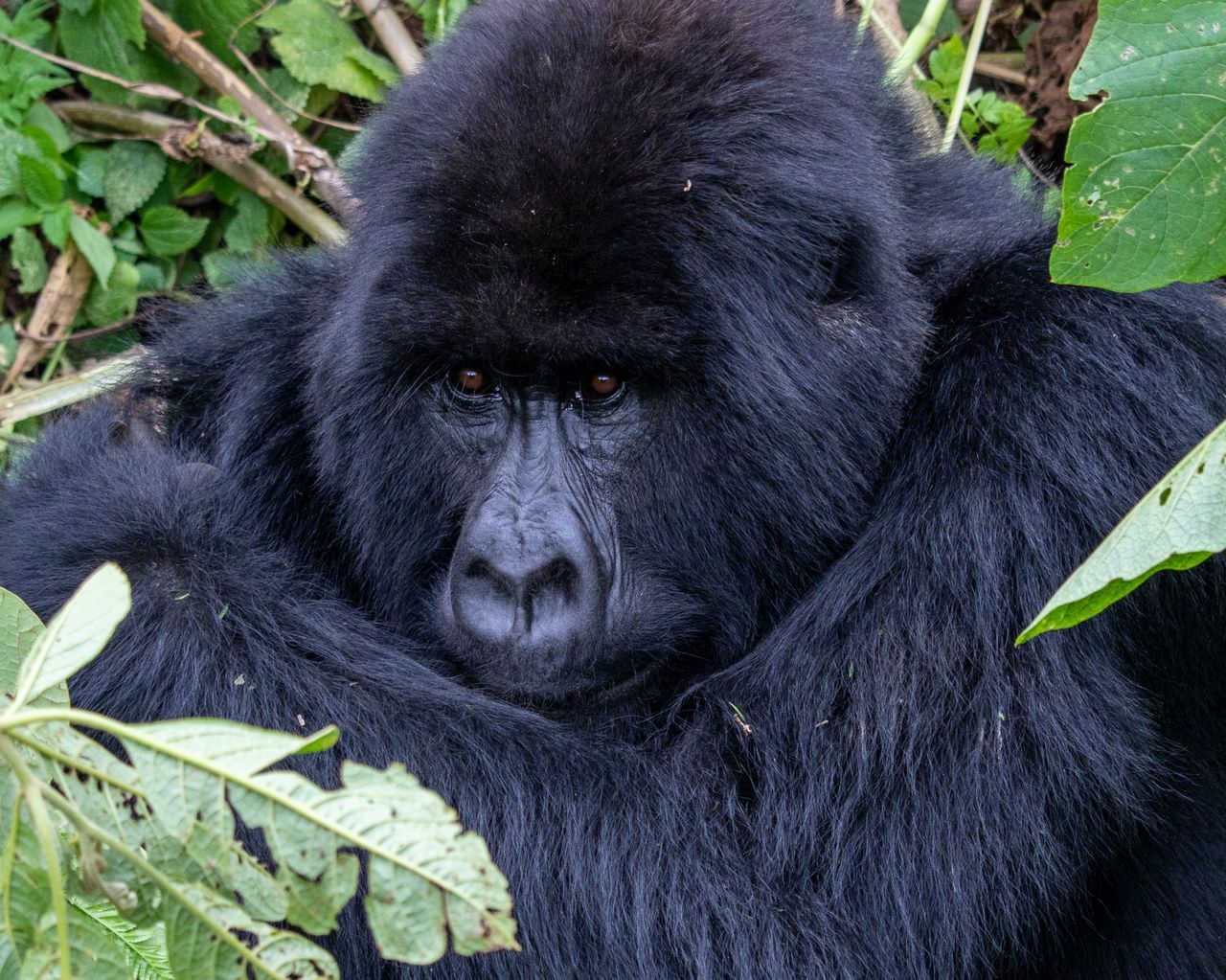
A mountain gorilla. Forest trails are firmest in the dry months, though the forest stays humid all year.
Four climates on one trip: why one weather forecast does not fit
Uganda, Rwanda, Kenya and Tanzania do not share one rainfall calendar, and that is the whole difficulty of choosing the best time for a four country safari. The table shows the pattern we plan around.
Place
Main dry months
Long rains
Short rains
Uganda (Bwindi)
About May or June to September, and December to February
March to April wettest
October to November
Rwanda
June to mid-September, and December to February
March to May, April wettest
October to November
Kenya (the Mara)
Roughly July to October, and January to February
March to May (one source says April to June)
November to early December
Tanzania (the Serengeti)
June to October
March to May
November to early December
Rain onset varies by country and by year.
Read across the rows and the pattern is plain. All four places are driest around July to September. Outside that, the countries disagree, so the best time for Uganda Rwanda Kenya Tanzania as one trip is the narrow overlap, not the best months for any single leg. For each country alone, our guides to Kenya and Tanzania go deeper, and Safari Weather 101 explains rainfall and temperature.
Where generic East Africa calendars go wrong
Most seasonal pages treat East Africa as one climate. Some give December as both dry and wet in different paragraphs. December is a good example of the real answer: it is the short dry season for gorillas in Uganda and Rwanda, while Kenya and Tanzania are only just coming out of the short rains, which run to early December. Crossing dates are often given as if they were a schedule, when they cannot be, and lodge closures in April and May are rarely mentioned. A four country safari calendar has to be built country by country, then merged.
Month by month: our four country safari calendar
This four country safari calendar is laid out month by month, and it is our four country safari by month view of the route. Ratings run from 1 to 5, where 5 is best and "none" means no river crossings in the Mara that month. They are our planning view, built from the seasonal sources above, and they are a judgement call rather than measured data.
Month
Gorillas (Uganda and Rwanda)
Mara river crossings
Serengeti
Overall
What to know
January
4
none
5
4
Dry in both gorilla countries; calving in the south. Holiday prices spill into early January.
February
4
none
5
4
Peak calving and predators. Rwanda's rain starts to creep back.
March
2
none
3
2
Long rains begin. Calving tails off.
April
1
none
2
1
Wettest month across the route. Some Tanzanian camps close.
May
2
none
2 to 3
1
Heavy rain in Rwanda and mud on trails.
June
4
none to 1
4
3 to 4
Dry season starts. Herds not yet in the Mara; western Serengeti is the alternative.
July
5
3 to 4
4 to 5
4 to 5
Crossings begin in the north. Arrival in the Mara is usually late July.
August
5
5
5
5
Best overlap. Permits sell out earliest.
September
5
5
5
5
Excellent, slightly fewer crowds. Rwanda's dry season ends mid-month.
October
3
4
4 to 5
3 to 4
Crossings fading; short rains return to Uganda and Rwanda.
November
2
1
3
2
Last crossings in early November. Herds head south.
December
4
none
4
3 to 4
Short dry season for gorillas. Holiday pricing. Rain risk this year.
Crossing and calving dates move by weeks from year to year.
How to read the calendar
Use the table to find the best months for a four country safari on your dates, then look at your dates and your fitness for the trek. If you are still weighing how long the whole route needs, our guide on how many days a four country trip takes covers it.
Forest trails and herd movements: what each needs and where they clash
Neither the forest nor the herds alone decide the best time for a four country safari. Gorilla trekking runs all year, so the question is comfort and predictability. In the rainy seasons the trails are softer and more slippery, and families may range farther, which makes treks less predictable. There are also fewer visitors. A trek can last from under an hour to six or eight hours whatever the month, so mud adds to a day that is already variable.
How the herds move through the year
The herds follow a different clock, and it is only roughly a calendar. These are typical phases, and rainfall can shift each one by weeks.
January to March: calving in the south around Ndutu, with February the peak.
April to June: herds move north through the central Serengeti.
June to July: crossings in the Grumeti area.
July to October: river crossings in the Mara, with the peak in August and September.
November to December: the return south.
Where the two clash
Laid over the forest seasons, the clash is clear. Gorillas and the migration meet cleanly in August and September. December to February pairs dry forest with calving, but no crossings. March to May is wet in the forest while the herds are only passing through, and in October and November the rain returns just as the herds leave. Which end of the trip the gorillas belong at is a separate question, covered in gorillas first or last.
No calendar can promise a crossing. Crossings depend on the herds and the weather, and they can happen in minutes after hours of waiting. We advise at least three nights in the crossing area, and we describe July to October as a window, never a schedule. See how the Great Migration works and the calving season guide.
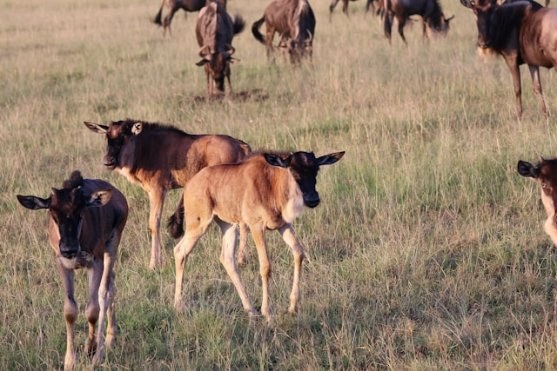
Wildebeest calving in the southern Serengeti, usually between January and March.
When to go on a four country safari outside July to September
Not everyone can go on a four country safari in the peak weeks, and the other windows are real options. The table sets each one against what you give up when you want gorillas and the migration on one trip.
If your priority is
Go in
What you give up
Dry forest and river crossings together
Late July to September
Peak rates, the earliest permit sell-outs, more vehicles at crossings
Calving and dry gorilla trails
January to February
No Mara crossings; Rwanda's rain returning in February; a rain warning this year
Dry trails and quieter plains
June
Herds not yet in the Mara; permit pressure begins
Excellent Tanzania and fading crossings
October
Short rains arriving in Uganda and Rwanda
June
June suits travellers who want dry forest trails and are happy to let the Mara be about lions, cheetah and open grassland rather than crossings. The dry season has started, and Grumeti and the western Serengeti offer action while the herds are still on their way north. Permit pressure builds from this month.
October
October still has fading crossings and a strong Serengeti, but the short rains return to Uganda and Rwanda, and the herds begin to leave the Mara over the month. Allow a spare night around each trek.
December to February
This is the second best time for a four country safari: gorillas in dry conditions, then calving in the south. There are no Mara crossings, though the Mara is quieter and still strong for lions and cheetah. In Rwanda the rain starts to creep back in February, and for 2026/27 the rain forecast below matters. If gorilla permits in Uganda are scarce for your dates, our 10 day Rwanda Kenya Tanzania safari keeps one Rwanda trek with the same plains.
Rainy seasons and what closes: March to May and November
The two rainy seasons are the long rains from March to May and the short rains in October and November. On a combined route, the long rains hit hardest, because four things go wrong together: gorilla trails turn muddy, calving is over, the herds are scattered through the central Serengeti, and some Tanzanian camps close in April. If you are choosing when to go on a four country safari, we do not recommend April or May. We could not confirm a list of closures for Kenya or Uganda, so ask us for the lodges on your route rather than assuming they are open.
Flights follow the seasons too. AirKenya's 2026 timetable has a Mara to Serengeti air and road link that runs daily to 31 December 2026 but not from 1 April to 20 May, with a minimum of two passengers, rising to four from 1 November to 15 December. Some operators still route Mara to Serengeti via Nairobi and Kilimanjaro or Arusha, which adds a day. Confirm the link for your dates, and see our flight logistics guide.
Reduced permit rates in the rainy seasons
Operators report that Uganda offered a reduced gorilla permit rate of USD 600 for April, May and November 2026, not reschedulable. UWA's published 2024 to 2026 tariff shows USD 800 for foreign non-resident visitors, and we found no confirmed low-season months for 2027, so confirm the rate for your date. Rwanda's permit is USD 1,500 on the RDB portal, with no refund for your own cancellation. These are facts about permits, not a reason to choose a wet month for a route that crosses four countries.
Our advice is plain: we do not recommend a four country route in April or May. A rainy-season trip can work for a shorter, single-country plan, as in our guide to green-season safaris, but four countries with four sets of mud and flights is the wrong shape for it.
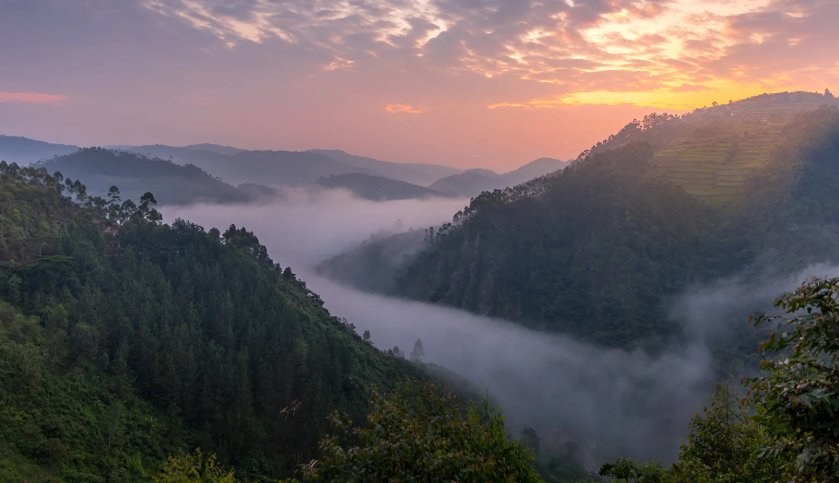
Morning mist over the Bwindi forest. The forest stays humid even in the dry months.
El Niño rains 2026/27: what to plan for if you travel before March 2027
If you are planning a trip between now and early 2027, the El Niño rains 2026/27 are the one weather factor that can move the best months for a four country safari this season. The Kenya Meteorological Department's June 2026 outlook said El Niño, possibly with a positive Indian Ocean Dipole, could bring wetter-than-normal short rains from October to December. A warning reported on 10 September 2026 urged preparation for heavy rain from October to December, possibly continuing into February 2027. We have read the warning at headline level only, so treat the detail as reported.
The warning is for Kenya. Uganda, Rwanda and northern Tanzania share the same short-rains season, so our reading is to treat it as a regional caution. Practically, it raises the risk of mud and road closures for any departure from November 2026 to February 2027.
What we do differently this season
Do not rely on a dry December to February. On the four country safari calendar it is normally the second window, but for 2026/27 we hedge it.
Add a spare night after each trek. We advise one night between a trek and a domestic flight, and it matters more in a wet season.
Favour flights over long road transfers. The Entebbe to Bwindi road takes about 8 to 10 hours, against about 1 hour 15 by light aircraft.
Keep dates flexible. If you can move by a few weeks, we will watch the forecast with you.
The warning covers October 2026 to February 2027 only and says nothing about the dry months that follow. Forecasts change, so we recheck them with you before any departure in the El Niño rains 2026/27 period.
Booking ahead for the best time for a four country safari
The best months for a four country safari are also the first to sell out, so the order in which you book matters as much as the dates.
Fix the gorilla permit date first. Permits are the scarcest item. Rwanda's RDB portal lists USD 1,500 for foreign visitors, and Uganda's UWA tariff lists USD 800, which you should confirm for your date. Uganda permits are bought through a licensed operator, and full payment at booking has been reported since 1 March 2026.
Book flights and the plains lodges around it. Mara camps are in peak demand from June to October, and bush flights use a soft bag of about 15 kg, so confirm baggage early.
Handle entry documents closer to departure. The East Africa Tourist Visa covers Uganda, Kenya and Rwanda only, not Tanzania (see the visa guide). Kenya's eTA is best applied for at least two weeks ahead (Kenya eTA guide). Tanzania's inbound travel insurance rule is treated as in force since 1 October 2026 by the UK FCDO (insurance guide).
Planning tip: if your preferred weeks fall in August, ask for the gorilla permit before you ask for anything else. Move the Mara and Serengeti nights around it, not the other way round.
Before you pay: live health and entry notices
Check live health and entry notices before you pay. As of 11 October 2026, the Bundibugyo Ebola outbreak is centred on the Democratic Republic of the Congo, Uganda declared its own outbreak over on 27 August 2026, and Kenya confirmed its first imported case on 6 October 2026. WHO advises against travel restrictions. Advice differs by government and some pages lag, so read the live WHO outbreak notice, the CDC situation summary and the UK FCDO health pages. Our multi country alerts are updated as we check.
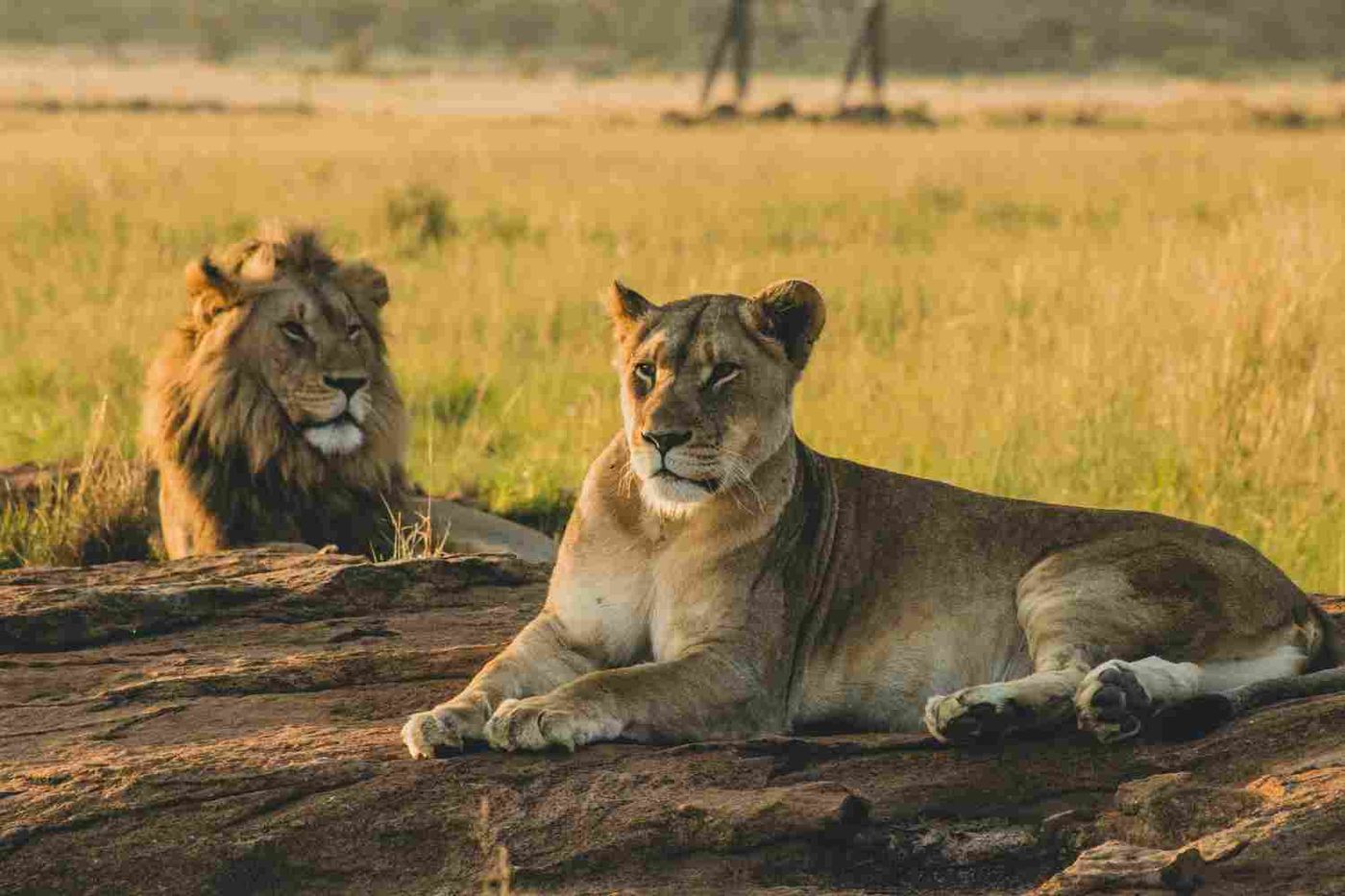
Lions in the Mara. Camps here are in peak demand from June to October.
Who each window suits, and mistakes when choosing the best months for a four country safari
When to go on a four country safari depends on what you can give up. Late July to September suits first-time visitors who want gorillas, crossings and the Serengeti in one trip, and who book early. January and February suit travellers who care most about calving and predators, and who accept no crossings. June and October suit flexible travellers who would rather give up one highlight than pay peak rates. If cost is your main question, read what an East Africa safari costs.
Treating a crossing as a date. It is a possibility within a window of weeks.
Choosing June for the crossings. The herds are usually not yet in the Mara.
Picking a month because it is dry in one country. December is dry for gorillas but still recovering from rain in Kenya and Tanzania.
Assuming 2026 permit rates carry into 2027. The reduced Uganda months were reported for 2026 only.
Trekking and flying on the same day in a wet month. Mud and delays add up, so leave a spare night.
Assuming Dec to Feb is dry in 2026/27. The Kenya Met warning points the other way, so hedge it.
When you pack, remember that cool forest mornings and warm plains days sit in one suitcase. Our packing list covers it.
Next steps: planning the best time for a four country safari
Choosing the best time for a four country safari is mostly a matter of order: decide your window, fix the gorilla permit, then build the plains legs and flights around it. Tell us which months you can travel and how flexible they are, and we will say which of the best months for a four country safari fit your dates, what each month gives up and what the 2026/27 rains mean for your dates.
To help us answer quickly, send us:
The months or weeks you can travel, and whether they can move by a fortnight.
How fit you are for a trek that can run from under an hour to six or eight hours.
The month you travel changes the fixed fees as well as the weather: the Mara reserve fee doubles from July, and Tanzanian park fees step up in the high season. Our four country safari cost guide shows the fees by park.
Choose your months with our planners
Tell us your dates and how flexible they are. We will confirm the window, the permits and the flight sequence in writing.
#best time for a four country safari#four country safari calendar#best months for east africa safari#uganda rwanda kenya tanzania seasons#gorillas and the migration#late july to september safari#el nino rains 2026/27#east africa rainy seasons#multi country safari timing
Trek gorillas in both countries on one trip: what two permits cost, which Bwindi sector links to Rwanda, which direction to travel and how to protect a rest day between treks.
What an East Africa safari really costs: the four price drivers, official permit and park fees in Uganda, Rwanda, Kenya and Tanzania, our from-prices and how to read a quote.
The East Africa tourist visa covers Uganda, Kenya and Rwanda for USD 100 and 90 days, but not Tanzania. Fees, first-entry rule, Kenya eTA question and the Tanzania eVisa, dated.
The fixed part of a four country safari cost: permits, park fees, visas and Tanzania insurance, added up for six routes, plus the ten lines to compare in any quote.
Should gorilla trekking come at the start or end of a long safari? Both sides, the tie-breakers, buffer nights and what to do if a trek is cancelled, with a five-step method to choose.
Work out how many days a Uganda, Rwanda, Kenya and Tanzania safari needs: a nights-per-stop ledger, the transfer days you cannot skip, and what 10 to 21 days really give you.
The Kenya eTA for safari guests: official USD 30 fee, about three working days to process, 90 days validity, who is exempt, transit rules and the open question for regional visa holders.
A planner's guide to a Rwanda Kenya Tanzania safari that starts in Kigali: route order, flights, the Mara to Serengeti link, entry rules and the gorilla permit.
A planner's guide to a Rwanda and Kenya safari: start in Kigali, trek once, fly to Nairobi, then the Mara. Flights, how to split your days and the entry rules for both countries.
A planner's guide to a Rwanda and Tanzania safari: one gorilla trek, RwandAir's three-day-a-week flight, the Serengeti by air or road, and Tanzania's eVisa and insurance rules.
How flights really work between safari countries: international routes, bush flights, the 15 kg baggage limit, the Mara to Serengeti link, overland times and a realistic transit day.
Safari luggage weight limits by carrier: the 15 kg soft bag rule, who allows 20 kg, excess and freight seat prices, storing luggage at the gateway and packing for the multi-country trap.
Tanzania now requires foreign visitors to hold government inbound travel insurance. See what is verified, reported and unknown: cost, exemptions, Zanzibar, buying and enforcement.
The route we recommend for a Uganda Kenya Tanzania safari: the best order, how many days it needs, the best months, how you move between countries and what to check before you book.
Two land posts link Rwanda and Uganda for gorilla trips. Learn which suits your sector, what to carry, how long to allow and why hours differ, checked 11 October 2026.
A Uganda Rwanda Kenya safari on one East Africa Tourist Visa: the order of the three countries, the Nairobi flights, the Mara, yellow fever rules and the open Kenya eTA question.
How to plan a Uganda Rwanda Kenya Tanzania safari: the four route directions compared, the flight chain, how the East Africa Tourist Visa interacts with the order, and what to check.
A planner's guide to a Uganda Rwanda Tanzania safari: Entebbe or Kigali start, the border or flight between the forests, Kilimanjaro flights, visas and Tanzania's insurance.
Visa rules for Uganda, Kenya, Tanzania, Zanzibar and the Seychelles change often. Here is how to check them properly and what to prepare before you travel.
Uganda dropped its yellow fever entry certificate on 2 October 2026, but Kenya, Rwanda and Tanzania still ask. Journey table, 12 hour transit rule and border outcomes, dated.
What is the best month for a Uganda, Rwanda, Kenya and Tanzania safari?+
August or September, in our planning view. Both months fall in the dry season for the gorilla forests in Uganda and Rwanda, and both sit at the heart of the Mara river-crossing window of about July to October. September is slightly less crowded, though Rwanda's dry season ends in mid-September. Dates move by weeks, so treat this as a guide and confirm the details with your planner.
Can you see the Great Migration and gorillas on the same trip?+
Yes, in the right months. Gorilla trekking runs all year, while the herds are in the Mara for crossings from about July to October and in the south for calving from about January to March. A trip in August or September gets crossings and dry forest together, and a January trip gets calving and dry forest. No operator can promise a particular sighting.
When are gorilla trekking conditions best in Uganda and Rwanda?+
Trails are firmest in the dry months: June to mid-September in Rwanda, about May or June to September in Bwindi, and a second short dry season from December to February in both countries. The wet months are March to May and October to November. Gorillas can be trekked all year, but in the rains trails are slippery, families may range farther and treks are less predictable.
When is it too wet to do all four countries?+
April is the wettest month across the route, with March and May close behind. In those months forest trails are muddy, calving has ended, the herds are scattered and some Tanzanian camps close in April. We do not recommend a four country route in April or May. November's short rains are the next weakest stretch, so plan extra buffer if you must travel then.
Is June to October the best time for all four?+
Not quite. It is the right broad season, but the ends are weaker than the middle. In June the gorilla trails are dry but the herds are usually not yet in the Mara. In October crossings are fading while the short rains return to Uganda and Rwanda. Late July to September is the tightest overlap for all four countries at once.
Is January and February a good alternative window?+
Yes, and it is our second window. The gorilla forests in both countries are normally dry then, and the southern Serengeti has calving, peaking in February. You lose the Mara crossings, and Rwanda's rain starts returning in February. For 2026/27 treat it with caution, because Kenya's weather service warned of heavy rain possibly continuing into February 2027.
Which months are quietest, and what do you give up?+
April, May and November are the quietest months on the route, with fewer visitors at the forest. The trade-off is weather: muddy trails, scattered herds, flight and road delays, and some Tanzanian camps closed in April. Operators report reduced Uganda gorilla permit rates for April, May and November 2026 only, and 2027 months are unconfirmed. We steer four country travellers to the drier windows.
Do lodges close in April and May?+
Some do. We found that some Tanzanian camps close in April, and the Mara to Serengeti air and road link in AirKenya's 2026 timetable does not run from 1 April to 20 May. We could not confirm a full list of closures in Kenya, Uganda or Rwanda, so ask your planner to check the exact lodges on your route for your dates before you commit.
How far ahead should I book for July to September?+
As early as you can, with gorilla permits first, because peak dates sell out months ahead. Published lead times vary widely between sources, so we do not quote a single figure. For August, secure the permit date, then the flights and the Mara camps, and handle the visa, Kenya eTA and Tanzania insurance steps closer to departure.
What is the best time to see river crossings in Kenya and Tanzania?+
About July to October, with the peak in August and September. Herds usually reach the Mara from late July, though sources put the arrival anywhere from late June to early August, and some herds leave in October. Crossings in the Grumeti area come earlier, in June and July. Crossings cannot be scheduled, so we advise at least three nights in the crossing area.
What should I pack for such different climates?+
Pack layers. Forest mornings in Bwindi can be cool, the plains are warm by day, and a waterproof jacket is sensible in the rainy seasons. Bush flights use soft bags of about 15 kg, so choose a soft bag and confirm the limit with your operator. Our East Africa safari packing list has the full checklist.
Do the 2026/27 El Niño rains affect a safari?+
They can. The Kenya Meteorological Department's outlook pointed to wetter-than-normal short rains from October to December 2026, and a warning reported on 10 September urged preparation for heavy rain, possibly into February 2027. We treat it as a regional caution, add a spare night around treks and hedge the usual dry December to February window. Check for updates before you travel.
Tick the destinations you're drawn to — each one opens its own list of signature experiences. Tick as many as you like, tell us how to reach you, and a real destination specialist turns your selections into a tailored itinerary within 24 hours.